
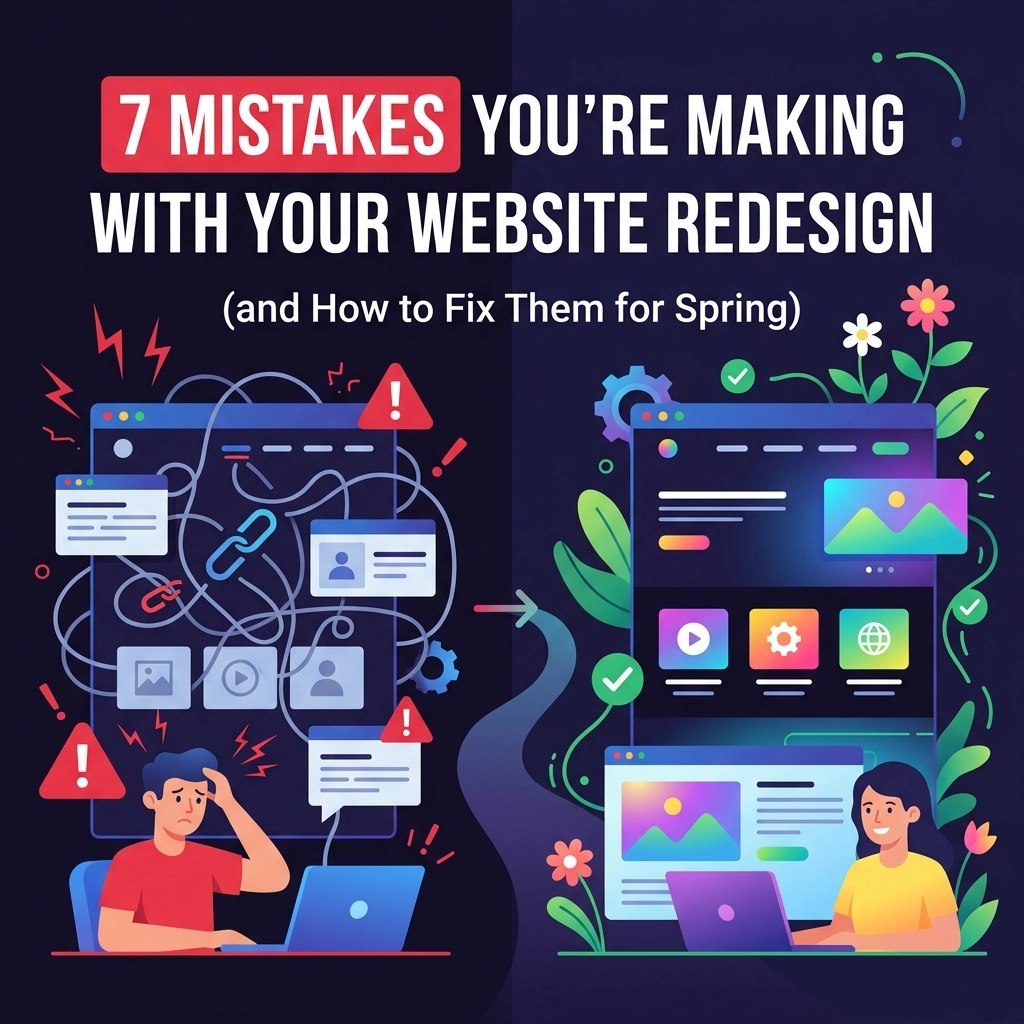
Spring is officially here in Bristol. It’s the time of year when we start thinking about fresh starts, clearing out the clutter, and giving our businesses a bit of a polish. For many Bristol business owners, that “spring clean” often involves a website redesign. You know the feeling: you look at your current site and feel that slight twinge of website embarrassment. Maybe it looks dated, or perhaps it just doesn’t reflect the quality of work you’re doing today.
But here’s the reality: a redesign can either be the best investment you make this year or a very expensive mistake. We see it all the time at Bamsh Digital Marketing. Business owners dive into a redesign focusing on “making it look pretty,” only to find their enquiries drop off a cliff once the new site goes live.
Are you about to make the same mistakes? Let’s look at the seven most common traps and, more importantly, how you can fix them before you hit “publish.”
1. Choosing Aesthetics Over User Experience (UX)
We all want a website that looks stunning. However, if your visitors can’t figure out how to buy from you because a fancy animation is in the way, the design has failed. Many designers focus on “the wow factor,” but research shows that 89% of consumers will shop with a competitor after a poor user experience.
Why This Matters
If your site is beautiful but difficult to use, people will leave. Fast. In the world of web design, form must always follow function.
How It Helps You
By prioritising UX, you make it easy for a busy Bristol local to find your phone number or book a service while they’re on the bus or grabbing a coffee. A simple, functional site builds trust far faster than a complex, flashy one.

2. Ignoring the “Need for Speed”
Did you know that even a one-second delay in page load time can reduce conversions by 7%? If your new redesign is packed with huge, unoptimised images and heavy video backgrounds, you’re basically showing your customers the door.
Why This Matters
Google loves speed. If your site takes longer than three seconds to load, over half of your mobile users will give up. This hurts your SEO services efforts and wastes your marketing budget.
How It Helps You
Fixing this is simpler than you think. Optimise your images, use a fast hosting provider, and keep the “bloat” to a minimum. A fast site feels professional and keeps people engaged with your content.
3. Forgetting the “Mobile-First” Rule
In 2026, it’s no longer enough for a website to just “work” on mobile. It needs to be designed for mobile first. More than 60% of web traffic is now on smartphones. If your redesign looks great on your 27-inch office monitor but is a jumbled mess on an iPhone, you’re losing more than half your potential leads.
Why This Matters
Google primarily uses the mobile version of your site for indexing and ranking. If your mobile site is poor, your search rankings will suffer across the board.
How It Helps You
When you focus on mobile-first design, you ensure that “tappable” buttons are large enough and that text is readable without zooming. It makes the journey from “just looking” to “paying customer” seamless.
4. Breaking Your SEO with Missing Redirects
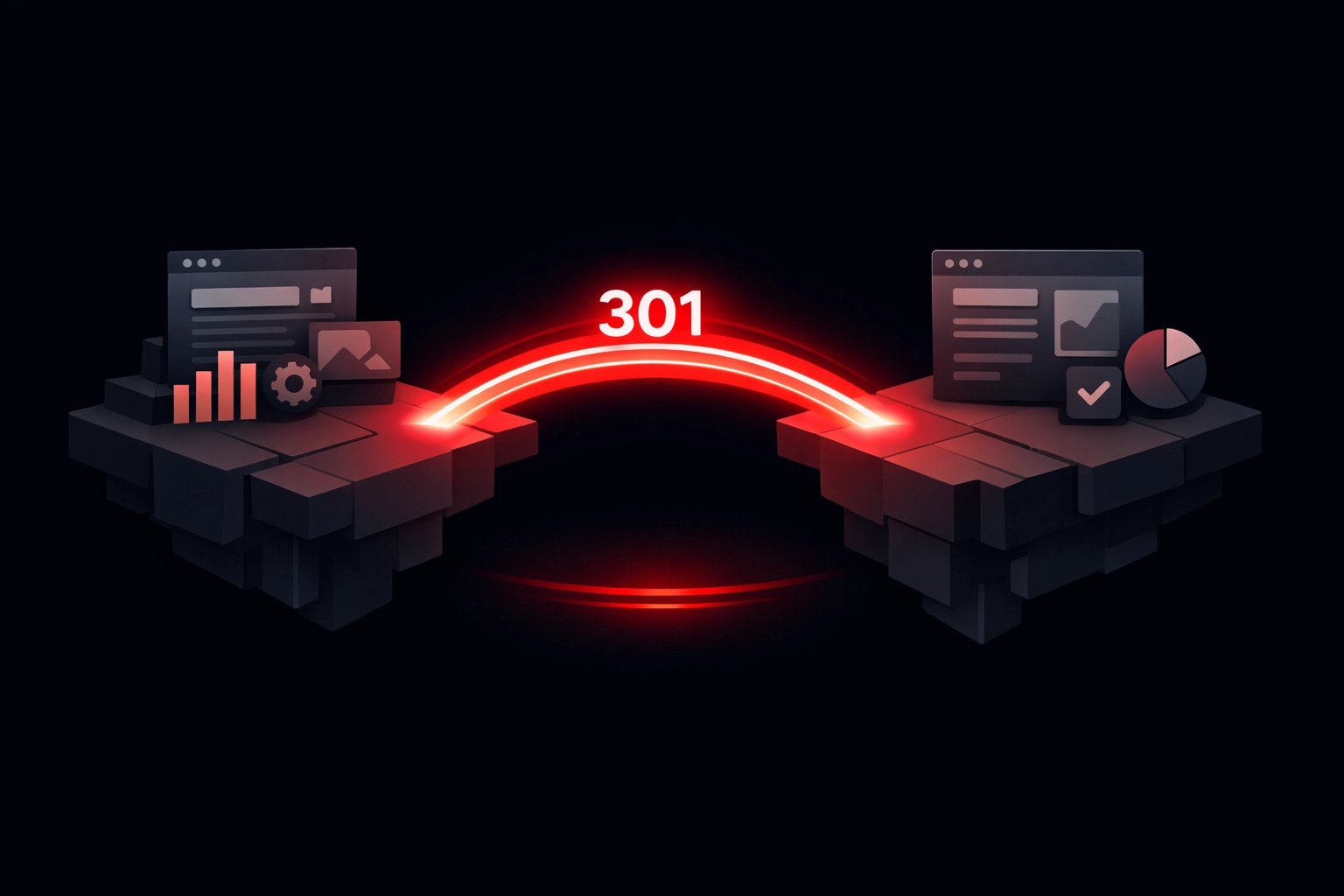
This is the “silent killer” of website redesigns. You build a beautiful new site, change all the page names (e.g., from /about-us to /our-story), and launch it. Suddenly, your traffic disappears. Why? Because you didn’t tell Google where the old pages went.
Why This Matters
Without 301 redirects, all the “SEO juice” you’ve built up over the years is lost. Every old link on the internet pointing to your site now leads to a 404 error page.
How It Helps You
Before you launch, map out your old URLs and redirect them to the most relevant new pages. This preserves your rankings and ensures that anyone clicking an old link still finds your business. If you’re worried about costs, checking our SEO costs guide can help you budget for professional help.

5. Confusing Navigation (Where Do I Go?)
Have you ever landed on a site and had no idea how to get back to the home page or find a price list? That’s what happens when navigation is over-complicated. “Creative” menu labels like “Our Philosophy” instead of “Services” might sound sophisticated, but they confuse users.
Why This Matters
Bounce rates increase by 32% if visitors can’t find what they need in under three seconds. If they have to think too hard, they’ll leave.
How It Helps You
Keep it simple. Use standard labels like “Home,” “About,” “Services,” and “Contact.” Use the “three-click rule”: a user should be able to find any piece of information within three clicks.
6. Lack of Clear Calls to Action (CTAs)
You’ve got them to your site. They like what they see. Now what? If your website doesn’t tell the visitor exactly what to do next, they won’t do anything. A common mistake is having a “Contact Us” button hidden at the very bottom of the page in a tiny font.
Why This Matters
Your website is your best salesperson. A salesperson who doesn’t ask for the order doesn’t get the sale.
How It Helps You
Place clear, high-contrast buttons in the top right corner and throughout your content. Use action-oriented language like “Get a Quote,” “Book a Call,” or “Check Prices.”
7. The “Imagination Gap” and Content Clutter
Often, business owners try to cram everything they’ve ever done onto the homepage. This leads to information overload. On the flip side, some sites are so minimalist that the visitor has to “imagine” what the business actually does. This is the “imagination gap.”
Why This Matters
If a visitor has to guess what you do, they won’t stick around to find out. Clutter distracts from your main message, while too little info creates doubt.
How It Helps You
Use whitespace to let your content breathe. Be crystal clear about who you are, what you do, and who you do it for within the first five seconds of someone landing on your site.
Comparing Your Options: DIY vs. Pro Redesign
You might be wondering if you should tackle this yourself or hire a digital marketing agency. Let’s look at the reality of both.
| Feature | DIY / Template Redesign | Professional Bespoke Redesign |
|---|---|---|
| Initial Cost | Low (£0 – £500) | Higher (£2,500+) |
| Time Investment | Very High (Your own time) | Low (Managed for you) |
| SEO Protection | Often ignored/broken | Handled by experts |
| Customisation | Limited to template | Unlimited |
| Site Speed | Can be slow/bloated | Optimised for performance |
| Lead Generation | Basic contact forms | Strategic conversion paths |
How to Avoid “Website Embarrassment” This Spring
We know that many business owners in Bristol feel a bit of “website embarrassment.” You’re proud of your business, but your website feels like a dusty old brochure from 2015. You want to change it, but there’s an “imagination gap”: you can’t quite see how it could look, and you’re worried about the cost.
Here is how we help you bridge that gap without the sales pressure:
- Get Instant Visual Proof: Use our Website Preview Tool. It allows you to see what a modern, high-performing version of your site could look like. No more guessing; just instant clarity.
- Know Your Numbers: Don’t let the fear of hidden costs stop you. Use our Bamsh Digital Marketing Costs Estimator. It’s a transparent way to see exactly what you should be budgeting for a redesign that actually works.
Frequently Asked Questions (FAQ)
How much does a website redesign cost in the UK?
Costs vary wildly, but for a professional, lead-generating site for a small to medium business, you’re typically looking at £2,500 to £10,000+. You can get a much more specific figure for your needs using our Costs Estimator.
How long does a redesign take?
A simple site might take 4–6 weeks, while a more complex project could take 3 months. The key is not rushing the “strategy” phase, as that’s where the most important decisions are made.
Will I lose my Google rankings if I redesign my site?
Not if it’s done correctly! By using 301 redirects and maintaining your SEO structure, you can actually see your rankings improve after a redesign because the site is faster and more mobile-friendly.
Do I really need a new website if my current one looks okay?
“Okay” doesn’t always cut it. If your site isn’t generating leads or if it’s slow on mobile, it’s costing you money every day. Use our Website Preview Tool to see the difference between “okay” and “excellent.”
Can I just update my current site instead of a full redesign?
Sometimes a “refresh” is all you need. However, if the underlying technology is old (like an outdated version of WordPress or a clunky page builder), a fresh start is often more cost-effective in the long run.
Take the First Step Today
Ready to stop worrying about your website and start using it as a tool to grow your Bristol business? Let’s take the guesswork out of the process.
First, see what’s possible with our Website Preview Tool. It’s the fastest way to get instant visual proof of how your brand can be elevated.
Then, once you’ve seen the potential, get a clear picture of the investment required with our Digital Marketing Costs Estimator.
No jargon, no pressure: just the facts you need to make the best decision for your business this spring. Let’s make sure your next redesign is your most successful one yet.