
Let’s talk about something uncomfortable: your website might be actively losing you sales right now.
Not in some vague, theoretical way. In a very real, measurable, “money-walking-out-the-door” kind of way.
Here’s the thing: most business owners know their website isn’t perfect. But there’s a massive difference between “not perfect” and “costing you thousands in lost revenue every month.” The question is: which side of that line are you on?
After working with hundreds of businesses here in Bristol and across the UK, I’ve seen the same warning signs appear again and again. When multiple signs show up together, the business impact is substantial. We’re talking about real money: companies with misaligned websites can spend an extra £85,000+ yearly in sales salaries just to compensate for the leads their website should have converted.
Let’s look at the five clear signs that your website isn’t just underperforming: it’s actively damaging your bottom line.
Sign #1: Your Website Looks Like It’s From 2015 (Or Loads Like It’s From 1995)
First impressions happen in seconds, not minutes. When someone lands on your site, they’re making snap judgements about your credibility before they’ve read a single word.
The research is brutal: 94% of first impressions are design-related. If your site looks outdated, visitors immediately question whether your business is still relevant, still operating, or still capable of solving their modern problems.
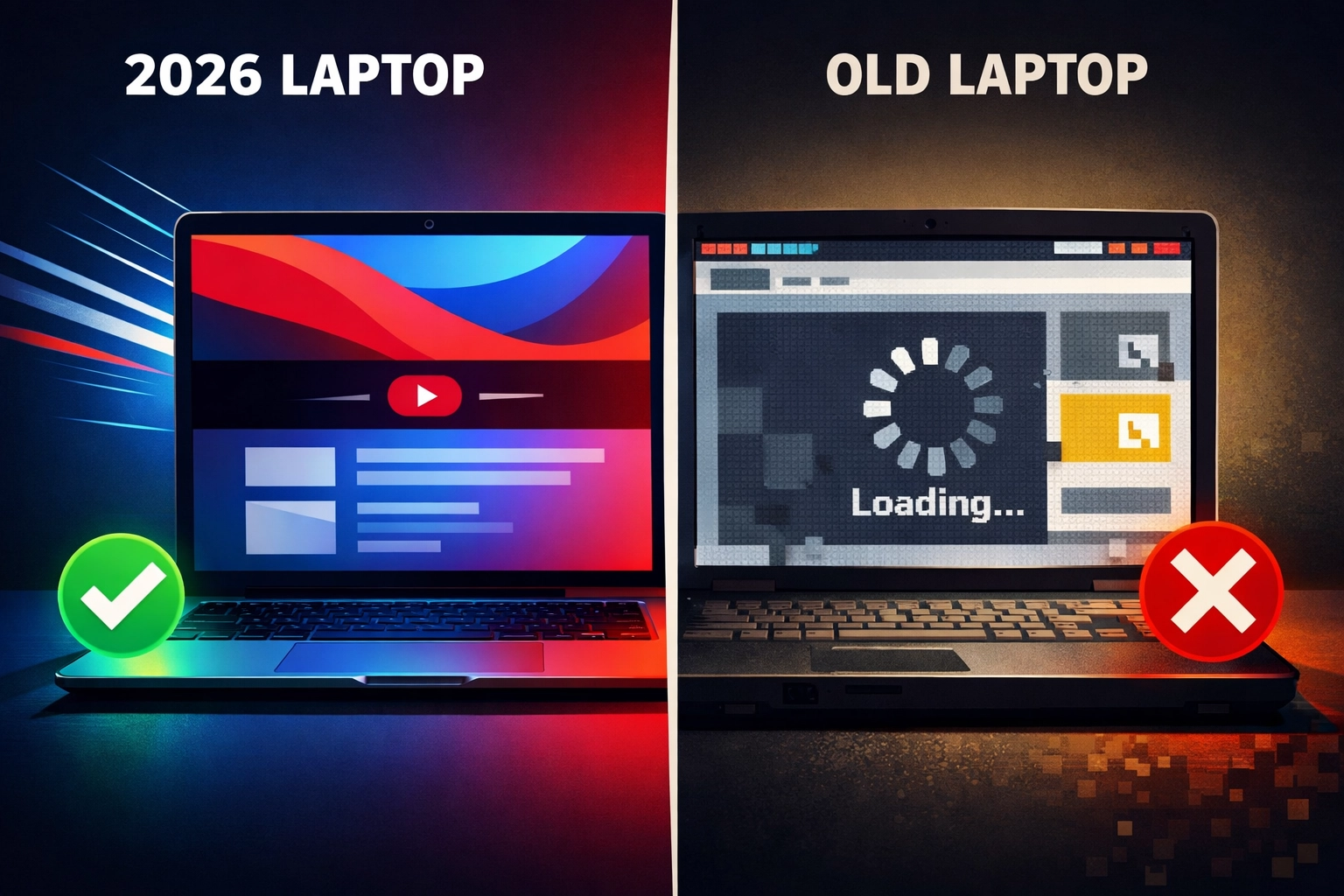
But here’s what really hurts: page speed. Even a one-second delay in load time reduces conversions by 7%. Think about that. If your site takes four seconds to load instead of one, you’re potentially losing 21% of your conversions before anyone even sees your content.
On mobile, the numbers get worse. A one-tenth of a second decrease in mobile load times can increase conversion rates by up to 10%. Your competitors who’ve invested in fast, modern websites aren’t just looking better: they’re converting at significantly higher rates.
What This Actually Costs You:
Let’s say you’re getting 1,000 visitors per month and converting at 2% (20 enquiries). If slow loading speeds are costing you even 15% of potential conversions, that’s 3 lost enquiries every month. If your average customer value is £2,000, that’s £6,000 in lost revenue monthly. That’s £72,000 per year because your website takes too long to load.
Sign #2: Your Website Doesn’t Reflect Who You Are Anymore
Your business has evolved. You’ve changed your services, updated your positioning, maybe even rebranded entirely. But your website? It’s still telling the story of who you were three years ago.
This disconnect creates a trust problem. When potential customers visit your site expecting one thing and encounter something completely different, they feel misled. They start questioning everything: “Is this company even still in business?” “Do they still offer what I need?” “Can I trust what I’m seeing here?”
Your website is often the first interaction potential clients have with your business. When it doesn’t match your current reality, you’re starting that relationship on shaky ground.
The Hidden Cost:
Brand misalignment doesn’t just lose individual sales: it devalues your entire marketing effort. You might be running brilliant advertising campaigns, creating engaging social content, or attending networking events. But when people click through to your website, the disconnect undermines all that good work. You’re essentially paying to send traffic to a site that contradicts your current message.
Sign #3: You’re Getting Traffic But No Enquiries
This is perhaps the most frustrating sign of all. Your analytics show decent visitor numbers. People are finding you. They’re clicking through. But they’re not converting.
Traffic without conversions means your website is failing at its primary job: turning interest into action. Usually, this comes down to one of three problems:
Confusing Navigation: Visitors can’t find what they’re looking for, so they leave.
Unclear Calls-to-Action: People don’t know what you want them to do next, so they do nothing.
Poor Layout: The design actively works against conversion, hiding important information or creating unnecessary friction.
Here’s how to diagnose this: look at your Google Analytics. If your bounce rate is above 60% and your average session duration is under a minute, people are leaving almost immediately. That’s not a content problem: that’s a design and usability problem.
The Real Cost:
This might be the most expensive sign on the list. You’re already paying for the traffic (whether through SEO, advertising, or content marketing), but you’re getting none of the return. If you’re spending £1,000 per month on marketing but your conversion rate is half what it should be because of poor website design, you’re effectively wasting £500 every single month.
Sign #4: Your Site Looks Terrible on Mobile (And You’re Losing 60% of Potential Customers)
More than 60% of online traffic comes from mobile devices. If your website doesn’t work properly on phones and tablets, you’re immediately excluding more than half your potential customers.
But “not working properly” covers a lot of ground. Maybe your site technically loads on mobile but:
- Text is too small to read
- Buttons are too close together to tap accurately
- Images don’t resize properly
- Forms are impossible to complete
- Pop-ups cover the entire screen with no way to close them
Google knows mobile matters. They’ve been using mobile-first indexing since 2019, which means they primarily look at your mobile site when determining your search rankings. A poor mobile experience doesn’t just lose conversions: it loses visibility.
The SEO Connection:
Here’s where it gets worse. Poor mobile optimisation hurts your search rankings, which reduces your organic traffic, which means fewer people even get the chance to have a bad mobile experience. You’re losing visibility and conversions simultaneously.
If you’re not mobile-optimised, you’re not just losing current sales: you’re losing future visibility in search results, which compounds the problem month after month.
Sign #5: Updating Your Content Requires an Act of Parliament
You want to add a new service page. You need to update pricing. You’d like to publish a blog post. But your website’s content management system is so complicated, outdated, or restrictive that making simple changes requires contacting your developer, waiting days (or weeks), and paying for updates that should take minutes.
This creates two problems:
Your Content Goes Stale: When updating is difficult, you simply don’t do it. Your website becomes increasingly outdated, which signals neglect to visitors and search engines alike.
You Can’t Respond to Market Changes: When competitors launch new offerings or market conditions shift, you can’t update your messaging quickly enough to stay relevant.
In 2026, search engines reward fresh, regularly updated content. If your last blog post was in 2024 and your service descriptions haven’t changed in two years, you’re telling Google (and potential customers) that your business is static or inactive.
What This Means for Your Bottom Line:
Outdated content directly impacts your search rankings. Lower rankings mean less organic traffic. Less traffic means fewer enquiries. Meanwhile, your competitors with regularly updated sites are capturing the leads that should be coming to you.
What to Do Next
If you’ve recognised even two or three of these signs, your website is likely costing you more than you realise. The good news? Once you know what the problem is, you can fix it.
A website redesign isn’t just about making things look pretty: it’s about removing the barriers between your business and potential customers. It’s about creating a digital presence that works as hard as you do.
The investment in a proper redesign typically pays for itself within 6-12 months through improved conversion rates and better search visibility. The real question isn’t whether you can afford to redesign your website: it’s whether you can afford to keep losing sales to a site that isn’t working.
Want to understand exactly how much your current website might be costing you? Let’s talk about your specific situation and run the numbers. Visit our web design page to learn more about how we approach website redesigns that actually drive business results.
Your website should be your hardest-working salesperson. If it’s not, it’s time to change that.
Frequently Asked Questions
1. How can I tell if my website is actively losing me sales?
If your website looks outdated, loads slowly, gets traffic but no enquiries, performs badly on mobile, or is difficult to update, it may be actively damaging your bottom line.
2. Why does an outdated website design hurt conversions?
First impressions happen in seconds, and 94% of first impressions are design-related. If your site looks outdated, visitors may question whether your business is still relevant, still operating, or still capable of solving their problems.
3. How much does slow page speed affect sales?
Even a one-second delay in load time reduces conversions by 7%. On mobile, even a small decrease in load time can improve conversion rates significantly.
4. What happens when my website no longer reflects my business?
When your website tells an old story about your business, it creates a trust problem. Visitors may feel misled and start questioning whether you still offer what they need.
5. Why am I getting website traffic but no enquiries?
Traffic without conversions usually means your website is failing at its primary job. Common causes include confusing navigation, unclear calls-to-action, and poor layout.
6. How can I diagnose website usability problems?
If your bounce rate is above 60% and your average session duration is under a minute, people are leaving almost immediately. That usually points to a design and usability problem rather than a content problem.
7. Why is mobile optimisation so important?
More than 60% of online traffic comes from mobile devices. If your website does not work properly on phones and tablets, you are excluding more than half your potential customers.
8. Can poor mobile performance affect SEO?
Yes. Poor mobile optimisation can hurt your search rankings, reduce your organic traffic, and lower your conversions at the same time.
9. Why is it a problem if my website is hard to update?
If simple changes require contacting a developer and waiting days or weeks, your content goes stale and your website becomes less relevant to both visitors and search engines.
10. Is a website redesign only about making the site look better?
No. A website redesign is about removing barriers between your business and potential customers and creating a digital presence that works as hard as you do.