
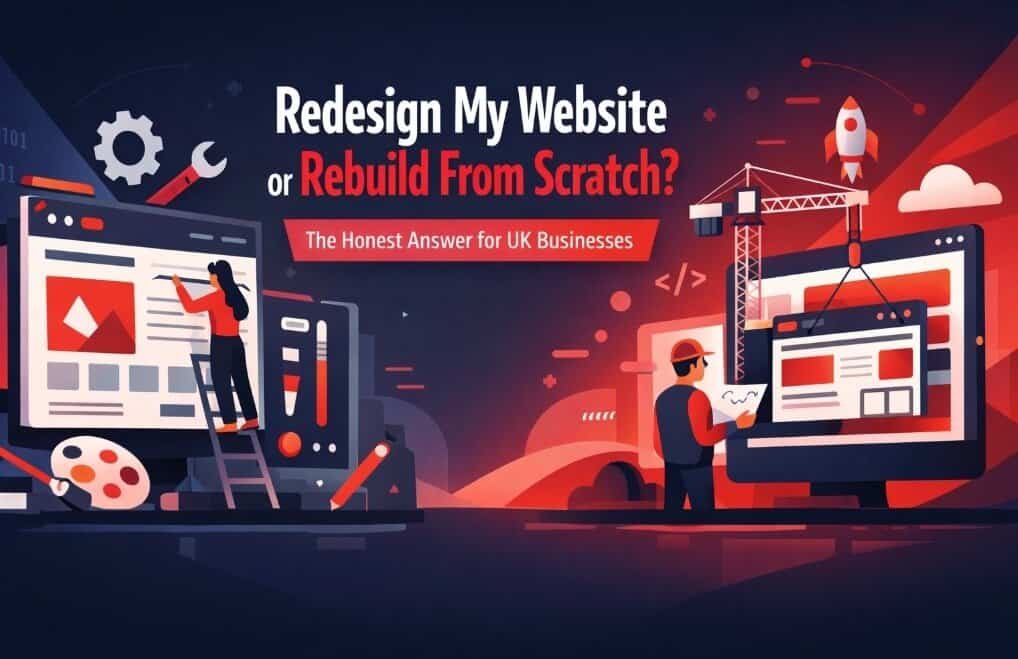
You’re staring at your website, and you know something needs to change. Maybe it looks like it was built when Gangnam Style was topping the charts. Perhaps it’s slower than a Monday morning queue at Pret. Or maybe you’ve just outgrown what you’ve got.
Here’s the question keeping you up at night: do you give your existing site a facelift, or do you tear it down and start fresh?
The honest answer? It depends on what’s happening under the bonnet. Let’s walk through exactly how to make this decision for your UK business.
What’s Actually Different Between a Redesign and a Rebuild?
Think of it this way: a redesign is like renovating your kitchen. You’re keeping the plumbing, the layout, and the basic structure. You’re just updating the cupboards, changing the worktops, and maybe adding some new lighting.
A rebuild? That’s knocking down walls and starting from the foundation up.
A redesign focuses on:
- Refreshing your visual appearance
- Improving user experience and navigation
- Updating content and imagery
- Tweaking your existing design elements
A rebuild addresses:
- Underlying code and infrastructure
- Platform and technology stack
- Site architecture and information hierarchy
- Performance, security, and scalability from the ground up
Here’s what you need to know: a redesign works with what you’ve got. A rebuild questions whether what you’ve got is fit for purpose.
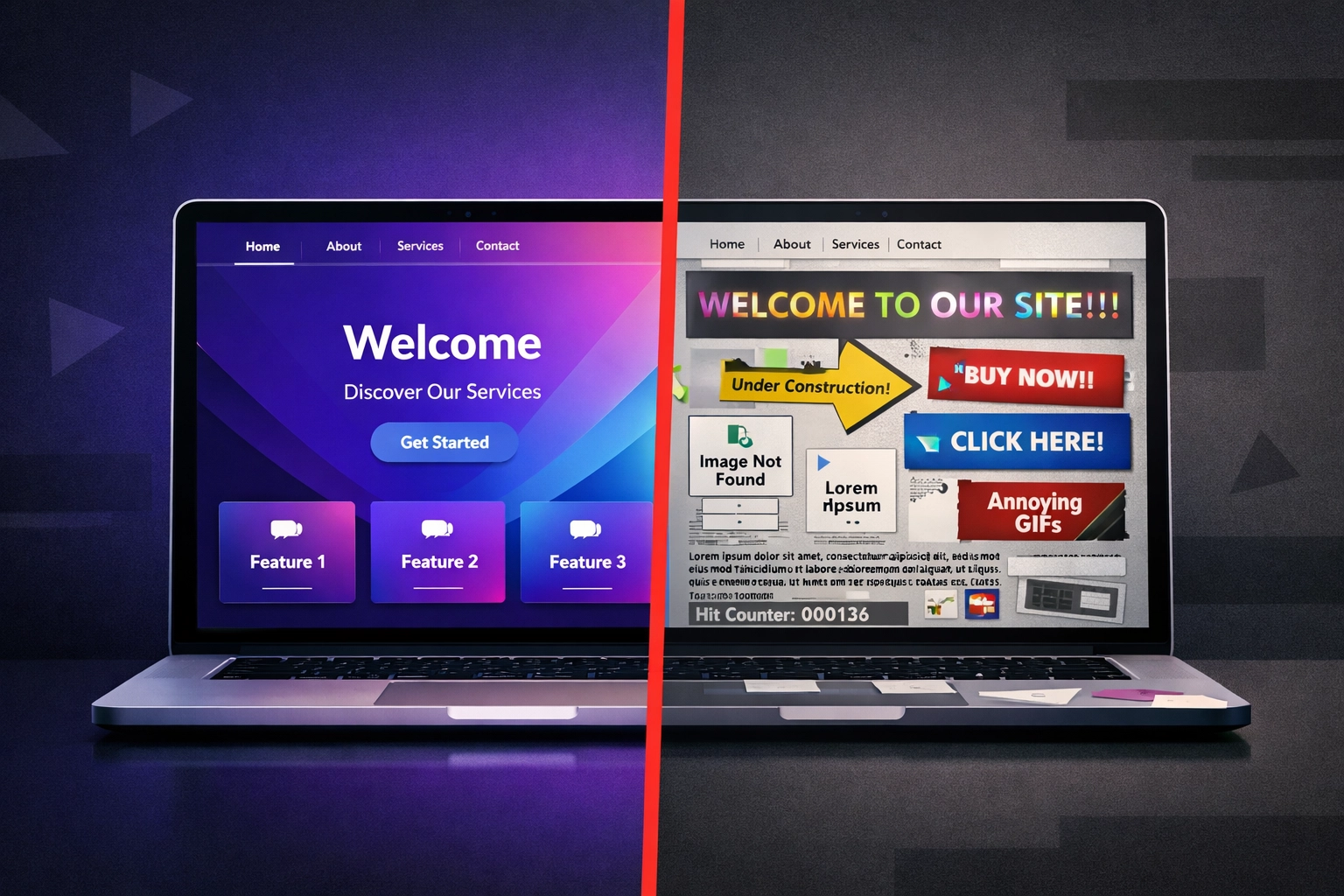
When Does a Redesign Make Sense?
You might be sitting on a perfectly good foundation. If your website’s core technology is sound, you don’t need to bin everything and start over.
Consider a redesign if:
Your backend works well. The site loads quickly, forms submit properly, and you’re not constantly battling technical glitches. The engine runs fine, it just needs a new paint job.
Your content structure is solid. Your information architecture makes sense. Visitors can find what they need. You’ve just lost the visual appeal or your branding has evolved.
Budget constraints are real. You need improvements now, but you don’t have eight to twenty grand sitting around. A redesign for UK SMEs typically costs £1,500–£8,000, making it the more accessible option.
Timeline matters. You need this sorted in weeks, not months. A redesign can be wrapped up in 2–8 weeks depending on complexity.
You’re looking for quick wins. Better conversion rates, improved user journey, and a modern look, these are achievable through a redesign without touching your technical foundation.
The thing is, a redesign assumes your foundation is worth building on. If it’s not, you’re just putting lipstick on a pig.
When You Actually Need a Full Rebuild
Let’s talk about the signs that scream “rebuild.” If your website is held together with digital duct tape, no amount of visual polish will fix the fundamental problems.
You need a rebuild when:
Performance is genuinely poor. We’re talking slow load times (over 3-4 seconds), clunky navigation, and mobile experience that makes visitors want to throw their phones. If your site scores poorly on Google’s PageSpeed Insights, you’ve got infrastructure problems.
Security is outdated. Running an old version of WordPress you’re scared to update? Using deprecated PHP versions? Your site’s security is like a lock from the 1800s on a modern door, it’s not protecting anything.
You’ve outgrown your platform. You need custom features, advanced integrations, or ecommerce functionality that your current setup simply can’t handle. You’re trying to fit a square peg in a round hole.
Technical debt is suffocating you. Years of patches, workarounds, and “quick fixes” have created a Frankenstein’s monster. Every change breaks something else. Maintenance is eating your budget.
Your SEO needs major surgery. Poor site structure, duplicate content, broken redirect chains, these aren’t design problems. They’re architectural ones that require rebuilding from the ground up.
Here’s the reality: if you’re constantly firefighting technical issues, that’s time and money you’re not spending on growing your business.

The UK Cost Conversation Nobody Wants to Have
Let’s put the numbers on the table. For UK SMEs, redesigns typically run £1,500–£8,000. Rebuilds? You’re looking at £8,000–£20,000 or more.
That’s a significant difference. Your immediate reaction might be: “Redesign it is, then.”
But here’s what those numbers don’t show:
Hidden redesign costs:
- Another overhaul in 2-3 years when the underlying problems resurface
- Ongoing maintenance battling technical debt
- Lost opportunities because your platform can’t do what you need
- Patchwork solutions that add up month after month
What a rebuild actually includes:
- Modern, secure infrastructure that won’t need major work for years
- Scalability to grow with your business
- Better performance that converts more visitors
- Platform flexibility for whatever comes next
The most expensive decision isn’t always the one with the highest price tag. Sometimes it’s the cheap fix that costs you more in the long run.
Think about it this way: if your car needs a new engine, you don’t just replace the air freshener and call it sorted.
Technical Debt: The Silent Business Killer
You might be wondering what technical debt actually means for your business. Let me explain.
Technical debt is what happens when quick fixes accumulate over time. It’s every plugin you’ve added as a workaround. Every bit of custom code someone slapped on top of the existing structure. Every update you’ve avoided because “if it ain’t broke, don’t fix it.”
Except it is broke. It’s just breaking slowly.
Technical debt shows up as:
- Sites that take ages to update because you’re scared something will break
- Features you can’t add because your platform won’t support them
- Security vulnerabilities you can’t patch without causing conflicts
- Performance that degrades no matter how much you optimise
Here’s what this means for you: technical debt is like compound interest working against you. The longer you leave it, the more expensive it becomes to fix.
A redesign can’t eliminate technical debt, it just hides it under a fresh coat of paint. A rebuild wipes the slate clean.

SEO and Branding: What Changes and What Stays
Here’s where business owners get nervous. You’ve spent years building up your search rankings. Will a redesign or rebuild tank your SEO?
The short answer: not if it’s done properly.
For redesigns:
Your URLs typically stay the same. Your site structure remains intact. Your content might get refreshed, but the fundamental SEO foundation doesn’t change. The risk is minimal if your team knows what they’re doing.
For rebuilds:
Yes, there’s more SEO work involved. You’ll need proper 301 redirects, careful URL structure planning, and strategic content migration. But here’s the thing, if your current site structure is hurting your SEO, a rebuild is your chance to fix it properly.
A rebuild done right can actually improve your SEO significantly. Better site speed, mobile optimisation, clean code, and proper information architecture, these are ranking factors that matter.
On the branding side:
Both options give you the chance to align your website with your current brand. If your business has evolved but your website hasn’t, either approach works. The difference is that a rebuild lets you embed your brand more deeply into how the site actually functions, not just how it looks.
The Long-Term ROI Picture
Let’s project this forward three years. You’ve chosen a redesign today because it’s cheaper. Your site looks better. Conversion rates have improved. You’re happy.
But 18 months in, you need functionality your platform can’t deliver. You’re patching again. Performance is slipping. You’re looking at another major investment.
Total cost over three years? That initial redesign, plus ongoing workarounds, plus another redesign or finally doing the rebuild you should have done initially.
Now imagine you’d chosen the rebuild. Higher initial investment, yes. But you’ve got:
- A platform that scales with your growth
- Performance that stays strong
- Flexibility to add features as you need them
- Security and maintenance that’s straightforward
- No major investment needed for years
The ROI on a rebuild isn’t just about the website itself. It’s about the business opportunities you can actually pursue because your website isn’t holding you back.

Making Your Decision
So where does this leave you? Here’s how to think through your specific situation.
Choose a redesign if:
- Your technology stack is sound and modern
- You primarily need visual and UX improvements
- Your budget is tight right now
- Timeline is critical (you need this done quickly)
- Your business needs haven’t fundamentally changed
Choose a rebuild if:
- Performance and security are genuine concerns
- You’re planning significant business growth
- Your current platform limits what you can do
- Technical debt is consuming resources
- You need major SEO restructuring
Still not sure? Here’s a quick test: imagine your business three years from now. Double the traffic. New product lines. Different customer needs. Can your current website handle that, or will you definitely need a rebuild before then?
If the answer is “definitely need a rebuild,” you’re just delaying the inevitable. Might as well do it now and reap the benefits sooner.
What Happens Next
The truth is, there’s no universal right answer. A Bristol retailer doing £500k annually has different needs than a London tech startup aiming for £5 million.
What matters is making the decision based on where your business is going, not just where it is today.
If you’re still weighing up your options, it might help to get an honest assessment of what you’re working with. At Bamsh Digital Marketing, we’ve helped UK businesses navigate exactly this decision. Sometimes we recommend a redesign. Sometimes we push for a rebuild. It depends entirely on what’s right for your situation.
The worst decision? Doing nothing because the choice feels overwhelming. Your website is either helping your business grow or holding it back. There’s not much middle ground.
What’s your website doing for you today?
Frequently Asked Questions
1. What’s actually different between a redesign and a rebuild?
A redesign is like renovating your kitchen. You’re keeping the plumbing, the layout, and the basic structure. You’re just updating the cupboards, changing the worktops, and maybe adding some new lighting. A rebuild is knocking down walls and starting from the foundation up.
2. What does a redesign focus on?
A redesign focuses on refreshing your visual appearance, improving user experience and navigation, updating content and imagery, and tweaking your existing design elements.
3. What does a rebuild address?
A rebuild addresses underlying code and infrastructure, platform and technology stack, site architecture and information hierarchy, and performance, security, and scalability from the ground up.
4. When does a redesign make sense?
A redesign makes sense when your backend works well, your content structure is solid, budget constraints are real, timeline matters, and you are looking for quick wins.
5. When do you actually need a full rebuild?
You need a rebuild when performance is genuinely poor, security is outdated, you have outgrown your platform, technical debt is suffocating you, or your SEO needs major surgery.
6. How much do redesigns and rebuilds typically cost for UK SMEs?
For UK SMEs, redesigns typically run £1,500–£8,000. Rebuilds usually cost £8,000–£20,000 or more.
7. What is technical debt?
Technical debt is what happens when quick fixes accumulate over time. It is every plugin you have added as a workaround, every bit of custom code someone slapped on top of the existing structure, and every update you have avoided because if it ain’t broke, don’t fix it.
8. Can a redesign eliminate technical debt?
A redesign cannot eliminate technical debt. It just hides it under a fresh coat of paint. A rebuild wipes the slate clean.
9. Will a redesign or rebuild hurt my SEO?
The short answer is not if it is done properly. A redesign usually keeps the SEO foundation intact, while a rebuild needs proper 301 redirects, careful URL planning, and strategic content migration.
10. How do I decide whether to choose a redesign or a rebuild?
Choose a redesign if your technology stack is sound and modern, you primarily need visual and UX improvements, your budget is tight, timeline is critical, and your business needs have not fundamentally changed. Choose a rebuild if performance and security are genuine concerns, you are planning significant business growth, your current platform limits what you can do, technical debt is consuming resources, or you need major SEO restructuring.