
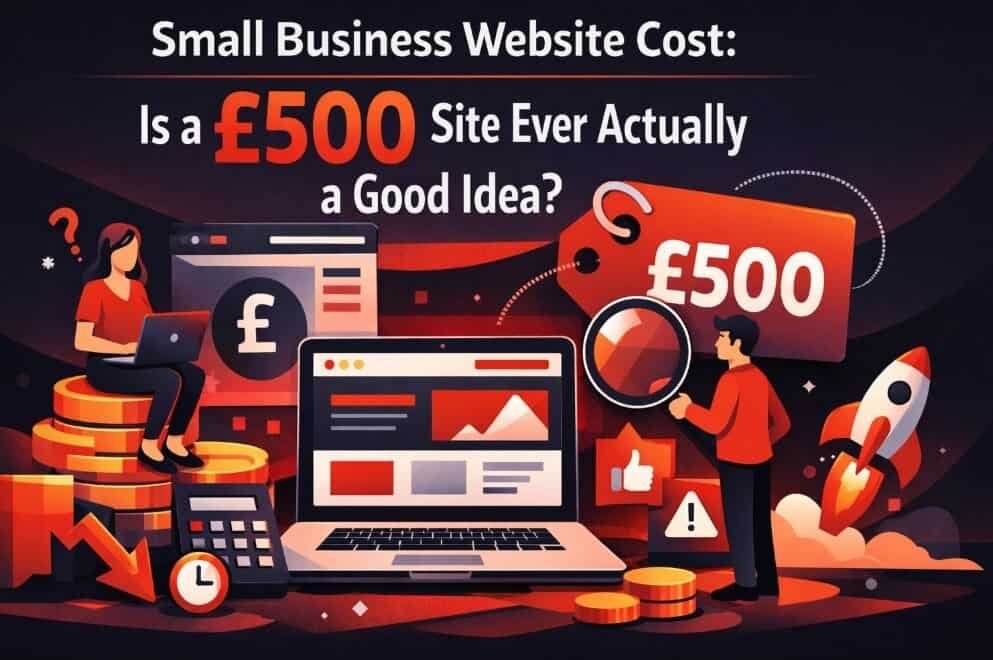
Let’s cut through the noise straight away: Yes, a £500 website can absolutely be a good idea. But it can also be a complete waste of money.
The answer depends entirely on what you need your website to do for your business. If you’re expecting a £500 site to compete with your rivals who’ve invested £5,000, you’re going to be disappointed. But if you understand what you’re getting, and what you’re not, it can be the perfect starting point.
Here’s the thing: I’ve seen brilliant £500 websites that serve their owners beautifully. I’ve also seen £10,000 sites that sit there doing absolutely nothing. The price tag doesn’t determine success. Your goals, expectations, and honesty about what you need determine success.
Let’s dive into the reality of budget website design and help you figure out if it’s right for you.
What Does £500 Actually Buy You?
First things first: you need to understand what you’re getting for your money.
A £500 website typically means you’re working with a template-based design rather than custom development. That’s not inherently bad, it’s just the reality of the budget. Here’s what’s usually included:
The basics:
- 3-5 pages (Home, About, Services, Contact, maybe a Blog)
- Mobile-responsive design that works on phones and tablets
- Basic contact form
- Integration with Google Maps
- Stock photography or space for your own images
- Basic SEO setup (page titles, meta descriptions)
- SSL certificate for security
What you won’t get:
- Custom design that’s completely unique to your brand
- Strategic conversion planning
- In-depth competitor analysis
- Advanced functionality (booking systems, calculators, member areas)
- Comprehensive content strategy
- Ongoing support or maintenance packages
- Detailed analytics setup and training
The truth is, at this price point, you’re buying functionality and credibility, not strategy or custom solutions.
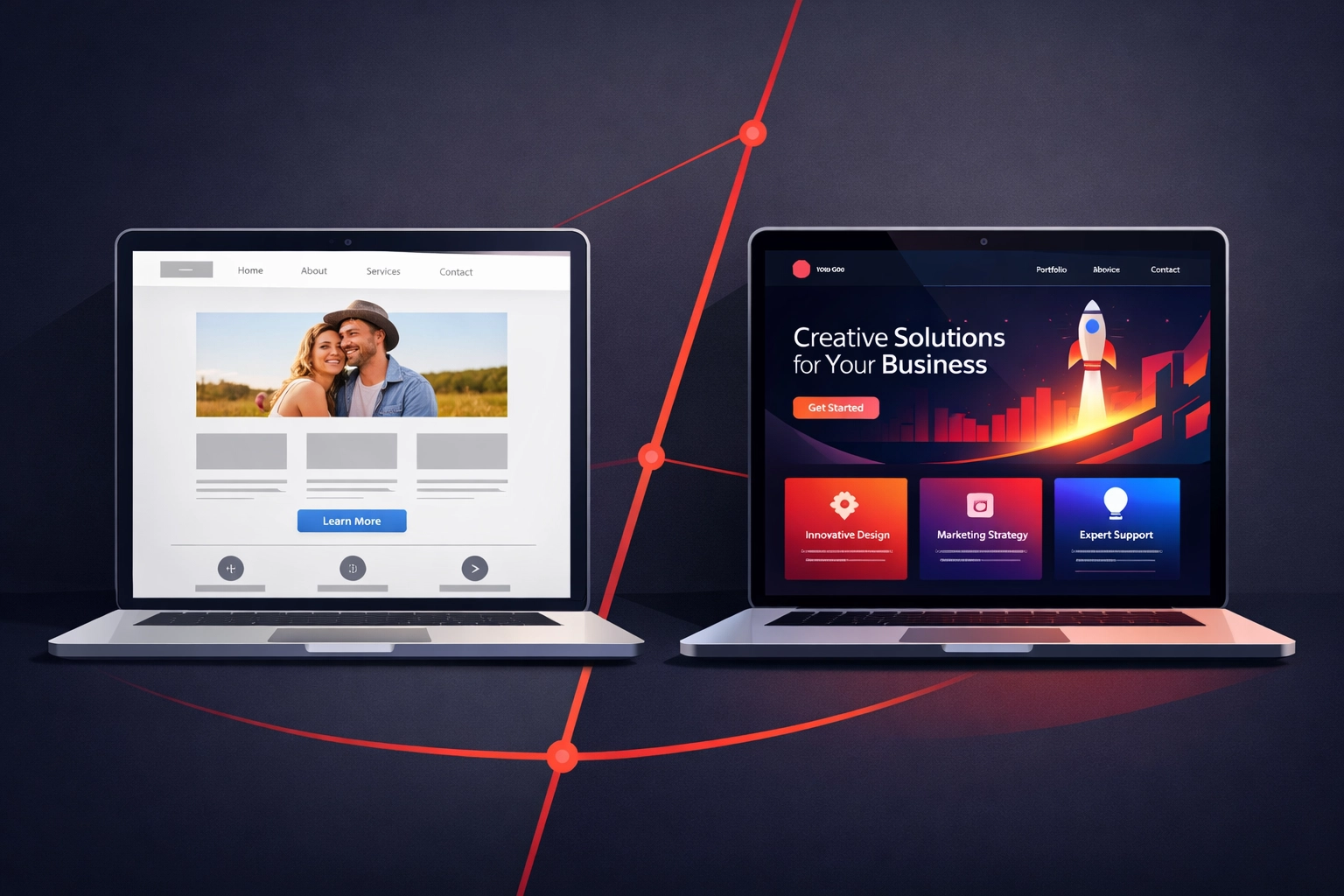
When a £500 Website Makes Perfect Sense
You might wonder if anyone should actually opt for a budget site. The answer is yes: for the right situations.
You’re a sole trader or freelancer just starting out. If you’re a plumber, electrician, gardener, or consultant who needs an online presence to look legitimate when potential customers Google you, a £500 site does the job. Your business cards point somewhere. Your Google My Business listing has a website link. That’s often enough.
You’re testing whether a website will drive business. If you’ve never had a website and you’re not sure whether your customers will even use it to find you, starting small makes sense. You can always upgrade once you’ve proven the concept.
Your website is purely a digital business card. Some businesses don’t generate leads or sales online. If your website’s only job is to display your credentials, show your portfolio, and provide contact details, you don’t need bells and whistles.
You have realistic expectations. This is crucial. If you understand that a £500 website won’t rank on page one of Google for competitive terms or convert at 10%, you won’t be disappointed. You’re simply establishing an online presence.
For trades and local services where customers find you through word-of-mouth or local directories, a basic site often ticks every box you need.
When You’ll Regret the Budget Option
Let’s be brutally honest about when a £500 website becomes a false economy.
Your website needs to generate revenue. If leads, enquiries, and sales are meant to come through your website, you need more than a digital placeholder. Budget sites typically lack the conversion strategy, user experience design, and persuasive copy needed to turn visitors into customers.
You’re in a competitive industry. If you’re a solicitor, accountant, or B2B service provider competing against established firms with professional websites, a template site will make you look like you can’t afford proper marketing. First impressions matter.
You need specific functionality. Booking systems, e-commerce, membership areas, or integration with your CRM all require custom development. You’ll quickly blow past £500: or worse, you’ll try to bolt on cheap plugins that break constantly.
You want to rank on Google. Basic SEO setup isn’t the same as SEO strategy. If organic search is meant to drive your business, you need proper keyword research, content planning, and technical optimisation. That doesn’t happen at this price point.
The danger isn’t spending £500. The danger is spending £500 expecting £5,000 results.

The Hidden Costs of Going Cheap
Here’s what they don’t tell you about budget websites: the initial cost is rarely the total cost.
You’ll need to fix it later. Most budget sites need significant work within 12-18 months. Either the template becomes outdated, the plugins break, or you outgrow the basic functionality. Starting again from scratch often costs more than investing properly from day one.
Your time has value. Budget website packages often require you to provide all the content, images, and structure. If you’re spending 20 hours writing copy and sourcing photos, what’s that worth to your business? Sometimes “cheap” isn’t cheap at all.
Opportunity cost adds up. If your competitors are capturing leads through well-optimised websites while you’re relying on a basic site that doesn’t convert, how much revenue are you losing each month? Six months of lost business can easily exceed the cost difference between budget and professional design.
Migration headaches. When you eventually upgrade, moving content from a poorly-built budget site to a professional one can be complicated and expensive. Clean code and proper structure from the start save money long-term.
I’m not trying to talk you out of a £500 site. I’m making sure you understand the full picture.
What the Extra £2,500-£7,500 Gets You
You might be thinking: “If I spent £3,000-£8,000 instead, what’s the actual difference?”
Fair question. Here’s what you’re paying for:
Strategic planning. Professional web designers start with research: your competitors, your customers, your goals. They build a site designed to achieve specific outcomes, not just look nice.
Custom design and branding. Your website looks like your business, not Template #247. This matters more than you might think for building trust and standing out.
Conversion optimisation. Professional designers understand user psychology, persuasive copy, and conversion paths. Every element is positioned to guide visitors toward taking action.
Proper SEO foundation. Not just basic setup, but strategic keyword targeting, optimised site structure, and content planned around what your customers actually search for.
Better functionality. Forms that integrate with your CRM, analytics that track real business outcomes, and custom features built specifically for your needs.
Ongoing support. When something breaks or you need changes, you have expert help rather than being stuck alone with a template you don’t understand.
Your time back. Professionals handle everything: content strategy, copywriting, image sourcing, technical setup. You focus on running your business.
The question isn’t whether these things have value. The question is whether you need them right now.
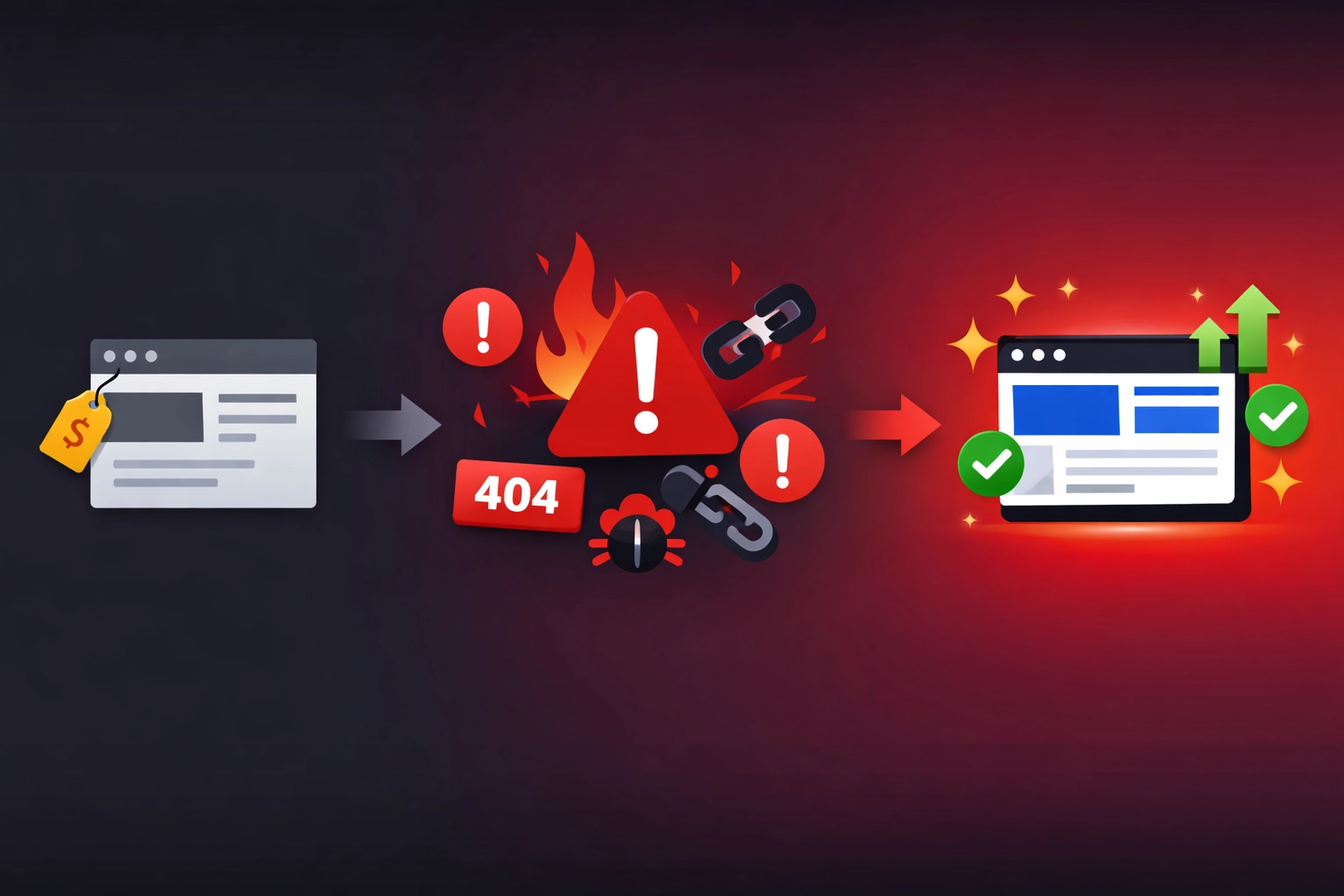
Making the Right Decision for YOUR Business
Let’s bring this back to what actually matters: your specific situation.
Ask yourself these questions:
- Is my website meant to generate revenue directly, or is it just a credibility tool?
- How competitive is my industry online?
- Do I have time to manage content and updates myself?
- What’s my realistic marketing budget?
- Am I prepared to upgrade in 12-18 months, or do I need something that will last 3-5 years?
A £500 website makes sense when:
- You’re just starting out
- Your industry isn’t highly competitive online
- You understand and accept the limitations
- You primarily get business offline
- You need an online presence now and can upgrade later
A professional website (£3,000-£8,000) makes sense when:
- Your website needs to generate leads or sales
- You’re competing against established businesses
- You want to rank well on Google
- You need custom functionality
- You’d rather invest properly once than cheaply twice
There’s no shame in starting with a budget site if that’s what your business needs right now. But be honest with yourself about what you’re trying to achieve.
The Bottom Line
The best website for your business is the one that meets your actual needs without overspending or under-delivering.
A £500 website isn’t automatically a bad idea. For sole traders, new businesses, and those needing basic online presence, it can be absolutely perfect. The key is having realistic expectations about what it will and won’t do for you.
But if your website is meant to be a revenue-generating tool, compete in a crowded market, or represent a professional service, the budget option becomes a false economy. The extra investment in proper design, strategy, and conversion optimisation typically pays for itself through better results.
The worst decision is choosing based purely on price without understanding what you actually need. The second worst is expecting professional results from a budget investment: or paying for professional features you’ll never use.
If you’re still not sure what level of website your business needs, we’d be happy to have an honest conversation about it. No sales pressure, just straight answers about what would actually work for your situation.
Because ultimately, that’s what matters: finding the right fit for your business, not just the cheapest option or the most expensive one.
Frequently Asked Questions (FAQ)
1. Is a £500 website ever actually a good idea?
Yes, a £500 website can absolutely be a good idea if you understand what it is meant to do. It works well as a starting point for businesses that need a basic online presence, but it is not designed to compete with websites built around strategy, lead generation, and custom functionality.
2. What does a £500 website usually include?
A £500 website usually includes 3 to 5 pages, a mobile-responsive design, a basic contact form, Google Maps integration, stock photography or space for your own images, basic SEO setup, and an SSL certificate for security.
3. What do you not get with a £500 website?
You usually do not get a custom design, strategic conversion planning, in-depth competitor analysis, advanced functionality, a content strategy, ongoing support, or detailed analytics setup and training.
4. Who is a £500 website best suited for?
A £500 website is best suited for sole traders, freelancers, and small businesses that need a digital business card, want to look credible online, or are testing whether a website will help bring in business.
5. When is a £500 website a false economy?
It becomes a false economy when your website needs to generate revenue, compete in a crowded market, rank well on Google, or include custom features such as booking systems, e-commerce, or CRM integrations.
6. Can a £500 website help my business rank on Google?
It may have basic SEO settings in place, but that is not the same as having a proper SEO strategy. If you want your website to rank for competitive search terms, you usually need keyword research, content planning, and technical optimisation that go beyond a basic budget package.
7. What are the hidden costs of a cheap website?
The hidden costs can include fixing or rebuilding the site later, the time you spend writing content and sourcing images, lost revenue from poor performance, and extra cost or hassle when migrating to a better website in the future.
8. What does spending an extra £2,500 to £7,500 usually get you?
That higher investment usually gets you strategic planning, custom design, stronger branding, conversion-focused layout and copy, a better SEO foundation, improved functionality, ongoing support, and more of your time back.
9. How do I know whether I need a budget site or a professional one?
It depends on your goals. If your website is mainly there for credibility and basic contact details, a budget site may be enough. If it needs to generate leads or sales, compete online, and support business growth, a professional website is usually the better option.
10. What is the bottom line on small business website cost?
The best website is the one that matches your real business needs. A £500 site can be the right choice for a simple online presence, but if you need performance, visibility, and long-term results, investing more often makes better financial sense.