
Let’s not dance around this one. You’ve invested time and money into your website, and it’s just… sitting there. The traffic might be decent, but your phone isn’t ringing and your inbox isn’t exactly overflowing with enquiries from eager customers.
Here’s the thing: most Bristol businesses face this exact problem. Your website looks fine on the surface, but something fundamental is broken in the conversion process. The good news? Once you identify the culprit, these issues are fixable.
Let’s dive into the brutal truth about why your website isn’t generating enquiries: and more importantly, what you can do about it.
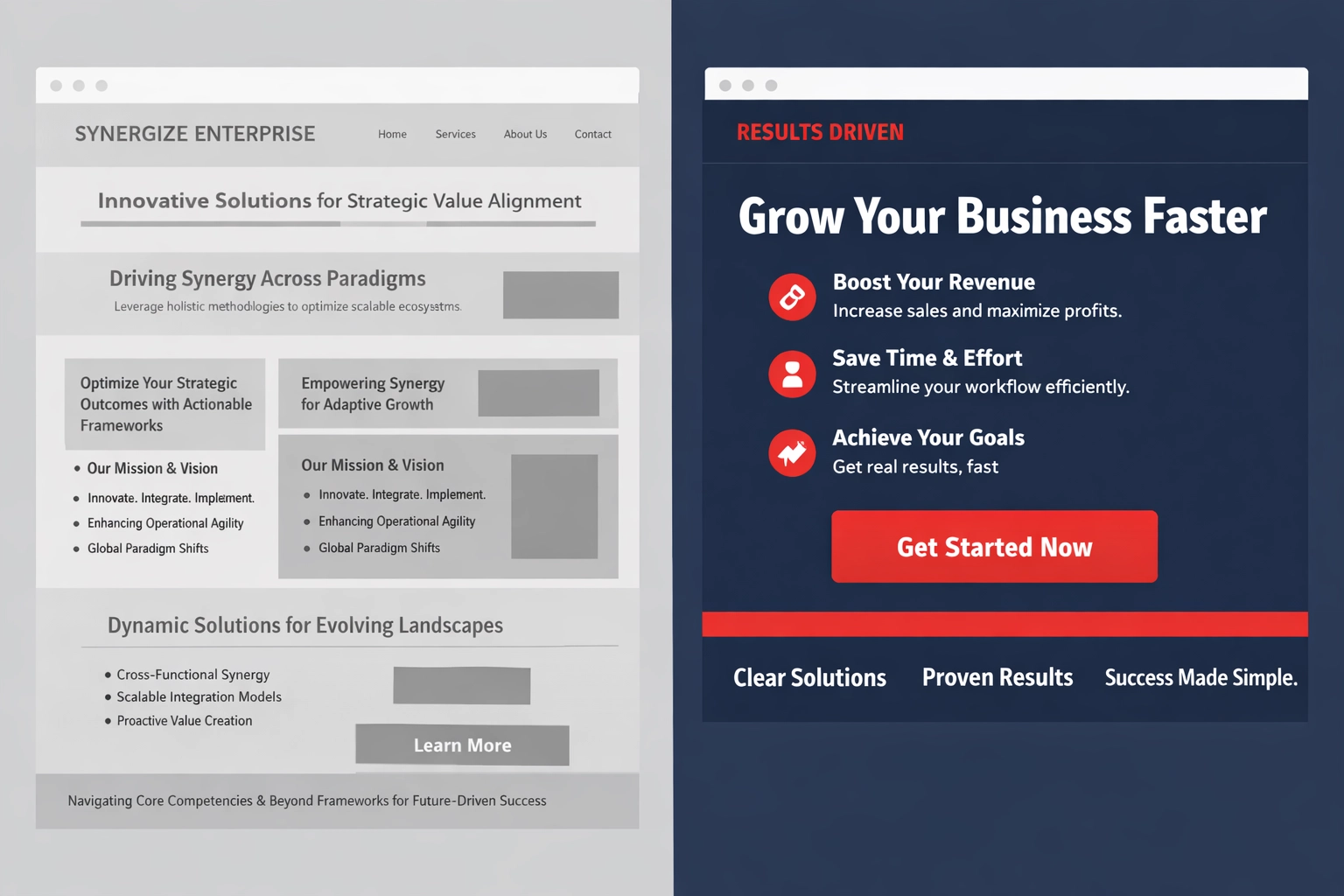
Your Value Proposition is Invisible
Here’s what happens in the first five seconds someone lands on your website: they’re making a snap decision about whether you can solve their problem. If they can’t immediately understand what you do, why you do it better, and who you do it for, they’re gone.
Take a hard look at your homepage right now. Does it clearly answer these three questions:
- What problem do you solve?
- Who do you solve it for?
- Why should someone choose you over the competitor they’ve got open in another tab?
Most websites bury this critical information under vague taglines like “Your Trusted Partner in Excellence” or “Innovative Solutions for Modern Businesses.” That’s not a value proposition: that’s corporate word salad.
Your Bristol customers need to know within seconds that you understand their specific challenge. If you’re a plumber, lead with “Emergency Boiler Repairs in Bristol: Response Within 2 Hours.” If you’re an accountant, try “Tax Planning for Bristol Property Developers: Save an Average of £12,000 Annually.”
Specificity sells. Vagueness repels.
Your Website Navigation is a Maze
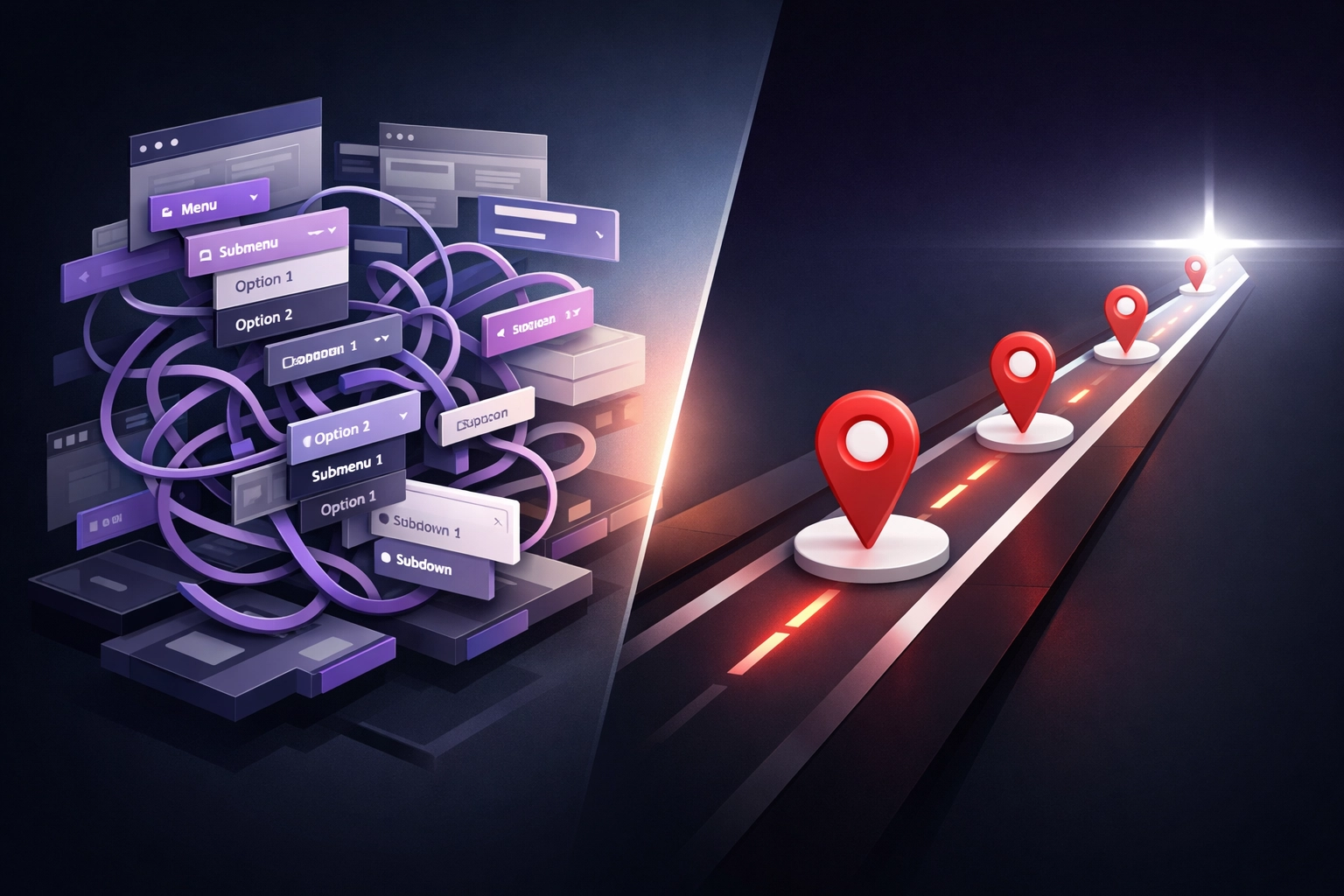
You might know your business inside out, but your visitors don’t. When someone lands on your site and can’t figure out how to find your services, pricing, or contact information within three clicks, they’ll leave for a competitor whose site actually makes sense.
Research shows that 82% of e-commerce stores don’t organise navigation into manageable chunks. If you’re a service business with fifteen different offerings all crammed into a dropdown menu, you’re overwhelming people before they’ve even started their journey.
Here’s what good navigation looks like:
- Clear, descriptive menu labels (not “Solutions” or “Offerings”)
- A logical hierarchy that matches how customers think
- Your contact information visible on every page
- A search function if you have a content-heavy site
Your navigation should guide visitors toward enquiring, not send them on a treasure hunt.
Your Pages Load Slower Than a Bristol Traffic Jam
Here’s a stat that should make you uncomfortable: a website that loads in one second converts three times better than one that loads in five seconds.
Every extra second of loading time is costing you enquiries. In 2026, people expect instant gratification. If your website is still loading hero images and chunky scripts while your competitor’s site has already displayed their pricing and contact form, guess who’s getting the enquiry?
Page speed issues typically come from:
- Oversized images that haven’t been optimised
- Excessive plugins or scripts running in the background
- Cheap hosting that can’t handle your traffic
- Outdated code that modern browsers struggle with
You can test your site speed right now using Google’s PageSpeed Insights tool. If you’re scoring below 70 on mobile, you’ve found one of your problems.
You’re Missing the Trust Signals That Matter
Think about the last time you bought something from a company you’d never heard of. You probably looked for reviews, testimonials, case studies: anything to confirm they were legitimate and capable of delivering what they promised.
Your potential customers are doing the same thing. If your website lacks social proof, you’re asking people to take a massive leap of faith. And most won’t.
Trust signals include:
- Customer testimonials with real names and photos
- Case studies showing actual results you’ve delivered
- Industry accreditations and certifications
- Reviews from Google, Trustpilot, or industry platforms
- Client logos (with permission)
- Guarantees or warranties
Here’s what makes trust signals effective: specificity. “Great service, highly recommend” tells visitors nothing. “Martyn helped us redesign our website and we saw a 140% increase in enquiries within three months” tells a story people can relate to.
If you’re a Bristol-based business, local trust signals matter even more. Mention local clients, showcase your involvement in the Bristol business community, and include your actual business address (not just a contact form).
Your Calls-to-Action Are Invisible or Uninspiring
Let me guess: your primary call-to-action button says “Submit” or “Learn More” or “Click Here.”
These generic CTAs convert terribly because they don’t tell visitors what happens next or why they should care. Personalised CTAs perform 202% better than generic ones, and the difference often comes down to being specific about the value exchange.
Compare these:
- “Submit” vs “Get Your Free Quote”
- “Contact Us” vs “Book Your Free Consultation”
- “Learn More” vs “See How We Helped Bristol Businesses Like Yours”
The second version in each pair tells the visitor exactly what they’re getting and reduces the perceived risk of clicking. You’re not asking them to “submit” to some unknown process: you’re offering them something valuable.
Here’s another brutal truth: if visitors have to hunt for your contact information or call-to-action, they won’t bother. Your CTA should appear above the fold on your homepage and on every service page.

Your Mobile Experience is Broken
Over 60% of internet users browse on smartphones. If your website doesn’t work flawlessly on mobile, you’re turning away the majority of your potential customers before they even see your services.
Common mobile issues include:
- Text that’s too small to read without zooming
- Buttons too close together to tap accurately
- Forms that are frustrating to fill out on a small screen
- Pop-ups that cover the entire mobile screen with no clear way to close them
- Images that don’t resize properly
Pull out your phone right now and try to complete an enquiry on your own website. If it’s annoying or difficult, that’s exactly what your customers are experiencing.
The fix isn’t just about responsive design: it’s about mobile-first thinking. Your mobile experience shouldn’t be a shrunk-down version of your desktop site. It should be optimised for how people actually use their phones.
You’re Treating Every Visitor the Same
Here’s something most Bristol businesses don’t consider: the person visiting your website for the first time has completely different needs than someone who’s visited five times and read three of your blog posts.
Generic, one-size-fits-all content reduces relevance and kills conversions. If you can segment your audience: even in simple ways: you’ll see dramatic improvements in enquiries.
For example:
- New visitors need to understand what you do and why you’re credible
- Returning visitors need to see what makes you different and why they should choose you
- People who’ve visited your pricing page but didn’t enquire need reassurance about value
This doesn’t require fancy technology. It might mean creating dedicated landing pages for different customer types or using targeted content based on which service page someone arrived from.
The point is this: relevance drives enquiries. The more your website speaks directly to where someone is in their decision-making process, the more likely they are to get in touch.
What You Should Do Next
Look, I could list another dozen reasons your website isn’t generating enquiries, but these are the big ones. The brutal truth is that small changes in these areas can mean dramatic results.
Start with an honest audit:
- Show your homepage to someone outside your business and ask them to explain what you do
- Check your mobile experience on multiple devices
- Test your page speed using free tools
- Review where your CTAs appear and what they actually say
- Look for trust signals: or the lack of them
If you’re finding multiple problems on this list, don’t panic. You’re not alone. Most websites have at least three or four of these issues holding them back.
The question isn’t whether your website has problems: it’s whether you’re willing to fix them. Because your competitors in Bristol? Some of them are getting this right. And they’re getting the enquiries that should be coming to you.
If you need help diagnosing what’s actually broken and building a plan to fix it, that’s exactly what we do at Bamsh. We specialise in turning underperforming websites into enquiry-generating machines for Bristol businesses.
But whether you work with us or tackle this yourself, the most important thing is to start. Your website won’t fix itself, and every day it’s not generating enquiries is another day of lost revenue.
Time to face the brutal truth: and do something about it.
Frequently Asked Questions
1. Why is my website getting traffic but not generating enquiries?
In many cases, your website looks fine on the surface, but something fundamental is broken in the conversion process. Common issues include an unclear value proposition, weak calls-to-action, slow page speed, poor mobile usability, and missing trust signals.
2. What is a value proposition and why does it matter so much?
Your value proposition is the message that tells visitors what problem you solve, who you solve it for, and why they should choose you over a competitor. If people cannot understand that within the first few seconds, they are likely to leave your website.
3. How does poor website navigation affect enquiries?
If visitors cannot quickly find your services, pricing, or contact information, they will often leave and try another business instead. Your navigation should make it easy for people to understand where to go next and how to enquire.
4. Can a slow website really cost me leads?
Yes. Every extra second of loading time can reduce conversions. If your site loads slowly because of oversized images, too many plugins, weak hosting, or outdated code, people may leave before they even see your offer.
5. What trust signals should I include on my website?
Strong trust signals include testimonials with real names and photos, case studies, reviews, guarantees, client logos, certifications, and local credibility markers. These help reassure potential customers that your business is genuine and capable.
6. Why are my calls-to-action not working?
Generic buttons like “Submit” or “Learn More” often do not convert well because they do not explain the value of clicking. Stronger calls-to-action are more specific, such as “Get Your Free Quote” or “Book Your Free Consultation.”
7. How important is mobile performance for generating enquiries?
It is essential. More than half of internet users browse on smartphones, so if your website is difficult to read, slow to use, or frustrating to interact with on mobile, you may be losing a large share of your potential enquiries.
8. How do I know if my website mobile experience is broken?
You can test it by using your own phone and trying to complete an enquiry yourself. If the text is hard to read, buttons are awkward to tap, forms are frustrating, or pop-ups get in the way, your customers are likely facing the same problems.
9. Why should my website speak differently to different visitors?
Not every visitor is at the same stage of decision-making. New visitors need clarity and trust, while returning visitors may need reassurance, proof, or a stronger reason to act. More relevant content usually leads to more enquiries.
10. What should I do first if my website is underperforming?
Start with an honest audit. Check whether your homepage clearly explains what you do, test your mobile experience, measure page speed, review your calls-to-action, and look for missing trust signals. Fixing these areas can make a major difference.