
Let’s talk about something uncomfortable: your website might be costing you sales right now.
I know that’s not what you want to hear, especially if you’ve invested time and money into your site. But here’s the truth, an outdated website doesn’t just sit there doing nothing. It actively pushes potential customers away, straight into the arms of your competitors.
The good news? If you can spot the warning signs, you can fix them. Let’s look at seven clear indicators that your website is outdated and what they’re really costing you.
1. Your Bounce Rate Is Through the Roof
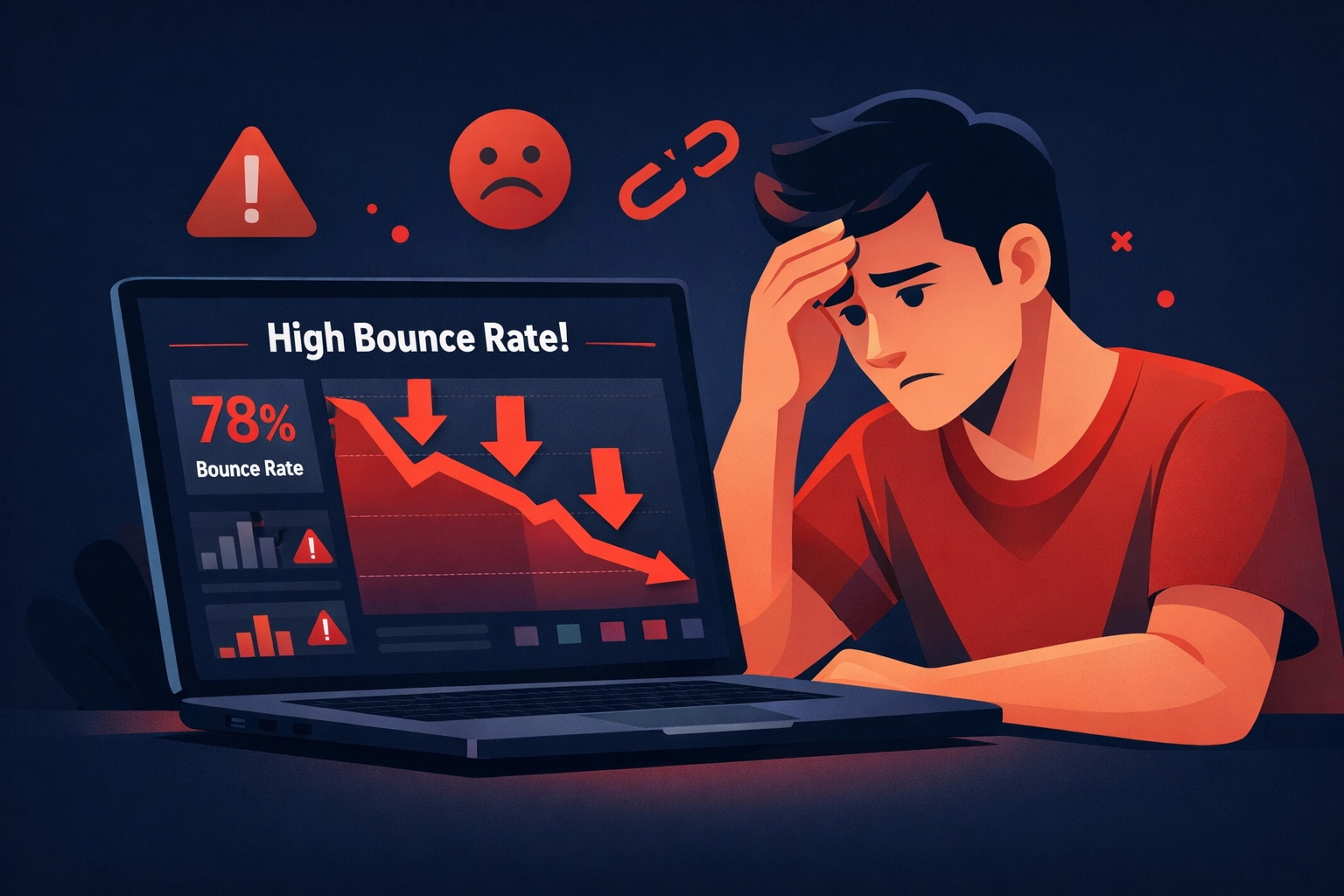
Here’s how it works: someone clicks on your website from Google, takes one look around, and immediately hits the back button. That’s a bounce, and if it’s happening a lot, you’ve got a problem.
A high bounce rate tells you that visitors aren’t finding what they expected or your site isn’t engaging enough to make them stay. Maybe your homepage is confusing. Maybe your content doesn’t match what they searched for. Either way, they’re leaving before adding anything to their cart or filling out your contact form.
Think about it this way, every bounce is a potential customer you’ve lost, often in less than 10 seconds.
You can check your bounce rate in Google Analytics. If you’re seeing rates above 70%, that’s a red flag. Your site isn’t converting visitors into buyers, and that’s directly impacting your bottom line.
2. Your Design Looks Like It’s From 2010
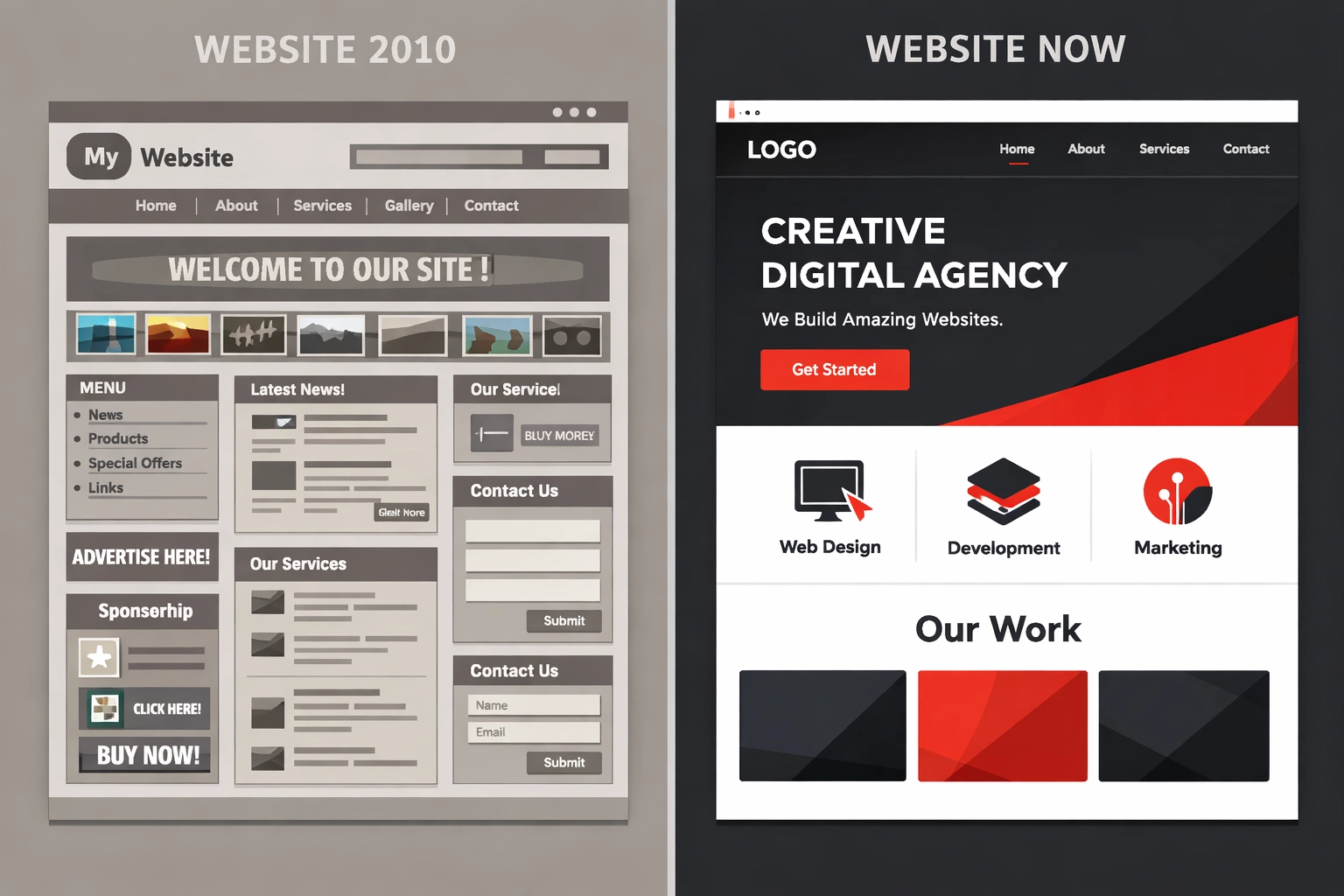
Remember when every website had a Flash intro and music that played automatically? Yeah, those days are gone.
Here’s the thing: users form their first impression of your website within three seconds. Three seconds. If your design looks dated: think tiny fonts, cluttered layouts, or those carousel sliders that nobody clicks through: visitors will assume your business is outdated too.
An old-fashioned design undermines trust. Potential customers might question whether you’re still in business or if you take your work seriously. When someone lands on a site that looks like it hasn’t been touched since the early 2010s, they wonder what else you’re not keeping up with.
Modern web design isn’t about following trends for the sake of it. It’s about creating a professional, trustworthy first impression that makes people want to stick around and learn more about what you offer.
3. Your Pages Load Slower Than a Monday Morning
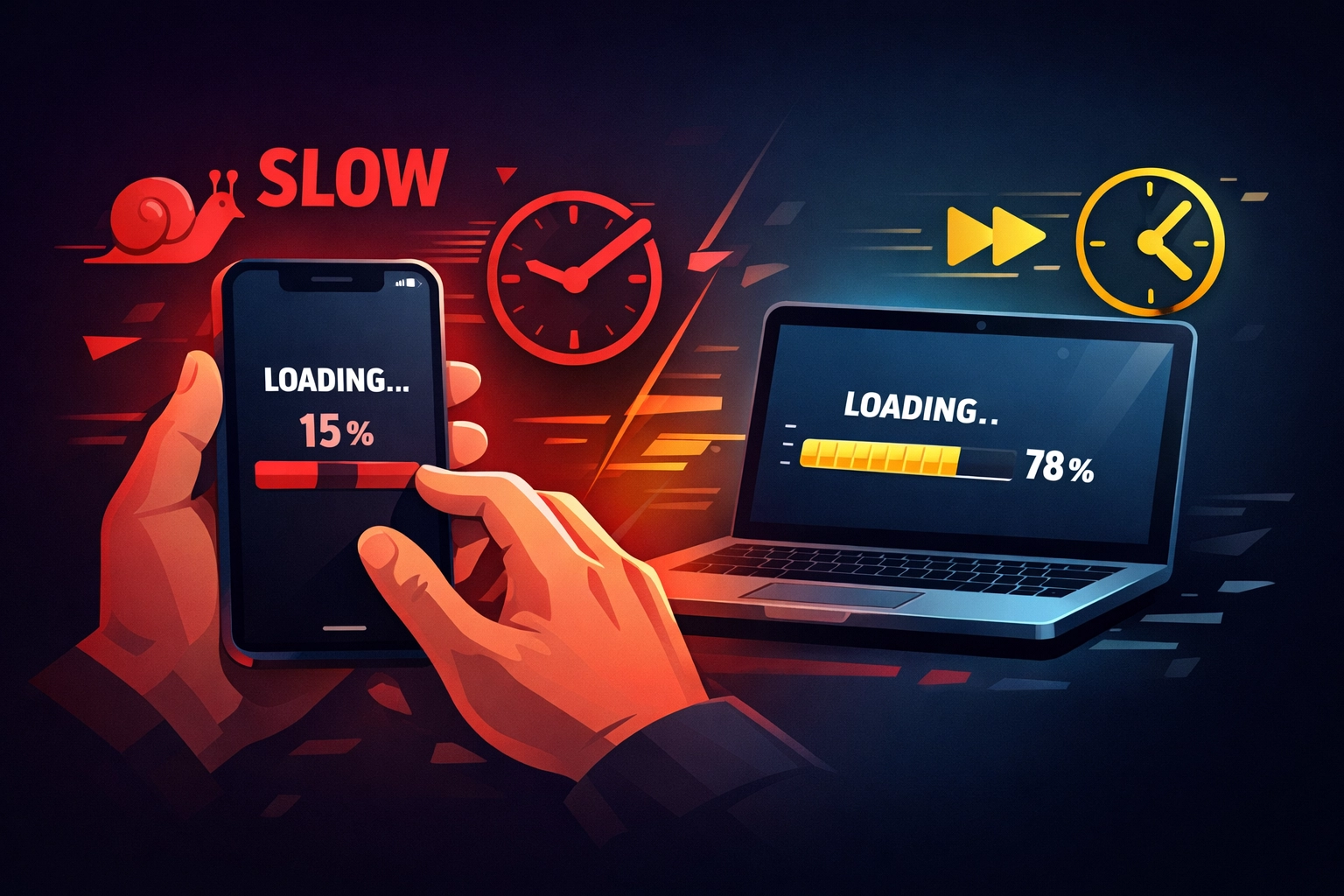
This one’s brutal: 40% of users will abandon your website if it takes more than three seconds to load.
Three seconds might not sound like much, but in internet time, it’s an eternity. If your homepage is taking 5, 6, or 7 seconds to appear, you’re watching potential sales disappear before your content even loads.
Slow loading speeds frustrate users. They’re searching for information or products, and if your site makes them wait, they’ll simply go to a competitor whose site loads faster. It’s that simple.
Why does this happen? Usually, it’s oversized images, outdated code, or cheap hosting that can’t handle your traffic. The technical bits can be fixed, but first you need to acknowledge the problem.
You can test your site speed using Google PageSpeed Insights. If you’re scoring below 50 on mobile, you’re losing customers every single day.
4. Your Content Is Gathering Digital Dust
When was the last time you updated your website content? If you’re not sure, that’s already a problem.
Stale content sends a clear message to visitors: you’re not paying attention to your business. Red flags include blog posts from 2019, event dates that have passed, team photos of people who left years ago, or product information that doesn’t match what you actually sell now.
Here’s what outdated content does:
- Makes visitors question if you’re still operating
- Tells Google your site isn’t relevant anymore
- Demonstrates a lack of care about your online presence
- Provides incorrect information that frustrates potential customers
Fresh content matters because Google prioritises sites that regularly publish helpful, current information. When your content goes stale, your search rankings drop. When your rankings drop, fewer people find you. When fewer people find you, your sales suffer.
It’s a downward spiral that starts with simply not updating your website.
5. You’re Invisible on Google
Speaking of search rankings, let’s address what happens when your website is outdated: you disappear from Google.
Search engines look at dozens of factors when deciding which sites to show in results. An outdated website typically fails on multiple fronts: old code structures, broken links, poor mobile optimisation, and that high bounce rate we talked about earlier.
Google also looks at how long people spend on your site. If they’re bouncing immediately, Google interprets that as “this site isn’t helpful” and stops showing it to searchers.
Think about your own behaviour. When was the last time you clicked through to page three of Google results? Probably never. If your website isn’t appearing on page one (or at least page two) for relevant searches, you’re essentially invisible to potential customers who are actively looking for what you offer.
The connection to sales is direct: no visibility means no traffic, and no traffic means no sales.
6. Your Site Doesn’t Work Properly on Mobile
Here’s a statistic that should wake you up: more than half of all web traffic now comes from mobile devices.
If your website doesn’t adapt properly to smartphones and tablets, you’re turning away a huge portion of your potential customers. We’re talking about people who have to pinch and zoom to read your text, buttons they can’t tap because they’re too small, or layouts that break completely on smaller screens.
A non-responsive website does several damaging things:
- Creates a frustrating user experience that makes people leave
- Hurts your Google rankings (mobile-friendliness is a ranking factor)
- Makes your business look unprofessional and behind the times
- Prevents mobile users from completing purchases or enquiries
You can test your site’s mobile-friendliness using Google’s Mobile-Friendly Test tool. If your site fails, you’re literally pushing away more than half your potential customers.
The fix isn’t optional anymore. It’s essential for survival in today’s market.
7. Nobody’s Filling Out Your Forms or Buying Your Products
Let’s get to the heart of the matter: if your website isn’t generating leads or sales, it’s not doing its job.
This is where everything comes together. An outdated website might have:
- Contact forms that don’t work or are buried three clicks deep
- Weak or missing calls-to-action that don’t tell people what to do next
- Confusing navigation that makes it hard to find products or services
- A checkout process that’s so complicated people give up halfway through
Your website exists to turn visitors into customers. If that’s not happening, you need to ask yourself why people aren’t taking the next step.
Sometimes the answer is obvious: your contact form hasn’t worked in months and nobody told you. Other times it’s more subtle: your calls-to-action don’t stand out, or your value proposition isn’t clear enough to convince someone to get in touch.
The bottom line is this: if your website isn’t generating leads or sales, every day you leave it unchanged is another day of lost revenue.
What You Can Do About It
If you’ve recognised your website in any of these seven signs, don’t panic. Recognition is the first step towards fixing the problem.
Start by running some basic tests: check your site speed, test it on multiple mobile devices, review your Google Analytics bounce rate, and honestly assess when you last updated your content.
Once you know what needs fixing, you can prioritise the changes. Sometimes a few strategic updates can make a massive difference. Other times, you might need a complete redesign to bring your site up to modern standards.
The important thing is to stop letting an outdated website kill your sales. Every visitor who bounces, every mobile user who can’t navigate your site, every potential customer who can’t find you on Google: they all represent lost revenue.
Your website should be your hardest-working salesperson, available 24/7 to attract, engage, and convert customers. If it’s not doing that job effectively, it’s time to make some changes.
Want to talk about bringing your website up to scratch? Get in touch with our team at Bamsh: we specialise in creating websites that actually generate leads and sales, not just look pretty.
Frequently Asked Questions
1. Why might an outdated website be costing me sales?
An outdated website doesn’t just sit there doing nothing. It actively pushes potential customers away, straight into the arms of your competitors.
2. What does a high bounce rate tell me about my website?
A high bounce rate tells you that visitors aren’t finding what they expected or your site isn’t engaging enough to make them stay.
3. How quickly do users judge my website design?
Users form their first impression of your website within three seconds, and if it looks dated, they may assume your business is outdated too.
4. Why does an old website design affect trust?
An old-fashioned design undermines trust and can make potential customers question whether you’re still in business or take your work seriously.
5. How does slow loading speed impact my website performance?
40% of users will abandon your website if it takes more than three seconds to load, meaning potential sales are lost before your content appears.
6. What are the risks of having outdated website content?
Outdated content makes visitors question if you’re still operating, tells Google your site isn’t relevant, and can provide incorrect information.
7. Why can an outdated website make me invisible on Google?
An outdated website typically fails on multiple fronts, which signals to Google that your site isn’t helpful and reduces your visibility in search results.
8. How important is mobile optimisation for my website?
More than half of all web traffic comes from mobile devices, so if your site doesn’t work properly on mobile, you are turning away a large number of potential customers.
9. What happens if my website isn’t generating leads or sales?
If your website isn’t generating leads or sales, it isn’t doing its job, and every day it remains unchanged results in lost revenue.
10. What should I do if my website shows these warning signs?
Start by checking your site speed, testing it on mobile devices, reviewing your analytics, and updating your content to improve performance.