

Over 60 percent of businesses report that generating quality leads is their biggest challenge. In a world where customer attention is fiercely competed for, understanding how to attract and convert genuine interest can make the difference between floundering and thriving. This guide reveals the process, strategies, and key methods behind lead generation, helping you build reliable customer pipelines and drive real business growth.
Table of Contents
- What Is Lead Generation In Business?
- Main Types Of Lead Generation Methods
- How Lead Generation Works Online And Offline
- Essential Tools And Technology For Success
- Costs, ROI, And Risks Of Lead Generation
- Common Lead Generation Mistakes To Avoid
Key Takeaways
| Point | Details |
|---|---|
| Importance of Lead Generation | Lead generation is crucial for business growth, turning potential customers into valuable prospects through targeted strategies. |
| Diverse Methods for Attraction | Successful lead generation relies on integrating various digital, traditional, and inbound methods for a comprehensive approach. |
| Utilization of Technology | Technologies like CRM systems and AI tools are essential for tracking and enhancing lead generation efforts. |
| Risks and ROI Considerations | It’s important to understand cost structures, potential risks, and aim for a strategic ROI in lead generation initiatives. |
What Is Lead Generation In Business?
Lead generation is the strategic process of identifying, attracting, and converting potential customers into individuals who have expressed interest in your company’s products or services. According to research from Leeds Beckett University, this process is critical for driving business growth, particularly within consultancy industries where cultivating potential client relationships determines long-term success.
Lead generation transforms cold market contacts into warm prospects by creating targeted interactions that demonstrate value. Think of it like fishing: instead of casting a wide net randomly, you’re using precise techniques to attract exactly the type of fish (customers) your business wants. These potential customers might engage through multiple channels like website forms, social media interactions, email inquiries, or telephone consultations.
The core objective of lead generation goes beyond simply collecting contact details. It’s about creating meaningful connections that move potential customers through a carefully designed sales funnel. As UK Government Research indicates, successful suppliers use sophisticated methods to initiate and nurture initial customer contacts.
Effective lead generation strategies typically involve:
- Developing compelling content that addresses customer pain points
- Utilising targeted digital marketing techniques
- Creating engaging website experiences
- Implementing strategic email marketing campaigns
- Leveraging social media platforms for direct customer interaction
For small and medium-sized businesses, lead generation isn’t just a marketing tactic—it’s a fundamental survival strategy. By consistently attracting and converting potential customers, businesses can build a predictable revenue stream and sustainable growth model.
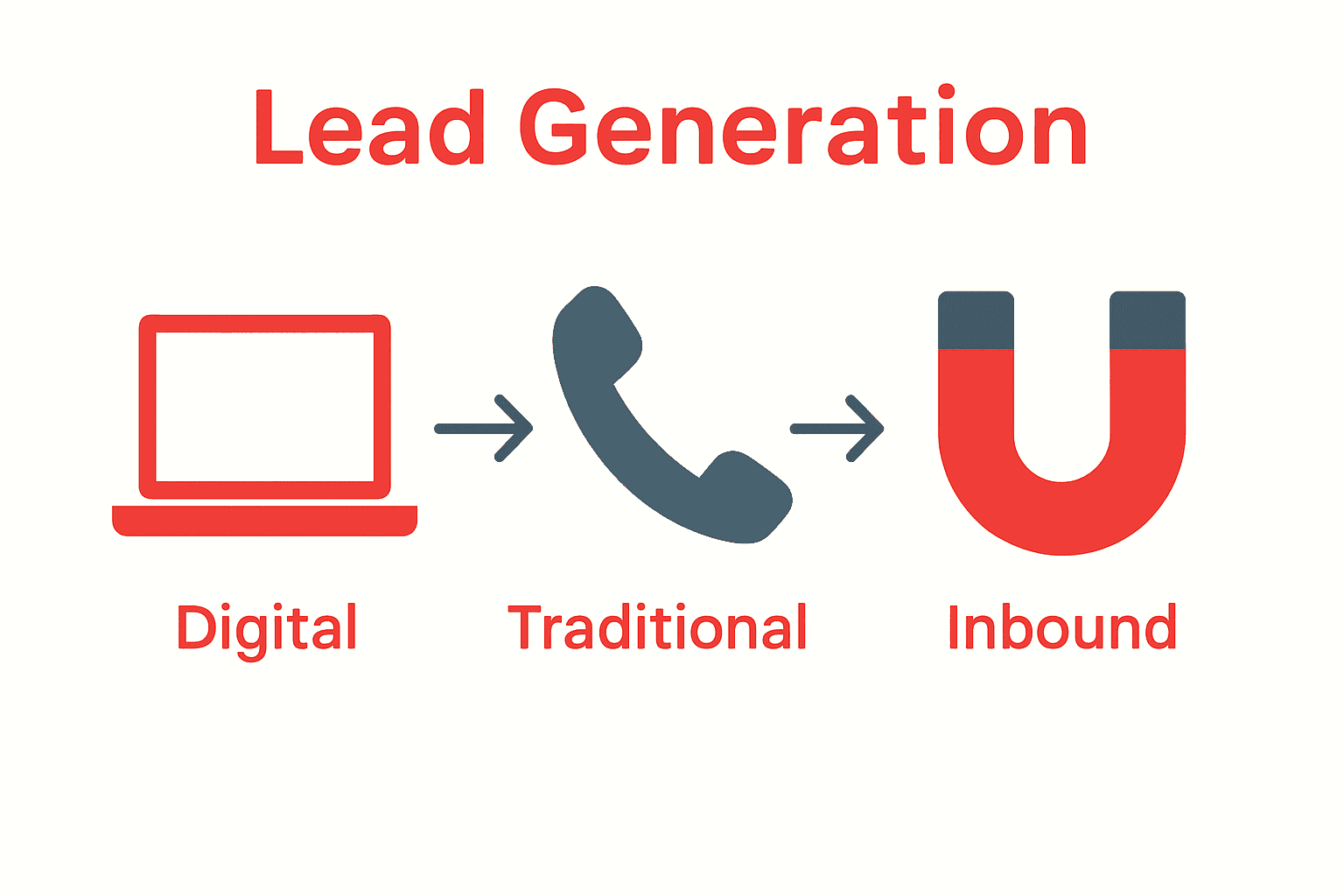
Main Types Of Lead Generation Methods
Lead generation encompasses a diverse range of strategies that businesses can leverage to attract and convert potential customers. Leeds Beckett University research highlights that successful companies employ multiple methods, recognising that no single approach works universally across all industries and market segments.
Digital Marketing Channels represent the most dynamic and adaptable lead generation method in today’s business landscape. These include:
- Search engine optimisation (SEO)
- Pay-per-click advertising
- Social media marketing
- Content marketing
- Email marketing campaigns
- Webinars and online events
Traditional Outbound Lead Generation methods remain relevant, as indicated by UK Government Research. These approaches involve direct communication with potential customers through:
- Telesales
- Print advertising
- Trade show participation
- Networking events
- Direct mail campaigns
Inbound Lead Generation focuses on creating valuable content and experiences that naturally attract potential customers. This approach includes:
- Blogging
- Video tutorials
- Downloadable resources
- Podcasts
- Interactive tools and calculators
The most effective lead generation strategies integrate multiple methods, creating a comprehensive approach that captures potential customers through diverse touchpoints. By understanding and implementing a mix of digital, traditional, and inbound techniques, businesses can build a robust pipeline of potential customers and drive sustainable growth.
How Lead Generation Works Online And Offline
Lead generation is a sophisticated process that bridges digital and traditional marketing strategies, creating a comprehensive approach to attracting potential customers. Leeds Beckett University research emphasises the critical importance of integrating online and offline methods to create a holistic lead generation ecosystem.
Online Lead Generation Mechanics operate through multiple digital touchpoints:
- Website contact forms capture direct inquiries
- Landing pages with targeted content collect email addresses
- Social media platforms enable direct engagement
- Automated email marketing nurtures potential leads
- Retargeting ads reconnect with interested prospects
- Chatbots provide immediate interaction and information gathering
Traditional Offline Lead Generation continues to play a significant role, as confirmed by UK Government Research. These methods include:
- Networking events and industry conferences
- Direct mail campaigns
- Print advertising in trade publications
- Telesales and cold calling
- Referral programmes
- Face-to-face meetings and personal introductions
The most effective lead generation strategies create a seamless omnichannel approach, where online and offline methods complement each other. This means tracking interactions across platforms, understanding customer journey touchpoints, and creating consistent messaging that guides potential customers from initial awareness to final conversion.
Successful businesses recognise that modern lead generation is not about choosing between online or offline methods, but strategically integrating both to create a robust, multi-dimensional approach that meets potential customers wherever they are most comfortable engaging.
Essential Tools And Technology For Success
Leeds Beckett University research underscores the critical role of technological tools in modern lead generation, highlighting how the right software can transform a business’s ability to attract, track, and convert potential customers. The landscape of lead generation technology has evolved dramatically, offering sophisticated solutions that go far beyond simple contact management.
Customer Relationship Management (CRM) Systems form the backbone of effective lead generation technology. These powerful platforms enable businesses to:
- Track and manage customer interactions
- Segment potential leads
- Automate follow-up communications
- Analyse lead conversion rates
- Integrate multiple communication channels
- Provide real-time performance insights
UK Government Research highlights the importance of digital tools in lead generation. Key technological solutions include:
- Email marketing platforms
- Social media management tools
- Analytics and tracking software
- Chatbot and live chat systems
- Landing page and form builders
- Lead scoring and qualification tools
Artificial Intelligence (AI) Technologies are revolutionising lead generation, offering unprecedented capabilities in:
- Predictive lead scoring
- Automated personalised communication
- Advanced customer behaviour analysis
- Intelligent chatbot interactions
- Dynamic content personalisation
- Automated lead nurturing workflows
The most successful businesses understand that technology is not a replacement for human interaction, but a powerful amplifier of human capabilities. By strategically implementing these tools, companies can create more intelligent, responsive, and efficient lead generation systems that adapt to changing customer needs and behaviours.

Costs, ROI, And Risks Of Lead Generation
Leeds Beckett University research reveals that lead generation is a complex financial equation where understanding potential costs, returns, and inherent risks becomes critical for business success. Smart businesses approach lead generation not as an expense, but as a strategic investment with measurable outcomes.
Cost Structures in lead generation vary significantly across different channels:
- Digital marketing: £500 – £5,000 monthly
- Pay-per-click advertising: £1 – £50 per lead
- Content marketing: £1,000 – £3,000 per month
- Social media advertising: £200 – £2,000 monthly
- Email marketing campaigns: £300 – £1,500 monthly
- Professional lead generation services: £1,500 – £10,000 monthly
UK Government Research highlights critical Risk Factors businesses must consider:
- Inconsistent lead quality
- High acquisition costs
- Potential marketing budget wastage
- Limited conversion rates
- Data privacy compliance challenges
- Technology integration complexities
Return on Investment (ROI) calculations demand a strategic approach. Successful businesses typically aim for:
- Customer acquisition cost below 20% of lifetime value
- Conversion rates between 2-5% across channels
- Lead-to-customer conversion rates of 10-20%
- Minimum three-month tracking period for meaningful insights
Ultimately, effective lead generation requires continuous monitoring, adaptive strategies, and a willingness to experiment. By treating lead generation as a data-driven process, businesses can minimise risks, optimise costs, and create a predictable revenue generation system.
Common Lead Generation Mistakes To Avoid
Leeds Beckett University research reveals that many businesses sabotage their lead generation efforts through predictable yet avoidable mistakes. Understanding these pitfalls is crucial for creating a robust, effective lead generation strategy that consistently delivers quality prospects.
Targeting Errors represent the most fundamental lead generation mistakes:
- Failing to define ideal customer personas
- Broad, unfocused marketing approaches
- Neglecting audience segmentation
- Ignoring demographic and psychographic data
- Using generic messaging that doesn’t resonate
- Misaligning marketing channels with the target audience
UK Government Research highlights critical Strategic Missteps businesses frequently encounter:
- Over-reliance on a single lead generation method
- Inadequate performance tracking
- Poor lead nurturing processes
- Inconsistent follow-up protocols
- Neglecting lead quality assessment
- Insufficient data management
Technical And Operational Mistakes can further compromise lead generation effectiveness:
- Complicated website contact forms
- Slow response times to inquiries
- Lack of clear value proposition
- Minimal trust-building elements
- Ineffective lead scoring mechanisms
- Disconnected marketing and sales processes
Successful lead generation requires a holistic, strategic approach that combines precise targeting, consistent follow-up, and continuous performance optimisation. Businesses must view lead generation as a dynamic, evolving process requiring constant refinement and adaptation.
Unlock Predictable Growth With Bamsh Digital Marketing
Struggling to convert leads consistently or unsure how to integrate both online and offline lead generation methods effectively. Here at Bamsh Digital Marketing, we understand the challenges UK SMEs face when trying to build a reliable pipeline of quality prospects. This complete guide highlights key issues like inconsistent lead follow-up, inefficient sales funnels and unclear ROI — problems we solve with clear strategies and transparent reporting.

Discover how our award-winning services can transform your lead generation through powerful SEO, Google PPC campaigns, tailored social advertising, and automated CRM systems designed to nurture leads while you focus on your business. Start by exploring our latest Special Offers – Bamsh Digital Marketing to find solutions that fit your needs. Ready for a no-jargon conversation about boosting your leads and revenue Book your free 15-minute consultation today at Bamsh Digital Marketing and take the first step towards clarity, growth, and marketing that actually works. For insights and ideas, listen to our Podcasts – Bamsh Digital Marketing and learn how leading businesses generate more leads with confidence.
Frequently Asked Questions
What is lead generation and why is it important for businesses?
Lead generation is the process of identifying, attracting, and converting potential customers into individuals interested in your products or services. It is crucial for driving business growth, especially for SMEs, as it helps build a predictable revenue stream and sustainable growth model.
What are the main types of lead generation methods?
The main types of lead generation methods include digital marketing channels (like SEO, PPC, social media), traditional outbound methods (such as telesales and print advertising), and inbound strategies (including blogging and content marketing). Combining multiple methods creates a comprehensive approach to attract potential customers.
How does online lead generation work?
Online lead generation works through various digital touchpoints, such as website contact forms, targeted landing pages, social media engagement, and automated email marketing. These tools help businesses capture inquiries and nurture potential leads effectively.
What are common mistakes to avoid in lead generation?
Common mistakes in lead generation include failing to define ideal customer personas, neglecting audience segmentation, over-relying on a single lead generation method, inadequate performance tracking, and disconnected marketing and sales processes.