

More than 60 percent of british businesses admit they are unsure about the best way to generate high-quality leads. With fierce competition and changing buyer behaviour, understanding what truly works matters more than ever. This guide clears up common misconceptions surrounding lead generation and provides clear, practical insights so you can build a smarter, more effective strategy for growing your business.
Table of Contents
- Lead Generation Defined And Common Myths
- Major Types Of Lead Generation Methods
- How The Lead Generation Process Works
- Evaluating Channels: Digital Vs. Traditional
- Crucial Costs, Risks, And Mistakes To Avoid
Key Takeaways
| Point | Details |
|---|---|
| Lead Generation is Strategic | It requires collaboration between marketing and sales to effectively attract and convert potential customers. |
| Quality Over Quantity | Focus on generating highly qualified leads rather than simply increasing the number of leads. |
| Ongoing Process | Lead generation should be viewed as a continuous process, requiring regular refinement and adaptation. |
| Hybrid Approach Recommended | Combining digital and traditional methods can create a robust lead generation strategy tailored to specific business needs. |
Lead Generation Defined and Common Myths
Lead generation is the strategic process of attracting and engaging potential customers who might be interested in your business’s products or services. According to Coursera, it’s a critical approach for facilitating business growth by increasing exposure and guiding prospects toward making a purchase.
Lead generation isn’t just about collecting random contact details. It’s a sophisticated method of identifying individuals who demonstrate genuine potential to become paying customers. As Indeed UK highlights, this process requires more than just marketing efforts – it demands close collaboration between marketing and sales teams to be truly effective.
Let’s debunk some common myths about lead generation:
- Myth 1: Lead Generation is Only a Marketing Task
Reality: Successful lead generation requires seamless integration between marketing and sales departments, with both teams working towards common goals. - Myth 2: More Leads Always Mean More Sales
Reality: Quality trumps quantity. A smaller number of highly qualified leads often converts more effectively than a large volume of disinterested contacts. - Myth 3: Lead Generation is a One-Time Activity
Reality: It’s an ongoing, dynamic process that requires continuous refinement, tracking, and adaptation to changing market conditions.
By understanding these nuances, businesses can develop more sophisticated, targeted approaches to attracting and nurturing potential customers. The key is to view lead generation not as a transactional process, but as a strategic relationship-building opportunity.
Major Types of Lead Generation Methods
Lead generation strategies are diverse and multifaceted, designed to attract potential customers through various channels and approaches. According to Unbiased, businesses have multiple methods at their disposal, including referrals, branding and advertising, content marketing, social media marketing, email marketing, and search engine optimization (SEO).
Each lead generation method offers unique advantages and can be strategically tailored to meet specific business objectives. Digital channels have revolutionised how businesses connect with potential customers, providing more targeted and measurable approaches compared to traditional marketing techniques.
Here’s a breakdown of the primary lead generation methods:
- Content Marketing
- Creating valuable, informative content that attracts potential customers
- Includes blog posts, whitepapers, guides, and educational resources
- Establishes thought leadership and builds trust
- Social Media Marketing
- Engaging potential leads through platforms like LinkedIn, Facebook, and Instagram
- Sharing targeted content and running strategic advertising campaigns
- Building brand awareness and generating direct inquiries
- Email Marketing
- Nurturing leads through personalised email communication
- Segmenting audiences for more targeted messaging
- Using automated workflows to guide prospects through the sales funnel
- Search Engine Optimisation (SEO)
- Optimising website content to rank higher in search engine results
- Attracting organic traffic from potential customers searching for relevant solutions
- Building long-term visibility and credibility
- Referral Marketing
- Leveraging existing customer networks to generate new leads
- Implementing referral programmes with incentives
- Utilising word-of-mouth recommendations
Successful lead generation requires a strategic, integrated approach that combines multiple methods. By understanding the strengths of each technique and how they complement each other, businesses can create a robust system for attracting and converting potential customers.
How the Lead Generation Process Works
The lead generation process is a systematic approach to identifying, attracting, and converting potential customers into actual paying clients. According to Act, this process involves strategically guiding prospects through a carefully designed sales funnel, which encompasses attracting potential customers through various channels, capturing their information, nurturing them with relevant content, and ultimately converting them into paying customers.
Lead generation is not a linear process but a dynamic, iterative journey that requires continuous refinement and strategic thinking. The typical workflow involves several critical stages that work together to transform cold leads into warm prospects and eventually loyal customers.
Here’s a detailed breakdown of the lead generation process:
- Attraction Stage
- Identify the target audience and the ideal customer profile
- Create compelling content across multiple channels
- Use SEO, social media, and advertising to increase visibility
- Capture Stage
- Design engaging landing pages and lead magnets
- Create irresistible value propositions
- Implement user-friendly contact forms
- Offer downloadable resources in exchange for contact details
- Nurturing Stage
- Develop personalised email marketing campaigns
- Segment leads based on behaviour and interests
- Provide valuable, targeted content
- Build trust and demonstrate expertise
- Conversion Stage
- Implement lead scoring mechanisms
- Create targeted sales pitches
- Use strategic follow-up techniques
- Convert qualified leads into customers
- Retention and Advocacy
- Continue providing exceptional value
- Develop customer loyalty programmes
- Encourage referrals and testimonials
- Transform customers into brand advocates
Successful lead generation requires a holistic approach that combines technical skills, creative marketing, and a deep understanding of customer psychology. By treating each stage of the process as an opportunity to build meaningful connections, businesses can create a sustainable and effective lead generation system.
Evaluating Channels: Digital vs. Traditional
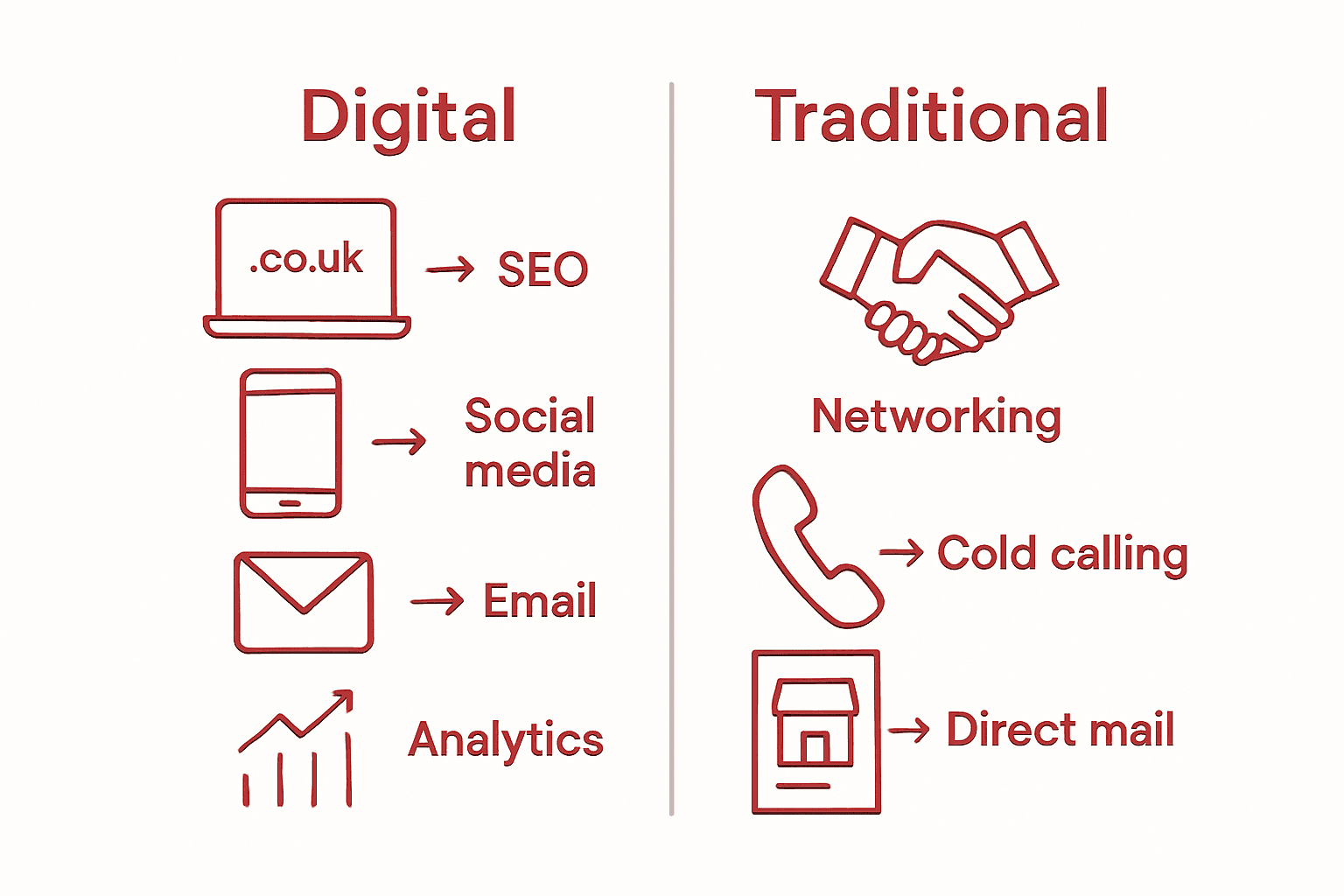
In the modern business landscape, lead generation strategies have evolved to encompass both digital and traditional approaches. According to Outsource Accelerator, digital channels like content marketing, SEO, PPC advertising, and social media marketing offer broad reach and highly measurable results, while traditional methods provide more personal engagement through networking, referrals, direct mail, and cold calling.
Digital marketing channels have revolutionised how businesses approach lead generation, providing unprecedented targeting capabilities and real-time analytics. As UNICCM highlights, these methods allow for targeted outreach and data-driven strategies that can be continuously optimised to improve performance.
Let’s compare the key characteristics of digital and traditional lead generation channels:
Digital Channels Strengths:
- Precise audience targeting
- Comprehensive performance tracking
- Lower cost per lead
- Scalable and repeatable strategies
- Instant communication and feedback
- Global reach
Traditional Channels Strengths:
- Personal, face-to-face interactions
- Building deep professional relationships
- Higher trust in specific industries
- Effective for complex, high-value sales
- Less digital competition
- Tangible marketing materials
Hybrid Approach Recommendation:
The most successful businesses often combine digital and traditional methods, creating a comprehensive lead generation strategy that leverages the unique strengths of each approach. By integrating data-driven digital techniques with the personal touch of traditional networking, companies can create a more robust and flexible lead generation ecosystem.

Ultimately, the most effective channel mix depends on your specific industry, target audience, and business objectives. Continuous testing, measurement, and adaptation are key to discovering the optimal balance between digital and traditional lead generation methods.
Crucial Costs, Risks, and Mistakes to Avoid
Lead generation is a complex process with potential financial and strategic pitfalls that can significantly impact business performance. According to SugarCRM, businesses must carefully navigate key costs associated with advertising, content creation, and technology tools while being acutely aware of potential risks such as targeting the wrong audience or failing to align marketing and sales efforts.
Financial considerations in lead generation extend far beyond simple monetary investments. They encompass not just direct expenses, but also opportunity costs, potential wastage, and the long-term implications of ineffective strategies. Understanding these nuanced financial dynamics is crucial for developing a sustainable and profitable lead generation approach.
Key Risks and Common Mistakes:
- Misaligned Target Audience
- Failing to accurately define the ideal customer profile
- Wasting resources on irrelevant demographic segments
- Creating generic content that doesn’t resonate
- Poor Lead Nurturing
- Neglecting follow-up processes
- Inconsistent communication strategies
- Lack of personalised engagement
- Inadequate Performance Tracking
- Not establishing clear KPIs
- Ignoring critical conversion metrics
- Failing to conduct regular performance analyses
- Technology and Tool Challenges
- Investing in complex systems without proper training
- Choosing tools that don’t integrate effectively
- Overlooking user experience and adaptability
- Budget Misallocation
- Overinvesting in low-performing channels
- Underestimating hidden costs
- Lacking flexible budget adjustment mechanisms
Effective lead generation demands a proactive, data-driven approach that continuously evaluates and refines strategies. By anticipating potential risks, maintaining strategic flexibility, and implementing robust tracking mechanisms, businesses can minimise costly mistakes and develop a more resilient lead generation ecosystem.
Unlock Your UK Business Potential with Strategic Lead Generation
The article uncovers the challenge many UK businesses face: transforming disjointed marketing efforts into a seamless, results-driven lead generation process that attracts the right prospects and nurtures them into loyal customers. Key pain points like misaligned sales and marketing teams, poor lead nurturing, and ineffective channel choice can stall growth and waste vital resources. At Bamsh Digital Marketing, we understand that quality leads and clear communication are crucial for business success in today’s competitive landscape.
Bamsh is here to help you close the gaps highlighted in the article. From boosting your search visibility with tailored SEO & Answer Engine Optimisation to crafting targeted Google Ads and social media campaigns, we focus on helping your ideal customers find and choose you confidently. We also automate lead nurturing with CRM solutions so no enquiries ever slip through the cracks. Experience transparency and measurable results with a team dedicated to honest growth without jargon or guesswork.
Discover practical strategies and real client success stories on our Podcasts – Bamsh Digital Marketing. Don’t miss out on exclusive opportunities to supercharge your growth via our Special Offers – Bamsh Digital Marketing.
Take the first step towards predictable revenue and customer loyalty by booking your free consultation today.
Ready to generate the leads your business deserves? Visit Bamsh Digital Marketing now and let us craft a bespoke lead generation system tailored to your goals.
Frequently Asked Questions
What is lead generation and why is it important?
Lead generation is the strategic process of attracting and engaging potential customers who may be interested in your business’s products or services. It is important for facilitating business growth by increasing exposure and guiding prospects toward making a purchase.
How can I improve the quality of my leads?
To improve lead quality, focus on creating targeted, valuable content that resonates with your ideal audience, utilise effective segmentation in your marketing efforts, and collaborate closely with your sales team to ensure alignment on lead criteria and nurturing processes.
What are some effective lead generation strategies?
Effective lead generation strategies include content marketing, social media marketing, email marketing, search engine optimisation (SEO), and referral marketing. Each method can be tailored to meet specific business objectives and attract potential customers through various channels.
How do I measure the success of my lead generation efforts?
Success in lead generation can be measured by establishing clear key performance indicators (KPIs) such as conversion rates, cost per lead, and lead quality. Regular performance tracking and analysis are essential to evaluate the effectiveness of your strategies and make necessary adjustments.