

Most advice about content marketing skips the basics, yet over 60 percent of British businesses struggle to create content that connects with their target audience. Understanding who you want to reach and setting clear goals make the difference between random posts and real results. This guide walks you through the exact steps British companies can take to build a content marketing strategy that attracts the right attention and supports business growth.
Table of Contents
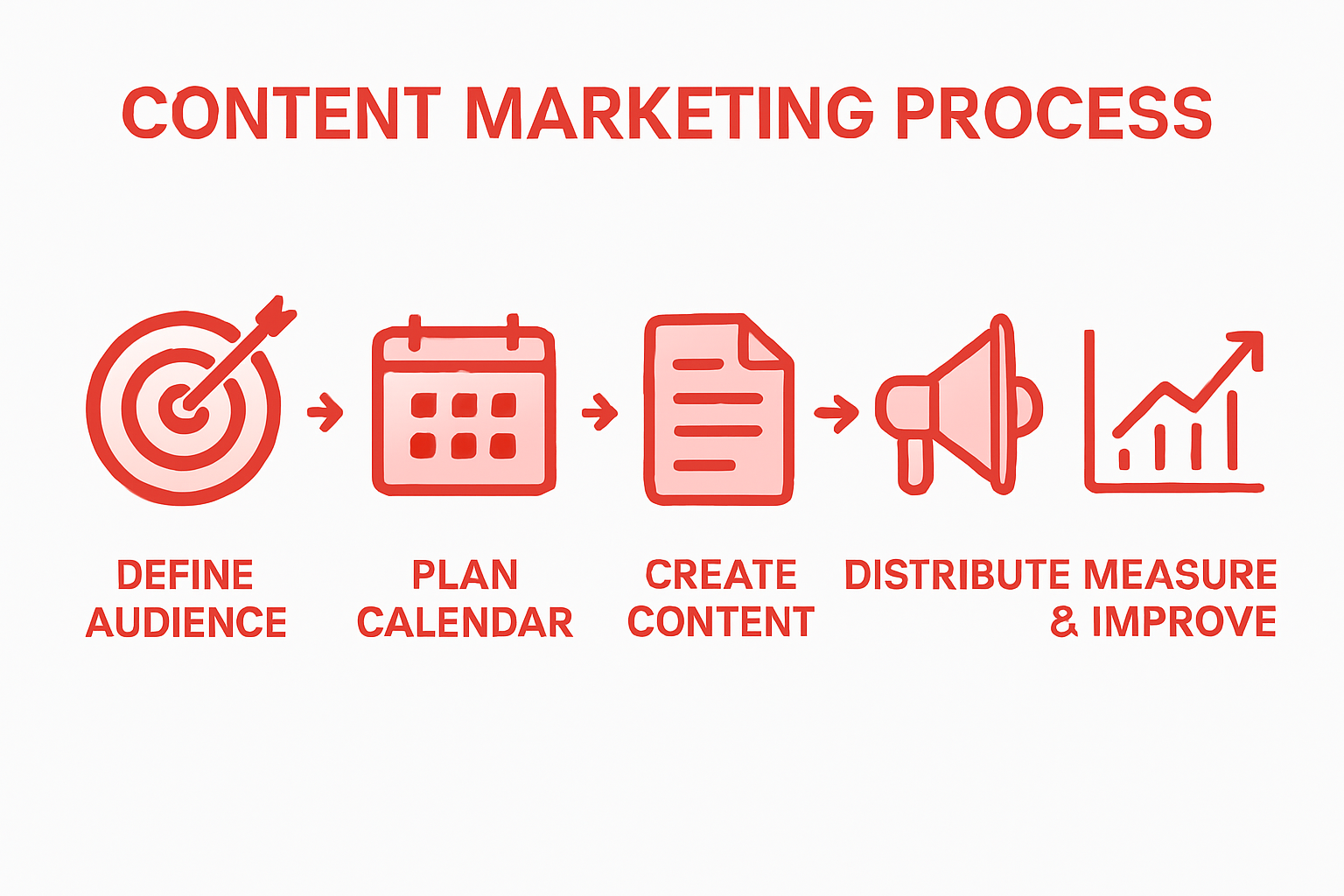
- Stage 1: Define Goals and Target Your Ideal Audience
- Stage 2: Develop a Structured Content Marketing Plan
- Stage 3: Produce Valuable and Relevant Content Assets
- Stage 4: Distribute Content to Maximise Reach
- Stage 5: Measure Performance and Refine Your Strategy
Quick Summary
| Key Point | Explanation |
|---|---|
| 1. Clearly define your goals | Establish measurable marketing objectives that align with business outcomes, like lead generation or brand awareness. |
| 2. Create detailed buyer personas | Develop comprehensive profiles of your ideal customers, focusing on their motivations, pain points, and questions. |
| 3. Build a structured content plan | Develop a content calendar that outlines topics and metrics, aligning production with your marketing goals. |
| 4. Distribute content strategically | Tailor your content for each platform, utilizing both organic and paid channels to enhance engagement. |
| 5. Measure and refine performance | Regularly assess key metrics and adjust your strategy to focus on effective content that drives results. |
Stage 1: Define Goals and Target Your Ideal Audience
Setting crystal clear goals and understanding precisely who you are talking to represents the critical foundation of any successful content marketing strategy. This step transforms your content from random noise into a targeted communication that speaks directly to your potential customers.
To begin, you need to map out specific marketing objectives that align with your business growth. According to strategic planning guidance from Coursera, your goals should be measurable and directly connected to tangible business outcomes. Are you looking to generate more leads? Increase website traffic? Build brand awareness? Establish thought leadership? Each objective requires a different content approach.
Creating a detailed buyer persona is your next crucial task. Think of this as developing a comprehensive profile of your ideal customer that goes beyond basic demographics. You want to understand their pain points, motivations, challenges, and the specific questions they are asking. Business planning resources recommend developing a nuanced understanding of your target audience that allows you to craft content which genuinely resonates.
Pro Tip: When defining your goals, use the SMART framework specific to your business context. Specific. Measurable. Achievable. Relevant. Time bound. This ensures your content strategy remains focused and actionable.
Up next, we will explore how to develop a content strategy that transforms these goals into an executable marketing plan.
Stage 2: Develop a Structured Content Marketing Plan
Building a robust content marketing plan transforms your scattered efforts into a strategic powerhouse that drives measurable business growth. This stage is about creating a systematic roadmap that aligns your content creation with your core business objectives.
Professional marketing strategists recommend developing a comprehensive framework that goes beyond random content production. Start by mapping out your key performance indicators and determining how each piece of content will contribute to your overall marketing goals. This means identifying specific metrics such as lead generation, engagement rates, website traffic, or conversion percentages that will demonstrate your content strategy’s effectiveness.
The core of your plan should include a detailed content calendar that outlines topics, formats, publication dates, and distribution channels. According to strategic planning insights from marketing professionals, your plan needs to be flexible yet structured. Consider developing a quarterly content matrix that allows for strategic adjustments while maintaining consistent messaging and brand voice.
Pro Tip: Always allocate resources for content performance tracking. Implement tools that enable you to measure the real impact of each content piece and be prepared to pivot your strategy based on actual data insights.
Next, we will explore how to create compelling content that genuinely resonates with your target audience.
Stage 3: Produce Valuable and Relevant Content Assets
Creating content that genuinely connects with your audience is the beating heart of an effective content marketing strategy. Your goal is to transform information into valuable resources that solve real problems and provide meaningful insights for your target readers.

Effective content strategies focus on developing high quality materials that directly address your audience’s specific challenges and questions. Start by conducting thorough research into your customers’ most pressing concerns. This means moving beyond surface level topics and diving deep into the genuine pain points that keep your potential clients awake at night. Consider conducting surveys, analysing customer support queries, and reviewing industry forums to uncover authentic content opportunities.
Business information resources recommend a strategic approach to content development that balances various content formats to maintain audience engagement. This could include mixing long form articles, quick reference guides, video tutorials, infographics, and podcast episodes. The key is diversifying your content while maintaining a consistent voice and delivering genuine value in each piece.
Pro Tip: Always prioritise depth and quality over quantity. One meticulously researched, insightful piece of content will outperform ten mediocre articles every single time.
Next, we will explore how to effectively distribute and promote your carefully crafted content assets across multiple channels.
Stage 4: Distribute Content to Maximise Reach
Successful content distribution is about strategically placing your carefully crafted assets where your ideal audience will discover and engage with them. Your goal is to transform great content into a powerful mechanism for attracting and converting potential customers.
Professional marketing strategists recommend a multi channel distribution approach that goes beyond simply posting content online. This means understanding the unique characteristics of each platform and tailoring your content to match audience expectations. LinkedIn might require more professional long form content, while Instagram demands visually compelling graphics and concise messaging. Twitter works best with punchy snippets that drive readers to your longer resources.
Business information experts suggest developing a strategic content distribution plan that leverages both organic and paid channels. Consider creating a distribution matrix that outlines which content types work best on each platform, including social media networks, email newsletters, industry forums, and potential partnership opportunities with complementary businesses. The key is to create a systematic approach that ensures your content reaches the right people at the right time.
Pro Tip: Track the performance of your content across different channels. Not all platforms will deliver equal results, so be prepared to adjust your distribution strategy based on actual engagement metrics.
Next, we will explore how to analyse and optimise your content marketing performance to ensure continuous improvement.
Stage 5: Measure Performance and Refine Your Strategy
Measuring your content marketing performance is not just about collecting numbers it is about transforming raw data into actionable insights that drive continuous improvement. Your ultimate goal is to create a dynamic strategy that evolves based on real world performance and audience engagement.
Content performance analysis requires a comprehensive approach to tracking key metrics that go beyond superficial measurements. Focus on understanding metrics that truly reflect your business objectives such as conversion rates, engagement depth, time spent on page, and actual revenue generated from content. This means looking beyond simple view counts and diving into how your content genuinely influences customer behaviour and purchasing decisions.
Business information experts recommend establishing a robust performance review process that includes regular quarterly assessments of your content strategy. Create a dashboard that tracks your most critical performance indicators, comparing actual results against your original objectives. Pay attention to which types of content generate the most meaningful interactions, which distribution channels deliver the best results, and where potential improvement opportunities exist.
Pro Tip: Implement a quarterly review cycle where you critically analyse your content performance. Be ruthless about cutting underperforming content and doubling down on what genuinely works for your audience.
Next, we will explore advanced techniques for scaling and optimising your content marketing approach to drive sustainable business growth.
Unlock Growth by Mastering Your Content Marketing Process
The article highlights a common challenge many businesses face: transforming a scattered, confusing content marketing effort into a clear, data-driven strategy that truly connects with your ideal audience and drives measurable growth. Pain points like setting SMART goals, developing buyer personas, producing quality content, and optimising distribution resonate deeply with anyone seeking to move beyond guesswork and wasted budget. The emotional weight of wanting to confidently grow your business without marketing jargon or uncertainty is something Bamsh Digital Marketing is specifically designed to address.
At Bamsh, we take pride in helping businesses like yours turn content marketing from a complex strategy into a powerful engine for lead generation and business growth. By focusing on honest, transparent, and results-driven marketing, our expert team offers services tailored to every stage discussed in the article, from SEO and PPC campaigns to AI-powered automation and CRM lead nurturing. Learn more about how we partner with businesses to make this process straightforward and effective by visiting our Bamsh category page.
Are you ready to stop guessing and start growing today? Take 15 minutes now for a free consultation to discover how Bamsh can help you define your content marketing goals and accelerate your revenue with confidence. Don’t miss out on turning your content into a reliable growth system that your ideal customers will find, choose, and stay with. Book your time at https://bamsh.co.uk/15-min/ and explore our Special Offers designed to give you the best start.
Frequently Asked Questions
What are the key steps to master the content marketing process for business growth?
To master the content marketing process, you must first define clear goals and understand your target audience. Then, develop a structured content marketing plan, produce valuable content assets, distribute them effectively, and measure your performance to refine your strategy.
How can I define my target audience for content marketing?
To define your target audience, create detailed buyer personas that include their pain points, motivations, and specific questions they have. Conduct research through surveys or industry forums to gain insights and ensure your content resonates with them.
What metrics should I track to measure my content marketing performance?
You should track metrics that reflect your business objectives, such as conversion rates, engagement depth, and time spent on page. Establish a quarterly performance review process to analyse these metrics and adjust your strategy based on your findings.
How do I create a content calendar for my marketing plan?
To create a content calendar, outline topics, formats, publication dates, and distribution channels all in one document. This will help you maintain consistency and ensure that all content aligns with your business objectives over a set period, like a quarter.
What types of content should I produce to engage my audience?
Produce a variety of content types, such as long-form articles, infographics, video tutorials, and podcasts, to maintain audience engagement. Focus on addressing your audience’s pressing challenges and providing actionable insights that solve their problems.
How can I effectively distribute my content across different channels?
Distribute your content by tailoring it to the unique characteristics of each platform, such as LinkedIn for professional content and Instagram for visual graphics. Develop a distribution matrix that outlines which content types work best on each channel to ensure maximum reach.
Recommended
- Complete Guide to Content Marketing Fundamentals
- Master Content Marketing Workflow for Business Growth
- Mastering Digital Marketing: Strategies for Success
- Mastering SEM Techniques to Drive Digital Growth – Bamsh Digital Marketing
- How to Set Business Goals for Measurable Growth Success – Projector Display
- Content Marketing Process: Complete Expert Breakdown – Jarrod Harman
- How to Develop a Content Strategy for Aligned Business Growth