

Over 80 percent of British businesses now consider digital strategy essential for long-term success. The rapid pace of technological change means having a clear digital plan is no longer optional—it is critical for staying ahead of competitors and meeting evolving market demands. Whether you lead a growing startup or an established company, understanding what makes digital strategy work can help you unlock real value, drive revenue, and future-proof your operations in a fast-moving business world.
Table of Contents
- Defining Digital Strategy For UK Businesses
- Core Components Of Digital Strategy
- How Digital Strategy Boosts Visibility And Leads
- Integrating Digital Tools And Automation Effectively
- Risks, Challenges, And Common Pitfalls
Key Takeaways
| Point | Details |
|---|---|
| Transformational Approach | Digital strategy must align technological capabilities with business objectives to enhance performance and achieve sustainable growth. |
| Core Components | Successful digital strategies encompass technology infrastructure, skills development, and cybersecurity to build a robust digital ecosystem. |
| Continuous Evolution | Digital strategy is an ongoing process that requires regular adaptation to stay responsive to market changes and technological advancements. |
| Proactive Risk Management | Identifying and addressing potential challenges early can prevent disruptions and turn obstacles into opportunities for growth. |
Defining Digital Strategy for UK Businesses
A digital strategy represents a comprehensive roadmap that connects technological capabilities with core business objectives. Unlike generic technology implementation, it involves purposeful integration of digital tools and processes that directly enhance organisational performance. Digital capabilities can boost revenues and reduce operational costs across multiple business dimensions.
For UK businesses, developing an effective digital strategy means understanding how technology interacts with specific organisational goals. The Institute for Manufacturing highlights that a successful digital strategy is not simply about adopting new technologies, but fundamentally transforming how businesses operate, compete, and deliver value. Successful strategies link long-term goals to specific digital initiatives that leverage existing resources and competencies.
Key components of a robust digital strategy typically include:
- Comprehensive technological infrastructure assessment
- Clear alignment with business objectives
- Identification of digital transformation opportunities
- Risk management and cybersecurity considerations
- Continuous learning and adaptation mechanisms
Businesses must recognise that digital strategy is not a one-time project, but an ongoing process of technological integration and strategic refinement. By approaching digital transformation as a dynamic, evolving journey, organisations can create sustainable competitive advantages in an increasingly digital marketplace.
Core Components of Digital Strategy
A comprehensive digital strategy comprises several critical elements that transform technological potential into tangible business outcomes. Successful digital strategies focus on delivering user-centric services that support economic growth while addressing specific organisational objectives. These strategies are not merely technological implementations but holistic approaches to digital transformation.
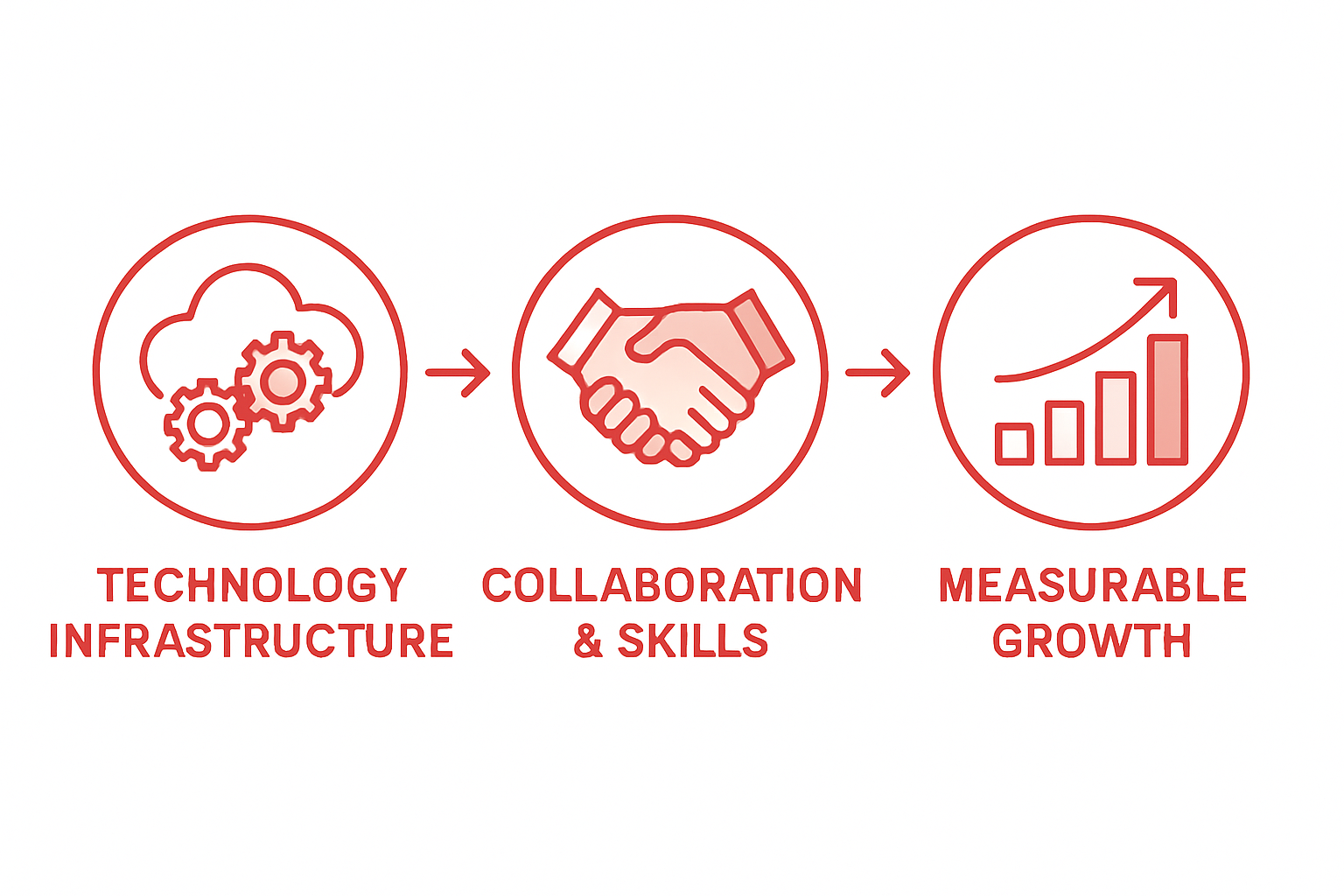
The UK government identifies key foundational components that businesses must consider when developing their digital strategy. Core digital strategy components include building world-class digital infrastructure, enhancing digital skills, and fostering digital sector growth. These elements work synergistically to create a robust digital ecosystem that supports business innovation and competitiveness.
Key core components of an effective digital strategy typically encompass:
- Strategic Technology Infrastructure
- Assessment of current technological capabilities
- Identification of potential technological upgrades
- Scalable and flexible digital architecture
- Digital Skills and Talent Development
- Training programmes for digital literacy
- Recruitment of specialised digital talent
- Continuous learning and upskilling initiatives
- Cybersecurity and Risk Management
- Comprehensive security protocols
- Data protection strategies
- Regular vulnerability assessments
- User-Centric Digital Services
- Customer experience optimisation
- Seamless digital interaction channels
- Personalisation and adaptive technologies
Businesses must recognise that digital strategy is an ongoing journey of adaptation and innovation. By embracing these core components, organisations can create a dynamic digital framework that not only responds to current market demands but also anticipates future technological trends, ensuring sustained growth and competitive advantage.
How Digital Strategy Boosts Visibility and Leads
A robust digital strategy serves as a powerful engine for business growth, transforming online presence into tangible commercial opportunities. Small and medium-sized enterprises with a strong web presence grow more than twice as quickly as those with minimal digital engagement, highlighting the critical importance of strategic digital visibility.

Digital strategies unlock multiple pathways for lead generation and business expansion. By leveraging advanced digital tools and platforms, businesses can create targeted marketing approaches that connect directly with potential customers. Data-driven automation can enhance business productivity by approximately 10 percent, demonstrating how strategic digital approaches translate into measurable performance improvements.
Key mechanisms through which digital strategy amplifies business visibility and lead generation include:
- Search Engine Optimisation (SEO)
- Improving website rankings
- Increasing organic traffic
- Enhancing digital discoverability
- Content Marketing
- Creating valuable, targeted content
- Establishing thought leadership
- Building audience trust
- Targeted Digital Advertising
- Precision audience targeting
- Cost-effective lead acquisition
- Measurable marketing performance
- Data Analytics and Insights
- Understanding customer behaviour
- Personalising marketing approaches
- Continuous strategy refinement
Successful digital strategies transcend traditional marketing boundaries, creating dynamic ecosystems where businesses can connect, engage, and convert potential customers with unprecedented precision and efficiency. By embracing a holistic digital approach, organisations can transform their online presence from a passive digital brochure into an active, revenue-generating platform.
Integrating Digital Tools and Automation Effectively
Successful digital transformation requires a strategic approach to integrating digital tools and automation that goes beyond mere technological implementation. Businesses using data to automate functions and inform decisions can enhance productivity by approximately 10 percent, demonstrating the tangible benefits of thoughtful digital integration.
Digital services must be designed to be convenient, easy to use, and aligned with achieving specific business objectives. This approach ensures that automation becomes a powerful mechanism for improving operational efficiency, reducing costs, and creating more responsive business processes.
Key considerations for effective digital tool and automation integration include:
- Technology Assessment
- Evaluate current technological infrastructure
- Identify potential automation opportunities
- Assess compatibility with existing systems
- Process Mapping
- Analyse current business workflows
- Identify repetitive or time-consuming tasks
- Design automation strategies
- Staff Training and Engagement
- Develop digital literacy programmes
- Create change management strategies
- Support staff through technological transitions
- Continuous Improvement
- Implement performance monitoring systems
- Regularly review automation effectiveness
- Adapt and refine digital tools
The ultimate goal of digital tool integration is not to replace human expertise but to augment and empower teams. By carefully selecting and implementing automation technologies, businesses can create more intelligent, efficient, and responsive organisational ecosystems that drive innovation and competitive advantage.
Risks, Challenges, and Common Pitfalls
Digital transformation presents significant challenges that can derail even the most well-intentioned strategic initiatives. Fewer than 20 percent of UK enterprises effectively use software to share information across their organisation, revealing a critical gap in digital integration that can severely limit business performance and competitive positioning.
Businesses must carefully redesign information systems, transactions, and digital engagement to align with authentic user needs. Failing to do so can result in technological investments that generate minimal returns and create additional operational complexity instead of solving fundamental business challenges.
Common digital strategy risks and challenges include:
- Technology Misalignment
- Selecting inappropriate digital tools
- Inadequate integration with existing systems
- Overlooking scalability requirements
- Skills and Cultural Resistance
- Limited digital literacy
- Employee reluctance to change
- Insufficient training programmes
- Cybersecurity Vulnerabilities
- Weak data protection protocols
- Insufficient threat monitoring
- Inadequate backup and recovery systems
- Financial Miscalculations
- Underestimating implementation costs
- Poor return on technology investment
- Hidden ongoing maintenance expenses
Successful digital strategy requires a nuanced, holistic approach that anticipates potential challenges. By proactively identifying and addressing these risks, businesses can transform potential obstacles into opportunities for strategic growth, ensuring that digital transformation becomes a catalyst for innovation rather than a source of operational disruption.
Unlock Your Business Growth with a Clear Digital Strategy
The article highlights the critical challenge UK businesses face in developing a digital strategy that truly aligns technology with business goals to drive growth and boost visibility. Key pain points like selecting the right digital tools, overcoming digital skills gaps, and turning online presence into steady lead generation resonate deeply with many organisations aiming to stay competitive. Concepts such as SEO, automation, and user-centric digital services show how a well-crafted digital strategy can transform your business operations and customer engagement.
At Bamsh Digital Marketing, we understand these challenges and specialise in delivering tailored solutions that help you achieve measurable results. Our services cover everything from SEO & Answer Engine Optimisation to CRM Setup & Automated Lead Nurturing, designed specifically to help your ideal customers find you, choose you, and stay with you. With our transparent, no-jargon approach, you know exactly how your investment converts into growth.
Ready to overcome digital confusion and create a thriving, scalable digital strategy? Discover how we can help your organisation build a sustainable competitive advantage. Book your free 15-minute consultation today at https://bamsh.co.uk/15-min/ and take the first step towards smarter business growth.
Frequently Asked Questions
What is a digital strategy?
A digital strategy is a comprehensive roadmap that connects technological capabilities with core business objectives, enhancing organisational performance through purposeful integration of digital tools and processes.
How can a digital strategy drive business growth?
A digital strategy can drive business growth by improving online visibility, generating leads, enhancing customer engagement, and creating operational efficiencies through the use of digital tools and automation.
What components are essential for an effective digital strategy?
Key components of an effective digital strategy include a strategic technology infrastructure, digital skills and talent development, cybersecurity and risk management, and user-centric digital services.
What are common pitfalls in digital strategy implementation?
Common pitfalls include technology misalignment, skills and cultural resistance, cybersecurity vulnerabilities, and financial miscalculations that can limit the effectiveness of digital initiatives.