

Most advice about SEO leaves british businesses confused and chasing quick fixes that rarely last. With search engines responsible for directing more than 50 percent of all website traffic, truly understanding SEO is vital for growing your online presence and reaching real customers. This guide clarifies what SEO actually means, reveals the core principles that matter, and helps British companies focus on what drives lasting results.
Table of Contents
- SEO Defined: Purpose And Core Principles
- SEO Types: Local, Technical, And Content Approaches
- How SEO Drives Visibility And Leads
- Measuring Success: Key Metrics And Outcomes
- Common SEO Pitfalls And How To Avoid Them
Key Takeaways
| Point | Details |
|---|---|
| Understanding SEO’s Purpose | SEO enhances online visibility, connecting businesses with ideal customers through organic search results. It’s about creating valuable content that meets user needs and complies with technical standards. |
| Types of SEO Strategies | Local SEO, Technical SEO, and Content SEO are essential components that cater to different business objectives and market needs. Each type offers unique methods to improve visibility and engagement. |
| Driving Visibility and Leads | Effective SEO attracts potential customers by directly addressing their queries, thus transforming digital marketing into a targeted strategy. High-quality, relevant content is crucial for achieving this. |
| Measuring SEO Success | Businesses should focus on key metrics like organic traffic, conversion rates, and engagement to assess their SEO effectiveness. Tracking these indicators helps refine strategies for better outcomes. |
SEO Defined: Purpose and Core Principles
Search Engine Optimisation (SEO) represents a strategic approach businesses use to enhance their online visibility and attract potential customers through organic search results. At its core, SEO is about understanding how search engines evaluate and rank web content, then strategically optimising your digital presence to meet those criteria. Modern SEO strategies have evolved far beyond simple keyword stuffing, now encompassing a holistic approach to digital communication and audience engagement.
The fundamental purpose of SEO goes beyond merely appearing in search results. It’s about connecting businesses with their ideal customers precisely when they’re seeking solutions. Search engines like Google use complex algorithms that assess multiple factors, including content relevance, website authority, user experience, and technical performance. Successful SEO means creating high-quality, informative content that directly answers user queries while ensuring your website meets technical standards that make it easy for search engines to understand and rank.
Core SEO principles include creating valuable content, optimising website structure, building credible backlinks, and ensuring technical excellence. This means developing web pages that load quickly, work seamlessly on mobile devices, contain clear and descriptive content, and provide genuine value to visitors. Unlike paid advertising, SEO builds long-term digital visibility by establishing your website as a trusted, authoritative resource in your industry. By consistently producing helpful content and maintaining a technically sound website, businesses can attract organic traffic that is more likely to convert into genuine leads and customers.
Pro Tip – SEO Strategy Insight: Focus on creating comprehensive, answer-driven content that genuinely helps your target audience solve their problems, rather than writing purely for search engine algorithms.
SEO Types: Local, Technical, and Content Approaches
SEO is not a one-size-fits-all strategy but rather a nuanced approach with distinct types that address different business needs. Local SEO, technical SEO, and content SEO represent three critical pillars businesses must understand to create a comprehensive digital marketing strategy. The essential guide to investing in local SEO highlights how these specialised approaches can dramatically improve online visibility for businesses targeting specific geographic markets.
Local SEO focuses on optimising a business’s online presence to attract customers from specific geographic areas. This approach is crucial for small businesses, restaurants, service providers, and physical retail locations. Key tactics include claiming and optimising Google Business Profile listings, gathering local customer reviews, ensuring consistent business name, address, and phone number (NAP) information across online directories, and creating location-specific content that resonates with local audiences. For businesses serving specific regions like Bristol, Cardiff, or the South West, local SEO can mean the difference between being discovered or overlooked by potential customers.
Technical SEO and content SEO represent the foundational infrastructure and storytelling aspects of search engine optimisation. Technical SEO involves optimising website architecture, improving page load speeds, ensuring mobile responsiveness, implementing secure protocols, creating clear site structures, and making websites easily crawlable by search engine robots. Content SEO, meanwhile, focuses on creating high-quality, relevant content that directly answers user queries, incorporates strategic keywords naturally, and provides genuine value to readers. This approach goes beyond simple keyword placement, demanding a deep understanding of audience needs, search intent, and comprehensive content development.
To clarify the main SEO types and their unique benefits, see the table below:
| SEO Type | Primary Focus | Best Suited For | Key Business Benefit |
|---|---|---|---|
| Local SEO | Geographic targeting and presence | High street and regional firms | Drives local customer visits |
| Technical SEO | Site infrastructure and performance | All online businesses | Improves crawlability and UX |
| Content SEO | High-quality, relevant content | Information-driven websites | Engages and informs customers |
Pro Tip – Strategic SEO Integration: Treat SEO as an interconnected ecosystem where local targeting, technical performance, and compelling content work together seamlessly to attract and engage your ideal customers.
How SEO Drives Visibility and Leads
Search engine optimisation transforms digital marketing from a passive broadcasting approach to an intelligent, targeted strategy for attracting potential customers precisely when they’re seeking solutions. Lead generation strategies for UK businesses reveal that effective SEO acts as a powerful magnet, drawing qualified prospects directly to your digital doorstep by understanding and matching user search intent. Unlike traditional advertising, which interrupts potential customers, SEO positions your business as the answer to their specific queries.

The mechanics of driving visibility and leads through SEO are rooted in understanding user behaviour and search algorithms. When businesses create content that directly addresses their target audience’s questions, challenges, and needs, they increase their chances of ranking higher in search results. This means developing comprehensive, authoritative content that demonstrates expertise, answers complex queries, and provides genuine value. Successful SEO strategies go beyond simple keyword placement, focusing instead on creating a holistic user experience that search engines recognise as genuinely helpful and relevant.
Businesses can leverage SEO to drive leads through multiple strategic approaches. This includes developing targeted content that speaks directly to specific customer pain points, optimising website architecture to improve user experience, and building credible backlinks that establish domain authority. Local businesses, particularly those serving specific regions like Bristol or Cardiff, can benefit immensely from geographically targeted SEO strategies that connect them with nearby customers actively searching for their services. Technical optimisations such as improving page load speeds, ensuring mobile responsiveness, and creating clear site structures further enhance a website’s ability to convert interested visitors into potential leads.
Pro Tip – Strategic Lead Generation: Treat your website as a 24/7 digital sales representative by creating content that not only attracts visitors but actively answers their most pressing questions and guides them towards taking action.
Measuring Success: Key Metrics and Outcomes
Measuring SEO success requires a comprehensive approach that goes beyond simple rankings, diving deep into meaningful performance indicators that directly impact business growth. SEM techniques to drive digital growth demonstrate that effective measurement involves tracking multiple interconnected metrics that reveal the true impact of search engine optimisation strategies. Key performance indicators (KPIs) provide businesses with a clear roadmap for understanding their digital marketing effectiveness and return on investment.
The most critical SEO metrics businesses should track include organic traffic volume, conversion rates, keyword rankings, and engagement metrics. Organic traffic represents the number of visitors arriving through unpaid search results, serving as a fundamental indicator of SEO performance. Conversion rates reveal how effectively that traffic translates into tangible business outcomes like enquiries, sales, or sign-ups. Keyword rankings show a website’s visibility for specific search terms, while engagement metrics such as time on page, bounce rate, and pages per session provide insights into content quality and user experience. These metrics work together to paint a comprehensive picture of a website’s digital performance.
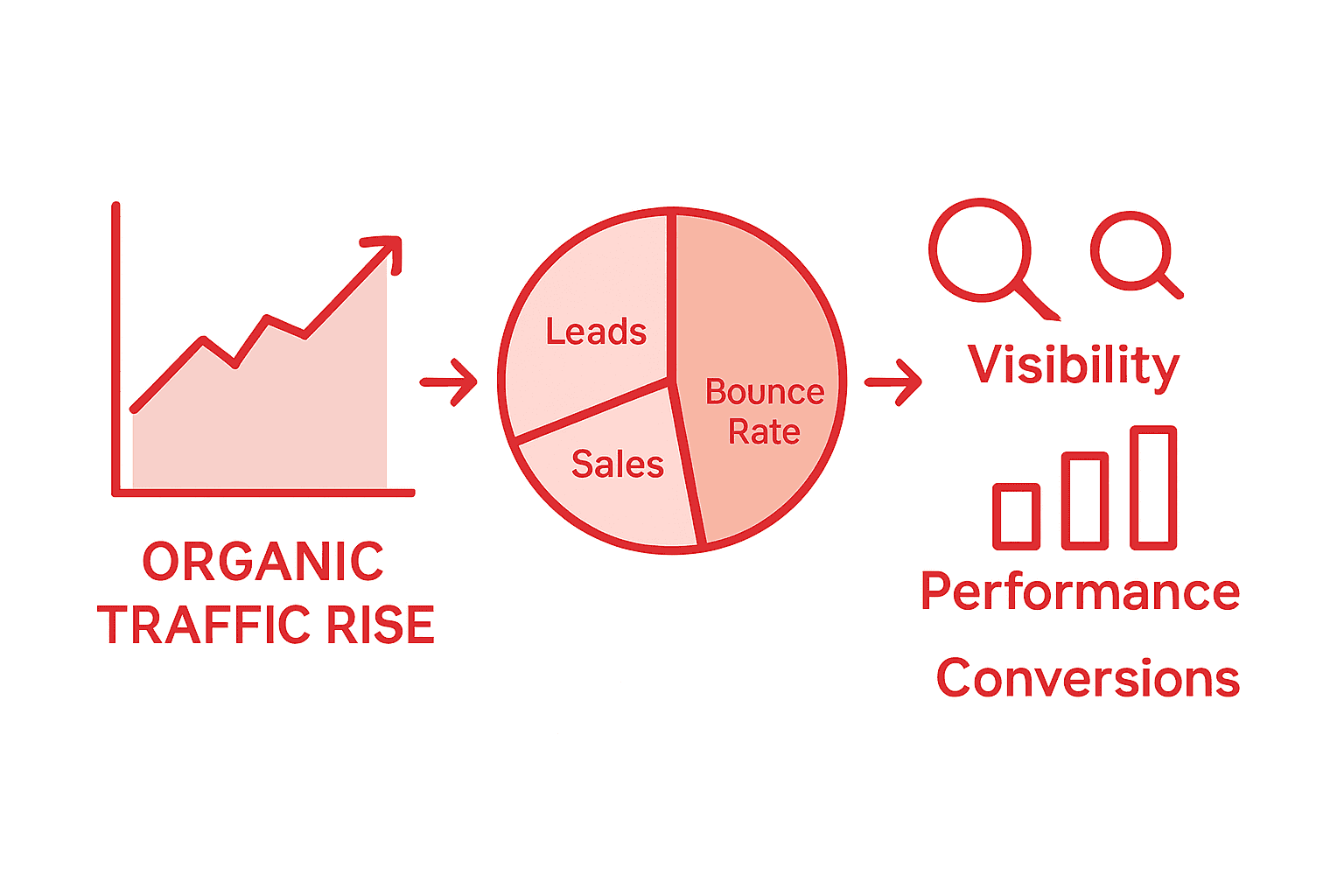
Advanced SEO measurement involves sophisticated tracking of user behaviour and business impact. Businesses should implement tools like Google Analytics and Google Search Console to gain granular insights into their digital performance. Tracking metrics such as click-through rates, domain authority, backlink quality, and local search visibility can help businesses refine their strategies. For local businesses in regions like Bristol or Cardiff, additional metrics like Google Business Profile interactions, phone call enquiries, and location-based search rankings become particularly important. By developing a nuanced understanding of these metrics, businesses can continuously optimise their digital presence and drive more targeted, high-quality traffic.
For a snapshot of critical SEO metrics and what they reveal about your site’s performance, refer to this comparison:
| Metric | What It Shows | Why It Matters |
|---|---|---|
| Organic Traffic | Volume of unpaid search visitors | Indicates SEO reach and growth |
| Conversion Rate | Visitor-to-lead or sale ratio | Reveals business outcomes |
| Engagement Time | Average time spent per page | Reflects content relevance |
| Keyword Position | Search ranking for target phrases | Drives visibility and clicks |
Pro Tip – Metric Mastery: Focus on tracking metrics that directly correlate with business revenue, not just vanity numbers like total website visits, to understand the true impact of your SEO efforts.
Common SEO Pitfalls and How to Avoid Them
Navigating the complex world of search engine optimisation requires understanding the most prevalent mistakes businesses make that can significantly hinder their digital visibility. The ongoing debate about SEO versus content strategies highlights how businesses often misunderstand the nuanced relationship between technical optimisation and meaningful content creation. Common SEO pitfalls range from technical oversights to strategic misconceptions that can derail even the most well-intentioned digital marketing efforts.
One of the most significant mistakes businesses make involves keyword misuse and content quality. Many organisations still approach SEO through outdated tactics like keyword stuffing, creating content that reads artificially and provides little genuine value to readers. Successful SEO demands a sophisticated approach: creating comprehensive, authoritative content that genuinely addresses user questions while naturally incorporating relevant keywords. This means developing in-depth articles, guides, and resources that demonstrate expertise, answer complex queries, and provide real insights rather than superficial, algorithm-focused content.
Technical SEO pitfalls can be equally destructive to a business’s online visibility. Common issues include slow website loading speeds, poor mobile responsiveness, complicated site structures, and inadequate metadata. Businesses must invest in technical infrastructure that makes their websites both user-friendly and search engine-friendly. This involves optimising image sizes, implementing clean URL structures, ensuring fast load times across all devices, creating clear navigation paths, and developing structured data that helps search engines understand page content. For local businesses in regions like Bristol and Cardiff, additional considerations include maintaining consistent local business information and leveraging location-specific SEO strategies.
Pro Tip – SEO Strategy Refinement: Regularly audit your website’s performance using professional tools, focusing on user experience and technical health rather than chasing temporary ranking tricks.
Transform Your UK Business Visibility with Expert SEO Support
Unlock the full potential of your online presence by addressing the challenges highlighted in the article such as attracting the right customers at the right time through refined SEO strategies. If your goal is to boost local visibility, enhance website performance, and create content that truly connects with your audience, Bamsh Digital Marketing specialises in precisely these solutions. We focus on proven techniques like local SEO, technical enhancements, and content optimisation designed to help your business stand out in competitive markets including Bristol and across the UK.
Explore how our dedicated SEO Agency Bristol – Bamsh Digital Marketing can refine your search engine presence with strategies tailored for measurable growth. We invite you to take the next step towards clear, honest, and results-driven digital marketing by booking your free consultation on our 15-Minute Strategy Call. Discover how you can start converting more visitors into loyal customers today. For additional insights and special opportunities to get started faster, check out our Special Offers – Bamsh Digital Marketing. Your journey to predictable leads and stronger online visibility starts now.
Frequently Asked Questions
Why is SEO important for businesses?
SEO is crucial for businesses as it enhances online visibility, connects them with their ideal customers, and drives organic traffic. By optimising their websites according to search engine algorithms, businesses can increase their chances of being found by potential customers when they search for relevant solutions.
What are the different types of SEO?
The main types of SEO include local SEO, technical SEO, and content SEO. Local SEO focuses on geographic targeting, technical SEO enhances website performance and structure, while content SEO is centred around creating high-quality, relevant content that answers user queries.
How can SEO generate leads for my business?
SEO generates leads by attracting qualified prospects through targeted content that aligns with user search intent. By optimising website architecture and creating valuable content, businesses can convert interested visitors into potential leads, effectively acting as a 24/7 digital sales representative.
What key metrics should I track to measure SEO success?
Key metrics to track include organic traffic volume, conversion rates, keyword rankings, and engagement metrics. These indicators provide insights into SEO performance and help businesses understand their digital marketing effectiveness and return on investment.