

Nearly every British business owner knows the challenge of cutting through online noise to connect with real customers in busy places like Bristol and South Wales. The right social advertising approach has become a vital lifeline for those who want more leads and steady visibility. With social media ads now reaching over 80 percent of the British population, using the right tactics can transform the way your business grows and stands out in your local market.
Table of Contents
- What Is Social Advertising in Business?
- Types of Paid Social Advertising Platforms
- Targeting Strategies for Lead Generation
- Compliance and UK Advertising Regulations
- Evaluating Costs, Returns, and Common Pitfalls
Key Takeaways
| Point | Details |
|---|---|
| Social Advertising Definition | Social advertising is a targeted digital marketing strategy using social media to connect with audiences through paid promotions. |
| Platform Selection Impact | Different social media platforms provide unique audience targeting capabilities, which can enhance the effectiveness of ad campaigns for various business types. |
| Lead Generation Strategies | Effective lead generation requires sophisticated targeting strategies, including behavioural, demographic, and interest-based methods to maximise conversion rates. |
| Compliance Importance | Adherence to advertising regulations and standards is crucial for avoiding penalties and maintaining brand reputation in digital marketing. |
What Is Social Advertising in Business?
Social advertising represents a strategic digital marketing approach where businesses leverage social media platforms to connect with potential customers through targeted, paid promotional content. Unlike traditional advertising, social advertising enables precise audience targeting by utilising platform-specific demographic, behavioural, and interest-based data.
At its core, social media marketing strategies involve creating paid advertisements across platforms like Facebook, Instagram, LinkedIn, and Twitter. These advertisements can take multiple forms, including image posts, video content, carousel ads, and sponsored updates. The key distinguishing feature is their ability to reach specific audience segments with unprecedented precision.
For UK small and medium enterprises (SMEs), social advertising offers several compelling advantages. Businesses can target consumers based on incredibly granular criteria such as age, location, interests, purchasing behaviour, and even online interactions. This means a local bakery in Bristol could potentially display ads only to people within a 5-mile radius who have previously shown interest in artisan bread and pastries.
The strategic value of social advertising lies in its measurability and flexibility. Unlike traditional print or broadcast advertising, digital platforms provide real-time analytics on ad performance, allowing businesses to track metrics like reach, engagement, click-through rates, and direct conversions. Companies can quickly adjust their strategies, budgets, and targeting to optimise their return on investment.
Pro tip: Start with a modest budget of £10-£20 per day and experiment with different audience targeting options to understand which demographics respond best to your specific business offering.
Types of Paid Social Advertising Platforms
The United Kingdom’s digital advertising landscape comprises several prominent social media platforms that offer sophisticated paid advertising solutions for businesses. UK digital advertising platforms provide diverse options for small and medium enterprises seeking targeted marketing approaches, with each platform delivering unique strengths and audience demographics.
The primary paid social advertising platforms include Meta’s ecosystem (Facebook and Instagram), LinkedIn, Twitter (now X), TikTok, and Snapchat. These platforms differ significantly in their targeting capabilities, audience characteristics, and advertisement formats:
- Facebook: Extensive demographic targeting, ideal for B2C businesses
- Instagram: Visual-focused platform, perfect for lifestyle and product-based brands
- LinkedIn: Professional networking platform, excellent for B2B marketing
- Twitter/X: Real-time engagement platform with concise messaging capabilities
- TikTok: Short-form video content targeting younger demographic groups
- Snapchat: Ephemeral content platform appealing to younger users
Each platform offers unique advertising formats such as sponsored posts, stories, video advertisements, carousel ads, and interactive content. The selection depends on specific business objectives, target audience characteristics, and marketing budget. For instance, a local fashion boutique might find Instagram’s visual advertisements more effective, while a technology consultancy might prefer LinkedIn’s professional targeting options.

Here’s a comparative overview of the major UK social advertising platforms and their business fit:
| Platform | Ideal Business Use | Main Audience Group |
|---|---|---|
| Community engagement, retail | Adults (25-54 years) | |
| Lifestyle and product brands | Millennials, Gen Z | |
| B2B services, recruitment | Professionals, managers | |
| Twitter/X | Real-time updates, campaigns | News seekers, students |
| TikTok | Creative promotion, trends | Teens, young adults |
| Snapchat | Short-lived visual marketing | Young teens |
Pro tip: Allocate 10-15% of your initial advertising budget to experimental campaigns across multiple platforms to identify which delivers the most cost-effective results for your specific business niche.
Targeting Strategies for Lead Generation
Effective lead generation for UK SMEs requires a sophisticated approach to audience targeting that goes beyond traditional demographic segmentation. Lead generation strategies demand precision, understanding of customer behaviours, and strategic platform selection to maximise conversion potential.
Successful targeting strategies typically involve multiple sophisticated approaches:
- Behavioural Targeting: Analysing user interactions, purchase history, and online engagement patterns
- Demographic Targeting: Segmenting audiences by age, income, occupation, and location
- Interest-Based Targeting: Connecting with users based on specific hobbies, professional interests, and content consumption
- Lookalike Audience Targeting: Creating new audience segments similar to existing high-performing customer groups
- Retargeting: Re-engaging users who have previously interacted with your brand but not converted
The most powerful targeting strategies combine multiple approaches. For instance, a local Bristol software consultancy might target professional LinkedIn users aged 35-55 in technology sectors, who have previously engaged with similar technology content. This multilayered approach ensures that advertising budgets are spent efficiently, reaching individuals most likely to become qualified leads.
Advanced targeting also involves understanding customer journey stages. Different platforms and targeting techniques work best at various points in the sales funnel. Top-of-funnel strategies might focus on broad awareness and interest generation, while bottom-of-funnel tactics prioritise direct conversion and lead capture through highly specific, intent-driven targeting.
Pro tip: Create at least three distinct audience segments for each campaign and allocate your budget proportionally to test which targeting combination delivers the most cost-effective lead generation results.
Compliance and UK Advertising Regulations
Navigating the complex landscape of advertising regulations requires UK small businesses to understand comprehensive legal frameworks that govern digital marketing practices. Advertising regulatory requirements demand strict adherence to principles of transparency, honesty, and consumer protection across all marketing channels.
The primary regulatory body overseeing advertising standards is the Advertising Standards Authority (ASA), which enforces crucial compliance guidelines:
- Must be legal and socially responsible
- Cannot be misleading or deceptive
- Must protect vulnerable audience groups
- Require clear disclosure of commercial intent
- Mandate truthful representation of products/services
- Ensure data protection and privacy compliance
Specific compliance considerations for social advertising include obtaining explicit consent for data usage, maintaining transparent targeting practices, and avoiding discriminatory or harmful content. GDPR regulations add another layer of complexity, requiring businesses to handle personal data with exceptional care. For instance, a local marketing agency must ensure that audience targeting does not inadvertently discriminate or breach privacy regulations.
Moreover, different advertising categories have unique regulatory requirements. Food and health-related advertisements face more stringent guidelines, while financial services must provide clear risk warnings. Social media platforms themselves also impose advertising standards that businesses must navigate, adding another dimension to regulatory compliance.
Pro tip: Regularly review your advertising content against ASA guidelines and maintain a comprehensive compliance checklist to minimise the risk of regulatory breaches and potential penalties.
Evaluating Costs, Returns, and Common Pitfalls
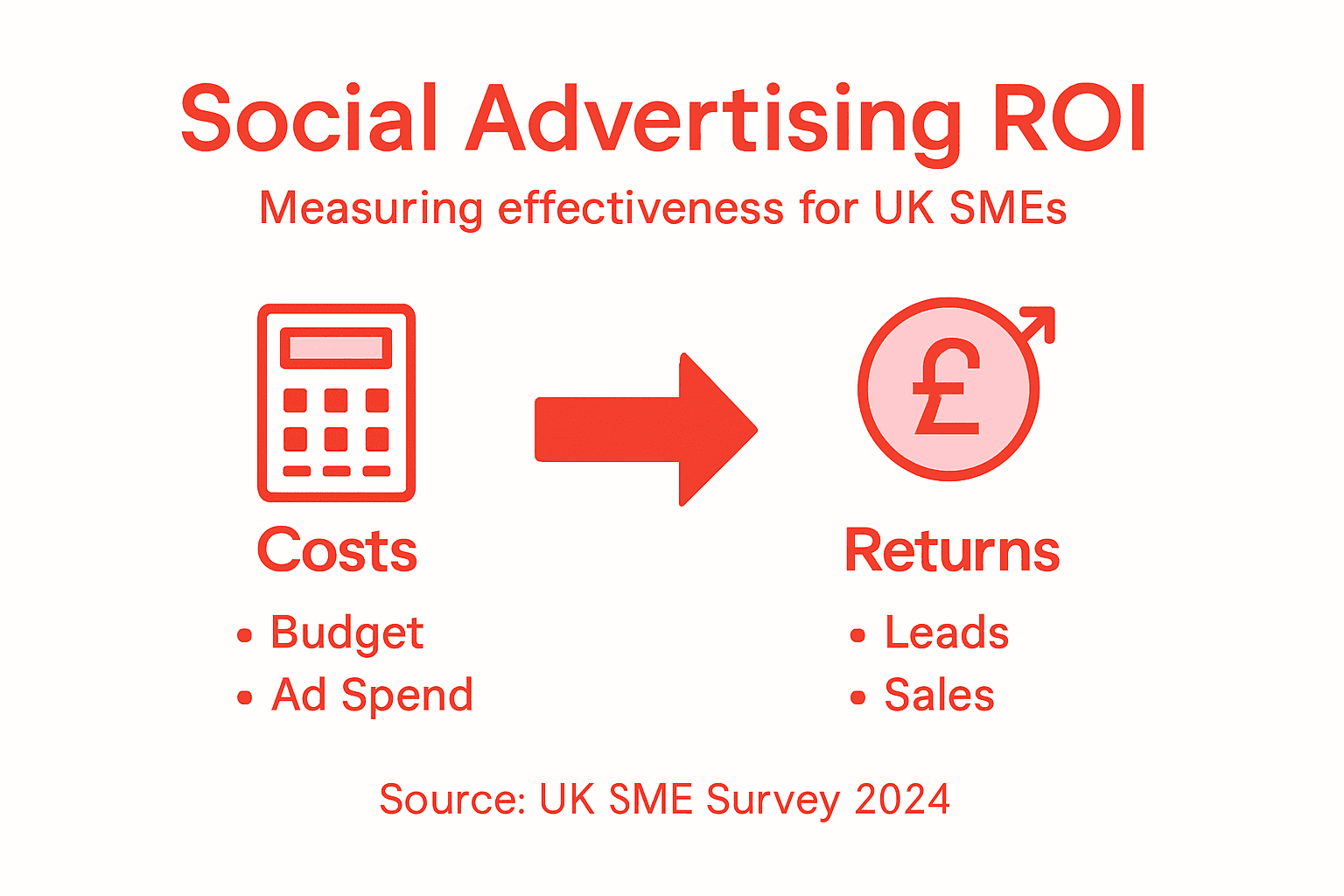
Understanding the financial dynamics of social advertising requires a nuanced approach to measuring investment effectiveness. Social advertising investment metrics reveal that UK businesses can potentially generate £5.28 in revenue for every pound spent on targeted social media campaigns, highlighting the substantial return potential for strategic advertisers.
Key financial considerations for social advertising investments include:
- Initial setup and creative production costs
- Platform-specific advertising fees
- Targeting and audience segmentation expenses
- Ongoing campaign management and optimisation
- Performance tracking and analytics tools
Common pitfalls that can undermine advertising performance often stem from inadequate planning and measurement. Many SMEs fall into traps such as using overly broad targeting, neglecting audience segmentation, or failing to continuously monitor and adapt campaign strategies. A Bristol-based bakery, for instance, might waste resources by targeting generic audience groups instead of focusing on local food enthusiasts and specific demographic segments most likely to engage with their brand.
Successful social advertising demands a disciplined approach to financial management. This involves setting clear budget boundaries, establishing precise key performance indicators (KPIs), and maintaining flexibility to reallocate resources based on real-time campaign performance. Video content typically delivers higher engagement rates compared to static imagery, potentially offering more cost-effective audience interaction when strategically implemented.
The following table summarises common social advertising pitfalls and solutions for UK SMEs:
| Pitfall | Potential Impact | Preventive Action |
|---|---|---|
| Overly broad targeting | Wasted budget, low conversions | Use layered audience filters |
| Ignoring ad performance metrics | Campaign underperformance | Set clear KPIs, monitor results |
| Neglecting compliance checks | Fines, reputational damage | Audit ads against regulations |
| Relying on one platform only | Limited reach, risk concentration | Diversify platform allocation |
Pro tip: Allocate 10-15% of your initial advertising budget to experimental campaigns across different platforms, enabling you to identify the most cost-efficient channels and audience targeting approaches before scaling your investment.
Unlock the Full Potential of Social Advertising for Your UK SME
If you are finding it challenging to target the right audience with your social advertising campaigns or struggling to measure and optimise your marketing spend, you are not alone. Many UK small and medium enterprises face these common hurdles such as pinpointing ideal customers, navigating complex platform choices like Facebook and LinkedIn, and ensuring compliance with advertising regulations. Bamsh Digital Marketing specialises in solving these issues by delivering transparent, results-driven paid social media advertising strategies that help your business generate more quality leads and predictable revenue.
Partner with a trusted expert who understands the intricacies of social advertising and knows how to translate platforms and targeting techniques into real growth. Explore our dedicated Social Media Marketing Agency Bristol services to benefit from tailored campaigns designed for your unique business needs. Whether you want to increase local visibility or generate high-converting leads through carefully layered audience segments, Bamsh provides clear reporting and honest communication every step of the way. Start transforming your digital marketing approach by booking a free 15-minute consultation at https://bamsh.co.uk/15-min/.
Don’t let ineffective social advertising drain your budget and your confidence. Discover how our award-winning team can help you simplify complexity, avoid costly pitfalls, and achieve measurable growth today. Visit Special Offers – Bamsh Digital Marketing to find the best value packages tailored for UK SMEs and see why so many businesses trust Bamsh to make their marketing work.
Frequently Asked Questions
What is social advertising?
Social advertising is a digital marketing strategy where businesses use social media platforms to promote their products or services through targeted, paid content aimed at specific audience segments.
How can small businesses utilise social advertising effectively?
Small businesses can utilise social advertising effectively by targeting specific demographics, interests, and behaviours, as well as experimenting with different audience segments to optimise their ad performance and return on investment.
What types of social media platforms are best for advertising?
The best social media platforms for advertising include Facebook, Instagram, LinkedIn, Twitter, TikTok, and Snapchat. Each platform offers unique targeting options and ad formats that may suit different business needs depending on their target audience and objectives.
What are common pitfalls to avoid in social advertising?
Common pitfalls in social advertising include overly broad targeting, neglecting ad performance metrics, failing to comply with advertising regulations, and relying too heavily on a single platform. To avoid these issues, businesses should use layered targeting strategies, set clear KPIs, conduct compliance checks, and diversify their platform use.