

Reaching the right customers online often feels like a guessing game for many small and medium-sized business owners across the South West UK and South Wales. With so many competitors and limited budgets, every pound needs to work harder than ever. Mastering sophisticated ad targeting gives you the tools to direct your message to those most likely to respond, increasing both quality leads and your marketing return. Discover how strategic online targeting can transform your digital campaigns and put your brand in front of the right audience when it matters most.
Table of Contents
- Defining Ad Targeting And Its Evolution
- Types Of Ad Targeting for SMEs
- How Ad Targeting Enhances Roi
- Legal, Privacy And Compliance In 2026
- Common Mistakes And How To Avoid Them
Key Takeaways
| Point | Details |
|---|---|
| Ad Targeting Evolution | Ad targeting has evolved significantly, leveraging advanced technology to create customised ads based on user data and behaviour. |
| Multiple Targeting Strategies | SMEs can utilise various ad targeting strategies such as demographic, behavioural, geographical, contextual, and retargeting to optimise their marketing efforts. |
| Enhancing ROI | Effective ad targeting reduces waste and improves ROI by connecting with audiences most likely to convert. |
| Compliance and Privacy | SMEs must stay informed about evolving regulations regarding data privacy and ensure that their advertising practices comply with legal requirements. |
Defining Ad Targeting and Its Evolution
Ad targeting represents a sophisticated digital marketing strategy that enables businesses to deliver personalised advertising content to specific audience segments based on detailed data insights. At its core, ad targeting transforms how small and medium enterprises (SMEs) connect with potential customers by moving beyond traditional blanket advertising approaches.
The evolution of ad targeting has been dramatic, driven by technological advancements and increasingly granular data collection methods. Online targeting technologies have transformed digital marketing, enabling organisations to monitor user behaviour and create highly customised online experiences. Modern ad targeting goes far beyond basic demographic segmentation, incorporating complex psychological profiling and real-time behaviour tracking.
Today’s ad targeting strategies leverage multiple data points, including:
- Browsing history
- Purchase behaviour
- Geographic location
- Device usage patterns
- Social media interactions
- Demographic information
These sophisticated techniques allow SMEs to reach precisely the right audience with messaging that resonates deeply, dramatically improving marketing efficiency and return on investment. By understanding individual user preferences and behaviours, businesses can craft messages that feel personal and relevant.
Expert Tip: Start by mapping your ideal customer’s digital journey and identifying the key touchpoints where targeted advertising can make the most significant impact.
Types of Ad Targeting for SMEs
Small and medium enterprises in the United Kingdom have access to multiple sophisticated ad targeting strategies that can dramatically enhance their digital marketing effectiveness. Each targeting approach offers unique advantages for businesses seeking to connect with their ideal customer base and maximise marketing investment.

The first category is demographic targeting, which allows businesses to segment audiences based on specific characteristics such as age, gender, income level, and occupation. Microtargeting techniques enable SMEs to refine these segments even further, creating highly personalised advertising experiences that resonate with precise audience groups.
The primary types of ad targeting available to SMEs include:
- Demographic Targeting: Segmenting by age, gender, and income
- Behavioural Targeting: Based on online browsing and purchase history
- Geographical Targeting: Focusing on specific regional markets
- Contextual Targeting: Displaying ads related to specific content
- Retargeting: Re-engaging previous website visitors
Moreover, the UK’s online advertising ecosystem provides multiple channels for targeted advertising. Search advertising allows businesses to appear during relevant keyword searches, while social media display targeting enables precise audience selection based on interests, behaviours, and interactions. Open display advertising and content marketing further expand SMEs’ ability to reach potential customers with pinpoint accuracy.
The following table compares key ad targeting strategies for UK SMEs and highlights how each can benefit business objectives:
| Targeting Strategy | Typical Use Case | Unique Advantage | Key Limitation |
|---|---|---|---|
| Demographic Targeting | Age, gender-based promotions | Direct outreach to defined groups | May miss niche interests |
| Behavioural Targeting | Past purchases and browsing | Increased relevance of offers | Requires detailed behavioural data |
| Geographical Targeting | Local events or shop launches | Focused regional campaigns | Limits reach outside the area |
| Contextual Targeting | Ads on related content sites | High relevance to the current context | Dependent on partner content |
| Retargeting | Reminding former visitors | Boosts recall and conversion | Can appear repetitive |
Expert Tip: Combine multiple targeting strategies and continuously test different audience segments to identify the most responsive and cost-effective approach for your specific business.
How Ad Targeting Enhances ROI
Ad targeting represents a powerful mechanism for small and medium enterprises to dramatically improve their marketing return on investment by ensuring advertising budgets are spent with surgical precision. By delivering messages to the most relevant audience segments, businesses can significantly reduce wasted expenditure and increase conversion potential.
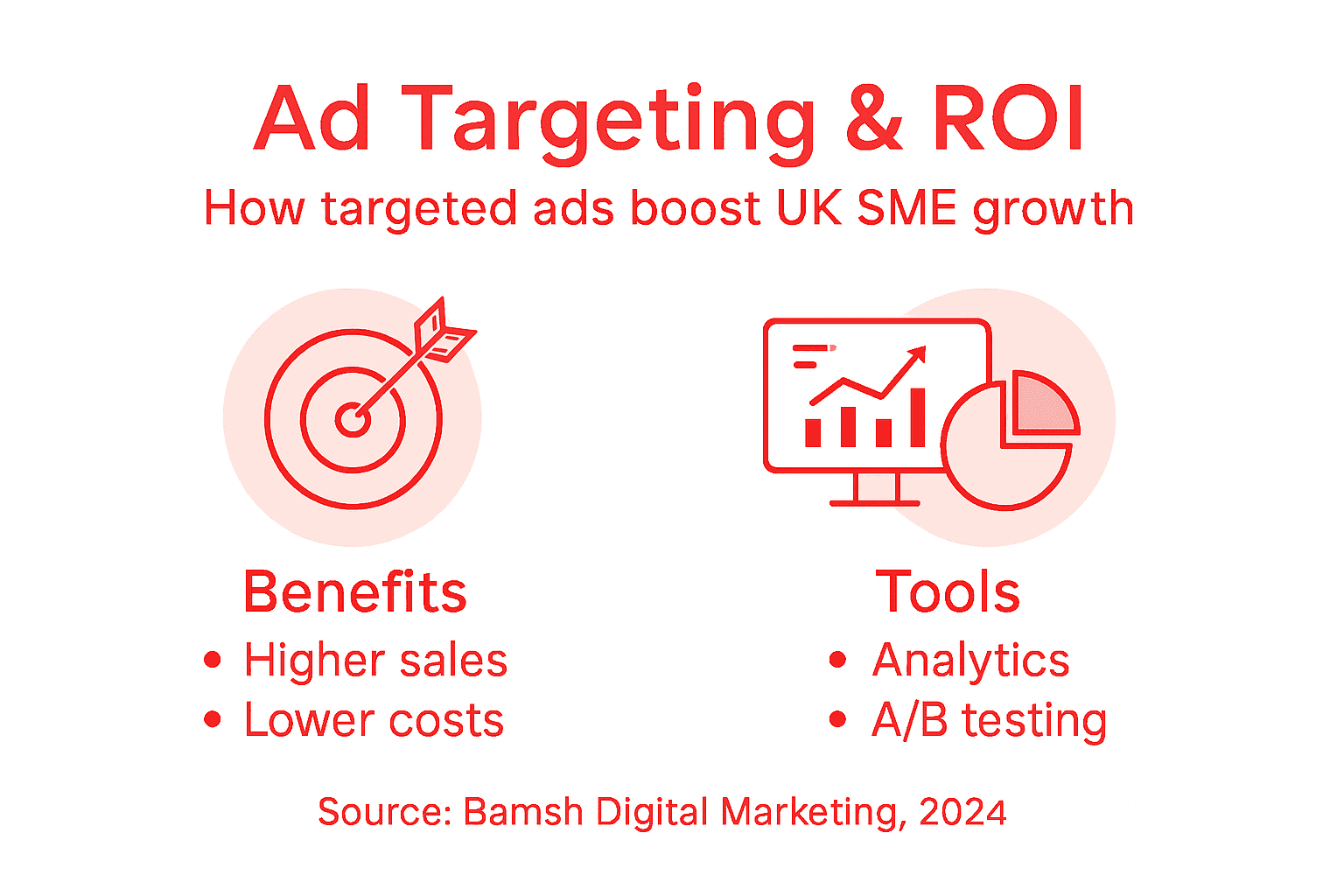
Targeted digital advertising enables SMEs to optimise marketing spend by connecting with users most likely to be interested in their products or services. This approach transforms traditional advertising from a scattergun method into a strategic, data-driven approach that minimises unnecessary spending and maximises engagement rates.
The key ROI enhancement mechanisms of ad targeting include:
- Reduced Advertising Waste: Narrowing audience focus
- Higher Conversion Rates: Reaching genuinely interested prospects
- Lower Customer Acquisition Costs: More efficient spending
- Improved Campaign Measurement: Precise performance tracking
- Enhanced Customer Insights: Better understanding of audience behaviour
Programmatic advertising and advanced data analytics further support continuous campaign optimisation. These technologies allow businesses to adjust targeting strategies in real-time, responding to performance metrics and audience interactions. By leveraging sophisticated tracking and analysis tools, SMEs can create increasingly refined marketing approaches that deliver progressively better results.
Expert Tip: Implement a systematic A/B testing approach to continuously refine your targeting parameters and incrementally improve your advertising performance.
Legal, Privacy and Compliance in 2026
The digital advertising landscape is undergoing a significant transformation, with emerging regulations designed to protect user privacy while maintaining the effectiveness of targeted marketing strategies. Small and medium enterprises must navigate an increasingly complex legal environment that balances technological innovation with individual data rights.
Regulatory frameworks for online targeting are becoming more sophisticated, introducing stringent requirements for transparency, consent, and ethical data usage. The upcoming Data (Use and Access) Act represents a pivotal moment for businesses, demanding a fundamental reassessment of how personal information is collected, processed, and utilised in advertising campaigns.
Key legal considerations for SMEs in 2026 include:
- Explicit Consent: Obtaining clear, informed user permission
- Data Minimisation: Collecting only essential information
- Transparent Practices: Clear communication about data usage
- User Control: Providing options to manage personal data
- Accountability: Maintaining comprehensive compliance documentation
The Information Commissioner’s Office continues to strengthen oversight, requiring businesses to implement robust data protection mechanisms. This means developing comprehensive privacy policies, establishing secure data management systems, and creating transparent opt-out processes for users. Technological solutions that prioritise user privacy while maintaining marketing effectiveness will become increasingly critical for businesses seeking to maintain a competitive advantage.
Here is a summary of essential legal and privacy requirements for SME ad campaigns in 2026:
| Requirement | Description | Business Benefit |
|---|---|---|
| Explicit Consent | Obtain clear user permission | Reduces legal risk |
| Data Minimisation | Collect only necessary personal data | Enhances customer trust |
| Transparent Practices | Disclose all data uses | Builds brand reputation |
| User Control | Users can manage their own information | Increases engagement |
| Accountability | Document compliance and procedures | Facilitates regulatory review |
Expert Tip: Invest in privacy-first marketing technologies and conduct regular compliance audits to stay ahead of evolving regulatory requirements.
Common Mistakes and How to Avoid Them
Ad targeting for small and medium enterprises can be a minefield of potential errors that can dramatically undermine marketing effectiveness and waste valuable resources. Understanding these common pitfalls is crucial for businesses seeking to maximise their digital advertising strategies and protect their marketing investments.
Common targeting mistakes often stem from inadequate data management, poor audience segmentation, and a lack of strategic oversight. Many SMEs fall into the trap of relying too heavily on automated systems without implementing robust human review processes, which can lead to inefficient campaigns and potential legal complications.
The most critical mistakes SMEs should avoid include:
- Overly Broad Targeting: Wasting budget on irrelevant audiences
- Neglecting Data Privacy: Failing to obtain proper user consent
- Ignoring Performance Metrics: Not tracking campaign effectiveness
- Inconsistent Messaging: Misaligned ad content across platforms
- Insufficient Audience Research: Using outdated or incorrect audience profiles
Successful ad targeting requires a nuanced approach that balances technological capabilities with strategic human insight. Businesses must invest time in understanding their audience, continuously refining targeting parameters, and maintaining a flexible approach that adapts to changing market conditions and user behaviours. Regular audits of targeting strategies, combined with ongoing learning and adjustment, can help SMEs avoid the most common pitfalls that undermine digital advertising performance.
Expert Tip: Conduct monthly reviews of your targeting parameters and performance metrics, and be prepared to make swift, data-driven adjustments to your advertising strategy.
Unlock Precise Ad Targeting to Accelerate Your SME Growth
The article highlights the critical challenge many UK small and medium enterprises face in achieving effective and legally compliant ad targeting. The pain points include avoiding wasted advertising spend on broad or poorly defined audiences, navigating evolving privacy regulations, and crafting campaigns that truly resonate with potential customers. It emphasises how sophisticated targeting methods, such as behavioural and demographic segmentation, combined with continuous refinement and transparent practices, are essential for maximising marketing ROI.
At Bamsh Digital Marketing, we align perfectly with these objectives. Our tailored solutions help you reach the right audience at the right moment through services like Google PPC Management and Paid Social Media Advertising. We prioritise transparency and compliance to keep your ad campaigns ethical and effective. By partnering with us, you gain access to expert guidance and tools that ensure your marketing budget delivers real results while respecting privacy laws.
Explore how our strategic approach to digital marketing can transform your advertising efforts. Visit our Bamsh Digital Marketing to learn more about our expertise and current insights. Ready to start turning targeted ad campaigns into predictable growth? Book a free consultation now at https://bamsh.co.uk/15-min/ and discover the difference precision targeting makes. Need special rates designed for effective marketing? Check out our Special Offers – Bamsh Digital Marketing to benefit from expert services at exceptional value.
Frequently Asked Questions
What is ad targeting and how does it work?
Ad targeting is a digital marketing strategy that delivers personalised advertisements to specific audience segments based on data insights such as browsing history, purchase behaviour, and demographics. This allows businesses to connect more effectively with their ideal customers.
What types of ad targeting strategies are beneficial for SMEs?
SMEs can utilise various ad targeting strategies, including demographic targeting, behavioural targeting, geographical targeting, contextual targeting, and retargeting. Each method offers unique advantages in reaching specific audiences more effectively.
How can ad targeting enhance return on investment (ROI) for my business?
Ad targeting enhances ROI by reducing advertising waste, increasing conversion rates, lowering customer acquisition costs, and allowing for improved campaign measurement. This data-driven approach ensures that marketing budgets are spent more efficiently.
What common mistakes should SMEs avoid in ad targeting?
Common mistakes include overly broad targeting, neglecting data privacy, ignoring performance metrics, inconsistent messaging, and insufficient audience research. Avoiding these pitfalls is essential for maximising the effectiveness of digital ad campaigns.