

Many small business owners in the South West UK wonder why their website struggles to appear when potential customers search for their services. Competing online can feel confusing, especially with common myths about what actually drives results in search engines like Google. By exploring the real meaning of Search Engine Optimisation (SEO) and breaking down its core elements, you can discover how effective strategies build credibility, attract the right visitors, and support lasting growth for your business.
Table of Contents
- Definition Of SEO And Common Misunderstandings
- Types Of SEO: On-Page, Off-Page, Technical
- How SEO Works For Your Website
- Why SEO Matters For Lead Generation
- Risks, Costs, And Common SEO Mistakes
Key Takeaways
| Point | Details |
|---|---|
| Understanding SEO | SEO is a continuous process that requires strategic planning and adaptation to evolving search engine algorithms. It is not merely about keyword stuffing or quick fixes. |
| Types of SEO | Successful digital visibility relies on a comprehensive strategy that includes On-Page, Off-Page, and Technical SEO, each contributing to improved search rankings. |
| Importance for Lead Generation | Properly implemented SEO can generate high-quality leads by positioning your business in front of potential customers during relevant searches. |
| Common Mistakes and Risks | Avoid pitfalls such as keyword stuffing and low-quality backlinks, which can seriously harm your website’s credibility and search rankings. |
Definition of SEO and Common Misunderstandings
Search Engine Optimization (SEO) is a strategic approach for improving a website’s visibility and ranking on search engines like Google. At its core, SEO involves optimising digital content so that potential customers can easily find your business when searching for relevant products or services. Strategic website optimization helps businesses attract organic traffic without relying on paid advertising.
Contrary to popular belief, SEO is not simply about stuffing keywords into web pages or employing quick tactical tricks. Modern SEO requires a comprehensive approach that integrates multiple technical and content-related strategies. These include creating high-quality, relevant content, ensuring excellent website performance, building credible backlinks, and providing an outstanding user experience. Search engine ranking strategies demand consistent effort and ongoing refinement.
Businesses often misunderstand SEO as a one-time task or a guaranteed method for instant results. In reality, SEO is a continuous process that requires patience, strategic planning, and adaptability. Search engine algorithms constantly evolve, which means your optimisation techniques must also change. Successful SEO involves understanding your target audience, researching their search behaviours, and consistently delivering valuable content that answers their specific questions.
Pro tip: Invest time in understanding your ideal customer’s online search patterns and create content that directly addresses their most pressing questions and challenges.
Types of SEO: On-Page, Off-Page, Technical
Search Engine Optimisation (SEO) is a multifaceted strategy comprising three primary approaches: On-Page, Off-Page, and Technical SEO. Each type plays a crucial role in improving a website’s search engine ranking and overall digital visibility. Modern SEO strategies require businesses to understand and effectively implement all three components.

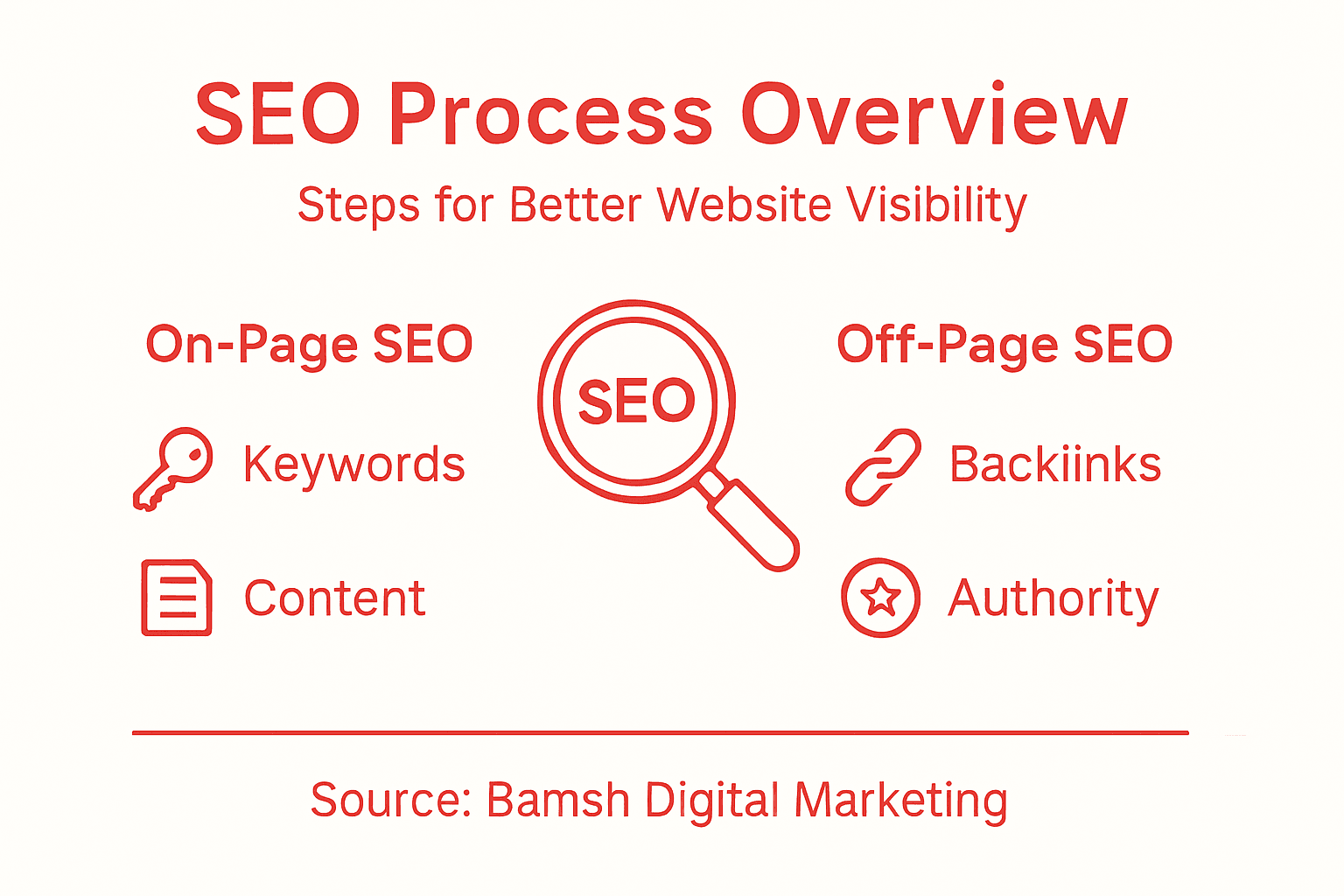
On-Page SEO focuses on optimising individual web pages to rank higher and earn more relevant traffic. This includes strategic keyword placement, creating high-quality content, optimising meta descriptions and title tags, using header tags effectively, and ensuring content directly answers user queries. Key elements involve writing compelling, informative content that matches search intent, using appropriate internal linking, and maintaining a clear website structure that helps both users and search engines navigate your content.
Off-Page SEO involves activities conducted outside your website to improve search engine rankings. This primarily includes building high-quality backlinks from reputable websites, managing your online reputation, and increasing brand mentions across digital platforms. Social media engagement, guest blogging, influencer collaborations, and creating shareable content are essential off-page strategies. These activities signal to search engines that your website is credible, authoritative, and valuable to users.
Technical SEO addresses the backend elements that impact search engine visibility. This includes improving website speed, ensuring mobile responsiveness, implementing secure HTTPS protocols, creating XML sitemaps, fixing crawl errors, and optimising website architecture. Technical SEO ensures that search engine crawlers can easily understand, access, and index your website’s content, which directly influences your search ranking potential.
Pro tip: Regularly audit your website across all three SEO types, focusing on creating a holistic strategy that balances content quality, external credibility, and technical performance.
Here is a summary of the three primary types of SEO and how they contribute to digital success:
| SEO Type | Main Focus | Key Business Impact |
|---|---|---|
| On-Page | Content and keywords | Improves content relevance |
| Off-Page | External credibility | Builds brand trust and authority |
| Technical | Website performance | Ensures search engines can index |
How SEO Works for Your Website
Search engines operate like sophisticated digital librarians, meticulously evaluating and ranking websites based on complex algorithms. Core SEO mechanisms involve three fundamental processes: crawling, indexing, and ranking. When a potential customer searches for a product or service, search engines rapidly scan billions of web pages to deliver the most relevant and valuable results.
The crawling process begins with automated search engine bots systematically exploring websites by following links between pages. These digital scouts collect information about each webpage’s content, structure, and context. They analyse everything from text and images to metadata and site architecture. Once a page is discovered, it is added to the search engine’s massive database through the indexing process, which involves categorising and storing website information for quick retrieval.
Ranking determines a website’s position in search results, which depends on numerous factors including content quality, relevance, user experience, and technical performance. Search engines assess websites using complex algorithms that consider hundreds of signals. These include keyword relevance, website loading speed, mobile responsiveness, backlink quality, content depth, user engagement metrics, and the overall trustworthiness of the website. Websites that provide the most comprehensive, user-friendly experience typically achieve higher search rankings.
Pro tip: Regularly update your website content, ensure fast loading times, and focus on creating genuine value for your target audience to improve your search engine ranking.
Why SEO Matters for Lead Generation
SEO represents a powerful strategy for attracting high-quality leads directly through organic search channels. B2B lead generation techniques reveal that modern buyers conduct extensive online research before engaging with potential vendors. Unlike traditional interruptive marketing approaches, SEO positions your business precisely where potential customers are actively searching for solutions.
The strategic importance of SEO lies in its ability to target decision-makers with laser-like precision. When potential clients search for specific services or products, a well-optimised website appears as a credible, authoritative resource. This organic visibility builds trust exponentially faster than conventional advertising methods. By consistently delivering valuable content that directly addresses user queries, businesses can establish themselves as industry experts and create a sustainable pipeline of qualified leads.
Search engine optimisation transforms your digital presence into a sophisticated lead generation machine. The process goes beyond simple keyword targeting, encompassing a holistic approach that considers user intent, content quality, and technical website performance. Businesses that invest in comprehensive SEO strategies typically experience higher conversion rates, lower customer acquisition costs, and more predictable revenue streams. The compounding effect of organic search visibility means that your initial SEO efforts continue generating leads long after the initial investment.
Pro tip: Focus on creating content that genuinely answers your ideal customer’s most pressing questions, and consistently monitor your website’s performance to refine your lead generation strategy.
Risks, Costs, and Common SEO Mistakes
Implementing SEO is not without potential pitfalls, and understanding these risks is crucial for small business owners. SEO investment strategies require careful planning to avoid costly mistakes that could harm your digital visibility. While SEO can deliver significant returns, businesses must navigate challenges with strategic awareness and realistic expectations.
Common SEO mistakes can dramatically undermine your digital marketing efforts. Keyword stuffing, purchasing low-quality backlinks, and creating thin, unoriginal content are practices that can trigger search engine penalties. Many businesses also erroneously focus solely on technical optimisation while neglecting the fundamental requirement of creating genuinely valuable content that addresses user needs. Another critical error is failing to understand your specific target audience, which leads to misaligned content and poor search performance.
Common SEO pitfalls and their real-world consequences are outlined below:
| Mistake | Short-Term Effect | Long-Term Consequence |
|---|---|---|
| Keyword stuffing | Drops in search rankings | Algorithm penalties |
| Low-quality backlinks | Short spike in traffic | Lasting loss of credibility |
| Neglecting mobile optimisation | Poor user experience | Declining organic visibility |
| Ignoring audience research | Irrelevant website visitors | Lower conversion rates |
The financial investment in SEO varies considerably, depending on your business size, competition, and marketing goals. Small businesses might spend anywhere from £500 to £2,500 per month on professional SEO services, with costs increasing for more competitive industries. However, the potential return on investment can be substantial. Organic search traffic typically converts at higher rates than paid advertising, meaning businesses can generate more qualified leads at a lower long-term cost. Strategic SEO is not an expense but an investment in sustainable digital growth.
Pro tip: Conduct a comprehensive SEO audit every six months to identify potential improvements and ensure your digital strategy remains aligned with changing search engine algorithms.
Unlock Business Growth Through Expert SEO Support
Understanding the true definition of SEO and how it powers business growth can be overwhelming. Many businesses struggle with technical hurdles, evolving search engine demands, and creating content that truly connects with their ideal customers. If you want to avoid common SEO mistakes and turn your website into a powerful lead generation asset, you need clear guidance combined with proven strategies.
At Bamsh Digital Marketing, we specialise in delivering transparent, results-focused SEO services designed to boost your online visibility and rank you higher in search results. From optimising your website’s content and technical structure to building credible authority, we help your business attract more qualified leads consistently. Discover how our award-winning team can personalise an SEO plan that grows your bottom line without jargon or guesswork. Learn more about our expert solutions at SEO Agency Bristol – Bamsh Digital Marketing and explore our complete approach at Bamsh – Bamsh Digital Marketing.
Ready to take the next step towards sustainable growth? Give us 15 minutes and we will show you exactly how to make your website work harder for your business. Visit https://bamsh.co.uk/15-min/ to book your free strategy call and start turning your SEO investment into real results today.
Frequently Asked Questions
What is SEO, and how does it benefit businesses?
SEO, or Search Engine Optimisation, is a strategy aimed at improving a website’s visibility on search engines. It helps businesses attract organic traffic by optimising their digital content, which can lead to higher conversion rates and sustainable growth.
How does on-page SEO differ from off-page SEO?
On-page SEO involves optimising individual web pages to enhance their ranking, focusing on content quality and keyword placement. Off-page SEO refers to strategies implemented outside your site, such as building backlinks and managing online reputations, to improve overall authority and trust.
What are common mistakes to avoid in SEO?
Common SEO mistakes include keyword stuffing, using low-quality backlinks, ignoring mobile optimisation, and failing to understand your audience’s search intent. These can negatively impact search rankings and user experience.
How long does it take to see results from SEO efforts?
SEO is a long-term strategy that often takes several months to yield noticeable results. Factors such as competition, the current status of your website, and the effectiveness of your SEO strategy can all influence the timeline.