

Finding new customers can feel more challenging than ever for business owners in South West England, where competition is fierce and resources are limited. This matters because relying on outdated lead generation methods often means missed opportunities and slow growth. Unlocking the potential of an AI Lead Engine offers a smarter way to identify, qualify, and nurture leads, helping businesses achieve more predictable and scalable results without exhausting time or budget.
Table of Contents
- What Is an AI Lead Engine?
- Types of AI Lead Generation Systems
- Key Features and How It Works
- Legal, Compliance and GDPR Requirements UK
- Costs, ROI and Scalability Advantages
- Common Pitfalls and Implementation Risks
Key Takeaways
| Point | Details |
|---|---|
| AI Lead Engines Transform Business Growth | AI Lead Engines enable SMEs in the UK to achieve scalable growth through intelligent lead generation and personalisation. |
| Types of AI Systems Offer Diverse Benefits | Various AI lead generation systems, such as Machine Learning models and NLP chatbots, cater to different business needs and enhance customer engagement. |
| Compliance with GDPR is Essential | SMEs must adhere to UK GDPR regulations to ensure lawful data processing and protect individuals’ data rights while leveraging AI technologies. |
| Evaluate Costs vs. ROI for Effective Investment | Understanding the cost structure of AI Lead Engines allows SMEs to make informed decisions and realise significant ROI through improved lead conversion rates. |
What Is an AI Lead Engine?
An AI Lead Engine represents a revolutionary approach to business growth for small and medium enterprises (SMEs) in the United Kingdom. At its core, this advanced system leverages artificial intelligence to transform how businesses identify, attract, and convert potential customers. AI technologies are central to UK’s economic strategy, enabling SMEs to achieve predictable and scalable growth through intelligent lead generation.
The fundamental components of an AI Lead Engine include several sophisticated technologies working in harmony:
- Machine Learning Algorithms: Analyse customer data and predict potential high-value leads
- Natural Language Processing: Understand and interpret customer interactions
- Predictive Analytics: Forecast likely customer behaviours and purchasing patterns
- Automated Communication Systems: Engage prospects through intelligent, personalised messaging
Unlike traditional lead generation methods, an AI Lead Engine doesn’t just collect contact details. It intelligently scores, segments, and nurtures potential customers through a data-driven approach. Advanced AI systems enable precise lead qualification by examining multiple data points and interactions, dramatically improving conversion rates for businesses.
The real power of an AI Lead Engine lies in its ability to work continuously, processing vast amounts of information faster than any human team. It can identify potential customers across multiple channels, understand their specific needs, and create personalised engagement strategies that significantly increase the likelihood of conversion.
Pro tip: Start small by integrating AI lead generation tools into one specific marketing channel, and gradually expand as you understand their impact on your business growth strategy.
Types of AI Lead Generation Systems
AI lead generation systems represent a sophisticated spectrum of technologies designed to transform how businesses identify and engage potential customers. UK research highlights diverse AI model categories, each offering unique capabilities for small and medium enterprises seeking intelligent marketing solutions.
The primary types of AI lead generation systems include:
- Rule-Based Automation Systems: Operate using predefined logic and decision trees
- Machine Learning Models: Adapt and improve performance through continuous data analysis
- Natural Language Processing Chatbots: Engage prospects through intelligent conversation
- Predictive Analytics Platforms: Forecast potential customer behaviours and interests
- Generative AI Tools: Create personalised content and interaction strategies
Generative AI models create novel customer interaction approaches by simulating human-like communications and predicting complex sales interactions. These systems differ significantly in their complexity, ranging from simple automated response mechanisms to advanced neural networks capable of understanding nuanced customer requirements.
Each AI lead generation system offers distinct advantages depending on business context. Classification models excel at segmenting potential leads, recommendation engines personalise engagement strategies, and autonomous agents can manage entire communication workflows with minimal human intervention. The sophistication of these systems enables businesses to move beyond traditional lead generation methods, creating more intelligent, responsive, and efficient sales pipelines.
Here is a summary of how different AI lead generation systems compare in business use:
| System Type | Typical Use Case | Main Benefit |
|---|---|---|
| Rule-Based Automation | Simple, repetitive tasks | Speed and consistency |
| Machine Learning Model | Data-driven lead prediction | Improved accuracy over time |
| NLP Chatbot | Customer interaction via chat | Enhanced engagement |
| Predictive Analytics Platform | Sales forecasting | Informed decision-making |
| Generative AI Tool | Personalised content creation | More compelling messaging |
Pro tip: Evaluate your specific business needs and start with an AI lead generation system that matches your current technological capabilities and growth objectives.
Key Features and How It Works
AI Lead Engines offer comprehensive technologies designed to revolutionise how businesses approach customer acquisition and engagement. These sophisticated systems integrate multiple intelligent technologies to create a seamless, data-driven lead generation process that transforms traditional marketing approaches.
The key features of an AI Lead Engine include:
- Automated Lead Identification: Rapidly scans and analyses potential customer data
- Predictive Lead Scoring: Ranks potential customers based on conversion likelihood
- Personalised Communication Strategies: Generates tailored messaging for different customer segments
- Real-Time Data Processing: Continuously updates and refines lead information
- CRM System Integration: Seamlessly connects with existing business management platforms
- Multi-Channel Engagement: Coordinates interactions across email, social media, and web platforms
Advanced AI systems enable precise lead management by implementing a sophisticated workflow. The process typically involves several interconnected stages: data collection, intelligent analysis, lead qualification, and automated engagement. Machine learning algorithms continuously analyse vast datasets, identifying patterns and predicting potential customer behaviours with remarkable accuracy.

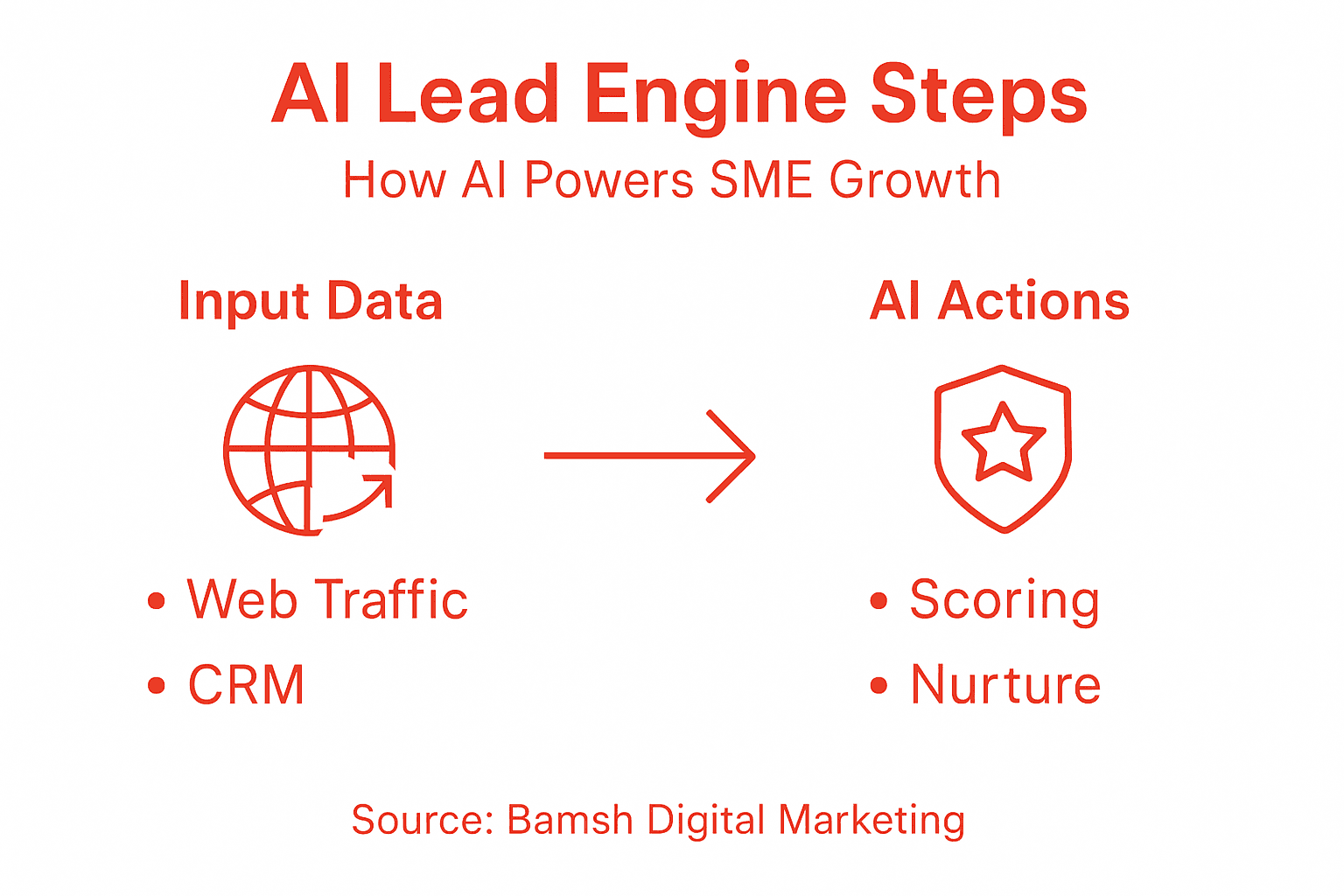
The operational mechanism of an AI Lead Engine is remarkably intelligent. It begins by aggregating data from multiple sources, including website interactions, social media engagement, and historical customer information. Sophisticated natural language processing and machine learning models then analyse this data, creating detailed customer profiles and predicting their likelihood of conversion. The system can automatically trigger personalised communication, schedule follow-ups, and provide real-time insights into potential customer journeys.
Pro tip: Implement a phased approach to AI lead generation, starting with one or two key features and gradually expanding your system’s capabilities as you understand its potential.
Legal, Compliance and GDPR Requirements UK
UK GDPR regulations govern AI technologies comprehensively, establishing critical frameworks for businesses implementing AI lead generation systems. These regulations ensure that artificial intelligence technologies operate within strict legal boundaries, protecting individual data rights and maintaining ethical standards for digital marketing practices.
The key legal and compliance requirements for AI Lead Engines include:
- Lawful Data Processing: Establishing a clear, transparent basis for collecting and using personal information
- Purpose Limitation: Restricting data usage to specific, predefined objectives
- Data Minimisation: Collecting only essential information required for lead generation
- Individual Rights Protection: Ensuring individuals can access, correct, and request deletion of their data
- Algorithmic Transparency: Providing explainable insights into automated decision-making processes
- Consent Management: Obtaining explicit, informed consent for data processing activities
AI regulatory frameworks focus on accountability and protecting individuals from potential discriminatory practices. SMEs must implement robust governance mechanisms that demonstrate responsible AI usage, including comprehensive documentation of data processing activities, regular impact assessments, and transparent communication about how automated systems make decisions.
The Information Commissioner’s Office (ICO) provides detailed guidance for businesses navigating these complex requirements. SMEs must develop comprehensive strategies that balance technological innovation with rigorous data protection principles. This involves implementing technical and organisational measures that prevent unauthorised data access, ensure data accuracy, and maintain comprehensive audit trails of all AI-driven lead generation activities.
Pro tip: Conduct a thorough data protection impact assessment before deploying any AI lead generation system to identify and mitigate potential legal and ethical risks.
Costs, ROI and Scalability Advantages
AI lead generation investment costs vary significantly for UK small and medium enterprises, presenting both challenges and remarkable opportunities for business growth. Understanding the financial landscape of AI lead engines requires a nuanced approach that balances initial investment with potential long-term returns.
The typical cost structures for AI Lead Engines include:
- Discovery Phase Investments: £7,000 – £25,000 for initial system design and strategy
- Pilot Implementation: £25,000 – £75,000 for testing and initial deployment
- Full Production Systems: £75,000 – £300,000 for comprehensive enterprise-grade solutions
- Ongoing Maintenance: Typically 15-20% of initial implementation costs annually
- Scalability Pricing: Flexible models based on lead volume and system complexity
The remarkable advantage of AI Lead Engines lies in their extraordinary return on investment (ROI). Traditional lead generation methods often require significant manual labour and produce inconsistent results, whereas AI-powered systems can generate 3-5x better conversion rates by automating complex workflows and providing intelligent, data-driven insights. These systems continuously learn and adapt, meaning their performance improves over time without proportional increases in operational costs.
Scalability represents another critical benefit for UK SMEs. AI Lead Engines can seamlessly integrate with existing business infrastructure, allowing companies to expand their lead generation capabilities without massive technological overhauls. The systems can rapidly adjust to market changes, handle increasing data volumes, and provide real-time analytics that enable more strategic decision-making. This flexibility means businesses can grow their lead generation efforts proportionally with their expansion, without being constrained by traditional marketing limitations.
Below is an overview of costs and ROI considerations for UK SMEs adopting AI Lead Engines:
| Investment Phase | Typical Cost Range | ROI Potential |
|---|---|---|
| Discovery/Design | £7,000 – £25,000 | Foundation for long-term gains |
| Pilot Implementation | £25,000 – £75,000 | Learn fast, limit risk |
| Full Deployment | £75,000 – £300,000 | Scalable, sustained returns |
| Ongoing Maintenance | 15-20% initial cost/year | Maintains system performance |
| Modular Scaling | Usage-based pricing | Matches business growth |
Pro tip: Start with a modest, phased implementation of AI lead generation technology, selecting a solution that offers modular scaling and clear performance metrics to manage your initial investment effectively.
Common Pitfalls and Implementation Risks
Implementation challenges impact AI lead generation strategies significantly for UK small and medium enterprises. Understanding these potential obstacles is crucial for developing a robust and effective approach to AI-driven lead generation, ensuring businesses can navigate technological integration successfully.
The most common implementation risks include:
- Data Quality Issues: Incomplete or inaccurate data undermining AI performance
- Limited Digital Skills: Insufficient staff training and technological expertise
- Organisational Resistance: Cultural barriers to technological change
- Strategic Misalignment: Unclear objectives for AI lead generation
- Regulatory Compliance: Navigating complex data protection requirements
- Technological Complexity: Challenges in integrating AI with existing systems
External challenges create additional implementation barriers for SMEs seeking to adopt AI technologies. The rapidly evolving technological landscape presents significant adaptation challenges, with businesses often struggling to maintain agility and implement strategic changes quickly. Fear of job displacement, restricted financial resources, and competitive market pressures further complicate the AI integration process.
Successful implementation requires a comprehensive approach that addresses both internal and external challenges. Businesses must develop a clear strategy that includes staff upskilling, iterative deployment, stakeholder engagement, and ongoing performance monitoring. This approach helps mitigate risks by creating a supportive environment for technological adoption, ensuring that AI lead generation systems align with broader business objectives and deliver tangible value.
Pro tip: Conduct a thorough organisational readiness assessment before implementing an AI lead generation system, identifying potential skill gaps and creating a targeted training and change management strategy.
Unlock Predictable Growth with Bamsh’s AI Lead Engine Solution
If you are a UK SME struggling with inconsistent leads or unclear marketing returns, the AI Lead Engine explained in the article offers the breakthrough you need. Leveraging artificial intelligence to automate and personalise lead generation can transform how your business attracts and converts customers. But to truly unlock this potential, you need a trusted partner who can integrate AI, SEO, PPC, and automation seamlessly.
Bamsh Digital Marketing specialises in exactly that. Our flagship AI Lead Engine combines cutting-edge AI tools with proven strategies like SEO and Google Ads management to deliver more quality leads and predictable revenue. We understand the challenges of data quality, regulatory compliance, and technological complexity that the article highlights. That is why we provide transparent communication and clear reporting, helping you understand every step from data analysis to lead nurturing.
Ready to move beyond generic lead generation? Discover how our award-winning team can personalise your AI-powered growth journey. Explore insights from our Podcasts – Bamsh Digital Marketing to hear real business stories and expert advice. For a straightforward start, book a free 15-minute consultation at bamsh.co.uk/15-min/ and begin turning intelligent lead generation into reliable business growth.
Frequently Asked Questions
What is an AI Lead Engine?
An AI Lead Engine is an advanced system that utilises artificial intelligence to help businesses identify, attract, and convert potential customers, enhancing lead generation and growth.
How does an AI Lead Engine improve lead generation compared to traditional methods?
Unlike traditional methods, an AI Lead Engine scores, segments, and nurtures leads through data-driven approaches, significantly improving conversion rates and automating workflows for better efficiency.
What are the key features of an AI Lead Engine?
Key features include automated lead identification, predictive lead scoring, personalised communication strategies, real-time data processing, CRM system integration, and multi-channel engagement capabilities.
What are the common pitfalls when implementing an AI Lead Engine?
Common pitfalls include data quality issues, limited digital skills within the team, organisational resistance to change, strategic misalignment, compliance challenges, and the technological complexity of integration.