

Struggling to get your website noticed by potential customers in the South West UK? Many business owners overlook technical SEO, thinking it is just for developers or that great content alone will earn them top rankings. In reality, technical SEO forms the backbone of online visibility, ensuring search engines can discover, understand, and index your website efficiently. This guide explains what technical SEO really means, dispels common myths, and reveals practical solutions to help your business stand out in local search results.
Table of Contents
- Defining Technical SEO and Common Myths
- Key Features of a Technically Optimised Site
- Website Speed, Crawlability and Indexing
- Practical Benefits for Business Visibility
- Common Pitfalls and How to Avoid Them
Key Takeaways
| Point | Details |
|---|---|
| Importance of Technical SEO | It is crucial for website visibility and customer acquisition, not just for web developers. |
| Debunking Common Myths | Misunderstandings such as viewing technical SEO as optional, can hinder digital marketing success. |
| Key Features for Optimisation | Mobile responsiveness, page speed, and secure connections are essential for user engagement. |
| Regular Audits are Essential | Conducting technical SEO audits biannually helps identify and resolve performance issues. |
Defining Technical SEO and Common Myths
Technical SEO represents the foundational infrastructure that enables search engines to discover, crawl, and understand your website effectively. Think of it like the hidden plumbing that ensures your digital content reaches potential customers smoothly and efficiently. Technical foundations of search engine performance determine whether your remarkable content actually gets seen.
Understanding technical SEO requires breaking down several critical components:
- Website Crawlability: Ensuring search engines can navigate your site’s structure
- Page Rendering: Making certain pages load correctly and completely
- Indexation: Guaranteeing search engines can add your pages to their searchable database
- Performance Optimisation: Improving site speed and user experience
Many business owners misunderstand technical SEO, believing it’s exclusively for web developers or an optional extra. In reality, it’s a fundamental strategy that directly impacts your online visibility and potential customer acquisition.
Common myths about technical SEO often prevent businesses from maximising their digital potential. Let’s debunk some prevalent misconceptions:
- Myth: Technical SEO is only about website code
- Myth: Good content automatically ranks well
- Myth: Technical optimisation is a one-time task
- Myth: Small businesses don’t need technical SEO
Each of these myths can significantly harm your digital marketing strategy. Technical SEO isn’t just a checkbox—it’s a continuous process of refinement and improvement that bridges the gap between your content and potential customers.
To clarify common misconceptions, here is a comparison between technical SEO myths and the facts:
| Myth | Reality | Risk if Ignored |
|---|---|---|
| Only about the website code | Involves site structure and performance | Poor indexing and visibility |
| Good content always ranks well | Needs technical optimisation | Low organic traffic |
| One-time task | Ongoing process due to updates | Outdated website performance |
| Small businesses do not need it | Essential for all business sizes | Missed digital growth potential |
Pro tip: Conduct a comprehensive technical SEO audit every six months to identify and resolve potential performance barriers.
Key Features of a Technically Optimised Site
A technically optimised website is far more than just an attractive digital presence. It represents a strategic ecosystem designed to deliver exceptional user experience and search engine performance. Modern website architecture requires careful planning across multiple technical dimensions.
The core features of a technically robust website include:
- Mobile Responsiveness: Seamless performance across all device types
- Fast Loading Speed: Minimal page load times under 3 seconds
- Secure Connection: HTTPS protocol and robust security measures
- Clean, Semantic Code: Structured HTML that search engines can easily interpret
- Intuitive Navigation: Clear site structure with logical user pathways
Understanding these features goes beyond basic website development. They represent critical infrastructure that directly influences user engagement, search engine rankings, and ultimately, business conversions. Each technical element acts as a foundation for your digital marketing strategy, ensuring your content reaches and resonates with your target audience.
Specifically, businesses must focus on key technical optimisation elements:
- Implement responsive design
- Optimise image and media file sizes
- Enable browser caching
- Minimise server response times
- Create a clear XML sitemap
These technical considerations aren’t just about pleasing search algorithms—they’re about creating a superior user experience that keeps potential customers engaged and encourages them to explore your offerings.

For quick reference, here is how key technical SEO features directly influence business outcomes:
| SEO Feature | Business Impact | User Experience Benefit |
|---|---|---|
| Mobile Responsiveness | Expands audience reach | Easy browsing on all devices |
| Fast Loading Speed | Improves search rankings | Reduces visitor frustration |
| Secure Connection | Builds customer trust | Protects sensitive user data |
| Clean, Semantic Code | Enhances search visibility | Consistent site appearance |
| Intuitive Navigation | Increases conversion opportunities | Simplifies content discovery |
Pro tip: Regularly run technical SEO audits using free tools to identify and address potential website performance bottlenecks.
Website Speed, Crawlability and Indexing
Website performance is the silent powerhouse of digital marketing, determining whether potential customers discover and engage with your online presence. Advanced technical infrastructure plays a critical role in transforming your website from a digital brochure into a dynamic lead-generation engine.
The key components of effective website performance include:
- Page Loading Speed: Determines user engagement and search ranking
- Crawlability: Enables search engines to discover and understand your content
- Indexing Efficiency: Ensures your pages appear in search results
- Server Response Times: Impacts overall website performance
- Mobile Compatibility: Critical for modern user experience
Search engines like Google use sophisticated algorithms to evaluate website performance. They prioritise websites that offer fast, seamless experiences across different devices. A sluggish website not only frustrates users but also signals poor quality to search algorithms, potentially damaging your online visibility.
Businesses must focus on specific technical optimisation strategies:
- Implement server-side caching
- Compress and optimise media files
- Minimise HTTP requests
- Use content delivery networks (CDNs)
- Enable browser caching
These technical considerations transform your website from a passive online presence into an active marketing tool that attracts, engages, and converts potential customers.
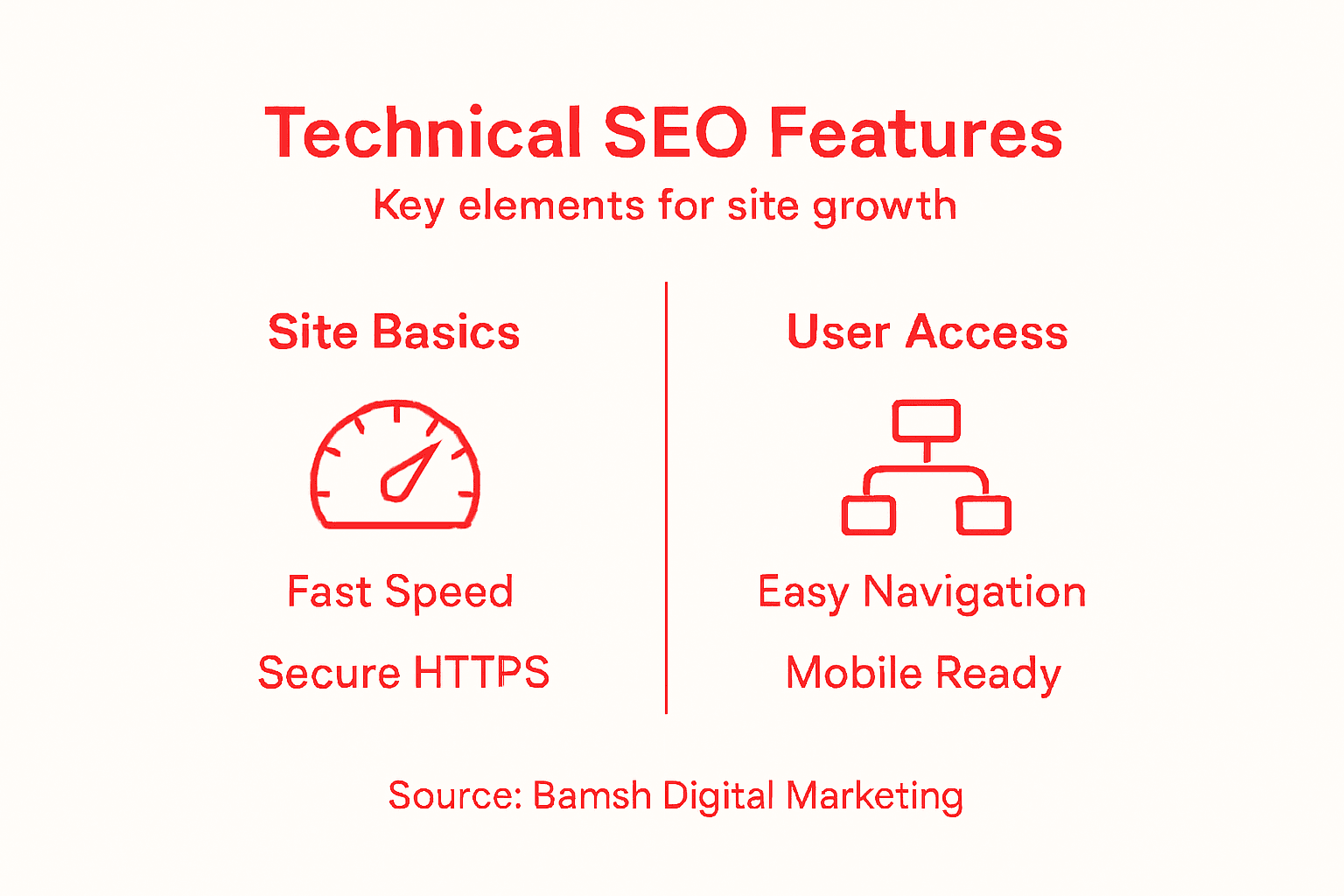
Pro tip: Utilise free performance testing tools like Google PageSpeed Insights to regularly diagnose and improve your website’s technical performance.
Practical Benefits for Business Visibility
Technical SEO transforms your website from a passive online presence into an active business growth engine. Local business visibility strategies can significantly amplify your digital marketing performance, creating opportunities that traditional marketing channels simply cannot match.
The most significant practical benefits of robust technical SEO include:
- Increased Organic Traffic: Higher search engine rankings mean more potential customers
- Enhanced User Experience: Smooth, fast-loading websites that keep visitors engaged
- Competitive Advantage: Outperforming competitors in digital discoverability
- Cost-Effective Marketing: Lower customer acquisition costs compared to paid advertising
- Measurable Results: Precise tracking of website performance and audience interaction
Businesses that invest in technical SEO create a powerful digital foundation that extends far beyond simple website maintenance. These strategic optimisations directly translate into tangible business outcomes, helping organisations capture market share and drive sustainable growth.
Key performance indicators demonstrate the real-world impact of technical SEO:
- Improved search engine rankings
- Higher conversion rates
- Increased website engagement
- More qualified lead generation
- Better return on digital marketing investments
These technical strategies are not just about pleasing search algorithms—they’re about creating a seamless, intuitive online experience that guides potential customers directly to your business offerings.
Pro tip: Conduct quarterly technical SEO audits to ensure your website remains optimised and competitive in an ever-changing digital landscape.
Common Pitfalls and How to Avoid Them
Navigating technical SEO requires understanding the potential landmines that can derail your digital marketing efforts. Common technical SEO challenges can significantly impact your website’s performance if left unaddressed.
The most frequent technical SEO pitfalls businesses encounter include:
- Slow Page Loading: Killing user experience and search rankings
- Broken Internal Linking: Creating navigation dead-ends
- Duplicate Content: Confusing search engine algorithms
- Improper Mobile Optimisation: Losing mobile traffic
- Incorrect Indexing: Preventing search engine discovery
These challenges might seem overwhelming, but they’re entirely manageable with a strategic approach. Understanding each pitfall allows businesses to create robust digital infrastructures that attract and retain potential customers.
Specific strategies for avoiding these technical SEO traps include:
- Conduct regular website performance audits
- Implement a comprehensive mobile-responsive design
- Use canonical tags to manage duplicate content
- Optimise image and media file sizes
- Create clear, logical site navigation structures
Small technical improvements can yield significant results, transforming your website from a potential liability into a powerful marketing asset that consistently attracts and converts potential customers.
Pro tip: Invest in professional technical SEO tools that provide comprehensive website diagnostics and actionable improvement recommendations.
Strengthen Your Business Growth with Expert Technical SEO Support
The article highlights key challenges businesses face with technical SEO, such as ensuring website crawlability, fast loading speed, and correct indexation , all critical to boosting your online visibility and attracting more customers. If you have struggled with slow page performance or confusing search engine rankings, these pain points are exactly what our specialised team addresses. With a clear focus on foundational elements like mobile responsiveness, semantic coding, and site structure, we help you bridge the gap between your content and ideal customers.
Take control of your website’s performance today with Bamsh Digital Marketing’s transparent and results-driven approach. From optimising your website’s technical infrastructure to ongoing audits that prevent common pitfalls, we empower your business to rank higher, generate leads, and convert more visitors. Discover how you can benefit from expert insights and tailor-made strategies by exploring our Bamsh services. For a no-obligation conversation that could transform your digital future, book a free 15-minute consultation now. To learn more about how businesses like yours succeed with clear marketing plans, visit our Special Offers page and start your journey toward measurable growth.
Frequently Asked Questions
What is technical SEO?
Technical SEO refers to the optimisation of a website’s infrastructure to enhance its crawling, indexing, and performance. It includes aspects like site structure, page loading speed, mobile responsiveness, and security protocols.
Why is technical SEO important for business growth?
Technical SEO is crucial for business growth because it directly impacts online visibility and user experience. A well-optimised site helps attract more organic traffic, improves search engine rankings, and enhances user engagement, leading to higher conversion rates.
How often should I conduct a technical SEO audit?
It’s recommended to conduct a comprehensive technical SEO audit every six months. This regular review helps identify and resolve potential performance barriers, ensuring your website remains competitive and accessible to search engines.
What are common pitfalls in technical SEO?
Common pitfalls include slow page loading times, broken internal links, duplicate content, improper mobile optimisation, and incorrect indexing. Addressing these issues helps improve site performance, user experience, and overall search visibility.