

Many business owners in Bristol and Cardiff find that simply launching a website is not enough to attract customers or boost leads. In a world where digital presence shapes success, understanding the purpose of content optimisation becomes vital for any business striving to stand out locally. This overview highlights how a targeted, user-focused strategy can make your content more discoverable and valuable, helping you connect with your audience at exactly the right moment.
Table of Contents
- Defining Content Optimisation And Its Purpose
- Types Of Content Optimisation For Business
- Key Strategies For Improving Visibility And Leads
- Tools And Processes Behind Effective Optimisation
- Risks, Challenges, And Common Pitfalls To Avoid
Key Takeaways
| Point | Details |
|---|---|
| Content Optimisation is Strategic | It aims to improve digital content’s relevance and effectiveness by understanding user intent and enhancing visibility. |
| Types of Optimisation Matter | Employ various optimisation types such as SEO, UX, and technical to maximise user engagement and conversions. |
| Continuous Monitoring is Essential | Regular audits and analytics tracking are crucial for identifying gaps, improving strategies, and ensuring content remains aligned with user needs. |
| Avoid Common Pitfalls | Focus on quality over quantity and maintain audience relevance to prevent low-value content that harms engagement and search rankings. |
Defining content optimisation and its purpose
Content optimisation represents a strategic approach to creating, managing, and improving digital content to maximise its effectiveness, visibility, and value for both businesses and users. At its core, this process aims to ensure that content not only reaches the right audience but also delivers meaningful, actionable information that drives engagement and achieves specific business objectives.
The fundamental purpose of content optimisation goes beyond simple keyword placement or search engine rankings. Instead, it focuses on delivering the right information in the most appropriate format and timing to meet user needs. This approach involves several critical components:
- Ensuring content is discoverable and accessible
- Matching content precisely with user intent
- Creating clear, valuable, and targeted information
- Reducing redundancy and improving efficiency
- Supporting ongoing digital transformation efforts
Successful content optimisation requires a comprehensive understanding of your target audience, their information requirements, and the digital channels through which they consume content. By systematically refining content strategy, businesses can prevent common pitfalls such as information duplication, inconsistent messaging, and wasted resources.
The key objectives of content optimisation include:
- Improving user experience
- Increasing content discoverability
- Enhancing engagement and retention
- Supporting conversion goals
- Building organisational knowledge and efficiency
Pro tip: Conduct regular content audits to identify gaps, redundancies, and opportunities for optimisation, ensuring your digital content remains strategic and aligned with user needs.
Types of content optimisation for business
Content optimisation encompasses several strategic approaches businesses can leverage to enhance their digital presence and drive meaningful engagement. Understanding these different types allows organisations to create a comprehensive and targeted content strategy that aligns with specific business objectives and audience needs.
One critical approach is SEO content optimisation, which focuses on improving content visibility through strategic keyword integration, metadata enhancement, and technical website improvements. This type of optimisation ensures that digital content ranks higher in search engine results, making it more discoverable for potential customers.
The primary types of content optimisation include:
-
Technical Content Optimisation
- Improving website load speeds
- Ensuring mobile responsiveness
- Implementing structured data markup
- Enhancing site architecture
-
Search Engine Optimisation (SEO)
- Keyword research and integration
- Creating high-quality, relevant content
- Building authoritative backlinks
- Optimising meta descriptions and titles
-
User Experience (UX) Optimisation
- Improving content readability
- Creating intuitive navigation
- Designing engaging visual layouts
- Reducing bounce rates
-
Conversion-Focused Optimisation
- Adding clear call-to-action elements
- Crafting compelling headlines
- Developing persuasive content structures
- Implementing strategic content placement
Beyond technical improvements, content optimisation also involves continuous performance analysis and refinement. Businesses must regularly assess content metrics, understand user interaction patterns, and adapt their strategies to maintain relevance and effectiveness.
To clarify the impact of different content optimisation strategies, here’s a comparison of their primary business benefits:
| Optimisation Type | Key Business Benefit | Typical Outcome |
|---|---|---|
| Technical Optimisation | Enhanced website performance | Faster site speeds, improved navigation |
| SEO Optimisation | Increased search visibility | More organic traffic, higher rankings |
| User Experience (UX) | Better user engagement | Longer visits, reduced bounce rates |
| Conversion-Focused | Higher lead conversion rates | Increased inquiries, more sales opportunities |
Pro tip: Implement a quarterly content audit to identify optimisation opportunities, tracking key performance indicators like engagement rates, conversion metrics, and search rankings.
Key strategies for improving visibility and leads
Improving online visibility and generating quality leads requires a multifaceted approach that goes beyond simple marketing tactics. Businesses must develop strategic, data-driven methods to ensure their digital presence not only attracts potential customers but also effectively converts their interest into tangible business opportunities.

One critical strategy involves targeting local keywords for SEO to enhance discoverability and connect with potential customers more precisely. This approach helps businesses appear in search results that are most relevant to their target audience’s specific needs and geographical location.
Key strategies for improving visibility and lead generation include:
-
Website Optimisation
- Implement mobile-first design
- Improve site loading speeds
- Create intuitive navigation
- Ensure responsive design across devices
-
Content Marketing
- Develop high-quality, relevant content
- Address customer pain points
- Use targeted keywords naturally
- Create comprehensive, valuable resources
-
Search Engine Strategies
- Conduct thorough keyword research
- Optimise meta descriptions and titles
- Build authoritative backlinks
- Improve technical SEO elements
-
Conversion-Focused Techniques
- Design clear call-to-action buttons
- Create compelling landing pages
- Implement lead capture forms
- Develop personalised user experiences
Successful visibility and lead generation demand continuous monitoring and adaptation. Businesses must leverage analytics tools to track performance, understand user behaviour, and refine their strategies accordingly. This data-driven approach ensures that marketing efforts remain targeted, efficient, and responsive to changing market dynamics.
Pro tip: Implement a comprehensive analytics dashboard to track key performance indicators, allowing real-time insights into your visibility and lead generation efforts.
Tools and processes behind effective optimisation
Content optimisation requires a sophisticated approach that combines cutting-edge digital tools with strategic processes designed to enhance online performance. Businesses must leverage a comprehensive toolkit that enables precise tracking, analysis, and continuous improvement of their digital content strategy.
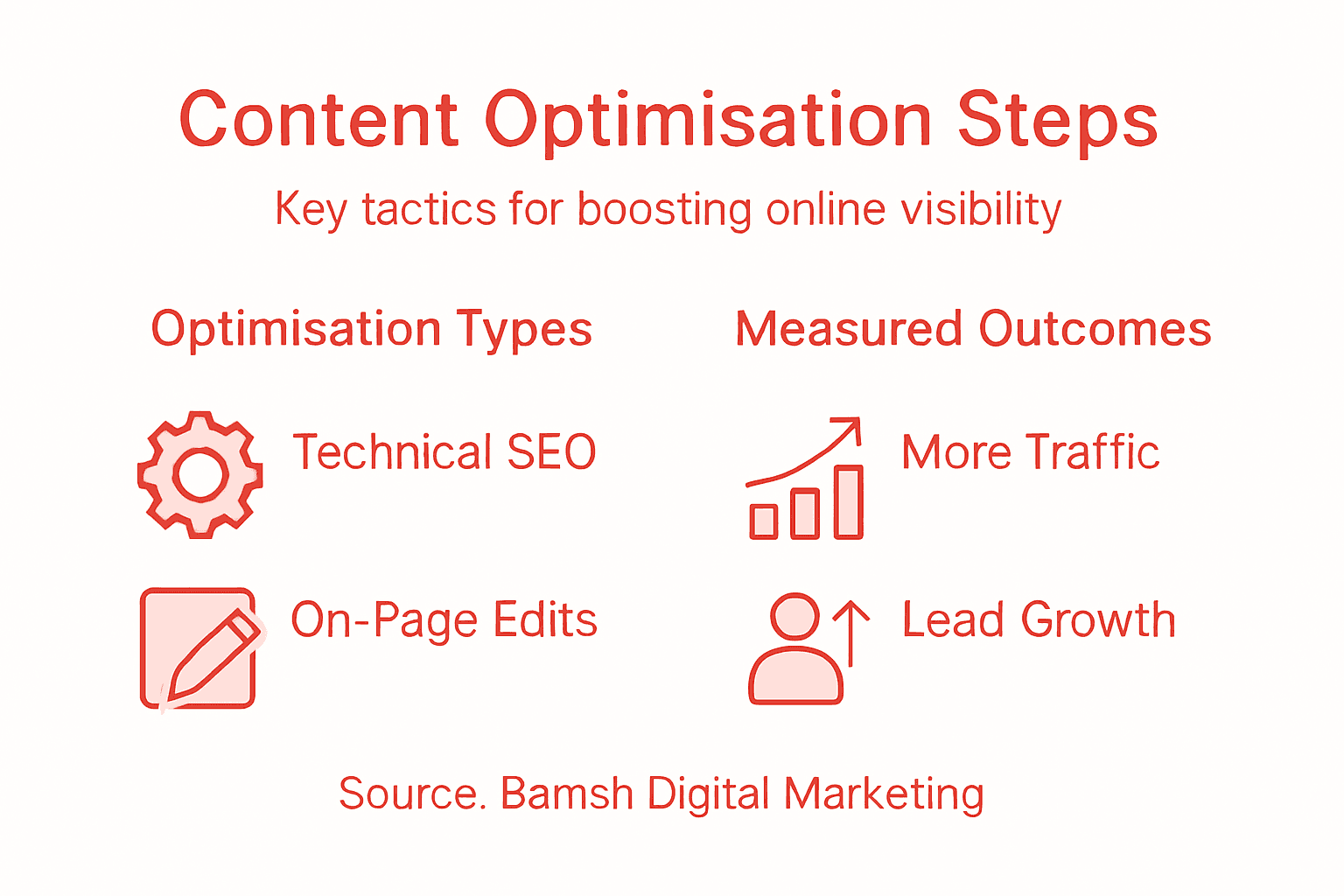
Professional content processes play a crucial role in this ecosystem, with content editing services ensuring accuracy and maintaining high-quality standards across digital platforms. These services help businesses refine their messaging, eliminate inconsistencies, and create more compelling communication materials.
Key tools and processes for effective content optimisation include:
-
Analytics and Performance Tracking
- Google Analytics
- SEMrush
- Ahrefs
- Moz Pro
- Content performance dashboards
-
Content Research and Keyword Tools
- Google Keyword Planner
- UberSuggest
- Answer The Public
- BuzzSumo
- SEO content research platforms
-
Content Management Systems
- WordPress
- HubSpot
- Wix
- Squarespace
- Drupal
-
Technical Optimisation Tools
- PageSpeed Insights
- Mobile-Friendly Test
- Screaming Frog
- GTmetrix
- Schema markup generators
Effective content optimisation is an iterative process that demands continuous monitoring and adaptation. Businesses must develop a systematic approach that combines technological tools with human expertise, ensuring their digital content remains dynamic, relevant, and aligned with audience expectations.
Here is an overview of essential content optimisation tools and their main use cases:
| Tool Category | Example Tool | Primary Use |
|---|---|---|
| Analytics & Tracking | Google Analytics | Monitor user behaviour |
| Keyword Research | SEMrush | Identify relevant keywords |
| CMS Platform | WordPress | Manage and publish content |
| Technical Audit | PageSpeed Insights | Diagnose performance issues |
Pro tip: Create a quarterly content audit checklist that integrates both automated tool insights and manual review processes to maintain ongoing content quality and performance.
Risks, challenges, and common pitfalls to avoid
Content optimisation is a nuanced discipline fraught with potential missteps that can significantly undermine digital marketing efforts. Understanding these risks is crucial for businesses seeking to develop robust, effective online strategies that genuinely connect with their target audience.
One of the most critical challenges involves avoiding low-value content creation, which can dramatically harm search engine rankings and user engagement. Search engines have become increasingly sophisticated at detecting and penalising content that appears manufactured solely for algorithmic manipulation rather than providing genuine value to readers.
Common content optimisation pitfalls include:
-
Keyword Misalignment
- Overemphasising search volume
- Ignoring user intent
- Forcing irrelevant keywords
- Neglecting long-tail keyword opportunities
-
Content Quality Issues
- Prioritising quantity over quality
- Publishing superficial content
- Lacking original insights
- Failing to address audience needs
-
Technical Optimisation Mistakes
- Slow website loading times
- Poor mobile responsiveness
- Inconsistent metadata
- Duplicate content problems
-
Strategic Execution Errors
- Inconsistent publishing schedules
- Neglecting content updates
- Ignoring performance metrics
- Lack of comprehensive analytics tracking
Businesses must adopt a holistic approach that balances technical optimisation with genuine, user-focused content creation. This means continuously refining strategies, understanding audience requirements, and maintaining a commitment to delivering meaningful, high-quality information.
Pro tip: Develop a rigorous content review process that evaluates both technical SEO elements and substantive user value before publishing any material.
Elevate Your Content Optimisation Strategy with Bamsh Digital Marketing
Struggling to boost your online visibility and convert more leads despite optimising your content? Many businesses face challenges such as keyword misalignment, poor user experience, and fragmented technical SEO that hold back growth. This article clearly explains how effective content optimisation requires a balanced approach of technical improvements and genuine user-focused content to truly increase engagement and drive conversions.
At Bamsh Digital Marketing, we specialise in helping businesses overcome these exact hurdles. From SEO and Answer Engine Optimisation to Google Business Profile management and automated lead nurturing, our tailored services are built to enhance discoverability, improve user experience, and generate consistent, quality leads. Discover how our transparent, results-driven approach can make your content work harder for your business.
Ready to transform your content strategy and see measurable results? Explore our Bamsh Insights and Case Studies to learn more about proven tactics or tune into expert discussions with our Podcasts. When you are ready to take action, book a free 15-minute consultation at https://bamsh.co.uk/15-min/ to get personalised advice and start boosting your online visibility today.
Frequently Asked Questions
What is content optimisation?
Content optimisation is a strategic approach to creating, managing, and improving digital content to maximise its effectiveness, visibility, and value. It ensures that content reaches the right audience and meets their needs with meaningful information.
Why is content optimisation important for businesses?
Content optimisation is essential for businesses as it improves user experience, increases content discoverability, enhances engagement, supports conversion goals, and builds organisational knowledge. It helps businesses connect with their audience effectively and achieve their objectives.
What are the main types of content optimisation?
The main types of content optimisation include technical optimisation (improving website performance), SEO optimisation (increasing search visibility), user experience optimisation (enhancing user engagement), and conversion-focused optimisation (boosting lead conversion rates).
How can I improve my website’s visibility and lead generation?
To improve website visibility and generate leads, focus on website optimisation (mobile design, loading speed), quality content marketing (addressing customer pain points), effective SEO strategies (keyword research, backlinks), and conversion-focused techniques (clear CTAs and compelling landing pages).