
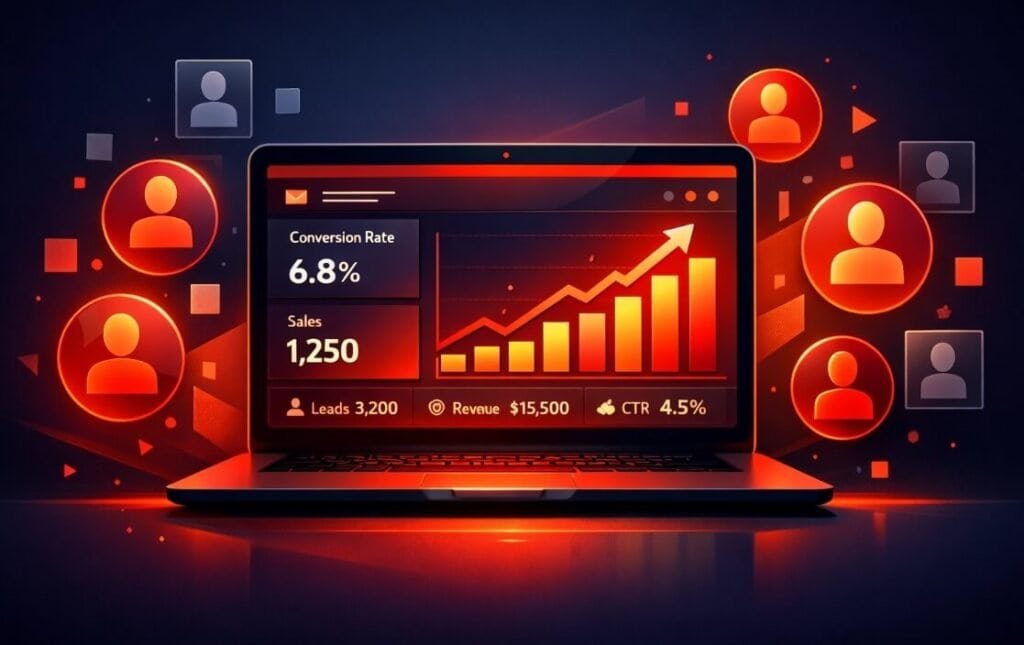
You’re getting traffic to your website. The numbers look good. Visitors are clicking through from Google, social media, and your paid ads. But here’s the problem: they’re not buying.
Sound familiar?
If you’re a Bristol business owner, you’re not alone. We see this all the time. Companies invest thousands in driving traffic but lose potential customers at the final hurdle. The good news? You don’t need more visitors to grow your revenue. You need to convert the ones you already have.
Let’s talk about conversion rate optimisation, and how small changes can create massive results for your bottom line.
What Actually Is Conversion Rate Optimisation?
Here’s the simple version: Conversion Rate Optimisation (CRO) is the process of increasing the percentage of website visitors who complete a desired action. That action might be making a purchase, filling out a contact form, downloading a guide, or booking a consultation.
The formula is straightforward:
Conversion Rate = (Number of Conversions ÷ Total Number of Visitors) × 100%
Let’s say 100 people visit your website and 2 make a purchase. That’s a 2% conversion rate. If you improve that to 4%, you’ve doubled your revenue without spending an extra penny on advertising.
That’s the power of CRO.
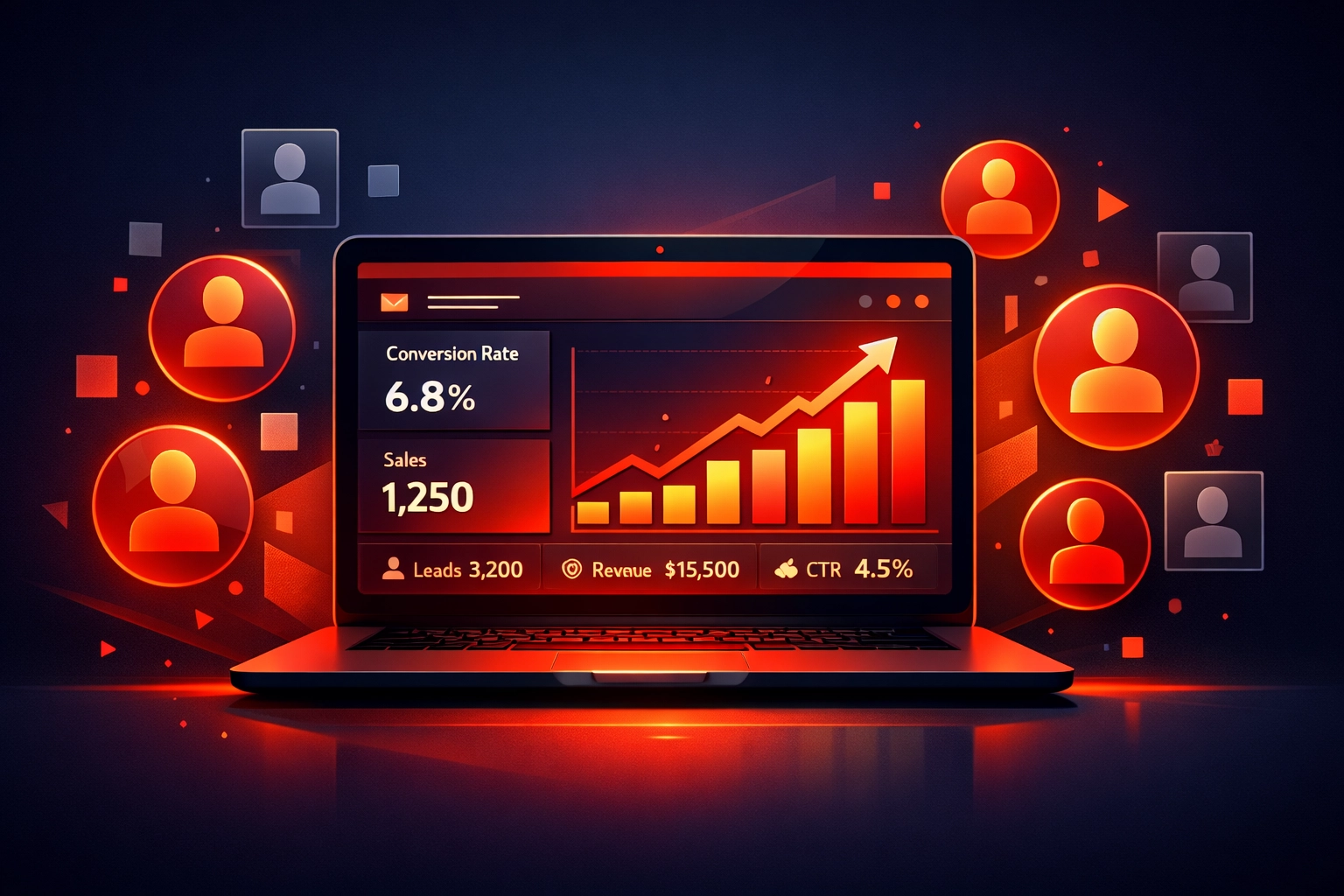
Why Most Bristol Businesses Are Leaving Money on the Table
Here’s the thing: most websites are designed without conversion in mind. They look pretty. They showcase products or services. But they don’t guide visitors toward taking action.
Think about your own website for a moment. When someone lands on your homepage, do they know exactly what to do next? Is your call-to-action clear? Can they find what they need in three clicks or less?
If you’re hesitating on any of those questions, you’re losing customers.
The reality is that website visitors make split-second decisions. Research shows you have roughly 3-5 seconds to capture attention before someone bounces. In those precious moments, your website needs to answer three questions:
- What do you offer?
- Why should I care?
- What do I need to do next?
If your site doesn’t answer these instantly, visitors leave. They don’t wait around.
The Psychology Behind Converting Visitors
Let’s dive into what actually makes people click “Buy Now” or “Get in Touch.”
Trust Is Everything
Before someone hands over their credit card details or personal information, they need to trust you. That trust is built through several elements:
Social proof: Testimonials, reviews, and case studies show that real people have worked with you and been happy. A Bristol café displaying “Winner of Best Coffee 2025” isn’t just bragging, they’re building trust.
Transparency: Clear pricing, visible contact information, and detailed product descriptions tell visitors you have nothing to hide. Mystery creates doubt. Doubt kills conversions.
Professional presentation: A poorly designed website signals an unprofessional business. You might offer the best service in Bristol, but if your site looks like it was built in 2005, visitors will question your credibility.
The Paradox of Choice
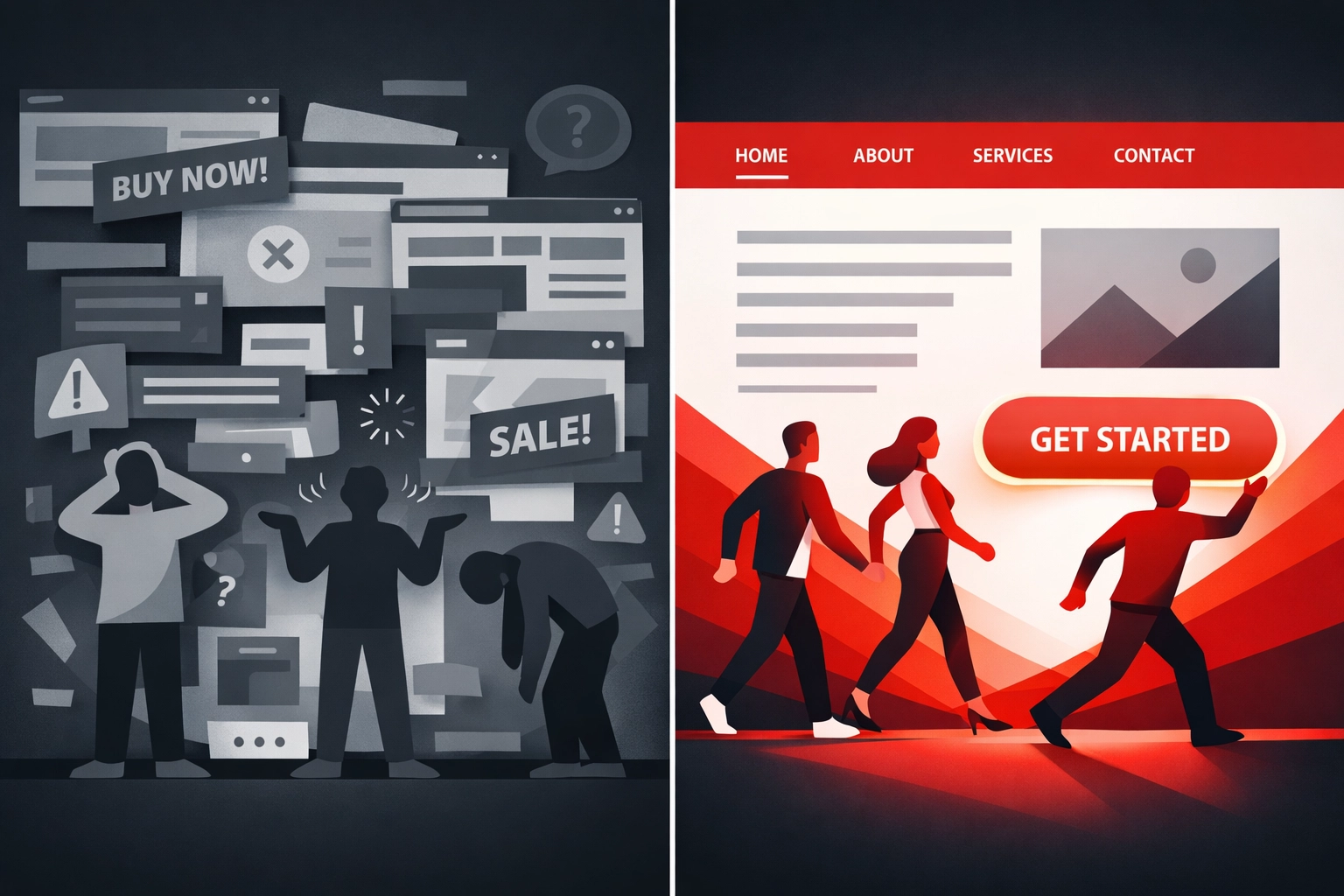
You might think offering dozens of options helps customers find exactly what they want. The opposite is true.
When faced with too many choices, people freeze. They become overwhelmed and often make no decision at all. It’s called analysis paralysis, and it’s destroying your conversion rate.
The solution? Simplify. Guide visitors down a clear path. If you offer ten services, create distinct landing pages for each rather than listing everything on one overwhelming page.
Creating Urgency (The Right Way)
Urgency works. It taps into our fear of missing out and motivates action. But there’s a right way and a wrong way to use it.
The wrong way: Fake countdown timers that reset when you refresh the page. Pop-ups screaming “LAST CHANCE!” when it’s clearly not. These tactics damage trust.
The right way: Genuine scarcity. “Only 3 workshop spaces remaining” when there truly are only three spots. “Early bird pricing ends Friday” when it genuinely does. Honest urgency respects your visitors and converts better long-term.
Small Tweaks That Create Big Results
Now let’s get practical. Here are proven changes that take minimal effort but significantly impact conversions.
Speed Matters More Than You Think
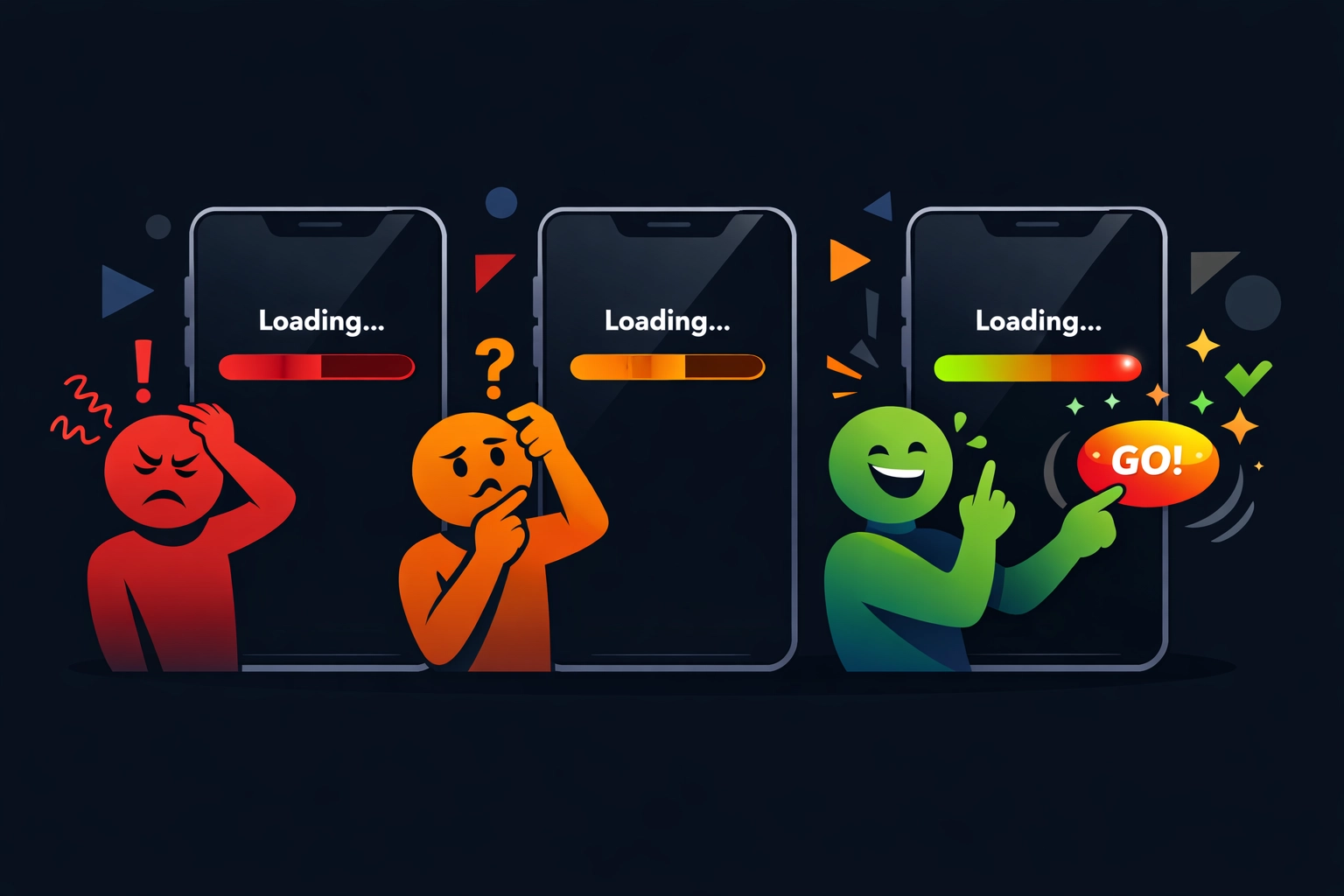
A one-second delay in page load time can reduce conversions by 7%. Think about that. If your Bristol shop makes £100,000 annually through your website, slow loading speeds could be costing you £7,000 per year.
Check your website speed using Google’s PageSpeed Insights. If you’re scoring below 80 on mobile, you have work to do. Compress images, enable browser caching, and consider upgrading your hosting.
Your Call-to-Action Buttons
Those buttons that say “Submit” or “Click Here”? They’re killing your conversions.
Better options use action-oriented, benefit-focused language:
- Instead of “Submit,” try “Get Your Free Quote”
- Instead of “Learn More,” try “Show Me How This Works”
- Instead of “Download,” try “Send Me the Guide”
See the difference? The improved versions tell visitors exactly what they’ll get and create anticipation.
Response Time Can Triple Your Conversions
Here’s something most Bristol businesses get wrong: inquiry response time.
When someone fills out your contact form, how quickly do you reply? If it’s longer than two hours during business hours, you’re losing deals.
Research shows that responding within the first hour increases conversion likelihood by 300%. Set up automated acknowledgement emails, then ensure someone follows up personally within 24 hours maximum.
A/B Testing: Your Secret Weapon
You might wonder how to know which changes actually work. The answer is A/B testing.
Here’s how it works: you create two versions of a webpage (A and B), send half your traffic to each, and measure which performs better. The winner becomes your new control, and you test something else.
What Should You Test?
Start with elements that have the biggest impact:
Headlines: Your headline is the first thing visitors read. Test different approaches, questions versus statements, benefit-focused versus feature-focused.
Button colours and placement: Yes, button colour matters. Red often creates urgency. Green signals “go.” Blue builds trust. Test what works for your audience.
Form length: Should you ask for five fields or fifteen? Generally, shorter forms convert better, but sometimes longer forms qualify leads better. Test both.
Images: Show people or products? Lifestyle shots or plain backgrounds? The only way to know what resonates with your Bristol audience is to test.
Testing Tools You Can Use
You don’t need expensive software to start testing. Google Optimise (free) integrates with Google Analytics and lets you run basic A/B tests. For more advanced testing, tools like Optimisely or VWO offer additional features.
The key is to test one element at a time. If you change your headline, button colour, and image simultaneously, you won’t know which change created the improvement.
Practical CRO Tactics for Bristol Businesses
Let’s make this specific to your situation.
For Bristol Retailers
Your product pages need stellar photography, clear descriptions, and visible customer reviews. Include size guides, delivery information, and hassle-free return policies upfront. Don’t make customers hunt for this information.
Add a live chat feature. When someone’s looking at a product, being able to ask a quick question can be the difference between a sale and an abandoned cart.
For Bristol Service Providers
Your contact forms are probably too long. Ask for name, email, phone number, and one qualifying question. That’s it. You can gather more details later.
Create dedicated landing pages for each service. If you offer web design and SEO services, don’t send all traffic to your homepage. Create targeted pages that speak directly to each audience.
For Bristol Restaurants and Hospitality
Make booking ridiculously easy. Your reservation system should work flawlessly on mobile devices, that’s where most people are browsing.
Include mouth-watering photos (professionally shot, please), clear menus with prices, and prominent displays of your location and opening hours. If you’ve won awards or been featured in Bristol publications, showcase that prominently.

Common CRO Mistakes to Avoid
Even with the best intentions, businesses make predictable mistakes.
Asking for too much, too soon: Don’t request a phone consultation before someone’s even read about your service. Build trust first, then ask for commitment.
Ignoring mobile users: Over 60% of web traffic comes from mobile devices. If your site doesn’t work perfectly on smartphones, you’re losing more than half your potential customers.
Forgetting about page speed: We mentioned this earlier, but it bears repeating. Slow websites kill conversions. No exceptions.
Not having a clear value proposition: Within seconds of landing on your site, visitors should understand what makes you different from every other Bristol business in your category.
Measuring What Matters
You can’t improve what you don’t measure. Set up proper tracking to understand how visitors behave on your site.
Google Analytics (free) should be your baseline. Track these metrics:
- Bounce rate (visitors who leave without interacting)
- Time on page (are people actually reading your content?)
- Click-through rates on call-to-action buttons
- Form completion rates
- Cart abandonment rates (for e-commerce)
Set up conversion goals for actions that matter to your business: form submissions, purchases, phone calls, downloads. Review these metrics monthly and look for patterns.
Your Next Steps
Conversion rate optimisation isn’t a one-time project. It’s an ongoing process of testing, measuring, and improving.
Start with the quick wins. Fix your page speed. Clarify your call-to-action buttons. Reduce form fields. These changes take minimal time but create immediate impact.
Then move to more sophisticated testing. Try different headlines. Experiment with page layouts. Test various offers and incentives.
The businesses winning in Bristol right now aren’t necessarily getting more traffic than you. They’re just converting their traffic more effectively. A 2% improvement in conversion rate might not sound dramatic, but for a business generating £500,000 annually, that’s an extra £10,000 straight to your bottom line.
That’s money you’re currently leaving on the table. Time to pick it up.
If you’re ready to turn more of your website visitors into paying customers, get in touch with our team. We’ll audit your current conversion rate and identify the biggest opportunities for improvement: no fluff, just practical changes that drive revenue.
Frequently Asked Questions About Conversion Rate Optimisation
1. What is conversion rate optimisation?
Conversion rate optimisation is the process of improving your website to increase the percentage of visitors who take a desired action, such as making a purchase or submitting an enquiry.
2. How is conversion rate calculated?
Conversion rate is calculated using the formula: (Number of Conversions ÷ Total Visitors) × 100%.
3. Why is my website traffic high but my conversion rate low?
A low conversion rate often happens when websites look good but lack clear calls to action, trust signals, fast loading speeds, or an easy user journey.
4. How can page speed affect my conversion rate?
A slow-loading website can significantly reduce your conversion rate, as even a one-second delay may cause visitors to leave before taking action.
5. What role does trust play in improving conversion rate?
Trust elements such as testimonials, reviews, clear pricing, and professional design help increase conversion rate by reassuring visitors that your business is credible.
6. Can simplifying choices improve conversion rate?
Yes, reducing overwhelm by limiting options and guiding users down a clear path can improve conversion rate and prevent analysis paralysis.
7. How does response time impact conversion rate?
Responding to enquiries within the first hour can dramatically increase conversion rate, as fast follow-ups show professionalism and reliability.
8. What is A/B testing and how does it improve conversion rate?
A/B testing involves comparing two versions of a webpage to see which performs better, helping you make data-driven changes that improve conversion rate.
9. Why is mobile optimisation important for conversion rate?
With over 60% of traffic coming from mobile devices, poor mobile performance can severely damage your conversion rate.
10. How much can a small improvement in conversion rate increase revenue?
Even a small 1–2% increase in conversion rate can generate significant additional revenue without increasing your advertising spend.