

Nearly 90 percent of UK consumers begin their search for products and services online, making digital marketing more vital than ever for businesses seeking growth. In a world where online presence drives real-world results, understanding how digital marketing works can set your brand apart from competitors. This guide breaks down the strategies and tools you need to attract, engage, and convert your ideal customers in today’s fast-paced digital arena.
Table of Contents
- What Digital Marketing Means Today
- Essential Digital Marketing Channels and Tools
- How Digital Marketing Campaigns Work
- Costs, Budgets, and Common Risks
- Measuring Success and Avoiding Pitfalls
Key Takeaways
| Point | Details |
|---|---|
| Digital Marketing’s Evolution | Digital marketing has become essential for businesses to engage customers, leveraging channels like SEO, PPC, and social media for targeted campaigns. |
| Channel Selection Is Crucial | The effectiveness of digital marketing relies on choosing the right mix of channels that align with business goals and audience preferences. |
| Budget Planning Is Key | A well-structured digital marketing budget should allocate resources effectively across various channels to maximize return on investment. |
| Measure Success With KPIs | Tracking key performance indicators is essential to evaluate campaign effectiveness and make data-driven decisions to improve marketing efforts. |
What Digital Marketing Means Today
Digital marketing has transformed from a buzzword into a critical business strategy for companies wanting to reach and engage customers in the modern digital landscape. According to Wikipedia, digital marketing involves internet-based digital technologies used to promote products and services, encompassing multiple sophisticated channels and techniques.
In practical terms, digital marketing means creating strategic online experiences that connect businesses directly with their target audience. It goes far beyond traditional advertising by leveraging powerful platforms like search engines, social media, email, and websites to deliver precise, measurable marketing campaigns. As research from IBIMA Publishing confirms, digital marketing is an “umbrella term” that includes marketing across internet platforms, mobile technologies, and various digital mediums.
The core components of digital marketing today include:
- Search Engine Optimisation (SEO): Improving website visibility in search results
- Pay-Per-Click Advertising: Targeted ads on search engines and social platforms
- Content Marketing: Creating valuable, relevant content to attract and retain customers
- Social Media Marketing: Building brand awareness and engagement through social channels
- Email Marketing: Nurturing leads and maintaining customer relationships
- Analytics and Tracking: Measuring campaign performance and customer interactions
For business owners in the UK, digital marketing represents an opportunity to level the playing field. Small and medium enterprises can now compete with larger organisations by using smart, targeted digital strategies that deliver measurable results. Check out our complete guide on digital marketing strategies to discover how you can transform your business’s online presence and start attracting more of your ideal customers.
Essential Digital Marketing Channels and Tools
Understanding the digital marketing landscape requires a strategic approach to selecting the right channels and tools for your business. According to Chartered Institute of Marketing, key digital marketing channels play a vital role in creating a comprehensive digital strategy.
Let’s break down the most powerful digital marketing channels that can transform your business’s online presence:
Search Engine Channels
- Search Engine Optimisation (SEO): Improving organic visibility in search results
- Pay-Per-Click (PPC) Advertising: Targeted paid search advertising
Social Media Channels
- Organic Social Media Marketing: Building brand awareness through regular content
- Paid Social Media Advertising: Targeted ads across platforms like Facebook, Instagram
Content Marketing Channels
- Blog Content: Establishing thought leadership and attracting organic traffic
- Video Marketing: Creating engaging multimedia content
- Podcasting: Reaching audiences through audio content
Direct Communication Channels
- Email Marketing: Nurturing leads and maintaining customer relationships
- Messenger Marketing: Engaging customers through chat platforms
While these channels offer immense potential, the key is selecting the right mix for your specific business goals. Learn more about increasing sales through strategic digital marketing to understand how to leverage these channels effectively.
Successful digital marketing isn’t about being everywhere, but being strategic. Each channel requires a tailored approach, understanding your target audience, and consistently delivering value. By focusing on the right platforms and creating high-quality, relevant content, UK businesses can significantly enhance their online visibility and drive meaningful customer engagement.

How Digital Marketing Campaigns Work
Digital marketing campaigns are sophisticated, data-driven strategies designed to connect businesses with their target audience across multiple online platforms. According to University of Kent, these campaigns involve carefully designing strategies, building optimised websites, and analyzing real data to create impactful marketing efforts.
The Campaign Development Process
- Research and Audience Identification
- Define target demographic
- Understand customer pain points
- Map customer journey
- Strategic Channel Selection
- Choose most effective digital platforms
- Align channels with audience preferences
- Create integrated multichannel approach
- Content and Creative Development
- Craft compelling messaging
- Design visually engaging assets
- Ensure consistent brand voice
Campaign Execution and Tracking
Research from the University of Lincoln highlights that successful digital marketing campaigns leverage social media and digital advertising to improve online presence, brand awareness, engagement, and conversions. This means moving beyond simple advertising to creating meaningful interactions.
Key performance metrics include:
- Website traffic
- Conversion rates
- Engagement levels
- Return on ad spend
- Lead quality
Check out our complete roadmap for dominating digital marketing to understand how to build campaigns that genuinely drive business growth. Remember, great digital marketing isn’t about shouting the loudest—it’s about speaking directly to your ideal customers in the most effective way possible.
Costs, Budgets, and Common Risks
Navigating the financial landscape of digital marketing requires strategic planning and careful risk assessment. According to University of Buckingham, understanding the costs and budgets associated with digital marketing is crucial, as it involves various practices that demand comprehensive financial planning.
Budget Allocation Strategies
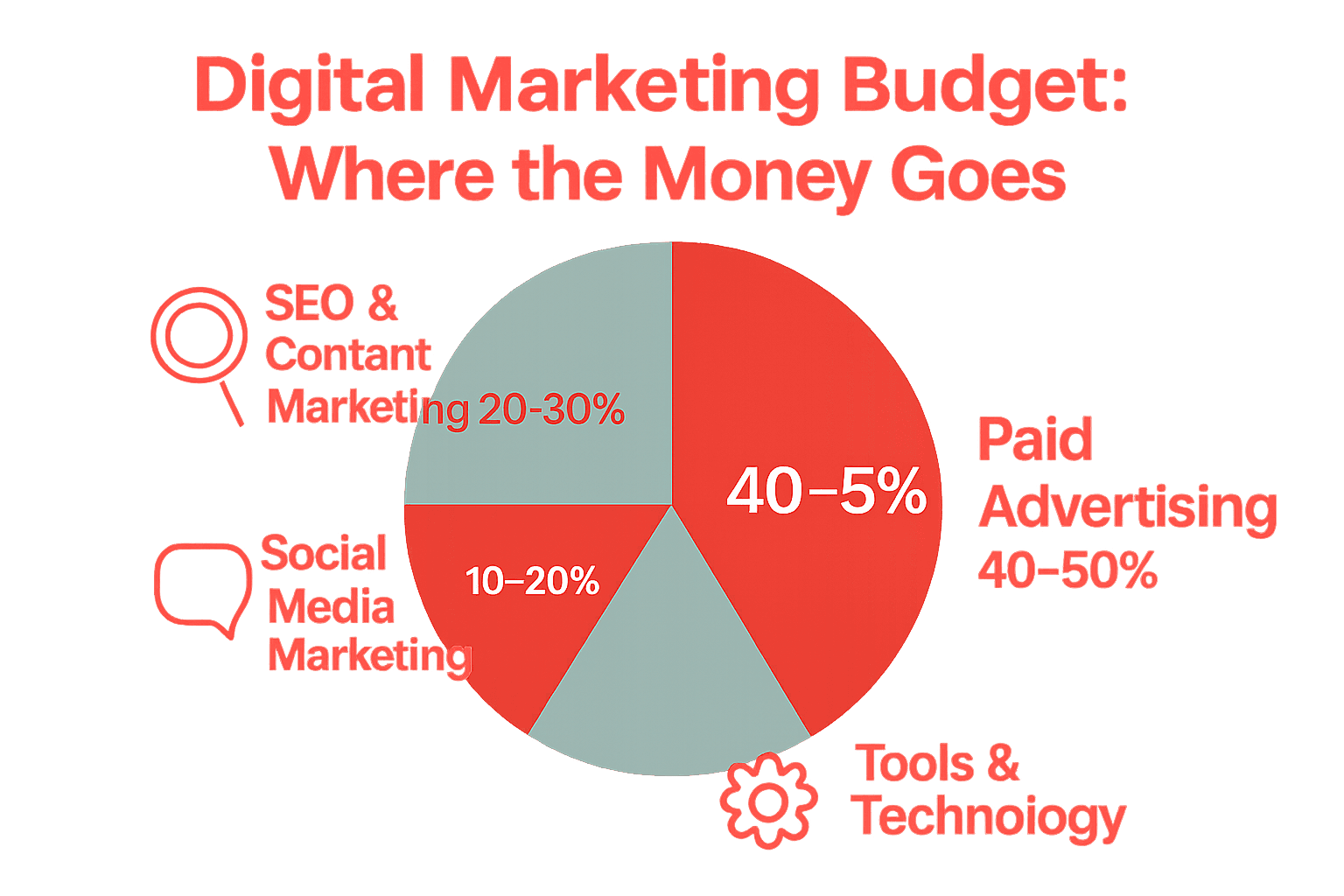
Digital Marketing Budget Breakdown:
- SEO and Content Marketing: 20-30% of total budget
- Paid Advertising: 40-50% of total budget
- Social Media Marketing: 10-20% of total budget
- Tools and Technology: 5-10% of total budget
Cost Ranges for Different Channels
- Google Ads: £1-£5 per click
- Facebook Advertising: £0.50-£2 per engagement
- LinkedIn Ads: £4-£8 per click
- Email Marketing: £10-£300 per month
Research from arXiv highlights the complexity of digital marketing budget decisions, emphasising the importance of understanding channel interactions and time-dependent factors. This means your budget isn’t just about how much you spend, but when and where you spend it.
Common Risks to Mitigate
- Overspending on underperforming channels
- Lack of tracking and measurement
- Inconsistent messaging
- Poor audience targeting
- Neglecting organic growth strategies
Learn more about revenue growth through strategic digital marketing to understand how to maximise your marketing investments. Remember, successful digital marketing is about smart spending, not just big spending.
Measuring Success and Avoiding Pitfalls
Measuring the effectiveness of digital marketing is more than just tracking numbers—it’s about understanding the deeper story behind your campaign’s performance. According to research from arXiv, success measurement involves comprehensive analysis of engagement, advertising strategies, and ensuring regulatory compliance.
Key Performance Indicators (KPIs)
Critical Metrics to Track:
- Conversion Rate: Percentage of visitors taking desired action
- Customer Acquisition Cost: Total spend divided by new customers
- Return on Ad Spend (ROAS): Revenue generated per marketing pound spent
- Engagement Rate: Interactions divided by total reach
- Website Traffic Quality: Not just volume, but relevance and behaviour
Compliance and Ethical Considerations
As highlighted by Wikipedia’s CAP Code reference, adhering to advertising standards is crucial. This means:
- Transparent communication
- Honest representation of products/services
- Clear pricing information
- Avoiding misleading claims
- Respecting consumer rights
Common Pitfalls to Avoid
- Vanity Metrics: Chasing likes instead of meaningful engagement
- Inconsistent Tracking: Not using unified analytics platforms
- Ignoring Data: Collecting metrics without actionable insights
- Narrow Targeting: Missing potential audience segments
- Neglecting Customer Feedback
Discover our comprehensive guide to mastering digital marketing strategies to transform these insights into real business growth. Remember, great digital marketing is a continuous learning process—not a one-time achievement.
Unlock the Power of Digital Marketing for Your Business Today
If the challenges of reaching your ideal customers, understanding the complex digital landscape, and turning clicks into loyal clients resonate with you, Bamsh Digital Marketing can help. This guide highlights key pain points such as selecting the right channels, optimising campaigns, and avoiding costly errors. We specialise in transforming these challenges into clear, results-driven strategies using practical solutions like SEO, PPC, and AI-powered automation tailored for UK businesses.
Discover why countless small and medium enterprises trust our transparent, jargon-free approach at Digital Marketing Bristol – Bamsh Digital Marketing.
Take control of your digital marketing journey now by partnering with experts who prioritise your growth and clear communication. Visit us today at Bamsh to book your free 15-minute consultation and explore how we can deliver consistent leads and predictable revenue. Learn more about our approach through Bamsh – Bamsh Digital Marketing and start building your success story with confidence.
Frequently Asked Questions
What are the key components of digital marketing?
Digital marketing includes essential components such as Search Engine Optimization (SEO), Pay-Per-Click Advertising (PPC), Content Marketing, Social Media Marketing, Email Marketing, and Analytics and Tracking.
How can businesses measure the success of their digital marketing campaigns?
Businesses can measure success through Key Performance Indicators (KPIs) like conversion rates, customer acquisition cost, return on ad spend (ROAS), engagement rates, and website traffic quality.
What budget allocation strategies should businesses consider for digital marketing?
A common budget allocation is: 20-30% for SEO and Content Marketing, 40-50% for Paid Advertising, 10-20% for Social Media Marketing, and 5-10% for Tools and Technology.
What are common pitfalls to avoid in digital marketing?
Common pitfalls include focusing on vanity metrics, inconsistent tracking, ignoring data insights, narrow audience targeting, and neglecting customer feedback.