

Most people find digital marketing jargon confusing, especially when british business owners hear words like SEO or PPC tossed around at meetings. It matters because these buzzwords can hold the key to real business growth, yet too many companies miss out. In fact, more than 60 percent of small businesses admit they struggle to understand key digital marketing terms. This guide clears up the confusion and shows how decoding this language helps you build a stronger online presence.
Table of Contents
- What Digital Marketing Jargon Really Means
- Common Terms and Their True Impact
- Types of Jargon Across Marketing Channels
- How Misunderstanding Jargon Costs Businesses
- Practical Ways to Cut Through the Noise
Key Takeaways
| Point | Details |
|---|---|
| Understanding Terminology | Familiarising yourself with digital marketing terms unlocks effective strategies for business growth. |
| Measuring Success | Key metrics such as Conversion Rate and ROI are essential for evaluating marketing effectiveness. |
| Channel-Specific Jargon | Different marketing channels have unique terminology that reflects their specific goals and strategies. |
| Continuous Learning | Commit to ongoing education to navigate digital marketing jargon and enhance decision-making. |
What Digital Marketing Jargon Really Means
Decoding digital marketing terminology can feel like navigating a maze of confusing acronyms and complex phrases. But here’s the reality: understanding these terms isn’t about impressing anyone – it’s about unlocking powerful strategies that can genuinely transform your business’s online presence. Digital marketing fundamentals are actually simpler than most business owners realise.
Let’s break down some of the most common digital marketing terms that often sound more complicated than they really are. SEO (Search Engine Optimisation) might sound technical, but it’s essentially about making your website more visible and attractive to potential customers searching online. PPC (Pay-Per-Click) isn’t rocket science – it’s simply a model where you pay a small fee each time someone clicks on your online advertisement. CRO (Conversion Rate Optimisation) sounds complex, but it really means improving your website to encourage more visitors to take actions like purchasing or signing up.
The goal isn’t to bamboozle you with jargon – it’s to help you understand the tools and strategies that can drive real business growth. By demystifying these terms, we’re empowering you to make smarter digital marketing decisions. Each acronym represents a practical approach to reaching more customers, increasing visibility, and ultimately boosting your bottom line. And the best part? You don’t need a computer science degree to leverage these powerful marketing techniques.
Remember, digital marketing isn’t about speaking a secret language – it’s about communicating effectively with your potential customers. The more clearly you understand these concepts, the more confidently you can make decisions that genuinely move your business forward.
Common Terms and Their True Impact
Understanding digital marketing terminology isn’t just about memorising acronyms – it’s about grasping how these concepts directly influence your business’s online success. Digital marketing strategies are powerful tools that can transform how potential customers discover and engage with your brand.
Let’s explore some key terms that sound complex but represent straightforward marketing approaches. Organic Traffic means website visitors who arrive through unpaid search results – essentially, customers finding you naturally. Bounce Rate tracks how quickly visitors leave your website, which signals the quality of your content and user experience. Click-Through Rate (CTR) measures the percentage of people who click on your online advertisement after seeing it, directly indicating how compelling your marketing message is. These metrics aren’t just numbers – they’re insights into customer behaviour and engagement.

Beyond technical definitions, these terms represent real opportunities for business growth. Imagine understanding that a high bounce rate means your website needs improvement, or recognising that a low click-through rate suggests your advertising needs refinement. By demystifying these concepts, you’re not just learning vocabulary – you’re gaining actionable intelligence about your digital marketing performance. Each metric tells a story about your customers’ interactions, preferences, and potential barriers to converting.
The ultimate goal of understanding these terms is to transform data into strategic decisions. Digital marketing isn’t about complex jargon – it’s about creating meaningful connections with your audience. When you understand these concepts, you can make informed choices that directly impact your business’s online visibility, customer attraction, and ultimately, your bottom line.
Types of Jargon Across Marketing Channels
Every digital marketing channel speaks its own unique language, creating a complex landscape of terminology that can overwhelm business owners. Digital marketing terminology varies dramatically across different platforms, each with its own set of specialised vocabulary and performance metrics.
Let’s break down the jargon by channel. Social Media Marketing comes with terms like engagement rate, which measures how people interact with your content, and reach, indicating how many unique users see your post. Email Marketing introduces concepts such as open rate (percentage of recipients who open your email) and click-through rate (number of people clicking links within your email). Content Marketing brings its own lexicon, including evergreen content (timeless pieces that remain relevant) and content pillars (core topics that guide your strategy).
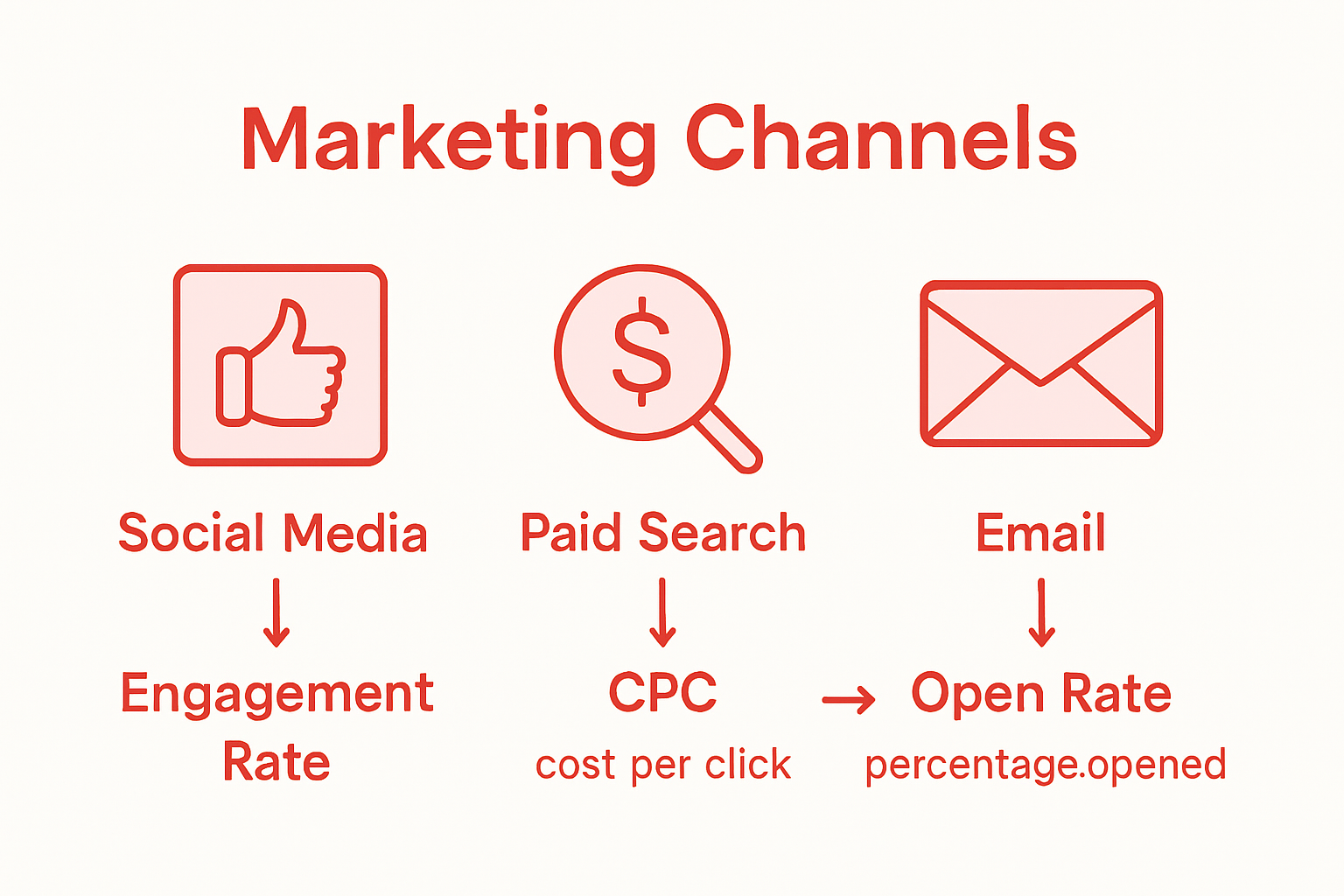
Each channel’s language reflects its unique goals and mechanics. Social media jargon focuses on interaction and visibility, email marketing terms centre on communication effectiveness, while content marketing terminology emphasises long-term value and strategic depth. These aren’t just fancy words – they’re precise tools for understanding how your marketing efforts perform across different platforms. By learning to decode these terms, you transform complex metrics into actionable insights that can dramatically improve your marketing approach.
Ultimately, understanding channel-specific jargon isn’t about impressing anyone – it’s about gaining clarity. The more fluent you become in these marketing languages, the better you’ll be at crafting strategies that truly resonate with your target audience. Think of it like learning different dialects that help you communicate more effectively in the vast, dynamic world of digital marketing.
How Misunderstanding Jargon Costs Businesses
Digital marketing terminology confusion can be a silent business killer, creating invisible barriers that prevent companies from effectively leveraging online strategies. What might seem like simple misunderstandings can translate into significant financial losses and missed opportunities for growth.
Consider the real-world implications of misinterpreting key digital marketing terms. Conversion Rate might sound straightforward, but misunderstanding this metric could mean investing resources in the wrong marketing activities. A business might think they’re doing well if 100 people visit their website, without realising that only two of those visitors are actually taking meaningful action. ROI (Return on Investment) is another term frequently misunderstood – some businesses calculate this superficially, overlooking critical, nuanced factors that truly determine marketing effectiveness. These misunderstandings aren’t just academic – they represent real money left on the table.
The consequences of digital marketing jargon confusion extend beyond simple misinterpretation. Many UK businesses waste thousands of pounds annually by implementing strategies based on a partial or incorrect understanding of key terms. Imagine spending money on a Pay-Per-Click campaign without truly understanding how bidding strategies, quality scores, and ad relevance interact. Or investing in SEO without comprehending the difference between technical optimisation and genuine, valuable content creation. These mistakes aren’t just costly – they can fundamentally undermine a company’s digital marketing efforts.
Ultimately, the solution isn’t to become a digital marketing dictionary, but to commit to continuous learning and clarity. Ask questions when terms seem unclear. Seek explanations that break down complex concepts into practical, understandable language. The most successful businesses aren’t those who know every acronym, but those who understand the core principles driving digital marketing success. By demystifying jargon, you transform complex terminology from a barrier into a powerful tool for business growth.
Practical Ways to Cut Through the Noise
Digital marketing integration strategies demand a proactive approach to understanding complex terminology. Cutting through digital marketing jargon isn’t about memorising every acronym, but developing a practical framework for learning and applying key concepts.
Start by building a personal digital marketing glossary. Keep a running document where you record new terms, their meanings, and most importantly, real-world examples of how they apply to your business. Break down complex concepts into simple language. For instance, instead of getting lost in the technical definition of conversion rate, translate it to: “How many website visitors actually do what I want them to do?”. This approach transforms abstract terminology into actionable insights. Create columns for the term, its technical definition, and your plain-English translation.
Seek out learning resources that prioritise practical understanding over academic complexity. Attend workshops, webinars, and industry meetups where professionals explain digital marketing concepts in straightforward language. Consider finding a mentor or joining a professional network where you can ask questions without feeling intimidated. Many successful business owners learn best through conversation and practical demonstration. Look for resources that provide case studies, showing exactly how specific marketing strategies have worked for real businesses in your industry.
Remember, mastering digital marketing language is a journey, not a destination. The goal isn’t to sound like a technical expert, but to understand how these strategies can genuinely grow your business. Be curious, ask questions, and never feel embarrassed about seeking clarification. The most successful businesses aren’t those with the most impressive vocabulary, but those who can translate complex concepts into clear, effective strategies that drive real results.
Gain Clarity and Grow with Bamsh Digital Marketing
Struggling to make sense of digital marketing jargon can hold your business back from real growth. The challenges highlighted in the article “Digital Marketing Jargon Explained – Clarity for UK Businesses” reveal just how confusing terms like SEO, PPC, and Conversion Rate can be. If you feel overwhelmed by these concepts or unsure how to turn them into actionable strategies, you are not alone. Your goal is clear: to cut through the confusion, attract more customers, and boost your bottom line.
At Bamsh Digital Marketing, we specialise in demystifying complex marketing terms and transforming them into simple, effective solutions that work for UK businesses. From optimising your website with SEO and managing results-driven Google PPC campaigns to creating targeted social media ads and automating lead nurturing, our transparent, jargon-free approach puts you in control. Understand exactly what you are paying for and see clear results every step of the way. Start your journey to confident marketing decisions with our quick and free 15-minute discovery call. Let us help you take the guesswork out of digital marketing and turn complexity into clarity today.
Explore practical insights on marketing terms in our Digital Marketing Bristol section or hear real-world experiences in our Podcasts, where we break down marketing strategies in plain English. Don’t let confusing terminology cost your business money or leads — partner with Bamsh and grow with confidence now.
Frequently Asked Questions
What is the meaning of SEO in digital marketing?
SEO stands for Search Engine Optimisation. It refers to the practice of enhancing a website’s visibility and attractiveness in search engine results, making it easier for potential customers to find you online.
How does Pay-Per-Click (PPC) advertising work?
Pay-Per-Click (PPC) is a digital marketing strategy where advertisers pay a fee each time one of their ads is clicked. It allows businesses to gain immediate traffic by showing ads to users searching for specific keywords.
What is Conversion Rate Optimisation (CRO) and why is it important?
Conversion Rate Optimisation (CRO) involves improving a website to encourage visitors to complete desired actions, such as making a purchase or signing up for a newsletter. A higher conversion rate can lead to increased sales and customer engagement.
Why should I care about metrics like Bounce Rate and Click-Through Rate?
Metrics such as Bounce Rate and Click-Through Rate (CTR) provide insights into customer behaviour. A high Bounce Rate may indicate that your website needs improvement, while a low CTR may suggest that your marketing message isn’t compelling enough. Understanding these metrics helps you make informed decisions to enhance your digital marketing strategy.
Recommended
- What is today’s equivalent of the Yellow Pages? – Bamsh Digital Marketing
- Digital Marketing Explained: The Complete Guide – Bamsh Digital Marketing
- Mastering Digital Marketing: Strategies for Success
- Dominate Digital Marketing – Bamsh Complete Roadmap Guide
- Glosario de IA de Rescrito: Domina el Lenguaje de la IA