

Most British online shoppers leave carts abandoned, with studies showing over 65 percent never complete their purchase. For digital marketing managers in Bristol, this represents both a challenge and an opportunity. Mastering retargeting means you can reconnect with these hesitant buyers and increase customer conversions. In this guide, explore practical strategies tailored for small and medium e-commerce businesses to transform those lost prospects into loyal customers.
Table of Contents
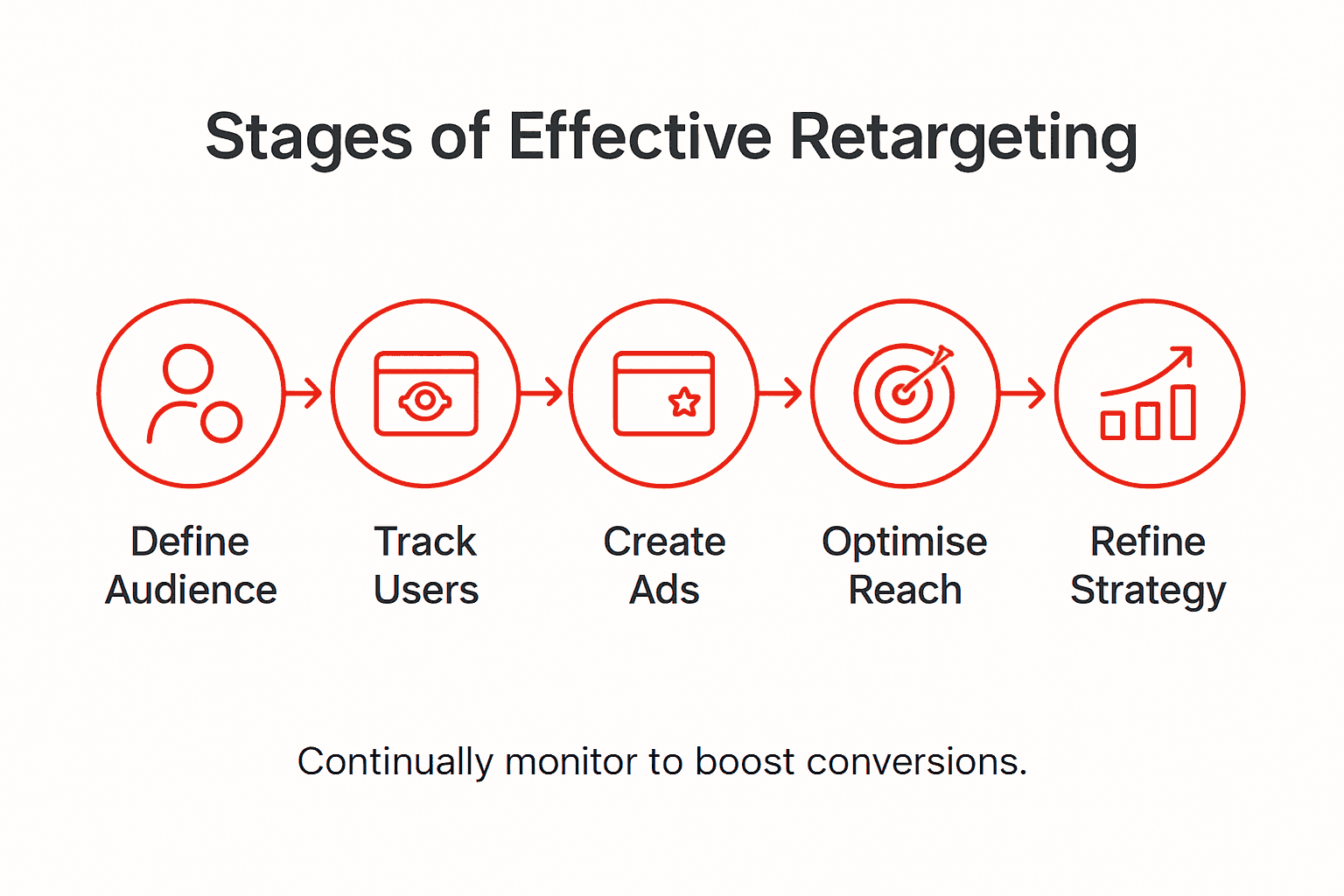
- Stage 1: Define Audience Segments For Targeted Retargeting
- Stage 2: Configure Tracking Tools And Pixel Integrations
- Stage 3: Create Compelling Dynamic Ad Creatives
- Stage 4: Optimise Campaign Settings For Reach And Relevance
- Stage 5: Monitor Performance Metrics And Refine Strategy
Quick Summary
| Key Point | Explanation |
|---|---|
| 1. Define audience segments for targeting | Break down potential customers into groups based on demographics, behaviour, and psychographics to tailor messages effectively. |
| 2. Configure tracking tools and pixels | Ensure pixel integration is correctly set up across all pages to accurately track user interactions and support retargeting efforts. |
| 3. Create dynamic ad creatives | Develop personalised advertisements that adapt to user data, showcasing relevant products and customer testimonials to enhance engagement. |
| 4. Optimise campaign settings regularly | Continually adjust targeting parameters and monitor performance to minimise wasted ad spend and improve conversion rates. |
| 5. Monitor performance metrics closely | Evaluate key performance indicators like conversion rates and click-through rates to refine strategies and inform future campaigns. |
Stage 1: Define audience segments for targeted retargeting
Understanding your audience is the foundational step in creating powerful retargeting campaigns. By breaking down your potential customers into specific groups, you can craft messages that truly resonate and drive conversions.
To develop meaningful audience segments, start by examining your existing customer data through multiple lenses. Marketing segmentation helps you divide broad audiences into specific groups based on key characteristics that influence purchasing behaviour. Consider segmenting your audience across several strategic dimensions:
- Demographic segments: Age, gender, income level, occupation
- Geographic segments: City, region, urban vs rural locations
- Behavioural segments: Previous purchase history, website interactions, engagement levels
- Psychographic segments: Interests, lifestyle choices, values and motivations
The goal is not just to categorise people but to understand their unique needs and preferences. By mapping out these different audience groups, you can design targeted retargeting strategies that speak directly to each segment’s specific motivations and challenges.
Here’s a summary of how segmentation types inform retargeting strategies:
| Segmentation Type | Typical Data Sources | Strategic Benefit | Common Application |
|---|---|---|---|
| Demographic | Surveys, purchase forms | Refine messaging | Age-specific ad creatives |
| Geographic | IP location, postcode | Target local needs | Regional promotions |
| Behavioural | Web analytics, CRM logs | Increase relevance | Personalised product offers |
| Psychographic | Interests, social media | Emotional connection | Value-driven campaigns |
Top advice: Always validate your audience segments with real data and be prepared to refine them as your understanding evolves.
Stage 2: Configure tracking tools and pixel integrations
Tracking tools and pixel integrations are the technical backbone of your retargeting strategy. They enable you to collect precise data about user interactions and build intelligent remarketing campaigns that speak directly to your audience.
Online retargeting technologies help track quantitative consumer behaviour patterns across multiple digital platforms. Start by selecting a robust tracking platform compatible with your website and marketing channels. Most platforms offer straightforward pixel integration processes:
- Generate a unique tracking pixel from your chosen platform
- Copy the pixel code
- Install the code across key website pages
- Verify pixel functionality through testing tools
Prioritise platforms that offer comprehensive tracking capabilities tracking user journeys across different devices and touchpoints. This allows you to build a more holistic understanding of customer interactions and create more nuanced retargeting strategies.
The following table compares popular tracking platforms for retargeting campaign management:
| Platform | Device Coverage | Pixel Integration Ease | Reporting Features |
|---|---|---|---|
| Google Ads | Multi-device | Simple | Custom dashboards |
| Facebook Pixel | Mobile & desktop | Straightforward | Real-time event tracking |
| LinkedIn Insight | Cross-platform | Moderate | B2B audience insights |
Remember that proper pixel configuration goes beyond simple installation. You will want to map specific conversion events tracking purchase completions, newsletter sign-ups and other meaningful interactions that demonstrate genuine user engagement.
Top advice: Configure tracking pixels on multiple page types and always test integration thoroughly to ensure accurate data collection.
Stage 3: Create compelling dynamic ad creatives
Dynamic ad creatives transform your retargeting strategy from generic messaging to personalised, highly engaging experiences that capture potential customers’ attention and drive conversions.
Persuasive narratives can significantly enhance advertisement effectiveness by connecting with viewers on an emotional and intellectual level. When designing dynamic ad creatives, focus on creating adaptable content that automatically adjusts based on individual user data and behaviour patterns:
- Use personalised product recommendations
- Include recently viewed items
- Display dynamic pricing information
- Showcase relevant customer testimonials
- Adapt visual elements to user preferences
The key is building ads that feel uniquely tailored to each viewer rather than presenting a one size fits all approach. Your creative should reflect the specific stage of the customer journey each audience segment represents while maintaining a consistent brand narrative.

Successful dynamic creatives require continuous testing and refinement. Monitor performance metrics closely and be prepared to iterate on your designs based on real-world user engagement data. This means regularly updating your creative templates, experimenting with different messaging approaches and visual styles to discover what resonates most effectively with your target audiences.
Top advice: Develop multiple creative variations and use automated testing to identify which combinations generate the highest conversion rates.
Stage 4: Optimise campaign settings for reach and relevance
Optimising your retargeting campaign settings is crucial for ensuring your ads reach the right audience at the right moment with maximum precision and minimal wasted ad spend.
Systematic campaign planning involves defining and tracking key performance indicators that help you understand and improve your marketing efforts. When configuring your campaign settings, focus on these critical parameters:
- Audience targeting precision
- Frequency capping
- Budget allocation
- Geographic and demographic filters
- Device and platform targeting
Your goal is to create a laser-focused approach that minimises ad fatigue while maximising potential conversions. This means carefully balancing how often your ads appear, to whom they appear, and across which platforms.
Start by analysing your existing customer data to establish baseline targeting parameters. Implement gradual adjustments and monitor performance metrics closely. A nuanced approach allows you to incrementally refine your targeting strategy, reducing wasted impressions and improving overall campaign efficiency.
Remember that optimisation is an ongoing process. What works today might need recalibration tomorrow as audience behaviours and market dynamics shift. Stay agile and be prepared to experiment with different settings to discover your optimal configuration.
Top advice: Set up detailed tracking and review your campaign performance weekly to catch opportunities for rapid optimisation.
Stage 5: Monitor performance metrics and refine strategy
Monitoring your retargeting campaign performance is not just about collecting data it is about transforming those insights into strategic actions that continuously improve your marketing effectiveness.
Marketing performance measurement systems require alignment with strategic goals through meticulous tracking of key performance indicators. When analysing your retargeting campaigns, focus on these critical metrics:
- Click-through rates
- Conversion rates
- Cost per acquisition
- Return on ad spend
- Audience engagement levels
Each metric tells a different story about your campaign performance. Click through rates reveal ad relevance while conversion rates demonstrate ultimate effectiveness. Cost per acquisition helps you understand the financial efficiency of your strategy.
Consider the broader context of consumer behaviour when interpreting these metrics. What looks like a low performing metric might actually indicate a valuable learning opportunity. For instance, a seemingly underperforming ad might reveal insights about audience preferences that can inform future targeting strategies.
Remember that data interpretation is an art as much as a science. Look for pattern,s trends and anomalies that can guide your strategic refinements. Regular weekly or fortnightly reviews will help you stay agile and responsive to changing market dynamics.
Top advice: Create a standardised performance dashboard that allows you to quickly visualise and compare key metrics across different campaign variations.
Elevate Your Retargeting Strategy with Bamsh Digital Marketing
Effective retargeting means overcoming challenges like defining precise audience segments, integrating advanced tracking pixels, and crafting dynamic ads that truly resonate. This article highlights key pain points such as optimising campaign settings and continuously refining performance metrics—essential for turning browsers into loyal customers. If you want to escape wasted ad spend and ad fatigue while boosting conversions, you need a partner who understands these complexities and delivers transparent, results-driven solutions.
At Bamsh Digital Marketing, we specialise in helping UK businesses master retargeting through comprehensive services, including Google PPC Management and Paid Social Media Advertising tailored to your audience. Discover how our award-winning team removes confusion with clear plans and honest reporting to improve your reach and relevance. Explore targeted offers that can accelerate your growth in our Special Offers – Bamsh Digital Marketing and learn from expert insights on our Podcasts – Bamsh Digital Marketing.
Ready to stop guessing and start converting? Take the next step by visiting Bamsh Digital Marketing to schedule your free consultation today and turn your retargeting campaigns into consistent profit drivers.
Frequently Asked Questions
How do I define audience segments for my retargeting campaigns?
To define audience segments, analyse your existing customer data across demographics, geography, behaviour, and psychographics. Start by dividing your audience into specific groups based on characteristics that influence their purchasing behaviour, allowing you to tailor your messaging more effectively.
What technical tools do I need for retargeting campaigns?
You will need tracking tools and pixel integrations to monitor user interactions on your website. Begin by selecting a robust tracking platform, generating a tracking pixel, and installing it across key pages to ensure accurate data collection and retargeting capabilities.
How can I create compelling dynamic ad creatives for retargeting?
To create compelling dynamic ad creatives, personalise your ads based on individual user data. Include elements like recent product views and customer testimonials to engage viewers more effectively and tailor your message to different audience segments.
What settings should I optimise for my retargeting campaigns?
Optimise your retargeting campaign settings by focusing on audience targeting precision, budget allocation, and frequency capping. Implement gradual adjustments based on performance metrics to maximise conversions while minimising wasted ad spend.
How can I track the performance of my retargeting campaigns?
Track your retargeting campaign performance by monitoring key metrics such as click-through rates, conversion rates, and return on ad spend. Establish a regular review schedule, like weekly checks, to analyse data trends and make necessary adjustments for continual improvement.
What steps can I take to refine my retargeting strategy?
Refine your retargeting strategy by interpreting performance metrics and identifying patterns in consumer behaviour. Regularly test different ad creatives and targeting parameters, adjusting your approach based on the insights gained to increase overall campaign effectiveness.
Recommended
- Mastering SEM Techniques to Drive Digital Growth – Bamsh Digital Marketing
- Top 10 Marketing Problems For PT, HIT & Strength Studios
- Retargeting Explained: Boosting Conversions and ROI
- Google Remarketing Strategy – Bamsh Boosts Conversions
- YouTube Thumbnail Agency From New Generation – Professional CTR Optimised Thumbnails For Higher Views | ViewsMachine