

Have you noticed something different about how your customers are finding information lately?
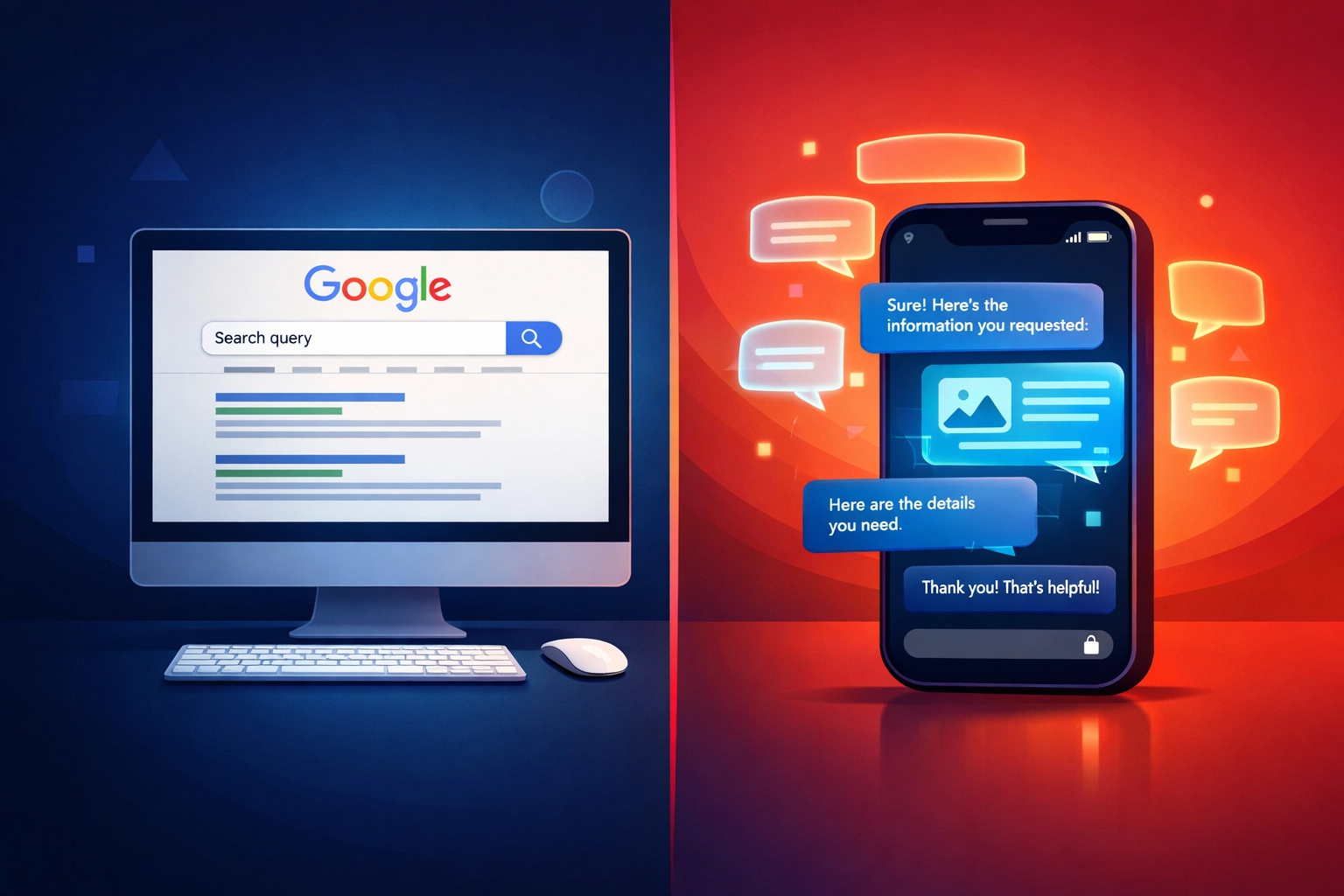
They’re not just Googling anymore. They’re asking ChatGPT. They’re using Perplexity. They’re talking to Siri whilst driving through Clifton or getting quick answers from Google’s AI overview before they even click a website.
This shift is massive, and it’s changing everything about how we need to design websites in Bristol. Let’s talk about what’s really happening and what it means for your business.
What Actually Is Answer Engine Optimisation?
First things first. Let’s clear up what we’re dealing with.
Answer Engine Optimisation (AEO) is about making your website’s content easy for AI systems to find, understand, and cite when someone asks a question. It’s different from traditional SEO, which focused on getting your site to rank high in search results so people would click through.
With AEO, the answer might be given directly by an AI tool without the user ever visiting your site. That sounds terrible at first, doesn’t it? But here’s the thing: if your content is being cited and referenced by these AI tools, you’re still building authority and trust. You’re just playing a different game.
The question is: are Bristol businesses ready for this game?
Why This Matters for Bristol Web Design Right Now
You might wonder why this is suddenly urgent for Bristol businesses specifically.
The truth is, Bristol has always been an early adopter city. We’ve got a thriving tech scene, creative industries, and businesses that pride themselves on being ahead of the curve. But that also means your competitors are probably already thinking about this.
More importantly, your customers are already using these tools. They’re asking AI assistants about “best accountants in Bristol” or “reliable web designers near Bedminster” or “where to find sustainable packaging suppliers in the Southwest.” If your website isn’t optimised for these answer engines, you’re invisible in those conversations.
Traditional SEO isn’t dead. But it’s no longer enough on its own.
The Five Ways AEO Is Changing How We Build Websites
Let’s get practical. Here’s what’s actually different when we design websites with AEO in mind.
1. Content Structure Has Been Turned Upside Down
Remember when we used to write long, flowing articles with keywords carefully placed throughout? That approach is becoming outdated fast.
Now, we need to structure content around explicit questions with immediate answers. Here’s how:
- Start sections with clear questions as headings
- Provide a concise answer (40-60 words) right at the top
- Follow with supporting details and context
- Use subheadings that are themselves questions
This isn’t just about AI. It’s better for your human readers too. People scan. They want answers quickly. This structure gives them exactly that.
2. Structured Data Is No Longer Optional
Here’s where things get technical, but stay with me.
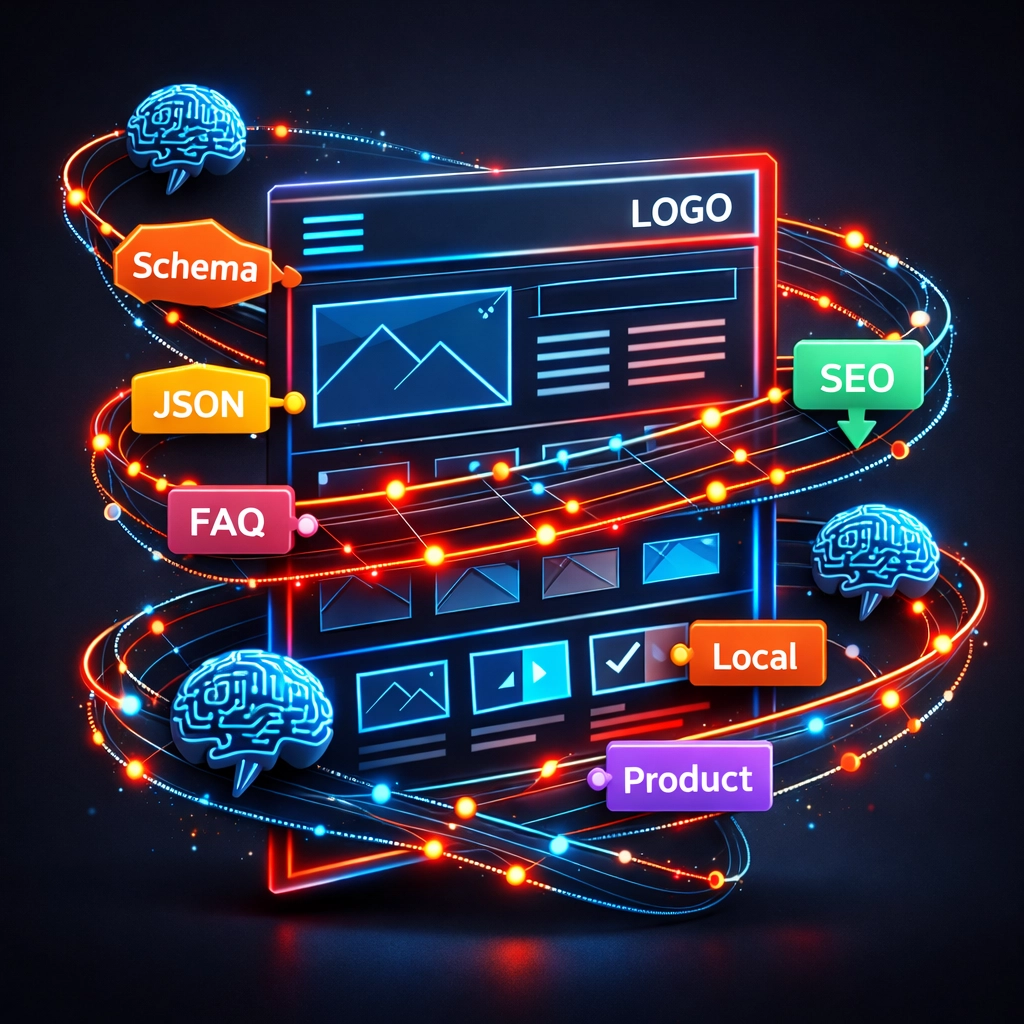
Structured data (also called Schema markup) is code that helps AI systems understand what your content actually means. It tells answer engines: “This is a business address. This is a service. This is a price. This is a review.”
Without structured data, even brilliant content can be invisible to AI tools. They simply can’t extract the information efficiently.
For Bristol businesses, this means your web designer needs to implement Schema.org markup across your site. It’s the difference between being findable and being hidden.
3. FAQ Sections Have Become Strategic Assets
Used to be, FAQ pages were an afterthought. Maybe you’d stick one at the bottom of your site if you had time.
Not anymore. FAQ sections are now one of your most valuable AEO assets.
Why? Because they perfectly match how people ask questions to AI tools. Someone might ask: “How much does website maintenance cost in Bristol?” If you’ve got a well-structured FAQ that answers this precisely, you’re in the game.
The key is being genuinely helpful. Answer the questions your customers actually ask, even the uncomfortable ones about price, timelines, and potential problems.
4. Voice Search Optimisation Is Part of Every Project
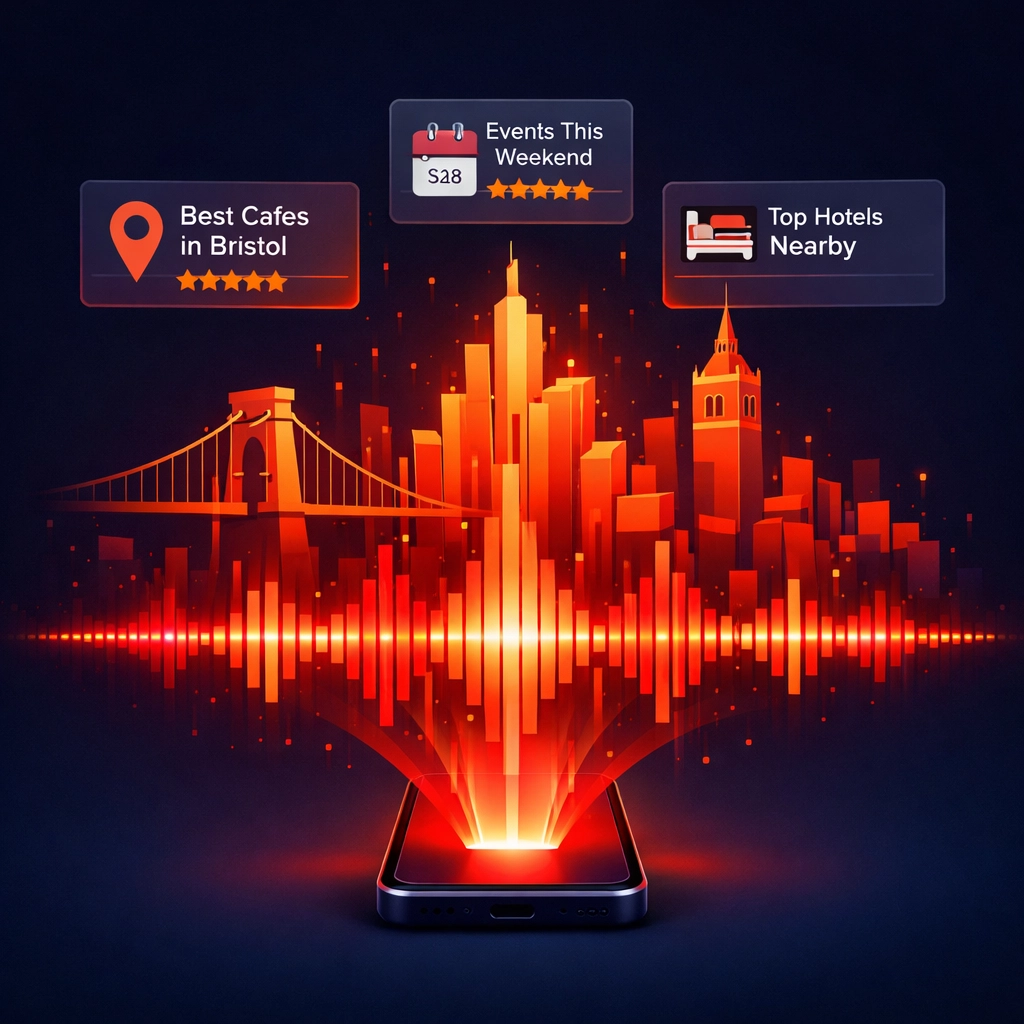
Your customers are talking to their devices. Full sentences. Natural language. Conversational queries.
This changes how we write content. Instead of targeting keywords like “Bristol web design affordable,” we need to answer questions like “Who are the most affordable web designers in Bristol?”
See the difference? One is how people type. The other is how people talk.
Modern Bristol web design needs to account for both. That means conversational content, long-tail question phrases, and local context that makes sense when spoken aloud.
5. Success Metrics Are Completely Different
Here’s something that surprises people: with AEO, you might see your click-through rates drop whilst your actual business impact increases.
Why? Because if AI tools are citing your content and presenting you as an authority, potential customers are arriving more qualified and ready to engage. You might get fewer tyre-kickers and more serious enquiries.
The new metrics to watch are:
- How often your content is cited in AI-generated answers
- Brand mentions in answer engines
- Quality of enquiries rather than just quantity
- Direct traffic from people who’ve heard about you through AI tools
This requires a mindset shift for many Bristol business owners. It’s about authority and trust, not just traffic volume.
What This Means for Your Website Right Now
Let’s bring this home. If you’ve got a website that was built more than two years ago, it’s probably not AEO-ready.
That doesn’t mean it’s useless. It means it needs updating.
Here’s what you should be asking your web designer or developer:
- Is our content structured with clear questions and immediate answers?
- Do we have proper Schema markup implemented across the site?
- Are our FAQ sections comprehensive and strategically positioned?
- Is our content written in natural, conversational language?
- Are we creating content that AI tools can easily cite and reference?
If the answer to any of these is “I don’t know” or “probably not,” you’ve got work to do.
The Bristol Advantage: Local Context Matters More Than Ever
Here’s some good news for Bristol businesses: local context has become incredibly valuable in the age of AI.
Answer engines love specific, location-relevant information. Generic advice about “UK businesses” is less useful than specific guidance about “Bristol businesses in the creative sector” or “Southville retail shops” or “Harbourside hospitality venues.”
This is where being genuinely embedded in the Bristol business community becomes an asset. You can create content that reflects real local challenges, opportunities, and context. That specificity makes you more valuable to AI tools trying to provide relevant answers.
What You Should Do Next
You might be thinking: “This sounds expensive and complicated.”
Here’s the truth: implementing AEO principles doesn’t have to mean a complete website rebuild. It can be done incrementally.
Start here:
- Audit your existing content. Which pages could be restructured around clear questions and answers?
- Add or improve your FAQ section. Answer the real questions customers ask you regularly.
- Implement basic Schema markup. Start with your business information, services, and location details.
- Create content in conversational language. Write like you’re talking to a customer, not a search engine.
- Test how AI tools currently handle your content. Ask ChatGPT or Perplexity questions your customers might ask. Do they mention you?
If you’re working with a web designer or agency here in Bristol, they should be having these conversations with you already. If they’re not, that’s a red flag. The landscape has changed, and expertise needs to change with it.
We cover more about optimising for AI search on our blog if you want to dive deeper into implementation strategies.
The Honest Assessment
Will AEO replace traditional SEO completely? No. Not in the next few years, at least.
But will AEO become just as important as traditional SEO? Absolutely. It already is for early adopters.
The businesses that win in Bristol over the next few years will be the ones that make their content genuinely useful to both humans and AI systems. They’ll structure information clearly. They’ll answer questions directly. They’ll build authority through being cited and referenced.
The ones that lose will be those still optimising for 2020’s search landscape whilst the world has moved on.
The choice, as always, is yours. But at least now you know what you’re choosing between.
Frequently Asked Questions
1. What is Answer Engine Optimisation (AEO)?
Answer Engine Optimisation (AEO) is about making your website’s content easy for AI systems to find, understand, and cite when someone asks a question.
2. How is AEO different from traditional SEO?
Traditional SEO focuses on ranking high in search results so people click through, while AEO focuses on providing answers that AI tools can cite directly, sometimes without users visiting your site.
3. Why is AEO important for Bristol businesses right now?
Bristol is an early adopter city with a strong tech and creative scene, and customers are already using AI tools to search for local services, making AEO essential for visibility.
4. How should website content be structured for AEO?
Content should be structured around explicit questions, with concise 40–60 word answers at the top, followed by supporting details and context.
5. What role does structured data play in AEO?
Structured data (Schema markup) helps AI systems understand what your content represents, such as business details, services, prices, and reviews.
6. Why are FAQ sections valuable for AEO?
FAQ sections match how people ask questions to AI tools and can help your content be cited when answering specific queries.
7. How does voice search influence modern web design?
Voice search requires content written in natural, conversational language that reflects how people speak rather than how they type.
8. Are success metrics different with AEO?
Yes, success metrics shift from click-through rates to brand mentions, AI citations, authority building, and the quality of enquiries.
9. Is a website built more than two years ago likely to be AEO-ready?
If your website was built more than two years ago, it’s probably not AEO-ready and may need restructuring and updates.
10. Will AEO replace traditional SEO completely?
AEO will not completely replace traditional SEO in the near future, but it is becoming just as important for businesses that want to stay competitive.