

Most UK business owners think search rankings are a mystery controlled by secret algorithms. You invest in a website, add some content, and hope Google notices you. When that doesn’t happen, frustration sets in. The truth is, understanding how search rankings work isn’t rocket science. This guide explains the key factors influencing your website’s position in search results and shows you practical steps to improve your online visibility and generate more leads.
Table of Contents
- How Search Engines Determine Rankings
- Key Ranking Factors That Influence Your Website’s Position
- Developing Content That Drives Rankings And Leads
- Technical SEO And Monitoring Your Website’s Performance
- Improve Your Search Rankings With Expert Help
- Frequently Asked Questions
Key Takeaways
| Point | Details |
|---|---|
| Ranking factors | Google uses over 200 factors with emphasis on relevance, authority and user experience. |
| Mobile priority | Google primarily ranks your mobile site version, making mobile optimisation critical for visibility. |
| Content quality | User-focused content that satisfies search intent outperforms keyword stuffing every time. |
| Technical foundations | Site speed, security and backlinks remain essential for authority and performance. |
| Continuous improvement | Regular monitoring and updates are crucial for maintaining and improving rankings. |
How Search Engines Determine Rankings
Google doesn’t randomly decide which websites appear first. It uses sophisticated crawlers called Googlebot to discover and index pages, evaluating hundreds of signals to determine relevance and quality. Understanding this process helps you optimise effectively.
The most significant shift in recent years is mobile-first indexing. Google primarily evaluates your mobile website version when determining rankings, not your desktop site. If your mobile experience is poor, your rankings suffer across all devices.
Consider these realities:
- 61% of Google searches happen on mobile devices, making mobile optimisation non-negotiable
- Googlebot Smartphone is the primary crawler determining your site structure
- Non-mobile-friendly sites face ranking penalties regardless of desktop performance
- Mobile page speed directly impacts both user experience and search position
Think of mobile-first indexing this way: Google knows your customers are searching on phones whilst commuting, during lunch breaks, or researching products in physical shops. Your mobile site is your real shop window.
“Mobile-first indexing means Google primarily uses the mobile version of a website for indexing and ranking.”
This approach benefits users by prioritising fast, accessible experiences. For you, it means mobile optimisation isn’t optional anymore. Your mobile site must load quickly, display content clearly without zooming, and provide seamless navigation. Optimising for AI search requires similar attention to user experience and content structure.
Key Ranking Factors that Influence Your Website’s Position
Whilst Google considers over 200 factors when ranking websites, some carry significantly more weight. Focusing your efforts on these high-impact elements delivers better results than trying to optimise everything simultaneously.
The most influential ranking factors include:
- Content relevance: How well your content matches what users actually search for
- Backlinks: Quality links from authoritative sites acting as trust signals
- User experience: Site speed, mobile usability, and how easily visitors find information
- Page security: HTTPS encryption protecting user data
- Technical structure: Clean code, proper headings, and logical site architecture
Here’s how these factors compare:
| Ranking Factor | Impact Level | Why It Matters |
|---|---|---|
| Content quality | Very High | Directly satisfies user intent and keeps visitors engaged |
| Backlinks | High | Signals authority and trustworthiness to Google |
| Site speed | High | Affects user experience and bounce rates |
| Mobile usability | Very High | Primary ranking signal due to mobile-first indexing |
| HTTPS security | Moderate | Required for user trust and minor ranking boost |
Content quality deserves special attention. High-quality, relevant content that answers user questions beats keyword-stuffed pages every time. Google’s algorithms have evolved to detect when you’re genuinely helping users versus gaming the system.
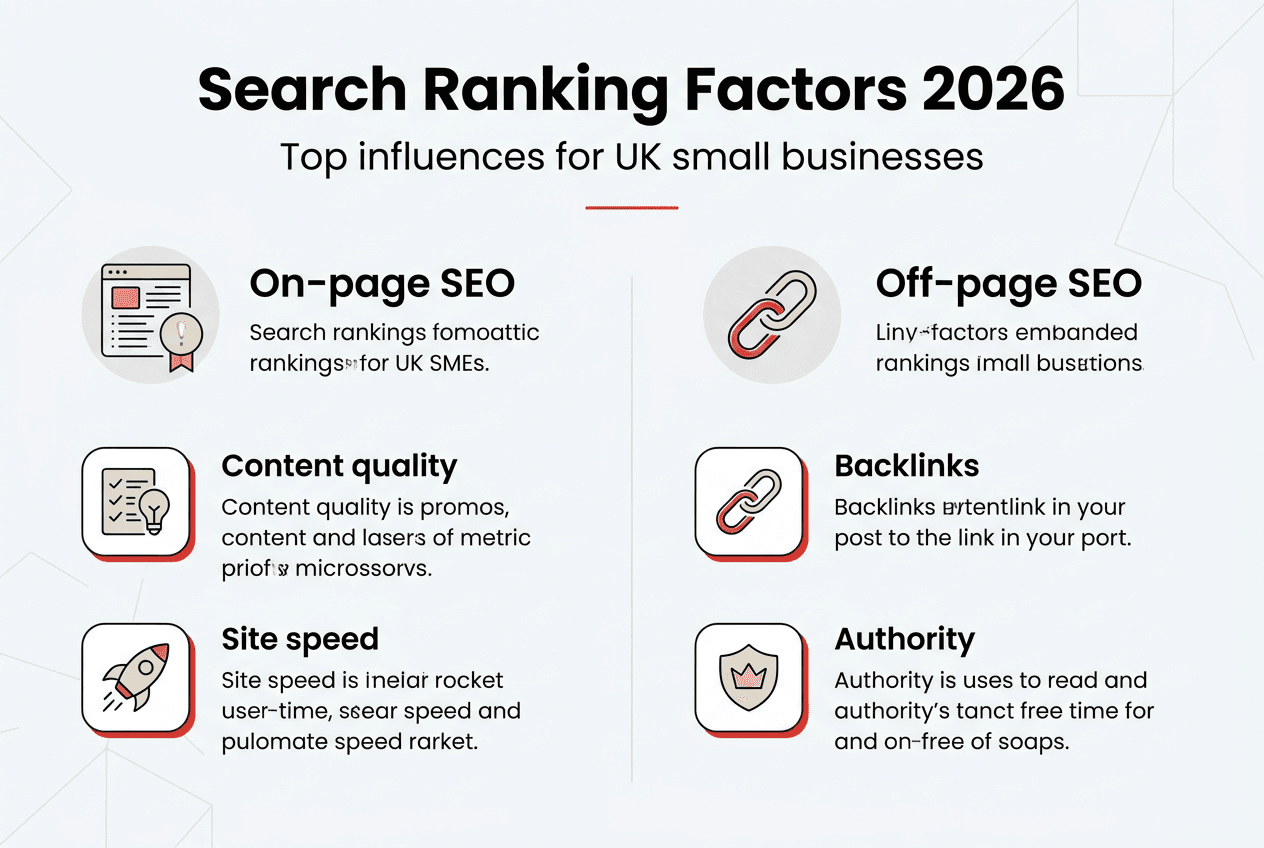
Backlinks work like votes of confidence. When authoritative websites link to your content, Google interprets this as validation of your expertise. One quality link from a respected industry site carries more weight than dozens of low-quality directory listings. Understanding the role of content in SEO helps you create material worth linking to.
Site speed impacts rankings because slow sites frustrate users. If your page takes more than three seconds to load, most visitors leave before seeing your content. Google recognises this and penalises slow sites accordingly.

Pro Tip: Focus on the top five ranking factors before worrying about minor optimisation details. Fixing fundamental issues delivers faster, more noticeable improvements than tweaking obscure technical elements.
Working with a Google expert can help you identify which factors need immediate attention for your specific website and industry.
Developing Content that Drives Rankings and Leads
Creating content that ranks well starts with understanding user intent. When someone searches “best accounting software for small business”, they want comparisons and recommendations, not a general article about accounting. Matching content to intent improves rankings and conversions simultaneously.
Follow this process for developing ranking-worthy content:
- Research what your audience actually searches for: Use keyword tools to find real queries, not what you assume people search
- Analyse top-ranking content: Study what currently ranks to understand what Google considers relevant
- Create genuinely helpful content: Answer questions thoroughly, provide actionable advice, and share real examples
- Structure content logically: Use clear headings, short paragraphs, and bullet points for scannability
- Optimise technical elements: Write compelling meta descriptions, use descriptive headings, and add alt text to images
- Update regularly: Refresh content with new information, statistics, and examples to maintain relevance
Avoid keyword stuffing at all costs. Cramming your target phrase into every sentence makes content unreadable and triggers Google’s spam filters. Instead, focus on creating high-quality content that naturally incorporates relevant terms whilst prioritising reader value.
Your meta title and description act as your search result advertisement. Make them compelling enough to earn clicks whilst accurately representing your content. Misleading titles might get clicks initially but high bounce rates hurt rankings long-term.
Images need optimisation too. Use descriptive file names like “small-business-accounting-software-comparison.jpg” instead of “IMG_1234.jpg”. Add alt text describing the image for accessibility and SEO benefits.
Pro Tip: Set a quarterly reminder to review and update your top-performing content. Adding fresh statistics, new examples, and updated recommendations signals to Google that your content remains current and valuable.
Effective content optimisation for online visibility requires balancing user needs with technical best practices. Following a structured content marketing checklist ensures you cover all essential elements consistently.
Technical SEO and Monitoring Your Website’s Performance
Technical SEO forms the foundation supporting your content and user experience efforts. Without solid technical infrastructure, even brilliant content struggles to rank well. These elements require regular attention:
- Site speed optimisation: Compress images, minimise code, and use caching to reduce load times
- Mobile responsiveness: Ensure content displays correctly on all screen sizes without horizontal scrolling
- HTTPS security: Encrypt data transmission to protect users and meet Google’s security requirements
- Structured data: Add schema markup helping search engines understand your content context
- XML sitemap: Provide Google with a roadmap of your important pages for efficient crawling
- Fix crawl errors: Regularly check for and resolve broken links, 404 errors, and redirect chains
Monitoring tools help you track performance and identify issues before they impact rankings significantly:
| Tool Type | Purpose | Best For |
|---|---|---|
| Google Search Console | Track rankings, clicks, crawl errors | Understanding search performance |
| Google PageSpeed Insights | Measure site speed, identify bottlenecks | Speed optimisation priorities |
| Analytics platforms | Monitor traffic, user behaviour, conversions | Understanding visitor actions |
| SEO audit tools | Comprehensive site health checks | Identifying technical issues |
Regular SEO audits catch problems early. You might not notice when a plugin update breaks mobile navigation or when a server change slows page speed, but these issues hurt rankings immediately. Monthly checks using automated tools combined with manual review provide comprehensive monitoring.
Crawl errors deserve quick attention. When Google encounters broken links or server errors repeatedly, it may reduce crawling frequency or lower your site’s perceived quality. Most errors are simple fixes once identified.
Structured data helps search engines understand your content better, potentially earning rich snippets in search results. These enhanced listings with star ratings, pricing, or event details attract more clicks than standard results.
Pro Tip: Set up automated alerts in Google Search Console for critical issues like security problems or dramatic ranking drops. Immediate notification allows faster response when problems occur.
Many business owners worry technical SEO requires coding expertise, but DIY SEO tools now make basic optimisation accessible. For complex issues, expert help prevents costly mistakes whilst you focus on running your business.
Improve Your Search Rankings with Expert Help
Understanding how search rankings work is one thing. Implementing effective optimisation whilst managing your business is another challenge entirely. You now know the key factors influencing rankings, from mobile-first indexing to content quality and technical foundations.
Applying this knowledge consistently requires time, tools, and expertise. Whether you prefer managing SEO yourself or want professional support, having the right resources makes the difference between sporadic efforts and sustained visibility improvements.
Bamsh offers both DIY SEO tools for hands-on business owners and comprehensive Google expert services for those wanting professional management. Start with a detailed SEO audit report identifying your specific ranking obstacles and prioritised fixes. This clarity helps you focus efforts where they’ll deliver the biggest impact for your online visibility and lead generation.
Frequently Asked Questions
How can I check my website’s search ranking?
Use Google Search Console to track your keyword rankings and overall site performance for free. This tool shows which queries drive traffic, your average position for each keyword, and click-through rates. Regularly monitor rankings for your primary keywords and watch for significant traffic changes indicating ranking shifts.
Why is my website ranking lower on mobile than desktop?
Google primarily ranks using your mobile site due to mobile-first indexing, so mobile experience directly determines your position. Desktop and mobile rankings differ when your mobile site offers inferior navigation, slower speed, or hidden content. Check your mobile site’s usability and speed to identify specific issues affecting rankings.
How important are backlinks for my website’s SEO?
Backlinks remain crucial ranking signals, acting as votes of confidence from other websites about your content quality. Google’s ranking algorithm weighs backlinks heavily when determining authority and trustworthiness. Focus on earning high-quality links from respected industry sites rather than accumulating numerous low-quality directory links.
Can I improve my search ranking without technical SEO knowledge?
Creating relevant, high-quality content addressing user questions is an effective starting point requiring minimal technical knowledge. Focus on answering your customers’ common questions thoroughly and clearly. For technical aspects beyond your expertise, use accessible DIY SEO tools with guided recommendations or consult experts for complex optimisation tasks.
Recommended
- How to Improve Online Visibility: UK SME Guide 2026 – Bamsh Digital Marketing
- SEO trends in 2025: 60% AI impact boosts UK SMB success
- Why Invest in Local SEO: Complete Guide for UK Businesses – Bamsh Digital Marketing
- 6 Essential Local SEO Best Practices for UK Businesses