

You’ve got a website. You’re running a business in Bristol. But when local customers search for what you offer, you’re nowhere to be found. Frustrating, right?
Here’s the thing: your competitors aren’t necessarily better than you. They’ve just optimised their websites for local SEO search. The good news? You can do the same, and it’s more straightforward than you might think.
Let’s walk through the practical steps that’ll help your Bristol business show up when local customers are searching.
Start with Your Google Business Profile
Before you touch anything on your website, you need to sort out your Google Business Profile. This is what appears in those local map results when someone searches for businesses like yours in Bristol.
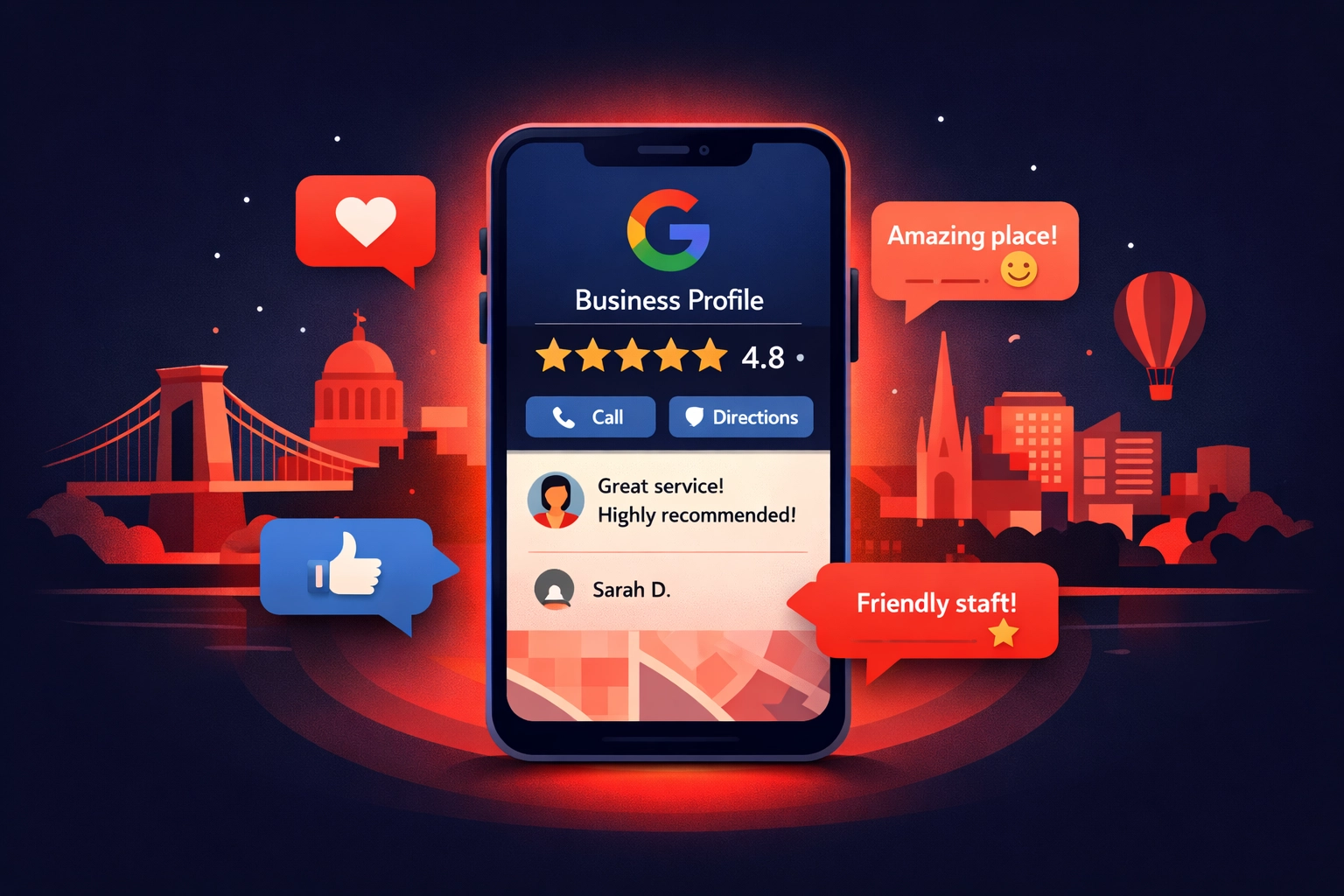
Think of your Google Business Profile as your digital shopfront. It’s often the first thing potential customers see, and it needs to be complete and accurate. Add your business name, address, phone number, opening hours, and high-quality photos of your premises, products, or team.
Here’s what makes a real difference: customer reviews. Encourage your satisfied customers to leave honest reviews on your profile. These boost your credibility and signal to Google that you’re a legitimate, active business. The more positive reviews you gather, the better your chances of appearing in those coveted top three map results.
Research the Keywords Your Customers Actually Use
You might call yourself a “plumbing contractor,” but your customers are searching for “emergency plumber Bristol” or “boiler repair near me.” This gap between industry language and customer language costs businesses thousands in missed opportunities.
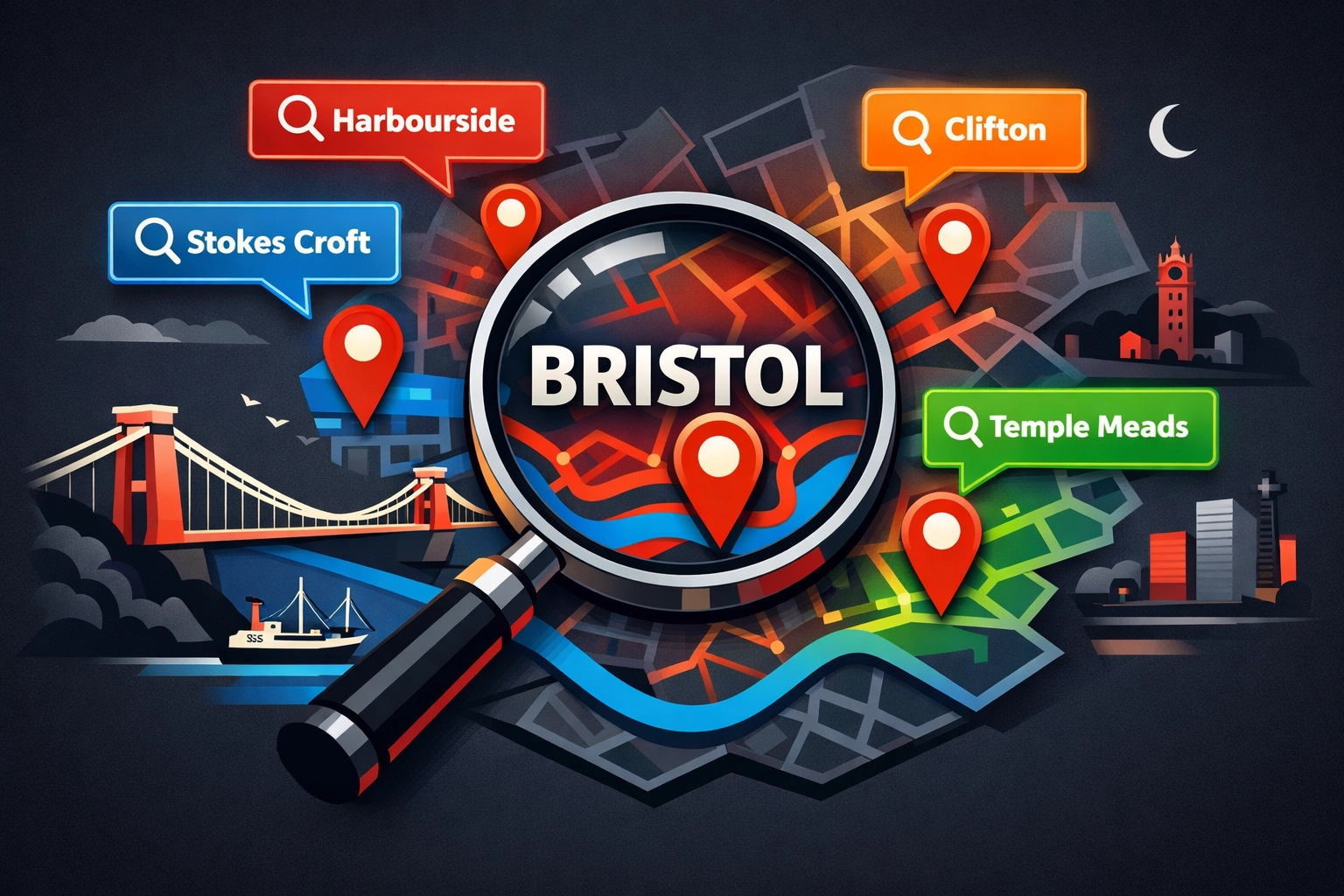
Start by putting yourself in your customers’ shoes. What would you type into Google if you needed your services? Focus on location-based terms that include Bristol or specific Bristol neighborhoods like Clifton, Bedminster, or Southville.
Use tools like Google’s own search suggestions. Start typing your service plus “Bristol” and watch what autocompletes. These suggestions come from real searches people make. Long-tail keywords like “24-hour emergency plumber in Bristol” might have lower search volume, but they attract people who are ready to hire right now.
Keep Your Business Information Consistent Everywhere
Here’s something that trips up loads of businesses: inconsistent information across the web. You’ve got “123 High Street” on your website, “123 High St” on Facebook, and “123 High Street, Bristol” on Yell. To search engines, these all look different.
This consistency, called NAP (Name, Address, Phone), matters more than you’d think. Search engines use this information to verify you’re a real business. Inconsistencies create doubt, and doubt kills your rankings.
Do an audit right now. Check your website, Google Business Profile, Facebook, Bing Places, Yelp, and any local directories where you’re listed. Make sure your name, address, and phone number are identical everywhere. Yes, it’s tedious. Yes, it’s worth it.
Build Your Presence in Local Directories
Getting listed in local directories does two things: it creates additional signals that you’re a Bristol business, and it gives you more chances to be found. Not all directories carry the same weight, though.
Focus on the established ones first: Yell.com, Thomson Local, and Bing Places for Business. Then look for Bristol-specific directories or industry-specific listings relevant to your sector. If you’re a restaurant, you want to be on TripAdvisor. If you’re a tradesperson, Checkatrade and Rated People make sense.
Each listing is another citation, another mention of your business name, address, and phone number. These citations build authority and help search engines understand where you operate.
Create Content That Speaks to Bristol Customers
Your website content needs to make it crystal clear you serve Bristol. That doesn’t mean stuffing “Bristol” into every sentence. It means creating genuinely useful content for your local SEO audience.
Write blog posts about local events, neighborhood guides, or area-specific challenges your customers face. A landscaper could write about “Gardens That Thrive in Bristol’s Climate” or “Best Plants for Redland Gardens.” An accountant might create content about “Bristol Business Tax Deadlines” or “Financial Planning for Bath Road Startups.”
This localised content does something clever: it positions you as a local SEO expert while naturally incorporating the location-based keywords you need. Plus, it gives you something valuable to share on social media and in email newsletters.

Make Sure Your Website Works Brilliantly on Mobile
Over 60% of local SEO searches happen on mobile devices. Someone’s walking down Park Street, needs your service, and pulls out their phone. If your website loads slowly or looks broken on mobile, they’ll tap the back button and try your competitor.
Your website needs responsive design, that means it automatically adapts to whatever screen size someone’s using. Check your loading speed using Google’s PageSpeed Insights tool. If you’re scoring below 50 on mobile, you’ve got work to do.
Navigation should be simple on small screens. Your phone number should be clickable so mobile users can call you with one tap. Your address should link to map directions. These small touches dramatically improve the mobile experience and increase the chances someone will actually contact you.
Optimise the Technical Stuff on Your Pages
Now let’s talk about your actual website pages. Each page needs optimisation, starting with your title tags and meta descriptions. These are the headlines and snippets that appear in search results.
Your homepage title might be something like “Bristol Web Design Services | Bamsh Digital Marketing.” It includes your service, your location, and your business name. The meta description expands on this: “Professional web design for Bristol businesses. We create websites that attract customers and drive growth. Get a free quote today.”
Use header tags (H1, H2, H3) to structure your content logically. Your H1 should include your main keyword. Subsequent headers break up your content and help search engines understand what each section covers.
Internal linking matters too. Link from your blog posts to your service pages and vice versa. This helps search engines discover all your content and understand how your pages relate to each other.
Build Relationships for Local SEO Backlinks
Backlinks: when other websites link to yours: remain one of the strongest ranking signals. But quality beats quantity every time. One link from the Bristol Post carries more weight than ten links from random blog networks.
Look for genuine opportunities in your local community. Sponsor a local sports team or charity event and you’ll often get a link from their website. Partner with complementary businesses for referrals and content collaborations. Write guest posts for local blogs or business publications.
Get involved in your local business community. Bristol has loads of networking groups, business associations, and chambers of commerce. Many offer member directories with links to your website. These legitimate, locally-relevant backlinks boost your authority in local SEO search results.

Use Social Media to Strengthen Your Local Presence
Social media might not directly impact your rankings, but it amplifies everything else you’re doing. Share your blog posts, promote special offers, showcase your work, and engage with the Bristol community online.
Use local hashtags like #BristolBusiness, #BristolLife, or neighborhood-specific tags. Tag your location when posting photos or updates. Engage with other Bristol businesses and local influencers. This activity creates social signals that support your overall local SEO presence.
When customers message you on social media, respond quickly. When they tag you or check in at your business, acknowledge it. This engagement builds community relationships that often lead to reviews, referrals, and backlinks.
Track Your Progress and Adjust
You can’t improve what you don’t measure. Set up Google Analytics and Google Search Console if you haven’t already. These free tools show you exactly how people find and use your website.
Watch which keywords bring you traffic. Monitor which pages get the most views. Check where your visitors come from geographically: are you actually attracting Bristol-based traffic? Track how your rankings change over time for your target local SEO keywords.
Review this data monthly and adjust your strategy based on what’s working. If certain blog topics attract loads of traffic, create more content like that. If specific keywords are climbing in rankings, double down on optimising for related terms.

Make Local SEO an Ongoing Effort
Here’s the truth about local SEO: it’s not a one-time project. Your competitors are optimising their websites right now. Search engine algorithms update constantly. Consumer search behavior evolves.
The businesses that dominate local search results are the ones that consistently work on their optimisation. They publish new content regularly. They encourage fresh reviews. They update their listings. They build new relationships.
Start with the fundamentals we’ve covered here: your Google Business Profile, NAP consistency, and mobile optimisation. Then work through localised content, directory listings, and backlink building. Track your results, learn what works for your specific business, and keep at it.
Local SEO gives Bristol businesses like yours a fighting chance against bigger competitors with larger budgets. When someone in your city searches for what you offer, you can be the business they find. You just need to put in the work to make it happen.
Need help getting your website optimised for Bristol search results? We specialise in local SEO strategies that help businesses show up when local customers are searching.
Frequently Asked Questions
What is local SEO and why does it matter for Bristol businesses?
Local SEO helps your business appear in search results when people nearby are looking for your services. It matters because most customers search locally, and showing up in Bristol-based searches increases your chances of getting enquiries.
How do I optimise my website for Bristol-based searches?
Use location-specific keywords like your service plus “Bristol” or nearby areas. Include these naturally in your titles, headings, and content to help search engines understand where you operate.
What is NAP consistency and why is it important?
NAP stands for Name, Address, and Phone number. Keeping this information consistent across your website and directories helps search engines verify your business and improves your local rankings.
How important is Google Business Profile for local SEO?
It is essential. Your Google Business Profile often appears before your website in local searches. A complete profile with reviews, photos, and accurate details improves your visibility and credibility.
Do customer reviews really affect local SEO rankings?
Yes, reviews play a major role. Positive and frequent reviews signal trust and activity to Google, helping your business rank higher in local search results.
What type of content helps improve local SEO?
Create content that speaks directly to Bristol customers, such as local guides, service pages, and blog posts addressing local needs. This builds relevance and authority.
How do local directories help my SEO?
Local directories create citations that confirm your business location and details. Listings on platforms like Yell or Bing Places strengthen your local presence and visibility.
Does mobile optimisation affect local SEO?
Yes, most local searches happen on mobile devices. A fast, mobile-friendly website improves user experience and helps your rankings.
What are local backlinks and why do they matter?
Local backlinks come from other Bristol-based websites linking to yours. They increase your authority and help search engines trust your business more.
How long does it take to see results from local SEO?
You can start seeing improvements within a few weeks, but strong, consistent results typically take 2 to 3 months depending on competition and effort.