

Here’s the truth: your website might be costing you business right now, and you wouldn’t even know it.
If your site was built more than three years ago and hasn’t been seriously updated since, there’s a good chance it’s not performing like it should. Technology moves fast. Consumer expectations move even faster. And what worked in 2023 definitely doesn’t cut it in 2026.
The good news? You don’t need to be a tech expert to spot the warning signs. Let’s walk through a practical checklist you can use today to see if your Bristol business needs a website refresh.
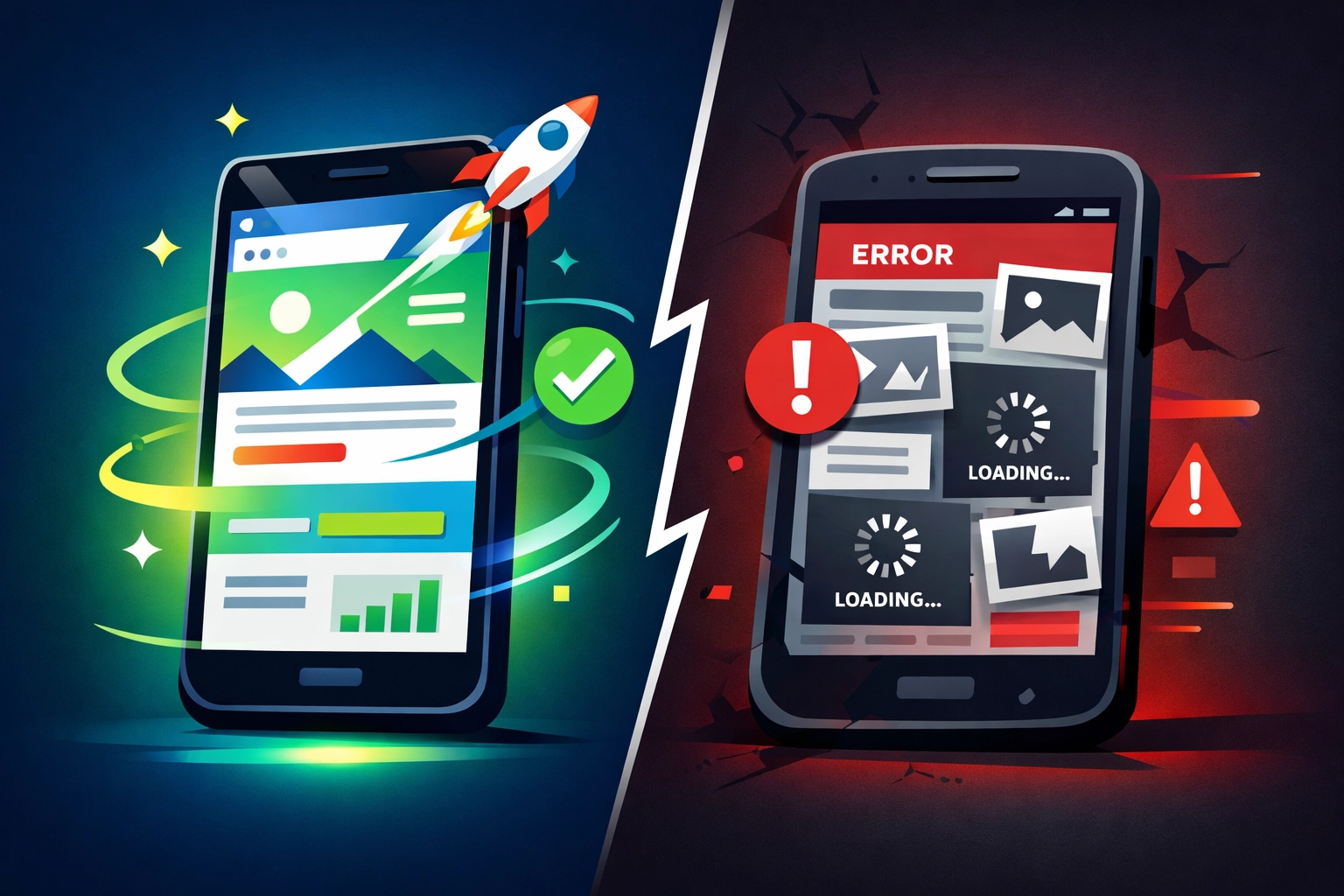
Does Your Site Actually Work on Mobile?
First things first: pull out your phone right now and visit your own website.
Be honest with yourself. Does it load quickly? Can you read the text without zooming? Are the buttons easy to tap without hitting the wrong thing?
Here’s what you need to know: over 70% of your potential customers are viewing your site on their phones. If they experience slow loading times or have to pinch and zoom to read your content, they’re gone within seconds. Literally seconds.
What to check:
- Load time under 3 seconds on mobile data (not just Wi-Fi)
- Text that’s readable without zooming
- Buttons and links that are easy to tap
- Images that display properly and don’t break the layout
- Forms that work smoothly on smaller screens
If your site fails any of these tests, that’s your first red flag.
Can Visitors Understand What You Do in 5 Seconds?
Look at your homepage with fresh eyes. Imagine you’re a potential customer who’s never heard of your business before.
Within five seconds, can you answer these questions:
- What does this company actually do?
- Who is this for?
- How will this help me?
If your homepage is filled with vague phrases like “innovative solutions” or “cutting-edge services,” you’ve got a problem. Marketing jargon doesn’t sell. Clear, honest communication does.
Better examples for Bristol businesses:
- “We help Bristol cafés get more customers through Instagram” instead of “Social media growth strategies”
- “Web design for Bristol tradespeople who hate technology” instead of “Digital transformation solutions”
- “SEO that gets Bristol restaurants on page one of Google” instead of “Advanced search optimisation”
Your value proposition should be crystal clear. No buzzwords. No corporate speak. Just straightforward language that explains exactly how you help people.
Is Your Contact Information Actually Easy to Find?
This one seems obvious, but you’d be surprised how many websites hide their contact details.
Your phone number and contact form should be visible on every page. Not buried in a footer with 8-point font. Not hidden behind multiple clicks. Right there where people can see it.
Ask yourself:
- Can someone find your phone number within 3 seconds?
- Is there a contact button in your main navigation?
- Do you have a clear call-to-action above the fold?
- Is your email address listed somewhere visible?
If visitors have to hunt for ways to contact you, they won’t bother. They’ll just move on to your competitor whose details are easier to find.
Does Your Site Mention Bristol at All?
Here’s something many Bristol businesses get wrong: they build a website that could be for anyone, anywhere.
If you serve local customers, your website should reflect that. Google’s algorithms in 2026 are incredibly sophisticated at understanding local intent. If your site doesn’t mention Bristol, Clifton, Bedminster, Southville, or the specific areas you serve, you’re missing out on local search traffic.
Local SEO checks:
- Does your homepage mention Bristol or your service areas?
- Do you have a dedicated page about serving Bristol customers?
- Is your Google Business Profile complete and up to date?
- Are your contact details consistent across your website and all online listings?
- Do you have content about Bristol-specific topics or events?
Local references aren’t just good for SEO. They build trust with potential customers who want to work with businesses that understand their area.

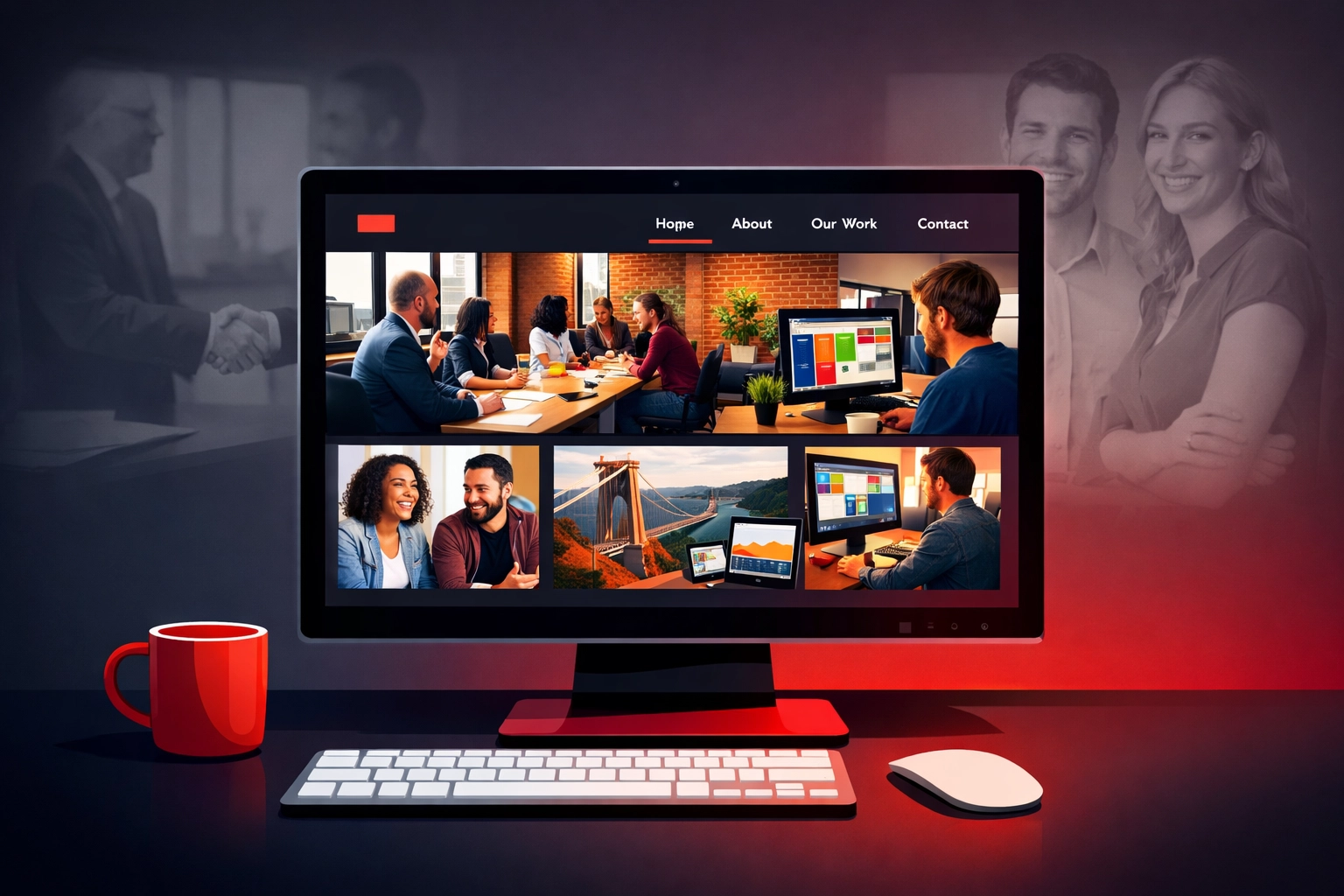
Are You Using Real Photos or Generic Stock Images?
Pull up your website and look at the images. Be brutally honest.
Are those photos of your actual team, your real workspace, your genuine work? Or are they the same polished stock photos that appear on 500 other websites?
Here’s why this matters: trust. When someone sees real photos of your Bristol office, your actual team members, or examples of work you’ve genuinely completed, they trust you more. Stock photos of models in suits pointing at whiteboards don’t build credibility. They make you look like every other generic business online.
Real photography shows:
- Your actual workspace and location
- Your genuine team members
- Real client projects (with permission)
- Before and after examples of your work
- Your products or services in action
If your website could belong to a company in Manchester, Leeds, or London just by changing the city name, that’s a problem you need to fix.
When Was Your Last Blog Post or Update?
Navigate to your news section or blog. What’s the most recent post?
If the answer is “2024” or earlier, that’s sending a clear message to potential customers: this business might not be active anymore.
Regular content updates serve two purposes. First, they show you’re still operating and engaged. Second, they help with SEO by giving search engines fresh content to index.
You don’t need to post daily. Even monthly updates about projects you’ve completed, industry changes, or helpful advice for your customers can make a huge difference.
Content freshness indicators:
- Blog posts or news within the last 3 months
- Updated case studies or portfolio pieces
- Current year mentioned throughout the site
- References to recent events or changes in your industry
- Social media feeds that show recent activity
Stale content loses trust. It makes visitors wonder if you’re still trading, still relevant, or still interested in taking on new work.
Does Your Design Look Modern?
Design trends change. A website that looked cutting-edge in 2022 might look outdated in 2026.
You don’t need to chase every design trend, but your site should feel current. Modern websites in 2026 typically feature:
- Clean layouts with plenty of white space
- Bold, readable typography
- High-quality, large images
- Clear visual hierarchy
- Minimal clutter and distractions
- Smooth animations and transitions
- Block-based layouts that feel spacious
If your site has busy backgrounds, small text, cluttered sidebars, or multiple columns competing for attention, it’s probably time for a redesign.
The key is this: your design should help visitors focus on your message, not distract from it.
Do You Have Trust Signals?
Testimonials, reviews, certifications, years in business, client logos, case studies: these are all trust signals that help visitors feel confident choosing you.
Look at your homepage and key service pages. Do you have:
- Customer testimonials with real names and photos?
- Google reviews displayed or linked?
- Industry certifications or accreditations?
- Client logos (if you serve other businesses)?
- Case studies showing real results?
- Awards or recognition you’ve received?
If your website is just you talking about how great you are without any proof, that’s a problem. Modern consumers want evidence, not claims.
Is Your Site Accessible?
Accessibility isn’t just good practice: it’s increasingly important for both legal compliance and SEO.
Basic accessibility checks:
- Can you navigate your site using only a keyboard?
- Do images have alt text descriptions?
- Is there sufficient colour contrast between text and backgrounds?
- Do videos have captions or transcripts?
- Are heading tags used properly (H1, H2, H3)?
Accessible websites work better for everyone, not just people with disabilities. They also tend to perform better in search results because they’re better structured and easier for search engines to understand.
What Happens Next?
If you’ve gone through this checklist and found multiple issues, don’t panic. Every website needs updates eventually. The question is whether yours needs a minor refresh or a complete rebuild.
Here’s a simple way to think about it:
- 1-3 issues: You probably need some updates and tweaks
- 4-6 issues: You need a significant refresh
- 7+ issues: It’s time for a complete redesign
The good news is that websites don’t have to cost a fortune or take months to build anymore. Modern web design for Bristol businesses is faster and more affordable than ever: especially when you work with a team that understands local business needs.
If you’re a Bristol business owner who’s realised your website isn’t up to scratch, we can help. At Bamsh Digital Marketing, we specialise in creating websites that actually work for local businesses. No jargon, no nonsense: just sites that get you more customers.
Want to talk about what a new website could do for your business? Have a look at our web design services or get in touch for an honest conversation about what you actually need.
Frequently Asked Questions
1. How do I know if my website is outdated?
If your site was built more than three years ago and hasn’t been seriously updated since, there’s a good chance it’s not performing like it should in 2026.
2. Why is mobile performance so important for my website?
Over 70% of potential customers are viewing your site on their phones, and if they experience slow loading times or have to zoom to read content, they’re gone within seconds.
3. How quickly should visitors understand what my business does?
Within five seconds, visitors should be able to understand what you do, who it’s for, and how it helps them.
4. Where should my contact information appear on my website?
Your phone number and contact form should be visible on every page, not buried in the footer or hidden behind multiple clicks.
5. Why should my website mention Bristol specifically?
If you serve local customers, your website should mention Bristol and the specific areas you serve to improve local search visibility and build trust.
6. Are stock photos harming my credibility?
Stock photos don’t build credibility. Real photos of your team, workspace, and genuine work help visitors trust your business.
7. How often should I update my website content?
You don’t need daily posts, but regular updates such as monthly blog posts, case studies, or project updates show you’re active and engaged.
8. What makes a website design look modern in 2026?
Modern websites typically feature clean layouts, bold typography, large high-quality images, clear visual hierarchy, minimal clutter, and spacious block-based layouts.
9. What are trust signals and why do they matter?
Trust signals include testimonials, Google reviews, certifications, client logos, case studies, and awards. They provide proof rather than just claims about your business.
10. How do I know whether I need updates or a full redesign?
If you find 1–3 issues, you likely need minor updates. 4–6 issues suggest a significant refresh. 7 or more issues indicate it’s time for a complete redesign.