
More than 60 percent of British businesses invest in pay-per-click advertising, yet only a fraction truly maximise its potential. The digital marketplace in the United Kingdom moves quickly, making every click and every pound count. Skilled PPC management helps British companies compete smarter, not just harder, by turning advertising spend into measurable growth with improved strategies and constant optimisation.
Table of Contents
- What PPC Management Means for Your Business
- Types of PPC Campaigns and Platforms
- How PPC Management Actually Works
- Optimising Campaigns for Better ROI
- Costs, Risks, and Common Pitfalls
Key Takeaways
| Point | Details |
|---|---|
| PPC Management is Strategic | Effective PPC management involves crafting, monitoring, and optimising ad campaigns to achieve business goals, ensuring maximum return on investment. |
| Diverse Campaign Types | Businesses can utilise various PPC campaign types, including Search Advertising, Display Advertising, and Social Media Advertising, to engage their target audience. |
| Continuous Optimisation is Key | Successful PPC requires ongoing analysis, bid optimisation, and testing to refine strategies and enhance campaign performance. |
| Risks Must be Managed | Budget management and clear audience targeting are critical to prevent financial drain and ensure effective advertising outcomes. |
What PPC Management Means for Your Business
PPC management is the strategic process of overseeing and optimising digital advertising campaigns to drive targeted traffic and achieve specific business objectives. At its core, PPC management involves carefully crafting, monitoring, and refining pay-per-click advertising strategies that transform clicks into valuable customer interactions.
The role of PPC management extends far beyond simply placing ads online. Professionals in this field use sophisticated data analysis to make strategic decisions about ad placement, keyword selection, and budget allocation. Tracking detailed performance metrics allows businesses to understand precisely how their advertising spend translates into tangible results, ensuring every pound invested delivers maximum return.
Understanding PPC management requires recognising its core components:
- Keyword Research: Identifying the most relevant search terms your potential customers use
- Ad Creation: Developing compelling ad copy that speaks directly to your target audience
- Campaign Optimization: Continuously adjusting bids, targeting, and messaging to improve performance
- Performance Tracking: Monitoring key metrics like click-through rates, conversion rates, and cost per acquisition
For UK businesses, effective PPC management means more than just visibility—it’s about creating a targeted approach that connects with the right customers at the right moment, transforming advertising spend into a strategic growth tool.
Types of PPC Campaigns and Platforms
Pay-per-click advertising offers businesses a diverse range of platforms and campaign types to reach their target audience effectively. Across multiple digital advertising channels, businesses can strategically position their marketing messages to capture potential customer interest at different stages of the buying journey.
Search Advertising represents the most traditional PPC campaign type, where businesses bid on specific keywords to display text ads alongside search engine results. These campaigns are particularly powerful for capturing high-intent customers who are actively searching for products or services. Google Ads remains the dominant platform, allowing precise targeting based on search queries, location, and user demographics.
Beyond search advertising, businesses can leverage several other strategic PPC campaign types:
- Display Advertising: Visual banner ads shown across websites in Google’s advertising network
- Remarketing Campaigns: Targeted ads shown to users who have previously visited your website
- Shopping Ads: Product-specific advertisements ideal for e-commerce businesses
- Video Advertising: Promotional video content displayed on platforms like YouTube
- Social Media Advertising: Targeted ads on platforms such as Facebook, Instagram, and LinkedIn
Each platform offers unique advantages, enabling businesses to craft nuanced marketing strategies that align with their specific goals. The key is understanding your target audience and selecting platforms that offer the most direct path to engaging potential customers.
How PPC Management Actually Works
PPC management is a sophisticated process that transforms advertising spend into strategic business growth. Comprehensive campaign oversight involves continuous monitoring, analysis, and refinement of digital advertising strategies to maximise return on investment.

Keyword Research forms the foundational step of effective PPC management. Specialists meticulously identify and select search terms that align precisely with potential customer intent, ensuring ads appear when and where they will generate the most meaningful engagement. This process requires deep understanding of audience behaviours, search patterns, and competitive landscapes.
The core mechanics of PPC management include several critical stages:
- Campaign Setup: Defining target audiences, selecting appropriate platforms, and establishing initial bid strategies
- Ad Creation: Developing compelling, targeted ad copy that speaks directly to potential customers
- Continuous Monitoring: Tracking performance metrics in real-time
- Bid Optimisation: Adjusting spending to maximise cost-effectiveness
- Performance Analysis: Generating detailed reports to inform future strategic decisions
Successful PPC management is not a set-and-forget strategy, but a dynamic process of constant refinement. By continuously analysing data, testing variations, and adapting to market changes, businesses can transform their digital advertising from a cost centre into a precision instrument of growth.
Optimising Campaigns for Better ROI
Maximising return on investment requires a strategic approach to PPC campaign management that goes far beyond simple keyword selection. Advanced campaign optimisation techniques focus on creating a precise, data-driven strategy that transforms advertising spend into measurable business growth.
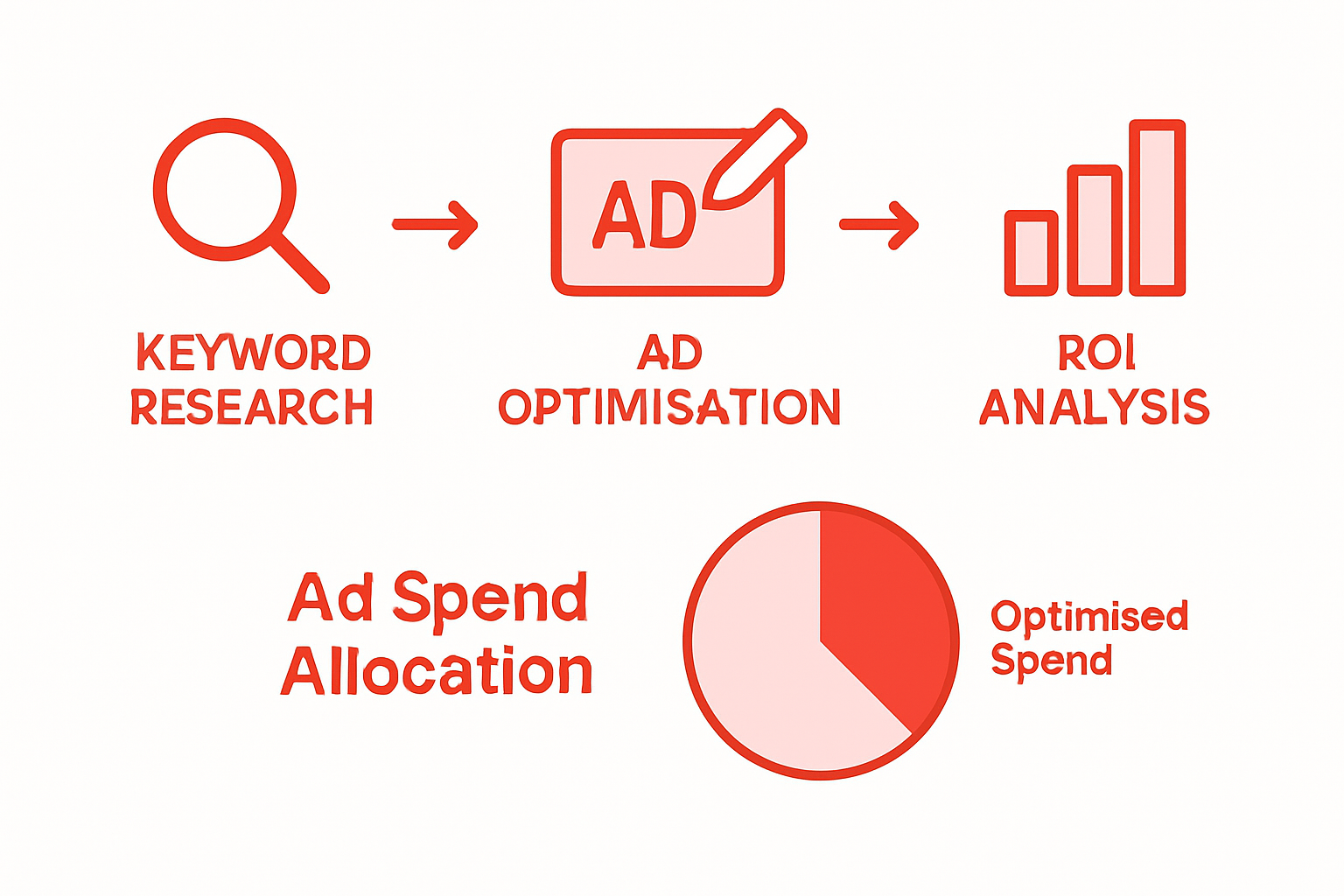
Conversion Optimisation stands at the heart of successful PPC campaigns. This involves creating highly targeted landing pages that speak directly to specific audience segments, ensuring that every click has the highest potential to convert into a valuable customer interaction. The goal is to align ad messaging, keyword targeting, and landing page experience into a seamless conversion pathway.
Key strategies for improving PPC campaign ROI include:
- Granular Audience Targeting: Segmenting audiences with extreme precision
- Continuous A/B Testing: Experimenting with ad copy, design, and messaging
- Negative Keyword Management: Eliminating irrelevant search traffic
- Bid Strategy Refinement: Dynamically adjusting spending based on performance
- Quality Score Improvement: Enhancing ad relevance and landing page experience
Successful ROI optimisation is an ongoing process of measurement, analysis, and strategic adjustment. By treating each campaign as a living, breathing entity that requires constant nurturing, businesses can transform their PPC efforts from a cost centre into a powerful engine of predictable, scalable revenue growth.
Costs, Risks, and Common Pitfalls
Navigating the complex landscape of PPC advertising requires a nuanced understanding of potential financial and strategic risks. Comprehensive campaign management demands careful consideration of the potential challenges that can quickly erode advertising budgets and marketing effectiveness.
Budget Management represents one of the most critical risk areas in PPC campaigns. Inexperienced marketers often fall into the trap of burning through advertising budgets without implementing proper tracking and optimisation strategies. The potential for rapid financial drain is significant, with unchecked campaigns capable of consuming resources without delivering proportionate returns.
Key risks and potential pitfalls in PPC management include:
- Poorly Defined Target Audiences: Resulting in irrelevant ad placements
- Inadequate Keyword Selection: Attracting low-quality or irrelevant traffic
- Ineffective Landing Pages: Failing to convert interested visitors
- Unmonitored Spending: Allowing costs to escalate without strategic oversight
- Competitive Keyword Bidding: Getting caught in expensive bidding wars
Professional PPC management requires a meticulous approach to risk mitigation. By implementing robust tracking mechanisms, continuously refining targeting strategies, and maintaining a data-driven approach to campaign optimisation, businesses can transform potential pitfalls into opportunities for strategic growth and improved marketing performance.
Unlock Your PPC Potential with Bamsh Digital Marketing
The challenge of turning every pay-per-click investment into measurable growth can feel overwhelming. With so many factors like keyword research, campaign optimisation and avoiding costly pitfalls to consider, it is easy to feel unsure if your ads are truly working for you. This article highlights the importance of strategic PPC management to maximise ROI and deliver predictable revenue — a goal that many UK businesses share.
At Bamsh Digital Marketing, we understand the frustration of seeing ad spend disappear without clear results. That is why we offer transparent, data-driven Google PPC Management designed to put your business at the top of search results when customers are ready to buy. Our approach focuses on precision targeting, continuous optimisation and honest reporting so you always know exactly where your money is going and what it is doing for your business. To explore how we help businesses just like yours avoid common PPC pitfalls and drive high-quality leads, visit our Uncategorized – Bamsh Digital Marketing page.
Ready to transform your PPC campaigns into a strategic growth engine? Take the first step with a free 15-minute consultation at https://bamsh.co.uk/15-min/ and discover how expert management can maximise your ad spend and boost your UK business’s bottom line.
Frequently Asked Questions
What is PPC management?
PPC management is the strategic process of overseeing and optimising digital advertising campaigns to drive targeted traffic and achieve specific business objectives, focusing on transforming clicks into valuable customer interactions.
How does keyword research impact PPC campaigns?
Keyword research is crucial as it helps identify the most relevant search terms potential customers use, ensuring ads are displayed at the right time and place to generate meaningful engagement and conversions.
What are some common types of PPC campaigns?
Common types of PPC campaigns include search advertising, display advertising, remarketing campaigns, shopping ads, video advertising, and social media advertising, each offering unique advantages for reaching target audiences.
How can I improve the ROI of my PPC campaigns?
Improving ROI involves strategies like granular audience targeting, continuous A/B testing, negative keyword management, bid strategy refinement, and enhancing ad relevance and landing page experience.