

Let’s be honest. You’ve looked at Wix, haven’t you? Maybe spent an evening clicking through Squarespace templates whilst convincing yourself you could build your business website over the weekend.
Here’s the thing: DIY website builders have their place. But if you’re running a serious business in Bristol’s competitive market, you need to understand exactly what you’re getting, and what you’re sacrificing, when you choose templates over a professional web designer.
This isn’t about me trying to sell you something you don’t need. It’s about helping you make the right decision for your business. Sometimes that means DIY. Often, it doesn’t.
When DIY Website Builders Actually Make Sense
Before we dive into why professional design wins, let’s acknowledge when Wix or Squarespace are perfectly fine choices.
You might genuinely be better off with a DIY platform if:
- You’re testing a business idea and need something live quickly
- Your budget is under £500 and that’s genuinely all you have
- You’re a sole trader offering simple services with no growth plans
- Your website is essentially a digital business card
- You enjoy tinkering with technology and have time to spare
There. I said it. DIY builders aren’t evil, and they’ve helped countless small businesses get online affordably.
But if you’re beyond this stage, if you’re serious about growth, competing locally, or actually generating leads from your website, the limitations start to show quickly.
The Template Problem Nobody Talks About
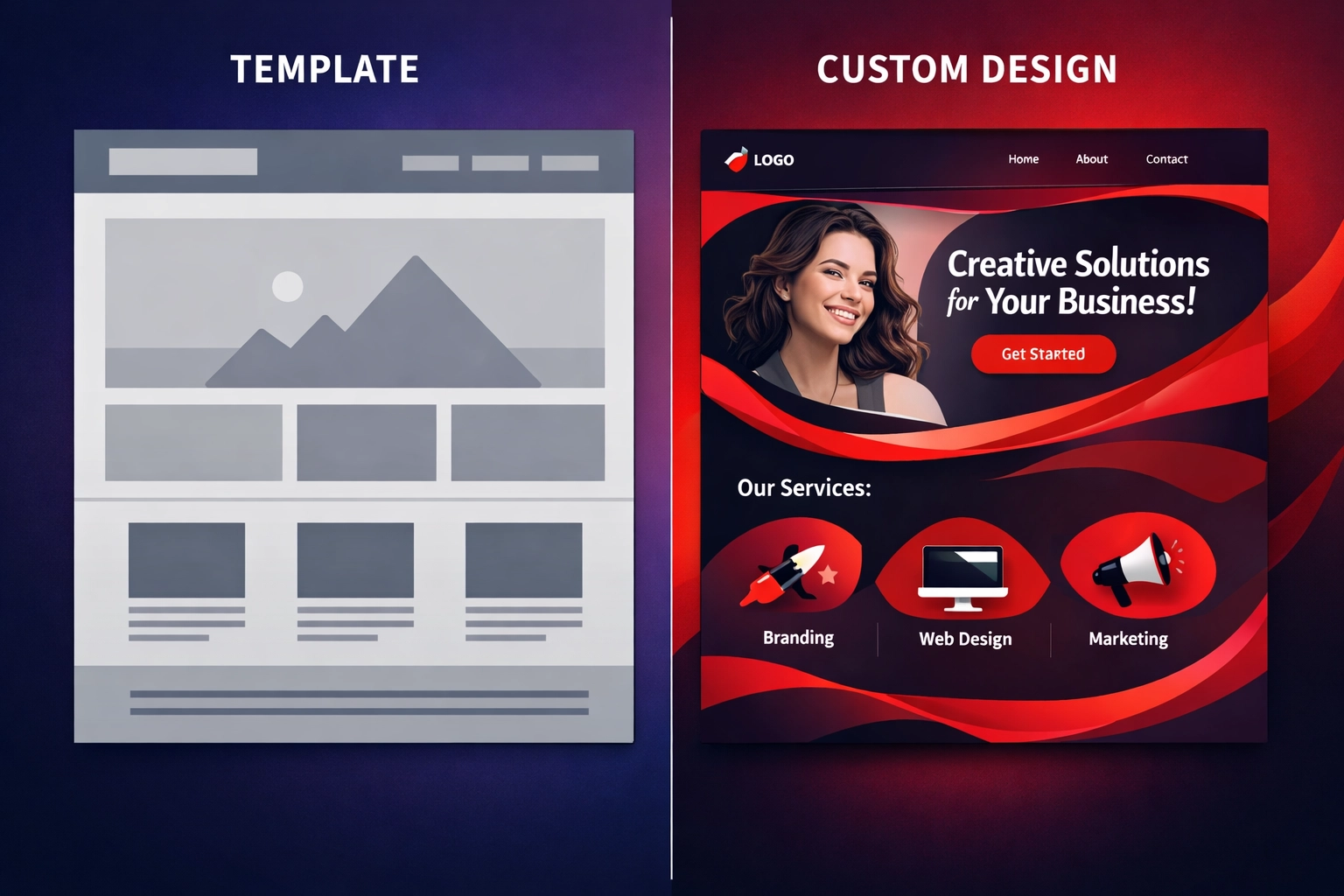
You’ve seen it happen. You choose a beautiful template, get excited, then spend hours trying to make it look like your business. You swap the photos, change the colours, fiddle with the fonts.
But here’s what you can’t change: the underlying structure.
Templates are designed for everyone, which means they’re optimised for no one. Your Bristol-based accountancy firm gets the same basic structure as a Los Angeles yoga studio. The template doesn’t care about your specific client journey, your unique selling points, or how Bristol businesses actually search for your services.
Why This Matters
A professional web designer starts with your business goals, not a template. They map out how your ideal clients behave, what questions they ask, and what information they need before they pick up the phone.
This isn’t just aesthetics. It’s strategic design that guides visitors toward becoming customers.
SEO: Where DIY Platforms Hit a Wall
Let’s talk about getting found on Google. Because what’s the point of a beautiful website if nobody in Bristol can actually find it?
DIY platforms will tell you they’re “SEO-friendly.” Technically true. But there’s a massive gap between SEO-friendly and SEO-optimised.
What DIY builders typically can’t do well:
- Custom URL structures that match search intent
- Proper schema markup for local businesses
- Advanced page speed optimisation
- Flexible site architecture as you grow
- Technical SEO troubleshooting when rankings drop
A professional designer doesn’t just build your site. They build it to rank. They understand how Google evaluates Bristol-based businesses, what local search signals matter, and how to structure your content so search engines actually understand what you do.
The Real Cost
You might save £2,000 upfront with DIY. But if that means you’re invisible on Google whilst your competitor ranks first, what’s the actual cost? Missing even five qualified leads per month could cost you tens of thousands in lost revenue.
The Functionality Gap

Here’s where DIY builders really struggle. They’re brilliant at simple brochure sites. They fall apart when you need:
- Custom booking systems integrated with your CRM
- Member-only areas with gated content
- Complex e-commerce with specific product configurations
- Advanced lead capture flows with conditional logic
- Integration with your existing business software
You’ll find yourself constantly hitting walls. “Can I make this form do…?” No. “What if I need to add…?” You can’t. “Is it possible to integrate with…?” Not without expensive third-party plugins that barely work.
Professional designers build exactly what your business needs. Not what a template allows.
The Hidden Time Sink
Let’s do some honest maths. How long will you spend:
- Choosing and customising your template (10-15 hours)
- Learning the platform’s limitations (5-10 hours)
- Troubleshooting when things break (ongoing)
- Making updates and changes (monthly)
- Optimising for mobile (another 5 hours)
- Trying to improve SEO (countless hours)
What’s your time worth? If you bill at £50 per hour, that’s already £1,000+ before your site even launches. And you’re still left with a template that looks like, well, a template.
A professional designer gives you back your time. You focus on running your business. They focus on building your website properly.
Speed and Performance Matter More Than You Think

DIY platforms are notoriously bloated. They need to include code for every possible feature every user might want, even if you’re only using 10% of them.
The result? Slow loading times.
Why You Should Care
Google uses site speed as a ranking factor. Visitors abandon slow sites within seconds. Every additional second of load time can reduce conversions by up to 7%.
Professional designers build lean, optimised sites. They only include the code you actually need. They optimise images properly. They implement caching and CDNs effectively.
Your site loads in under two seconds instead of five. That directly impacts your bottom line.
Security: The Boring Bit That Actually Matters
DIY platforms handle basic security. But you’re entirely dependent on their infrastructure. When vulnerabilities appear (and they do), you’re at their mercy for fixes.
Professional designers implement multiple layers of security tailored to your specific needs. Regular updates. Proper backup systems. Monitoring for threats. Rapid response when issues arise.
If your website handles customer data or processes payments, this isn’t optional. It’s essential.
The Bristol Advantage
Here’s something specific to our city. Bristol has a thriving business community with increasingly sophisticated expectations. Your potential clients are comparing you against competitors who invest in professional design.
A professional Bristol web designer understands:
- Local search behaviour and terminology
- Bristol’s competitive landscape
- What works for businesses in our specific market
- How to position you against local competitors
- Regional business culture and expectations
They’re not just designing for the internet. They’re designing for Bristol businesses selling to Bristol customers.
When Professional Design Pays for Itself

Let’s talk investment. A professional website typically costs £3,000-£8,000 for a small to medium business site. Yes, that’s significantly more than £20/month for Squarespace.
But consider this scenario:
You run a Bristol-based consultancy. Your average client value is £5,000. A properly optimised professional website generates just two additional clients per year that you wouldn’t have gotten otherwise.
That’s £10,000 in revenue. From a £5,000 investment. Every year.
The question isn’t whether you can afford professional design. It’s whether you can afford not to have it.
What About Ongoing Costs?
This is where people get nervous. DIY platforms charge £20-40 monthly forever. Professional sites need maintenance too.
Typical ongoing costs for professional sites:
- Hosting: £10-50/month
- Maintenance and updates: £50-200/month
- Content updates: As needed or included in maintenance
Yes, it’s more. But you’re paying for reliability, security, and performance that directly impacts your revenue. You’re also not locked into a platform. You own your site. You can move it, modify it, or hire someone else to work on it.
Making the Right Choice for Your Business
Here’s my honest advice. Choose DIY if:
- You’re genuinely just starting out with minimal budget
- Your website needs are extremely simple
- You have time and enjoy working on websites
- You’re not relying on your website for lead generation
Choose professional design if:
- Your website is central to your business growth
- You compete in a crowded Bristol market
- You value your time and want to focus on what you do best
- You need specific functionality or integrations
- You’re serious about ranking on Google
- Your brand reputation matters to your success
The right answer depends entirely on where your business is now and where you want it to be. But don’t let initial cost savings blind you to the long-term costs of a website that doesn’t actually work for your business.
What Happens Next?
If you’re leaning toward professional design, start by having conversations with Bristol designers. Ask to see their work. Understand their process. Get a feel for whether they actually understand your business or they’re just trying to sell you a package.
A good designer will ask you difficult questions about your goals, your customers, and your competition. They’ll be honest about what you need and what you don’t. They won’t try to sell you features you’ll never use.
The difference between a DIY template and professional design isn’t just how it looks. It’s whether your website actively grows your business or just sits there looking reasonably pretty.
Your business deserves the former. The question is whether you’re ready to invest in making that happen.
Frequently Asked Questions
1. Are Wix and Squarespace always a bad choice for business websites?
No. DIY website builders have their place. They can make sense if you are testing a business idea, working with a very small budget, offering simple services, or just need a digital business card.
2. When does a DIY website builder stop being enough?
Once you are serious about growth, competing locally in Bristol, or relying on your website to generate leads, the limitations of templates start to show quickly.
3. What is the main problem with website templates?
Templates are designed for everyone, which means they are optimised for no one. You can change photos and colours, but you cannot change the underlying structure that shapes how visitors move through your site.
4. Why does structure matter more than just design?
A professional web designer starts with your business goals, mapping out how your ideal clients behave and what information they need. Strategic structure guides visitors toward becoming customers.
5. Are DIY platforms really SEO-friendly?
They are technically SEO-friendly, but there is a big difference between SEO-friendly and SEO-optimised. DIY platforms often struggle with custom URL structures, schema markup, advanced page speed optimisation, and flexible site architecture.
6. How can DIY website builders affect my visibility on Google?
If your website is not properly optimised for local search, you may be invisible on Google while competitors rank above you. Even a few missed qualified leads each month can cost significant revenue.
7. What functionality issues do DIY builders typically have?
They work well for simple brochure sites but struggle with custom booking systems, complex e-commerce, advanced lead capture flows, and integrations with existing business software.
8. Is building a DIY website really cheaper when you factor in time?
Not necessarily. Choosing and customising templates, learning limitations, troubleshooting issues, and trying to improve SEO can take dozens of hours. If your time is valuable, that cost adds up quickly.
9. Why does website speed matter so much?
Slow loading times hurt rankings and conversions. Every additional second of load time can reduce conversions by up to 7 percent. Professional designers build lean, optimised sites that load faster.
10. How do I know whether to choose DIY or professional design?
Choose DIY if your needs are extremely simple and you are not relying on your website for growth. Choose professional design if your website is central to your business, you compete in a crowded Bristol market, and you want a site that actively grows your business rather than just looking reasonably pretty.