
Let me guess why you’re here.
You’re looking at your website, and something feels… off. Maybe it’s been a few years since you built it. Maybe a competitor just launched a sleek new site that makes yours look dated. Or maybe you’re just wondering if you should be doing something about your digital presence before it becomes a problem.
Here’s the question I hear constantly from Bristol business owners: “How often should I actually redesign my website?”
The answer? It depends. (I know, you wanted something more definitive, but stick with me.)
The Standard Timeline (And Why It’s Just a Starting Point)
Most Bristol businesses should consider a full website redesign every 2–3 years.
That’s the industry standard, and there’s solid reasoning behind it. Technology evolves rapidly. User expectations shift. Google updates its algorithms. Design trends change. Your business grows and your messaging needs to reflect that growth.
But here’s the thing: that 2–3 year guideline isn’t a hard rule. It’s more like a general framework that you’ll adjust based on what’s actually happening with your website’s performance.
Some businesses need updates every 6 months to 2 years. Others can stretch to 4–5 years without issues. The key is understanding what drives the decision.

Why You Can’t Just Follow a Schedule
Think about your website like your car. You might have a maintenance schedule, but if the engine starts making a strange noise or the brakes feel soft, you don’t wait until the next scheduled service. You take it in immediately.
Your website works the same way.
A calendar date shouldn’t trigger your redesign. Your website’s performance should.
Here’s what you need to monitor instead of watching the calendar:
- Traffic patterns and visitor engagement
- Conversion rates (enquiries, calls, purchases)
- Time spent on site
- Bounce rates
- Mobile performance metrics
- Search engine rankings
- Page load speeds
When these metrics start declining, that’s your signal. Not the date on the calendar.
The Warning Signs That You Need a Redesign Now
Let’s get specific. Here are the clear indicators that your Bristol business needs a website redesign, regardless of how long it’s been since your last update:
1. Your traffic is declining
If your website visits are dropping month over month, something’s wrong. It might be an SEO issue, or your site might not be meeting user expectations anymore.
2. It looks unprofessional compared to competitors
You know the feeling. You look at your competitor’s website and then look at yours, and there’s an obvious gap. Design matters because it signals credibility and modernity.
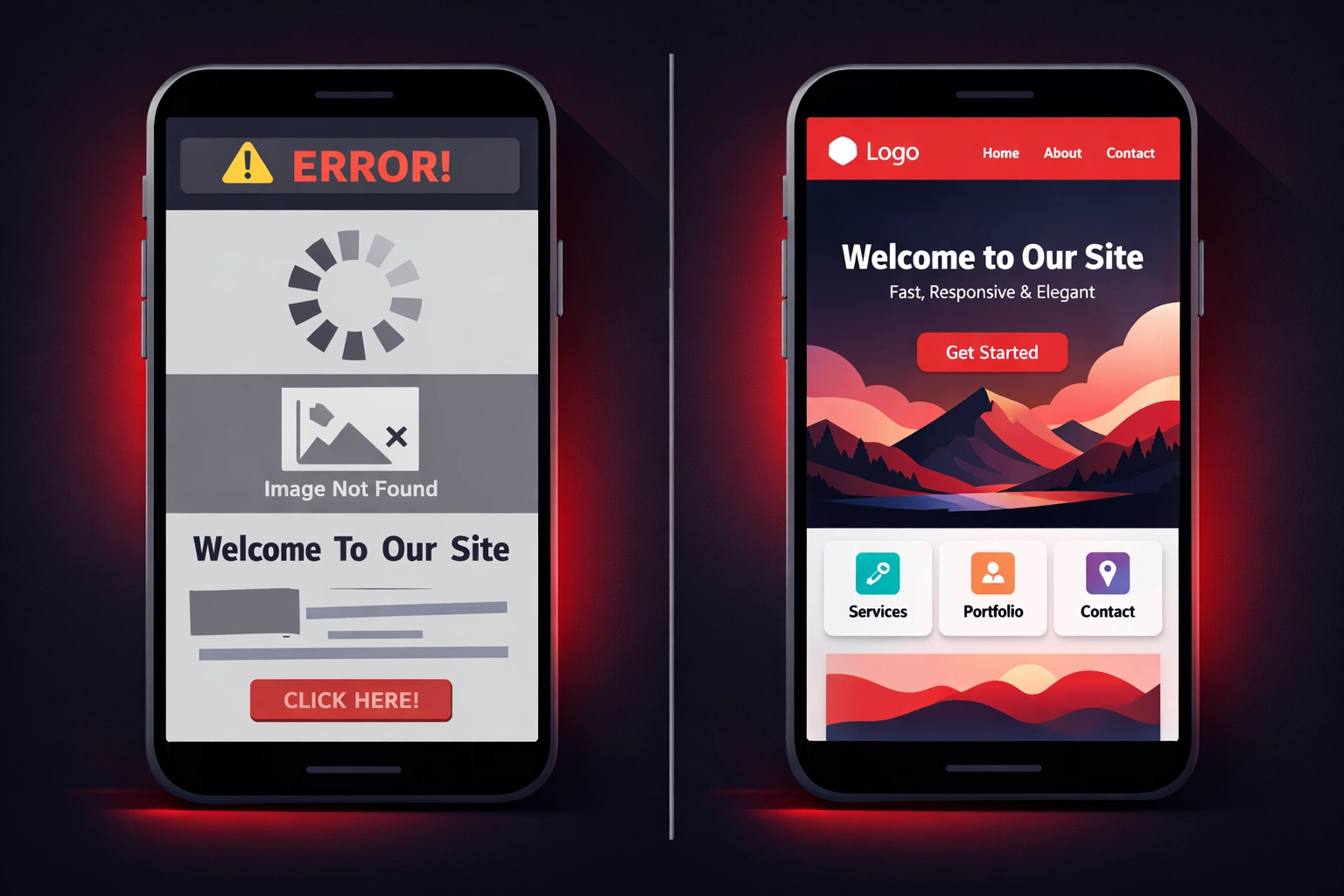
3. It’s not mobile-responsive
If your site doesn’t work seamlessly on phones and tablets, you’re losing customers daily. Over 60% of web traffic now comes from mobile devices. That number is even higher for certain Bristol industries.
4. It loads slowly
Page speed is critical. If your site takes more than 3 seconds to load, you’re watching potential customers leave before they even see your content.
5. You can’t update it yourself
If you need to call your developer every time you want to change a price, add a blog post, or update an image, your website is holding your business back.
6. Your search rankings have dropped
Visibility on Google is crucial for Bristol businesses. If you’ve slipped from page one to page three, that’s a massive loss in potential customers.
7. Conversions are down
This is the big one. If fewer people are contacting you, buying from you, or engaging with your calls to action, your website isn’t doing its job.
8. Your messaging doesn’t match your current business
Maybe you’ve rebranded. Maybe your services have evolved. If your website tells an outdated story about who you are, it’s time for an update.
What Makes Bristol Businesses Different
Here’s where local context matters.
Bristol has a competitive, tech-savvy market. Your customers are comparing you to London agencies and international competitors through their screens. The bar is high.
Bristol also has distinct industry clusters, creative agencies, tech startups, professional services, marine businesses, aerospace companies. Each sector moves at a different pace.
A Bristol tech startup might need updates every 12–18 months to stay relevant in a fast-moving industry. A well-established Bristol law firm might comfortably maintain their site for 3–4 years if it’s well-built initially.
Your industry dictates your timeline as much as your website’s performance does.
The Real Cost of Waiting Too Long
Let’s talk about what happens when you put off a needed redesign.
You’re not just maintaining the status quo. You’re actively losing ground.
Every month you operate with an outdated, poorly performing website, you’re:
- Losing potential customers to competitors with better sites
- Spending money on marketing that drives traffic to a conversion-killing website
- Damaging your brand perception among potential clients
- Missing out on organic search traffic that a modern, SEO-optimised site would capture
- Creating frustration among your team who can’t update content efficiently
The ROI calculation isn’t just about what a redesign costs. It’s about what your current website is costing you in lost opportunities.

Between Major Redesigns: The Power of Small Updates
You don’t need a full redesign every time something needs attention.
Between major overhauls, you should be making smaller, continuous improvements:
- Refreshing content to keep it current and relevant
- Optimising images and code for better performance
- Updating for new Google algorithm changes
- A/B testing calls to action and page layouts
- Adding new features or functionality as your business needs evolve
- Maintaining security updates and plugin compatibility
Think of these as the routine maintenance that extends the life of your website. A well-maintained site built on modern technology can serve you well for 3–4 years. A neglected site might need a complete rebuild after just 18 months.
How Long Does a Website Redesign Actually Take?
When you do decide to redesign, here’s what to expect.
A typical Bristol business website redesign takes 6–12 weeks to complete from initial planning to launch. Simpler projects can be done in 4–10 weeks, while more complex sites with custom functionality, extensive content, or third-party integrations might stretch longer.
The timeline breaks down roughly like this:
- Discovery and planning: 1–2 weeks
- Design concepts and revisions: 2–3 weeks
- Development and build: 3–5 weeks
- Content migration and creation: 1–2 weeks (often concurrent)
- Testing and refinement: 1–2 weeks
Your involvement matters too. The faster you provide feedback, content, and approval at each stage, the faster the project moves.
Making the Decision: Should You Redesign Your Website?
Let’s bring this back to your specific situation.
Ask yourself these questions:
- Is your website generating the leads and sales you need?
- Does it accurately represent your current business?
- Is it easy for customers to use on all devices?
- Can you update it yourself when needed?
- Does it load quickly and perform well?
- Are you proud to send people to it?
If you answered no to more than two of these, it’s time to seriously consider a redesign.
The investment in a website redesign typically pays for itself through improved conversion rates, better search rankings, and increased customer confidence. Most Bristol businesses see ROI within 6–12 months of launching their new site.
The Bottom Line
How often should you redesign your website? Every 2–3 years is a solid guideline, but your website’s performance will tell you when it’s truly time.
Don’t wait for a calendar date. Watch your metrics. Listen to customer feedback. Compare your site honestly to your competitors. When the warning signs appear, act on them.
Your website is often the first impression potential customers have of your Bristol business. Make sure it’s making the right one.
And remember: between major redesigns, keep your site fresh with regular updates and improvements. That ongoing maintenance is what keeps a website performing well year after year.
If you’re seeing the warning signs and wondering whether now is the right time, the answer is probably yes. Every day you wait is another day of missed opportunities.
Frequently Asked Questions
How often should Bristol businesses redesign their website?
Most Bristol businesses should consider a full website redesign every 2–3 years.
Is the 2–3 year website redesign guideline a hard rule?
That 2–3 year guideline isn’t a hard rule. It’s more like a general framework that you’ll adjust based on what’s actually happening with your website’s performance.
What should trigger a website redesign?
A calendar date shouldn’t trigger your redesign. Your website’s performance should.
What website metrics should I monitor instead of the calendar?
You need to monitor traffic patterns and visitor engagement, conversion rates, time spent on site, bounce rates, mobile performance metrics, search engine rankings, and page load speeds.
What are the warning signs that my website needs a redesign now?
Clear indicators include declining traffic, poor mobile responsiveness, slow load speeds, dropped search rankings, reduced conversions, outdated messaging, and an unprofessional appearance compared to competitors.
Why does mobile responsiveness matter for Bristol businesses?
If your site doesn’t work seamlessly on phones and tablets, you’re losing customers daily. Over 60% of web traffic now comes from mobile devices.
What happens if I wait too long to redesign my website?
Every month you operate with an outdated, poorly performing website, you’re losing potential customers, damaging your brand perception, and missing out on search traffic and conversions.
Do I need a full redesign every time something needs attention?
You don’t need a full redesign every time something needs attention. Between major overhauls, you should be making smaller, continuous improvements.
How long does a typical Bristol business website redesign take?
A typical Bristol business website redesign takes 6–12 weeks to complete from initial planning to launch.
How do I know if it is time to seriously consider a redesign?
If you answered no to more than two key questions about leads, usability, performance, updates, and business fit, it’s time to seriously consider a redesign.