

Let’s talk about the question every small business owner asks when they’re ready to go online: “How much is this actually going to cost me?”
If you’ve been googling around, you’ve probably seen prices ranging from £20 a month to £30,000+. That’s not exactly helpful, is it? The truth is, both figures can be accurate depending on what you’re building and who’s building it.
Here’s what you need to know about website costs in 2026, without the sales pitch or confusing jargon.
Why Website Prices Vary So Much
Think of building a website like buying a car. You can get a perfectly functional vehicle for £5,000, or you can spend £50,000 on something with more bells and whistles. Both will get you from A to B.
The difference comes down to three main factors: what features you need, how custom the design is, and who’s doing the work.
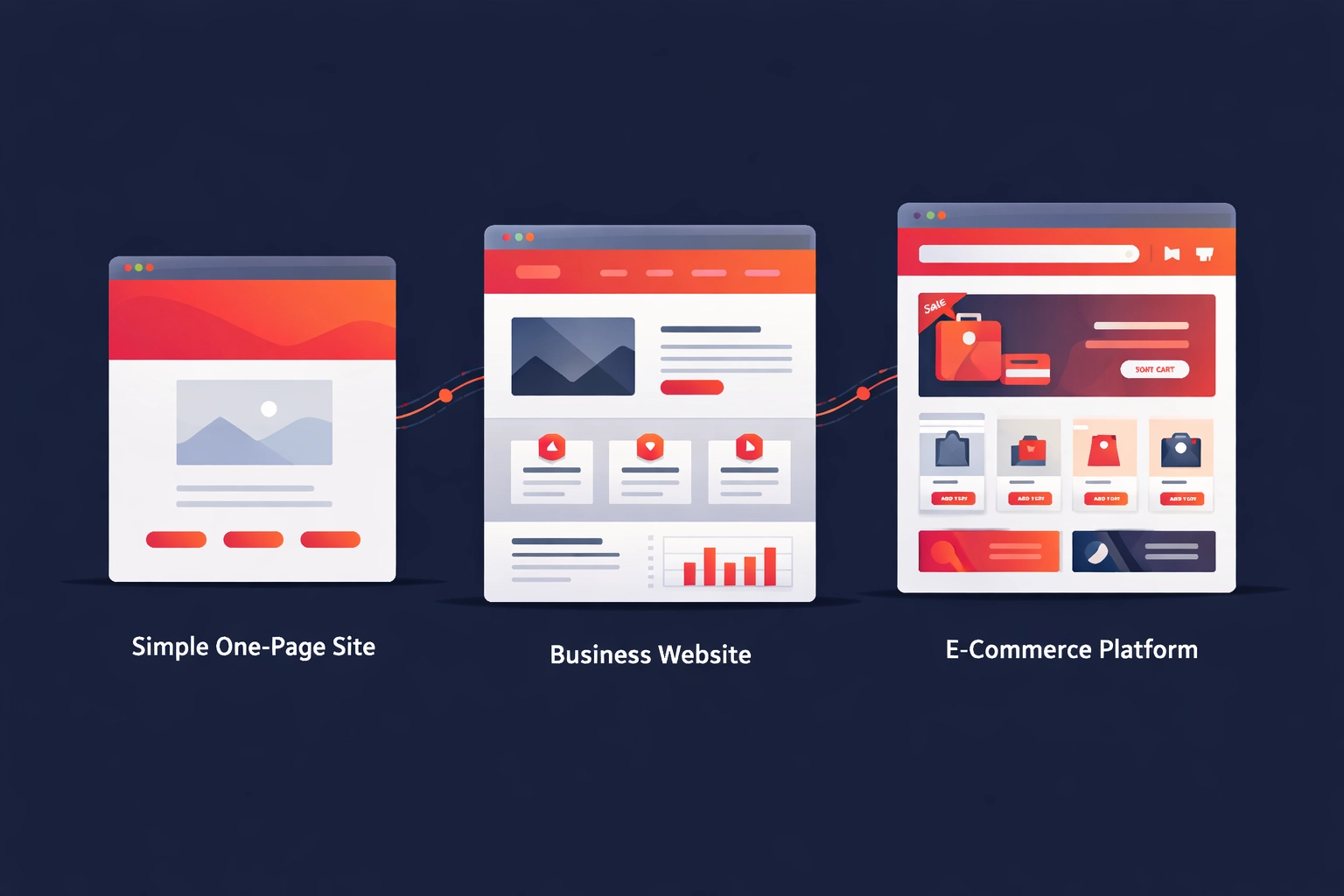
A five-page brochure site showcasing your services will always cost less than an e-commerce platform with booking systems, customer accounts, and payment integrations. Custom design and development costs more than using pre-made templates. An agency with a full team costs more than a solo freelancer.
None of these options are inherently “better” – it depends entirely on what your business needs right now.
Your Website Options (And What They’ll Actually Cost)
Let’s break down your realistic options as a UK small business in 2026.
Quick comparison table (so you can pick a lane)
| Option | Typical upfront cost | Typical ongoing cost | Best for | Main trade-off |
|---|---|---|---|---|
| DIY builder (Wix/Squarespace/Shopify) | £0-£200 | £15-£40/month | Getting online fast with minimal spend | Template limits and “samey” look |
| DIY WordPress | £100-£250 | £20-£50/month | More control without paying a pro | You handle updates, security, fixes |
| Freelancer | £1,500-£6,000 | £0-£200+/month | Custom look on a sensible budget | Quality varies; bandwidth can be limited |
| Agency | £4,000-£12,000 | £120-£500+/month | A proper growth-focused site (design + build + SEO foundations) | Higher upfront investment |
Why this matters: you’re not just paying for “a website”, you’re paying for time, skill, and the level of support you want.
How it helps you: you can shortlist the right route in minutes instead of collecting quotes you can’t compare.
In the next section, we’ll break down what each option really looks like in practice.
DIY Website Builders
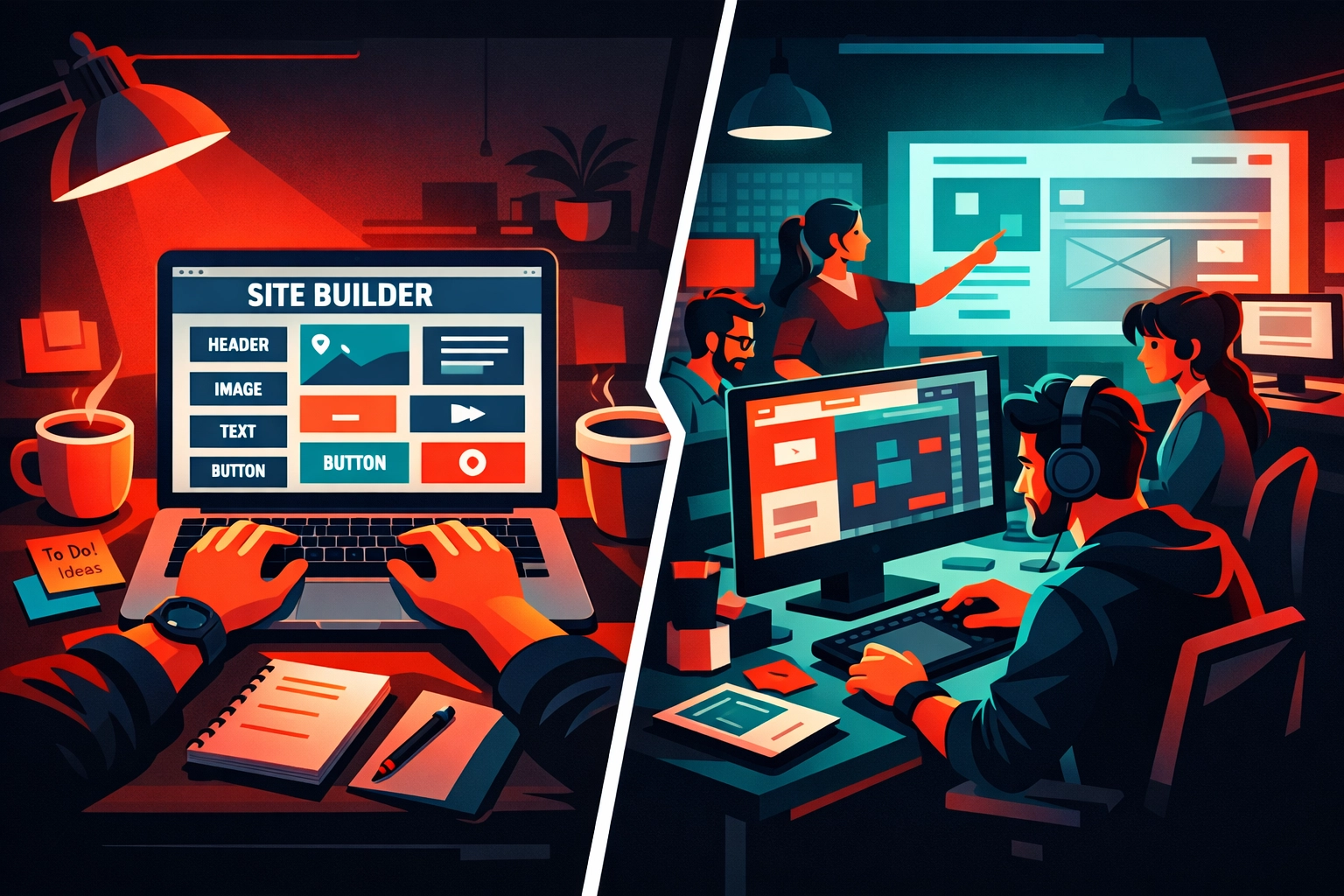
Platforms like Wix, Squarespace, or Shopify let you build your own site for £15-£40 per month. Your upfront time investment is significant, but your financial outlay is minimal.
This works brilliantly if you’re just starting out, have more time than money, and need something basic online quickly. You won’t need technical skills, and you can have something live in a weekend.
The downside? You’re limited by templates, the design might look similar to competitors, and if you need custom functionality later, you’re often stuck.
DIY WordPress
If you’re comfortable with technology, you can set up a WordPress site yourself for around £100-£250 upfront, plus £20-£50 monthly for decent hosting.
This gives you far more flexibility and control than website builders. WordPress powers about 40% of the web for good reason – it’s powerful, customisable, and you own everything.
The catch is that you need to handle updates, security, and troubleshooting yourself. If that sounds stressful, this probably isn’t your best route.
Freelance Web Designer
Hiring a UK freelancer typically costs between £1,500 and £6,000 for a complete small business website. You get custom design without the agency price tag.
This middle-ground option works well for Bristol businesses that want something professional but don’t have the budget for a full agency. You’ll work directly with one person who handles your design, development, and initial setup.
Quality varies enormously with freelancers, so check portfolios carefully and ask for references from other small businesses they’ve worked with.
Web Design Agency
A professional agency like Bamsh typically charges £4,000-£12,000 for a small business website, depending on complexity and features.
What you’re paying for is a team approach. You get a designer, a developer, possibly a copywriter, and ongoing support. Most agencies also handle SEO properly from the start, which DIY sites often miss entirely.
For established Bristol businesses that see their website as a genuine business asset rather than just a digital business card, this investment makes sense.
Breaking Down the Price Tags
Here’s what different types of websites actually cost in the UK market:
Basic Brochure Site (5-8 pages): £1,500-£4,000
Perfect for service businesses that need to establish credibility online. Includes your services, about page, contact form, and basic SEO.
Service Business Website with Lead Generation: £4,000-£8,000
Includes everything above plus optimised contact forms, testimonial sections, case studies, and proper SEO foundation to actually attract enquiries.
E-commerce Website: £5,000-£15,000+
Depends enormously on how many products you’re selling and what payment systems you need. A small shop with 20 products costs far less than a catalogue with 500 SKUs.
Custom Functionality: £8,000-£20,000+
If you need booking systems, member areas, custom calculators, or integration with your existing business systems, expect costs at the higher end.
The Ongoing Costs Nobody Mentions Upfront
Here’s where many small businesses get caught out. Your website isn’t a one-time purchase – it’s more like a car that needs regular servicing.
Hosting costs between £15-£80 per month depending on performance needs. Cheap hosting (under £10/month) often means slow loading times, which costs you customers. For most Bristol small businesses, spending £30-£50 monthly on decent managed hosting makes sense.
Maintenance and updates run about £500-£2,500 per year if you outsource them. This covers security updates, plugin updates, backups, and fixing things when they break (because they will).
Technical support typically costs £75-£150 per hour for ad-hoc help, or £120+ per month for a retainer where your developer keeps an eye on things proactively.
Many agencies offer care plans that bundle hosting, maintenance, and support for a predictable monthly fee. This often works out cheaper than paying for emergency fixes when something breaks at the worst possible moment.
What Affects Your Final Price
Beyond the basics, certain decisions will push your costs up or down.
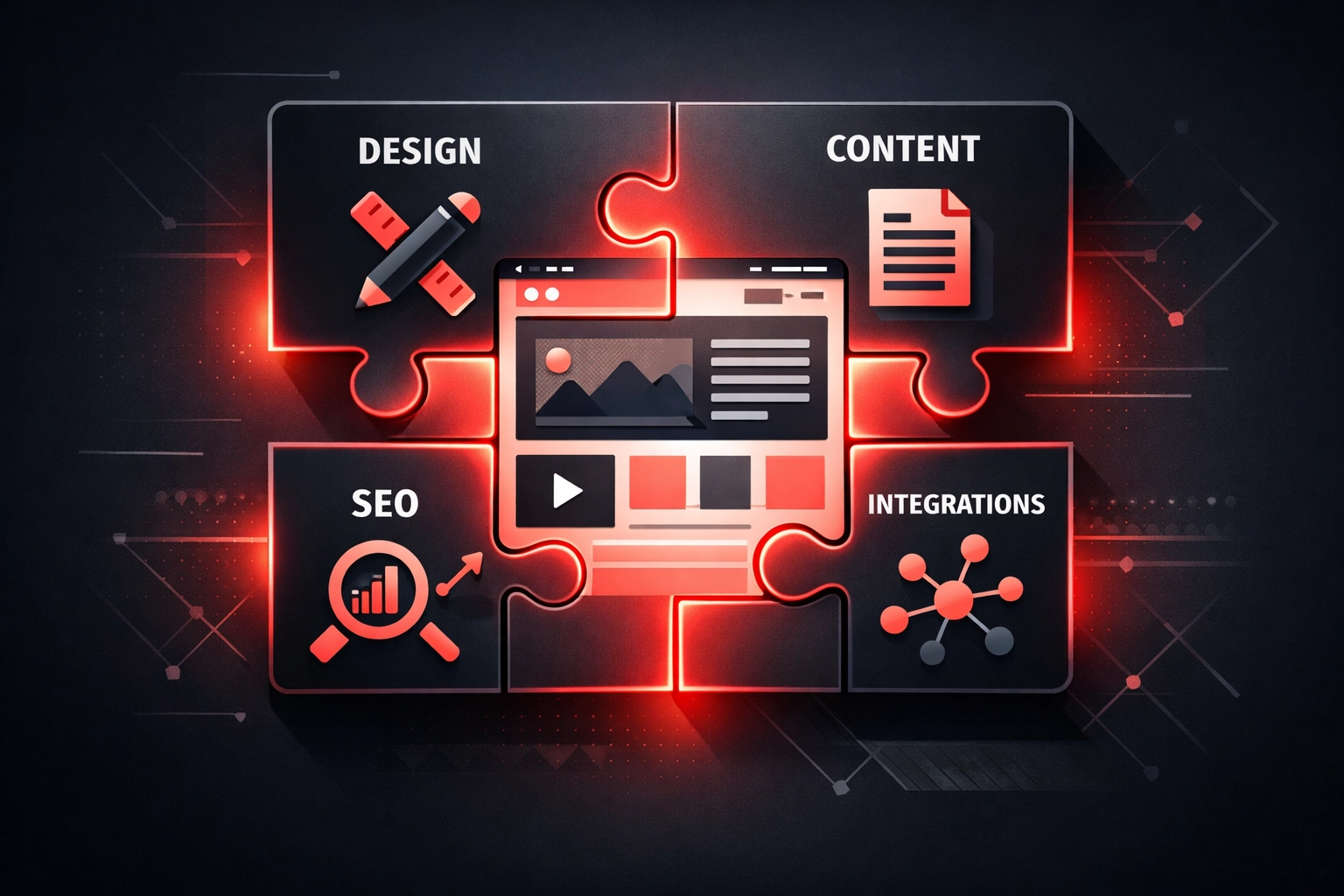
Design complexity makes a big difference. A clean, minimal design using standard layouts costs less than fully custom designs with animations, custom illustrations, or complex layouts.
Content creation often gets forgotten. If you need professional copywriting or photography, budget an extra £500-£2,000 depending on how many pages you need.
SEO setup varies wildly. Basic on-page SEO might be included, but comprehensive keyword research and technical SEO optimisation could add £1,000-£3,000 to your project.
Integrations with your CRM, booking system, payment processor, or email marketing platform each add complexity and cost. Budget £500-£2,000 per integration depending on complexity.
How to Choose What’s Right for Your Business
First, be honest about your technical comfort level. If you dread technology, don’t choose the cheapest DIY option thinking you’ll figure it out. You’ll waste weeks of valuable time and probably end up hiring someone anyway.
Second, consider your timeline. Need something live next week? A DIY builder might be your only realistic option. Have a few months to do this properly? You’ve got more choices.
Third, think about where your business is heading. If you’re planning to grow significantly in the next two years, building on a platform that can scale with you makes sense. Starting cheap and rebuilding in 18 months often costs more in the long run.
Getting a Realistic Quote for Your Specific Needs
The ranges we’ve discussed are helpful for budgeting, but your actual costs depend on your specific requirements.
Rather than spending hours requesting quotes from multiple agencies, you can get a realistic estimate in about five minutes using our web design cost estimator. Answer a few questions about what you need, and you’ll get a transparent price range based on current UK market rates.
No sales calls required, no pressure, just honest numbers so you can budget properly.
Want to see what that investment could look like?
Numbers are useful, but you probably want the visual too. If you’re thinking, “Okay, but what would I actually get for £X?”, our Website Preview Tool makes that easy.
Use it here: Website Preview Tool
Why this matters: price ranges can feel abstract until you can picture the outcome.
How it helps you: you’ll quickly see example layouts and a “this is the kind of site you’re budgeting for” preview, so you can decide with more confidence (and fewer back-and-forth calls).
In the next section, we’ll wrap it up with the key takeaway.
FAQ: Small business website costs (2026)
1) Why is there such a big range in website prices?
The reality is you’re paying for different levels of strategy, design time, technical build, and support. A simple brochure site is quicker to produce than a lead-gen site with custom sections, SEO setup, and integrations.
2) What’s the biggest cost driver for most small business sites?
Usually it’s scope (how many pages/sections), content (copywriting and photography), and functionality (booking, e-commerce, calculators, CRM connections).
3) Is it better to start cheap and upgrade later?
If you just need an online presence fast, starting simple is fine. But if you know you need lead generation, it’s often cheaper long-term to build the right foundation once, rather than rebuilding in 12–18 months.
4) Do I need to budget for ongoing costs?
Yes. Hosting, maintenance, security updates, and support keep your site fast and safe. Skipping this is how small issues become expensive emergencies.
5) How do I know what my budget gets me visually?
That’s exactly what the Website Preview Tool is for. Pair it with the web design cost estimator and you’ll have both the numbers and a visual reference.
The Bottom Line
Most Bristol small businesses end up spending between £3,000-£8,000 for a professionally built website that actually works as a business tool, not just a digital brochure.
You can definitely spend less if you’re willing to trade time for money or accept limitations. You might need to spend more if you need complex functionality or truly custom design.
The key is matching your investment to your actual business needs right now, not what you might need in five years or what your competitor down the road has.
Start by getting clear on what success looks like for your website. Is it generating leads? Booking appointments? Selling products? Once you know that, the right investment level becomes much clearer.