
Let’s be honest. When you’re running a small business, every pound matters. So when you see a website builder advertising a professional site for £299, it’s tempting. Really tempting.
But here’s the thing: that bargain basement price tag rarely tells the whole story.
I’m not saying cheap website builders are evil or that you need to spend £10,000 on a website. What I am saying is that the true small business website cost goes far beyond the initial price you see advertised. And if you don’t know what you’re getting into, that “cheap” website can end up costing you thousands in lost revenue and emergency fixes.
Let’s look at what these hidden costs actually are.
The Price Tag Isn’t Really the Price Tag
You’ve seen the ads. “Professional website for £299!” or “£15 per month, no setup fees!”
Sounds great, right?
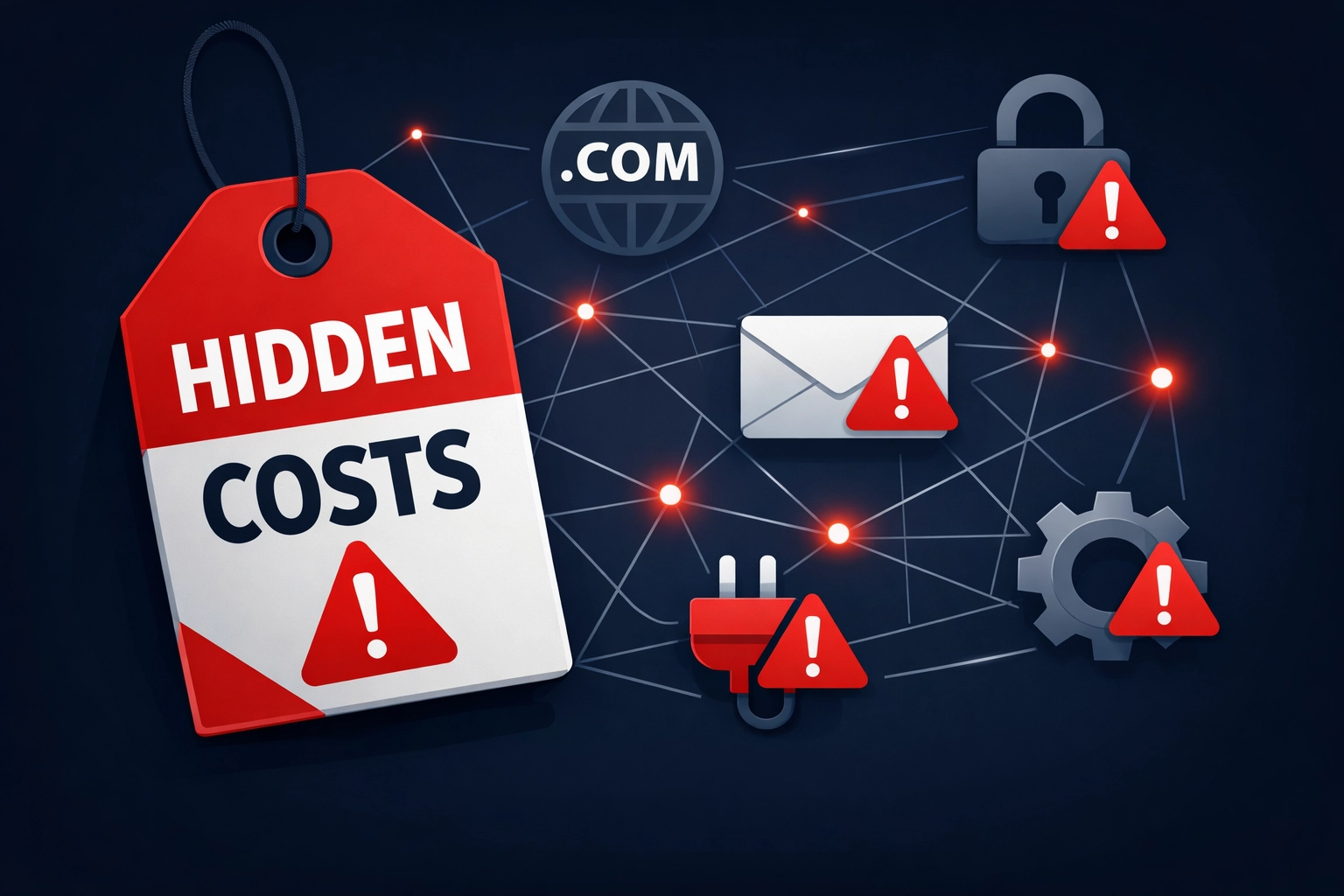
Here’s what they often don’t mention upfront:
- Domain registration and setup: £15-25 yearly
- Email hosting: £5-15 monthly (because yes, you need a professional email address)
- E-commerce functionality: £15-40 monthly extra
- Premium templates that don’t look like everyone else’s: £50-200
- Analytics and tracking tools: £10-30 monthly
- SSL certificate (the padlock that says your site is secure): sometimes extra
- Responsive design fixes when your site looks terrible on mobile: sometimes extra
That £299 website? It’s now costing you closer to £1,500 in the first year alone.
And that’s just if everything goes smoothly.
The Cost You Can’t See: Lost Sales and Traffic
This is where it gets expensive. Really expensive.
Budget website builders simply don’t perform as well in search engines. The research is clear: businesses using cheap platforms see 317% lower organic traffic compared to properly built websites.
Let’s put that in perspective. If a well-built website gets 1,000 visitors per month from Google, a budget platform might only deliver 240 visitors.
What does that mean for your business? Fewer enquiries. Fewer sales. Fewer opportunities.
One startup discovered this the hard way. They spent £50,000 building on a budget platform, then lost £128,000 in enterprise deals because their website didn’t instil confidence in potential clients. They spent another £72,000 fixing checkout bugs that were driving customers away.
The cost of a business website should include the cost of lost opportunities. And that’s often the biggest expense of all.
Security Isn’t Optional (Even Though It Seems It)
Here’s a question you might not have considered: what happens if your website gets hacked?
Budget solutions frequently skip essential security features. No regular malware scanning. Outdated plugins. Missing security patches.
Google blacklists approximately 10,000 websites daily for malware. If yours is one of them, recovery can take months. During that time, your website essentially doesn’t exist to potential customers.
The average cost of a data breach for a small business? £3.31 million according to IBM’s 2023 report.
Now, will your budget website be breached? Maybe not. But the risk is significantly higher when you’re using a platform that treats security as an add-on rather than a foundation.

The Time Sink Nobody Mentions
Even “easy” website builders take time to manage. A lot of time.
Business owners typically spend 20-40 hours per month maintaining their DIY websites. That’s one full working week every month.
What could you do with an extra week each month? How many sales calls could you make? How many client projects could you deliver? How much more revenue could you generate?
And here’s what really frustrates small business owners: budget websites are often incredibly difficult to modify. Want to change your opening hours? Update your pricing? Add a new service?
You might need to hire a freelancer at £50-100 per update just to change text on your homepage. I’ve heard this story dozens of times.
The hidden cost here is your time and the opportunity cost of what else you could be doing.
When Your Business Grows, Your Website Holds You Back
Let’s say everything goes well. Your business is growing. You’re getting more traffic, more enquiries, more sales.
Brilliant! Except…
Your budget website can’t handle it.
Unexpected traffic spikes on cheap platforms can trigger emergency scaling fees. One business paid £5,000 for emergency scaling when a social media post went viral because their platform simply couldn’t handle the load.
Professional solutions typically auto-scale without surprise invoices. Budget platforms? Not so much.
You’ll also start noticing other limitations:
- Your site slows down as you add more products or content
- Forms stop working (and you don’t know how long they’ve been broken)
- The design looks increasingly dated compared to your competitors
- You can’t integrate the tools your business actually needs
Within 6-12 months, most small businesses on budget platforms hit a wall. The website that saved you money upfront is now holding your business back.

You Don’t Actually Own It
Here’s something that surprises many business owners: with many budget website builders, you don’t truly own your website.
You’re renting it.
Want to move to a different platform? Good luck. Your content, your design, your setup: it’s all locked into their system. You can’t just export everything and move elsewhere.
This gives the platform leverage to increase prices, knowing you’re stuck. And if they go out of business or change their terms? Your website could simply disappear.
Ownership matters. Control matters.
What Should You Actually Consider?
Rather than asking “what’s the cheapest option,” ask “what’s the total cost of ownership over the next 2-3 years?”
Factor in:
- All the hidden fees and add-ons
- The revenue you’ll lose from poor search engine performance
- The time you’ll spend managing and updating the site
- The cost of fixes when things break
- The opportunity cost of a website that can’t grow with your business
A professional website isn’t an expense. It’s an investment in your business’s scalability, searchability, and adaptability.
Does that mean you need to spend £10,000? Not necessarily. But it does mean you need to look beyond the advertised price and understand what you’re actually paying for.
The truth is, a website that costs £3,000 upfront but generates consistent leads and requires minimal maintenance is far cheaper than a £299 website that costs you thousands in lost revenue and emergency fixes.
Making the Right Choice for Your Business
So what should you do?
First, be honest about your technical skills and available time. If you genuinely enjoy website building and have hours to spare, a budget builder might work for you.
But if you’re like most small business owners: busy running your actual business: you need a website that works for you, not another job.
Ask potential website providers direct questions:
- What’s included in the quoted price versus what costs extra?
- Who owns the website and can I move it if needed?
- What happens when my business grows?
- How will this perform in search engines?
- What’s included for ongoing maintenance and security?
The answers will tell you everything you need to know about the true small business website cost.
Your website is often the first impression potential customers have of your business. It’s worth getting right the first time.
Because in the end, the most expensive website isn’t the one that costs the most upfront. It’s the one that fails to deliver results, loses you sales, and needs to be completely rebuilt within a year.
Choose wisely.
Frequently Asked Questions
Why is a cheap website not actually cheap?
That bargain basement price tag rarely tells the whole story, as the true small business website cost goes far beyond the initial price you see advertised.
What hidden costs are included in cheap website builders?
Hidden costs often include domain registration, email hosting, e-commerce features, premium templates, analytics tools, SSL certificates, and mobile fixes.
How do cheap websites affect traffic and sales?
Businesses using cheap platforms see significantly lower organic traffic, which leads to fewer enquiries, fewer sales, and fewer opportunities.
Why is security a concern with budget websites?
Budget solutions frequently skip essential security features, increasing the risk of malware, blacklisting, and costly data breaches.
How much time do DIY websites take to manage?
Business owners typically spend 20-40 hours per month maintaining their DIY websites, which can take time away from revenue-generating activities.
Why are cheap websites difficult to update?
Budget websites are often difficult to modify, meaning even simple changes may require hiring a freelancer and paying additional fees.
What happens when my business grows on a budget platform?
As your business grows, your website may struggle with traffic, slow down, or lack integration capabilities, eventually holding your business back.
Do I actually own my website on a cheap platform?
With many budget website builders, you don’t truly own your website, as your content and design are locked into their system.
What is the real cost of a cheap website over time?
The real cost includes hidden fees, lost revenue from poor performance, time spent managing the site, and the cost of future fixes or rebuilds.
What should I consider instead of the cheapest option?
You should consider the total cost of ownership over 2-3 years, including performance, scalability, maintenance, and long-term results.
Recommended
Is My Website Outdated? A Final Checklist for Bristol Businesses in 2026
How Much Does a Website Cost in Bristol? (2026 UK Price Breakdown)
Website Not Getting Enquiries? 7 Mistakes Bristol Businesses Make (And How to Fix Them)
Redesign vs Rebuild: Which Does Your Bristol Business Website Actually Need?