

We need to talk about something that’s costing British businesses thousands of pounds every year. It’s not a conversation anyone wants to have, but it’s one you need to hear if you’re considering a budget website solution.
Here’s the truth: that £299 website package or £15-per-month platform isn’t what it seems. And I’m not saying this to scare you or push expensive services. I’m saying it because I’ve watched too many businesses learn this lesson the hard way.
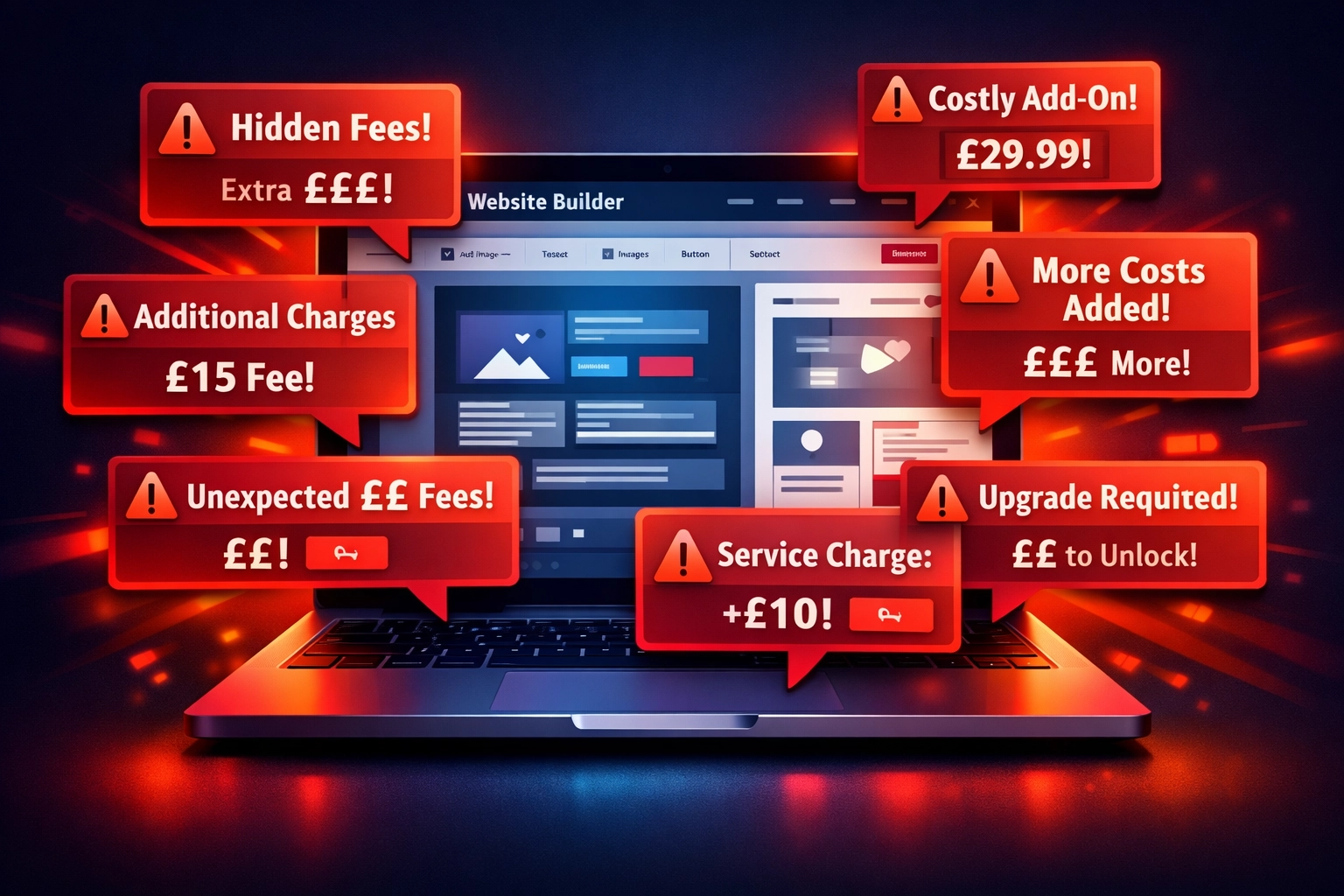
The Sticker Price Is Just the Beginning
You see that advertised price? That’s not what you’ll actually pay. Not even close.
Let me walk you through what actually happens. You sign up for a budget website builder thinking you’ve found a brilliant deal. Then reality sets in:
- Custom domain: £15-25 yearly
- Email hosting: £5-15 monthly
- E-commerce features: £15-40 monthly
- Analytics tools: £10-30 monthly
- Premium templates: £50-200 one-time
- Removing their branding: £10-20 monthly
That £299 package? You’re now looking at £1,500 or more within months. And here’s the thing: you’ll keep paying these fees year after year.
Your Traffic Will Tank (And So Will Your Revenue)
Let’s talk about what cheap website design actually does to your business performance. The numbers here are sobering.
Businesses using budget platforms experience 317% lower organic traffic compared to professionally built websites. That’s not a typo. Three hundred and seventeen percent.
What does this mean for you? Fewer visitors means fewer enquiries. Fewer enquiries means fewer sales. It’s simple maths, really.
One startup invested £40,000 in a DIY platform and lost £100,000 in enterprise deals because their website performed poorly during client demonstrations. They then spent another £55,000 fixing checkout bugs that should never have existed in the first place.
Think about that for a moment. They tried to save money and ended up losing significantly more than a professional website would have cost them upfront.
Security Vulnerabilities Will Keep You Up at Night
Here’s what budget providers don’t advertise: they cut costs by skipping essential security measures.
The average cost of a data breach for small businesses now sits at £2.5 million. Google blacklists approximately 10,000 websites daily for malware. Recovery can take months, and the damage to your reputation? That’s often permanent.
When you choose cheap website design, you’re essentially leaving your front door unlocked and hoping for the best. Your customer data, your business information, your reputation: all of it becomes vulnerable.

The Time Drain No One Mentions
Let’s address something that rarely appears in the pricing discussions: your time.
Managing a DIY website typically requires 20-40 hours monthly. That’s learning the platform, fixing problems, making updates, and troubleshooting issues that wouldn’t exist on a properly built site.
What’s your time worth? If you value it at just £50 per hour, you’re spending £1,000-2,000 monthly managing your website. That’s money you could be making by focusing on your actual business.
And here’s the kicker: businesses report paying freelancers £50-100 just to update homepage text because their cheap sites lack proper architecture for easy self-editing. You end up paying for simplicity that was supposed to be included.
When Success Becomes a Problem
You might think, “What if my marketing actually works?” With budget platforms, successful marketing becomes a financial nightmare.
Traffic surges trigger emergency scaling fees. One business paid £4,000 in emergency charges when a social media post went viral because their platform couldn’t handle the traffic spike.
Professional websites auto-scale without surprise invoices or service interruptions. Budget platforms? They’ll send you a bill first and keep your site running second.

The Inevitable Rebuild
Here’s the pattern I see repeatedly: businesses invest in cheap design, struggle for 6-12 months with mounting problems, then face a complete rebuild that costs far more than doing it properly from the start.
You’re not just paying for the rebuild itself. You’re paying for:
- Lost revenue during those struggling months
- The accumulated subscription fees that delivered little value
- Migration costs to move your content
- The time spent managing a subpar solution
- Lost SEO rankings you have to rebuild from scratch
The maths becomes brutal when you add it all up.
Red Flags in Budget Proposals
How do you spot a problematic proposal before signing? Watch for these warning signs:
Vague scope: Missing details about information architecture, user experience planning, content strategy, or SEO planning. If they’re not discussing these elements, they’re not building them.
No performance metrics: Professional designers discuss loading speeds, Core Web Vitals, conversion tracking, and other measurable outcomes. Budget providers avoid these conversations because they know their platforms underperform.
Custom features on rigid templates: They promise customisation but deliver cookie-cutter solutions that can’t actually do what you need.
No authoring model: You’ll pay for every minor change because they haven’t built a system for you to manage your own content effectively.
The Real Cost of Ownership
Let’s reframe how you think about website investment. Instead of asking “What’s the cheapest option?” ask “What’s the total cost over three years?”
Factor in:
- All subscription and hidden fees
- Lost revenue from poor performance and lower traffic
- Time spent on maintenance and problem-solving
- Security breach risks and potential costs
- Eventually needing a rebuild anyway
When you calculate honestly, cheap design becomes the most expensive option available.

What Actually Makes Sense
I’m not saying you need to spend tens of thousands on a website. I’m saying you need to spend appropriately for what your business requires.
A proper business website represents an investment in your revenue generation infrastructure. It should perform reliably, convert visitors to customers, scale with your growth, and require minimal maintenance.
The question isn’t whether you can afford professional design. The question is whether you can afford not to have it.
Here’s what you should expect from a properly scoped website project:
- Clear performance benchmarks and KPI planning
- Documented SEO strategy built into the foundation
- Security measures that actually protect your business
- User experience design based on your customer research
- Content management you can handle without technical knowledge
- Ongoing support that prevents problems rather than just fixing them
Moving Forward
If you’re currently trapped in a budget website that’s underperforming, you’re not alone. Many businesses face this exact situation. The good news? Recognising the problem is the first step toward solving it.
If you’re considering a new website, take time to evaluate total cost of ownership properly. Ask detailed questions about what’s included and what isn’t. Request case studies showing actual performance metrics, not just pretty screenshots.
Your website isn’t an expense to minimise. It’s a revenue-generating asset to optimise. The difference in perspective changes everything about how you approach the investment.
At Bamsh Digital Marketing, we’ve helped businesses recover from budget website disasters and watched them transform their online presence into genuine business growth. We understand both the technical requirements and the business realities you’re facing.
The right website investment pays for itself through increased traffic, better conversions, and reduced operational headaches. The wrong investment keeps costing you: month after month, opportunity after opportunity.
Choose wisely. Your business deserves better than false economy.
Frequently Asked Questions
1. Is a £299 website package really that cheap in the long run?
No. The advertised price is just the beginning. Once you add domains, email hosting, e-commerce features, analytics tools, premium templates, and branding removal, costs can quickly exceed £1,500 within months, and those fees continue year after year.
2. Why do budget website platforms end up costing more than expected?
Because essential features are often sold separately. What looks like an affordable package quickly becomes expensive once you factor in add-ons, monthly subscriptions, and hidden upgrade fees.
3. Does cheap website design really affect traffic and sales?
Yes. Businesses using budget platforms experience 317% lower organic traffic compared to professionally built websites. Lower traffic means fewer enquiries and fewer sales.
4. Can a poor website actually lose me major deals?
Absolutely. One startup lost £100,000 in enterprise deals due to poor website performance during client demonstrations, then spent £55,000 fixing technical issues that should not have existed.
5. Are budget websites more vulnerable to security problems?
Yes. Budget providers often cut costs by skipping essential security measures. With small business data breaches averaging £2.5 million in cost and thousands of sites blacklisted daily, the risk is serious.
6. How much time does managing a DIY website actually take?
Typically 20–40 hours per month. That includes learning the platform, troubleshooting issues, making updates, and fixing problems that would not exist on a properly built site.
7. What happens if my marketing suddenly works and traffic spikes?
On budget platforms, traffic surges can trigger emergency scaling fees. One business paid £4,000 in unexpected charges after a viral post because their platform could not handle the spike.
8. Why do so many businesses eventually rebuild after choosing a cheap website?
Because after 6–12 months of performance issues, mounting fees, and lost revenue, a full rebuild becomes unavoidable. By then, they have also lost SEO rankings and spent money migrating content.
9. What are the warning signs of a problematic website proposal?
Vague scope, no performance metrics, promises of custom features on rigid templates, and no authoring model for easy content management are all major red flags.
10. What should I expect from a properly scoped business website?
Clear performance benchmarks, built-in SEO strategy, real security measures, user experience design based on customer research, easy content management, and ongoing support that prevents problems rather than just fixing them.