
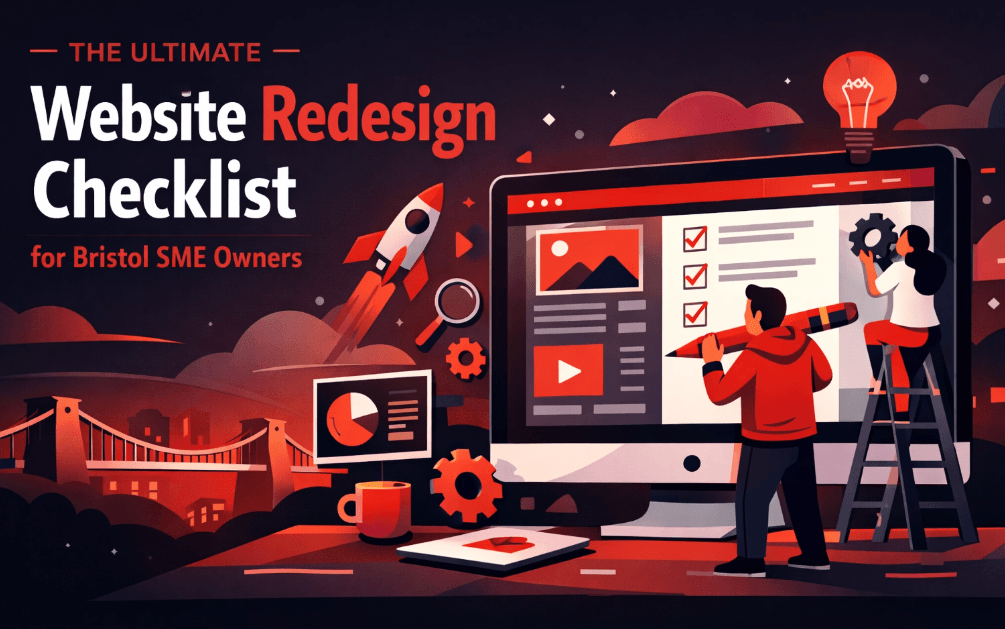
You’ve reached that point, haven’t you? Your website feels clunky, outdated, or just isn’t bringing in the leads it should. You know a redesign is on the cards, but where do you even start?
Here’s the thing: a website redesign Bristol project can be brilliant for your business, or it can be an expensive headache. The difference comes down to proper planning.
I’ve put together this practical checklist to help Bristol SME owners navigate a website redesign without the stress, technical overwhelm, or nasty surprises. Let’s dive in.
Before You Do Anything: Define Your “Why”
Most business owners jump straight into design discussions. Big mistake.
First, ask yourself: what exactly isn’t working right now? Is your site slow? Does it fail to convert visitors? Is the content outdated? Are you invisible on Google?
Write down your specific problems. Be brutally honest. This clarity will guide every decision that follows and help you measure whether your redesign actually succeeds.
The Planning Phase: Get Your Ducks in a Row
Set Clear, Measurable Goals
Vague goals like “make the site better” won’t cut it. Instead, think about specific outcomes:
- Increase contact form submissions by 40%
- Reduce bounce rate on key landing pages
- Improve mobile page speed to under 3 seconds
- Rank on page one for “your service + Bristol”
Specific goals keep your project focused and help you evaluate agencies based on whether they understand what you’re trying to achieve.
Map Out Your User Journey
Who visits your site? What are they looking for? What questions do they need answered before they’ll trust you with their business?
Sketch out the path from first visit to customer. This exercise will reveal which pages you actually need, what content belongs on each, and where those all-important calls-to-action should live.

Audit What You Already Have
Before you bin everything, take stock. Which pages get the most traffic? Which ones actually convert? What content ranks well on Google?
Use Google Analytics to identify your top performers. These pages are valuable assets, you’ll want to preserve and improve them, not accidentally delete them in the redesign.
Content Preparation: The Bit Everyone Forgets
Here’s something agencies won’t always tell you upfront: content is usually the biggest bottleneck in redesigns.
You can’t just copy-paste your old content into a shiny new design and expect magic. A business website redesign requires fresh, focused content that actually serves your customers.
Create a Content Inventory
List every page on your current site. Mark each one:
- Keep and improve – Good content that needs refreshing
- Keep as-is – Still relevant and performing well
- Merge – Similar pages that should be consolidated
- Delete – Outdated, irrelevant, or duplicate content
This process typically reveals that you need far fewer pages than you thought. That’s good news, quality beats quantity every time.
Write for Your Customers, Not Yourself
Look at your current website copy. Is it full of industry jargon? Does it talk about how brilliant you are, or does it address your customers’ actual problems?
The best content answers the questions your prospects are actually asking. Think about the emails and calls you receive. What do people want to know before they buy? Write that.
Prepare Your Visual Assets
Gather high-quality photos, logos, brand guidelines, and any other visual materials. If you’re using stock photos, bin the obvious ones, you know, the suspiciously happy office workers shaking hands in an unnaturally bright conference room.
Real photos of your actual team and workspace build far more trust than generic stock imagery.
Choosing a Bristol Agency: What Actually Matters
Right, let’s talk about finding the right partner for your website redesign Bristol project.
Ask About Their Process, Not Just Their Portfolio
Pretty websites are easy to spot. What’s harder to evaluate is whether an agency knows how to deliver results for businesses like yours.
Ask potential agencies:
- How do you approach SEO during a redesign?
- What happens to my current Google rankings?
- How do you handle content migration?
- What’s your process for preserving link equity?
If they can’t answer these questions clearly, walk away. A redesign that tanks your search visibility is worse than no redesign at all.
Understand What “Done” Actually Means
Here’s a question that trips up many SME owners: what exactly is included in the quote?
Be specific about:
- How many pages are covered
- Who writes the content (you or them)
- Whether SEO optimisation is included
- What happens after launch
- Who owns the website files
- How updates and changes work going forward
Transparent agencies will spell this out clearly. Vague agencies will give you headaches later.
Local Knowledge Matters (Sometimes)
Does your agency need to be Bristol-based? Not necessarily: plenty of remote agencies do brilliant work.
However, a local agency often understands the Bristol market better, knows local competitors, and can meet face-to-face when needed. For some businesses, that matters. For others, it doesn’t.
What definitely matters is that they understand your industry and customer base, wherever they’re located.
The Technical Bits You Can’t Ignore
Mobile-First Is Non-Negotiable
Google indexes mobile versions of websites first. If your site doesn’t work brilliantly on phones and tablets, you’re already behind.
Your agency should design for mobile first, then scale up to desktop: not the other way around. Test your new design on actual devices, not just desktop browser windows made smaller.
Speed Matters More Than You Think
A slow website kills conversions and damages your search rankings. Aim for page load times under 3 seconds on mobile.
Your agency should optimise images, minimise code, and implement caching properly. Use Google’s PageSpeed Insights to test both before and after your redesign.

Preserve Your SEO Equity
This is critical: if you change URLs during your redesign, you must implement proper 301 redirects from old pages to new ones.
Missing this step can devastate your search rankings. Make sure your agency has a comprehensive redirect plan before launch day.
Accessibility Isn’t Optional
Your website should work for everyone, including people with visual, auditory, or cognitive impairments. Beyond being the right thing to do, accessible websites also perform better in search engines.
Ask your agency about WCAG compliance. If they look confused, find a different agency.
Post-Launch: You’re Not Finished Yet
Here’s what most people don’t realise: launching your redesigned website isn’t the end: it’s the beginning.
Monitor Everything
Set up proper analytics tracking before launch. Watch your traffic, conversions, rankings, and user behaviour closely in the first few weeks.
Some fluctuation is normal, but significant drops in traffic or conversions need immediate attention.
Plan for Continuous Improvement
Your new website should be easier to update and optimise than your old one. Schedule regular reviews of performance data and make incremental improvements.
The websites that win long-term are the ones that evolve based on real user behaviour, not the ones that get redesigned once every five years and left to gather dust.
Your Next Steps
A successful website redesign Bristol project comes down to proper planning, clear goals, and choosing the right partner.
Start by auditing your current site and defining what success looks like. Prepare your content before you get quotes. Ask tough questions of potential agencies, especially about SEO preservation and what’s actually included in their pricing.
If you’re ready to explore what a properly planned redesign could do for your Bristol business, we’d love to chat. No hard sell, just honest advice about whether a redesign makes sense for you right now and what it would take to do it properly.
Visit our web design page to see our approach, or get in touch for a straightforward conversation about your options.
Your website should work harder for your business. With the right planning and the right partner, it will.
Frequently Asked Questions
Why is planning important for a website redesign Bristol project?
A website redesign Bristol project can be brilliant for your business, or it can be an expensive headache. The difference comes down to proper planning.
What should I do before starting a website redesign?
First, ask yourself what exactly isn’t working right now and write down your specific problems to guide every decision that follows.
Why do I need clear goals for my website redesign?
Specific goals keep your project focused and help you evaluate whether your redesign actually succeeds.
How do I map out my website user journey?
Sketch out the path from first visit to customer to understand what pages you need, what content belongs on each, and where calls-to-action should live.
Why should I audit my existing website before redesigning?
Use Google Analytics to identify your top-performing pages so you can preserve and improve them instead of accidentally deleting valuable content.
Why is content preparation important in a website redesign?
A business website redesign requires fresh, focused content that actually serves your customers rather than copying old content into a new design.
What should I look for when choosing a Bristol web design agency?
Ask about their process, especially how they handle SEO, content migration, and preserving your current Google rankings.
Why is mobile-first design important for my website?
Google indexes mobile versions of websites first, so if your site doesn’t work well on phones, you are already behind.
How does website speed affect performance?
A slow website kills conversions and damages your search rankings, so you should aim for page load times under 3 seconds.
What happens after launching a redesigned website?
Launching your redesigned website isn’t the end, you need to monitor performance and plan for continuous improvement.