

Growing a small business in Bristol or Cheltenham often means juggling limited resources while striving to attract more customers online. Struggling to appear in search results and find quality leads can leave your growth ambitions stuck in neutral. Unlocking your website’s potential starts with assessing your SEO performance and acting on real data. This guide walks you through practical steps designed to help local companies sharpen visibility and turn web traffic into valuable business opportunities.
Table of Contents
- Step 1: Assess Current Website SEO Performance
- Step 2: Identify and Target Strategic Keywords
- Step 3: Optimise On-Page Content for Search Engines
- Step 4: Enhance Website Technical SEO and Structure
- Step 5: Build Quality Backlinks and Local Authority
- Step 6: Monitor Progress and Refine SEO Strategies
Quick Summary
| Key Takeaway | Explanation |
|---|---|
| 1. Assess Your Current SEO Performance | Use analytics tools to evaluate traffic, keyword rankings, and engagement metrics. Understanding these insights is vital for improvement. |
| 2. Conduct Strategic Keyword Research | Identify high-volume, relevant keywords. Focus on aligning content with what potential customers are searching for online. |
| 3. Optimise On-Page Content Effectively | Create valuable content that integrates keywords naturally, including title tags, meta descriptions, and header tags. |
| 4. Strengthen Technical SEO Practices | Improve loading speeds and mobile responsiveness, and enhance site structure to support efficient search engine crawling. |
| 5. Build Quality Backlinks | Focus on acquiring backlinks from high-authority sites, recognising that quality links are more valuable than multiple low-quality ones. |
Step 1: Assess Current Website SEO Performance
Understanding your website’s current search engine performance is crucial for developing an effective SEO strategy. This assessment will help you identify strengths, weaknesses, and opportunities for improvement across your digital presence.
To begin, you’ll want to leverage powerful analytics tools that provide comprehensive insights. Performance metrics for websites are essential for tracking your online visibility. Start by examining key areas:
- Organic search traffic from Google Analytics
- Keyword rankings using tools like SEMrush or Ahrefs
- Click-through rates from search results
- User engagement metrics such as time on site and bounce rate
Next, conduct a detailed technical review using Google Search Console. This will reveal critical technical issues impacting your SEO performance, such as:
- Crawlability of your website
- Mobile responsiveness
- Page loading speeds
- Broken links or server errors
- Indexing problems
Tracking your website’s SEO performance is like maintaining a high-performance vehicle – regular check-ups prevent major breakdowns and ensure optimal performance.
The insights you gather will form the foundation of your SEO improvement strategy. Practical SEO tracking methods recommend systematic analysis to understand your current digital landscape.
Expert Tip: Create a spreadsheet to track your key SEO metrics monthly, allowing you to visualise progress and identify trends over time.
Here’s a concise comparison of common SEO metrics and their significance:
| Metric | What It Measures | Why It Matters |
|---|---|---|
| Organic Search Traffic | Number of visitors from search engines | Shows visibility and reach |
| Bounce Rate | Percentage leaving after one page | Reveals engagement and content quality |
| Keyword Ranking | Position in search results for keywords | Assesses keyword strategy effectiveness |
| Conversion Rate | Percentage taking desired actions | Indicates business impact and ROI |
Step 2: Identify and Target Strategic Keywords
Keyword research is the cornerstone of any successful SEO strategy, helping small businesses understand exactly what potential customers are searching for online. By identifying market opportunities, you can align your digital content with genuine user needs and search intent.
Begin your keyword research process through these strategic steps:
- Brainstorm core business services and potential customer search terms
- Use keyword research tools like Google Keyword Planner
- Analyse competitor keyword strategies
- Examine long-tail keyword variations
- Consider local search terms relevant to your business location
Your keyword selection should balance three critical factors:
- Search volume
- Keyword difficulty
- Relevance to your business offerings
Strategic keyword targeting isn’t about attracting everyone – it’s about attracting the right people who are most likely to become your customers.
Understanding the broader search services landscape can provide additional insights into how users interact with search engines and discover businesses like yours.
Expert Tip: Regularly update your keyword strategy every three to six months to stay aligned with changing market trends and search behaviours.
To help select the best keywords, consider these factors side by side:
| Factor | Description | Impact on Keyword Choice |
|---|---|---|
| Search Volume | Number of monthly searches | Higher volume means greater reach |
| Keyword Difficulty | How hard it is to rank for a keyword | Lower difficulty is easier to rank |
| Relevance | Alignment to your products or services | Ensures targeted, quality traffic |
Step 3: Optimise On-Page Content for Search Engines
Optimising your website’s content is crucial for improving search engine rankings and attracting potential customers. Developing an effective search strategy involves more than just inserting keywords – it’s about creating valuable, relevant content that speaks directly to your audience’s needs.
Focus on these key on-page optimisation elements:
- Craft compelling title tags that include primary keywords
- Write descriptive meta descriptions that encourage click-throughs
- Use header tags (H1, H2, H3) strategically
- Incorporate keywords naturally throughout your content
- Ensure content is informative and answers user questions
Your content optimisation process should include:
- Conduct thorough keyword research
- Create high-quality, original content
- Implement semantic variations of target keywords
- Optimise image alt texts
- Improve internal linking structure
Great on-page SEO is about creating content that serves both search engines and human readers – never sacrifice readability for keyword density.
Understanding content optimisation techniques can transform your website into a powerful lead-generation tool that attracts and engages potential customers.

Expert Tip: Aim to solve your customers’ problems through your content, and search engine rankings will naturally follow.
Step 4: Enhance Website Technical SEO and Structure
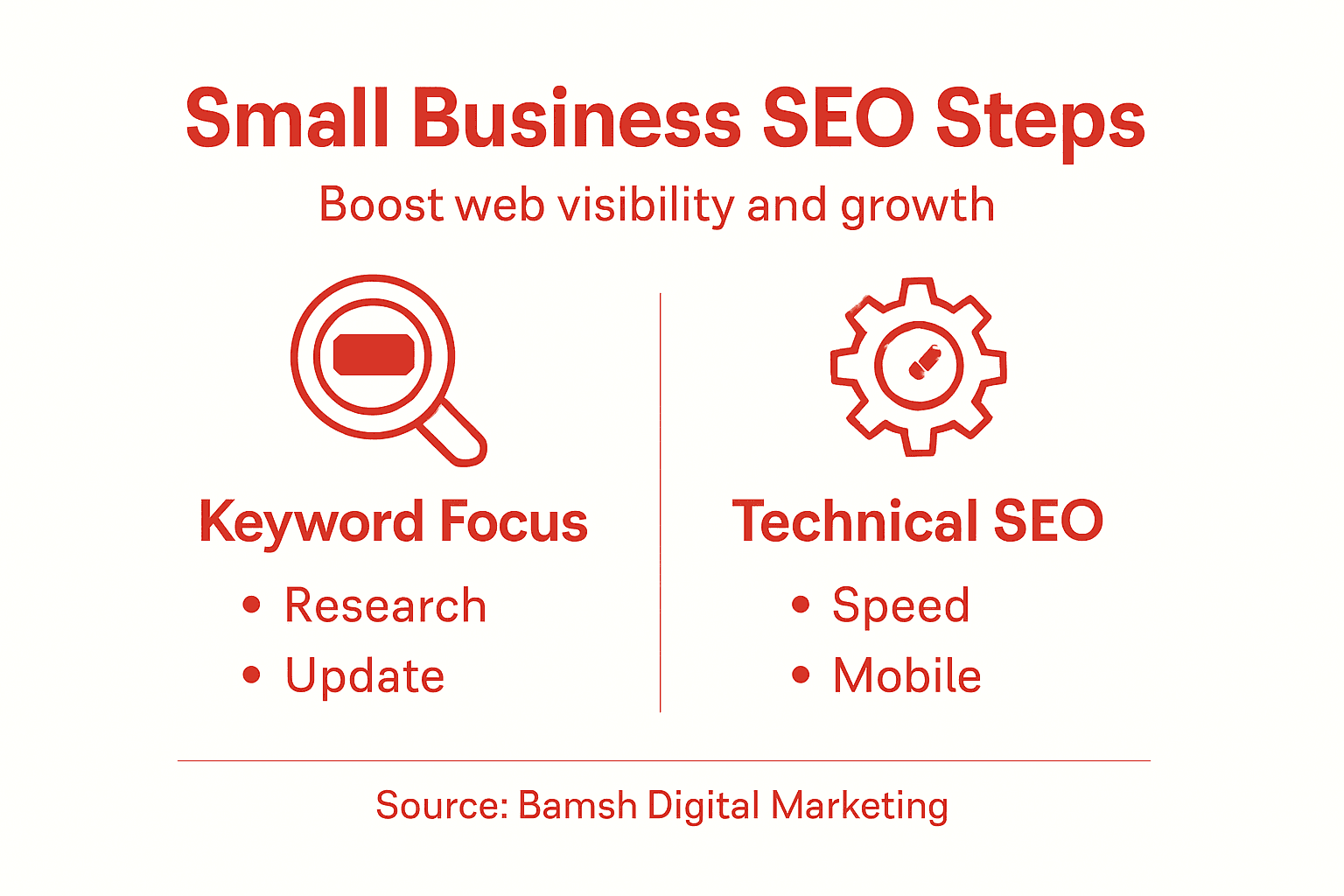
Technical SEO forms the foundation of your website’s search engine performance, determining how effectively search engines can discover, crawl, and understand your digital content. Technical SEO fundamentals involve creating a robust website infrastructure that supports seamless search engine indexing and user experience.
Prioritise these critical technical SEO elements:
- Improve website loading speed
- Ensure mobile responsiveness
- Create a clear, logical site structure
- Implement secure HTTPS protocol
- Develop an XML sitemap
- Optimise robots.txt file
Your technical SEO enhancement strategy should focus on:
- Reduce server response times
- Compress and optimise images
- Minimise unnecessary code
- Use browser caching
- Enable content delivery networks
Technical SEO is like building a well-designed highway system for search engines – smooth, efficient, and without unnecessary obstacles.
Even small technical improvements can significantly impact your website’s search engine visibility and user engagement.
Expert Tip: Regularly audit your website’s technical performance using free tools like Google Search Console to identify and resolve potential issues before they impact your rankings.
Step 5: Build Quality Backlinks and Local Authority
Backlinks are the digital reputation builders that signal your website’s credibility and expertise to search engines. Backlink strategies for local businesses involve creating meaningful connections that demonstrate your authority within your industry and local community.
Effective backlink building strategies include:
- Create high-quality, shareable content
- Engage with local business networks
- Participate in community events and sponsorships
- Write guest posts for reputable industry websites
- Leverage local directory listings
- Develop relationships with industry influencers
Your backlink acquisition process should prioritise:
- Focus on relevant, high-authority websites
- Ensure natural, contextual link placement
- Diversify your backlink sources
- Monitor and disavow toxic backlinks
- Track your domain authority progression
Quality trumps quantity when it comes to backlinks – one genuine, relevant link is worth more than dozens of low-quality connections.
Building local authority requires consistent effort and genuine community engagement that goes beyond mere digital marketing tactics.
Expert Tip: Treat backlink building as relationship building, focusing on providing genuine value to your local business ecosystem.
Step 6: Monitor Progress and Refine SEO Strategies
Successful SEO is an ongoing journey of continuous improvement and adaptation. Digital market monitoring requires a strategic approach to tracking your website’s performance and making data-driven refinements.
Essential metrics to track include:
- Organic search traffic
- Keyword ranking positions
- Conversion rates
- Bounce rates
- Page loading speeds
- Mobile responsiveness
- User engagement metrics
Your SEO monitoring process should encompass:
- Set up comprehensive analytics tracking
- Review performance monthly
- Identify trends and patterns
- Conduct regular competitor analysis
- Test and implement incremental improvements
SEO is not a destination but a continuous journey of refinement and adaptation.
Staying ahead requires understanding evolving digital landscapes and maintaining flexibility in your approach.
Expert Tip: Allocate at least two hours each month to systematically review and adjust your SEO strategy based on performance data.
Boost Your Small Business SEO with Bamsh Digital Marketing
The “Website SEO Optimisation Guide for Small Businesses” highlights common challenges like technical SEO hurdles, keyword targeting difficulties, and maintaining ongoing SEO momentum. If you want to stop feeling overwhelmed by complex SEO strategies and see clear, measurable results that bring more leads, higher rankings, and increased local authority, Bamsh can help. Our team specialises in optimising websites for search engines and AI platforms, crafting tailored strategies that match your business goals and connect with your ideal customers.
Explore proven solutions with our SEO Agency Bristol – Bamsh Digital Marketing team, who understand these pain points and can guide you step-by-step. Take advantage of our transparent, no-jargon approach and fast setup so you start growing your visibility quickly. For special deals designed to fit your budget and ambition, see our Special Offers – Bamsh Digital Marketing page.
Ready to turn your SEO efforts into predictable growth? Book a free 15-minute consultation today at Bamsh Digital Marketing and discover how to make your website work harder for your business.
Frequently Asked Questions
How can I assess my current website’s SEO performance?
To assess your current website’s SEO performance, start by using analytics tools to track key metrics like organic search traffic, keyword rankings, and user engagement. Regularly review these metrics, ideally on a monthly basis, to identify strengths and areas for improvement.
What steps should I take to identify strategic keywords for my small business?
Begin your keyword research by brainstorming core services and using keyword research tools to find popular search terms. Aim to create a list of at least 10 relevant keywords that balance search volume, difficulty, and relevance to your offerings.
How do I optimise my website’s content for search engines?
To optimise your website’s content, include target keywords naturally in title tags, meta descriptions, and throughout the text. Focus on creating high-quality, informative content that answers user questions, and aim for at least 500 words per page to provide value.
What are the key technical SEO elements I should prioritise?
Key technical SEO elements to prioritise include improving website loading speed, ensuring mobile responsiveness, and creating a clear site structure. Regularly test these aspects and aim for a loading speed of under three seconds to enhance user experience and search rankings.
How can I build quality backlinks for my small business?
To build quality backlinks, create shareable content and engage with local business networks. Target at least three relevant websites per month for guest posting or collaboration to enhance your website’s credibility and authority.
How often should I monitor and refine my SEO strategies?
You should monitor your SEO strategies monthly to track performance metrics and identify trends. Make specific adjustments based on data, and aim to implement at least one significant change every three months to keep your SEO efforts effective.