

Many business owners in South Wales struggle to stand out online without resorting to pushy advertising. The reality is, building trust and attracting leads requires more than just shouting your message—it demands a genuine, customer-focused approach. Understanding the difference between inbound marketing and traditional outbound methods helps you create honest connections while meeting UK marketing regulations. This overview offers clear steps to generate real interest and improve your visibility without breaking the rules or your budget.
Table of Contents
- Defining Inbound Marketing and Common Myths
- Key Principles and Core Methodologies
- Types of Inbound Marketing Channels
- How Inbound Delivers Leads and ROI
- Comparing Inbound with Outbound Approaches
- Common Pitfalls and How to Avoid Them
Key Takeaways
| Point | Details |
|---|---|
| Inbound Marketing Focus | Inbound marketing draws customers in by providing valuable content, contrasting with traditional advertising that interrupts. |
| Myths of Inbound Marketing | It is important to recognise that inbound marketing is not free or instantaneous; it requires investment and consistent effort. |
| Buyer Personas Importance | Developing detailed buyer personas enhances marketing effectiveness by tailoring strategies to customer preferences and behaviours. |
| Performance Measurement | Successful inbound marketing relies on tracking key performance indicators (KPIs) to evaluate ROI and ensure strategies are effective. |
Defining Inbound Marketing and Common Myths
Inbound marketing represents a transformative approach to attracting customers by creating valuable content that naturally draws people towards your business, instead of interrupting them with traditional advertising methods. Unlike outbound marketing, which pushes messages at potential customers, inbound marketing pulls interested prospects towards your brand by providing helpful, relevant information.
At its core, inbound marketing focuses on three critical stages:
- Attract: Drawing potential customers through compelling, high-quality content
- Engage: Providing solutions and insights that address specific customer needs
- Delight: Continuing to support and add value even after a purchase is made
Many businesses misunderstand inbound marketing, believing it’s just another buzzword or temporary trend. However, marketing communication regulations in the UK emphasise transparency and honest communication, which aligns perfectly with inbound marketing’s core principles. The most common myths about this approach include:
- Inbound marketing is free (False: It requires investment in content creation and strategy)
- It works instantly (False: Building trust and visibility takes consistent effort)
- Only large companies can do it effectively (False: Small businesses can excel with targeted content)
Direct marketing is often confused with inbound marketing, but they’re fundamentally different. Direct marketing guidelines highlight that targeted communication differs from the organic, value-driven approach of inbound marketing.
Pro tip: Start your inbound marketing journey by creating content that genuinely answers your customers’ most pressing questions, focusing on providing real value rather than selling.
Key Principles and Core Methodologies
Inbound marketing is built upon a strategic framework that goes far beyond traditional marketing approaches. Ethical marketing principles underscore the importance of creating genuine connections with potential customers by delivering value through targeted, relevant content and experiences.
The core methodologies of inbound marketing can be distilled into several key strategic components:
- Customer-Centric Approach: Prioritising the customer’s needs and pain points
- Content Relevance: Creating highly targeted, valuable information
- Personalisation: Tailoring experiences to individual customer preferences
- Data-Driven Decision Making: Using analytics to refine and improve strategies
Buyer personas play a critical role in developing effective inbound marketing strategies. These detailed customer profiles help businesses understand their audience’s motivations, challenges, and communication preferences, enabling more precise and impactful marketing efforts.
Successful inbound marketing transforms strangers into loyal customers by providing genuine value at every stage of their journey.
Strategic marketing education emphasises the importance of integrating digital technologies with deep consumer insights. This approach requires businesses to continuously adapt their strategies, leveraging advanced analytics and emerging digital platforms to create more meaningful customer interactions.
The methodology relies on a systematic approach to attracting, engaging, and delighting customers through:
- Comprehensive market research
- Detailed customer behaviour analysis
- Continuous content optimisation
- Responsive communication strategies
Pro tip: Invest time in developing detailed buyer personas and regularly update them based on actual customer interactions and feedback to ensure your inbound marketing remains relevant and effective.
Types of Inbound Marketing Channels
Inbound marketing leverages a diverse array of digital and traditional channels to attract, engage, and convert potential customers. Marketing communication channels offer businesses multiple touchpoints to connect with their target audience effectively and strategically.
The primary inbound marketing channels can be categorised into several key groups:
- Digital Channels:
- Company websites and blogs
- Search engine content
- Social media platforms
- Email marketing
- Podcasts and video content
- Interactive Channels:
- Webinars
- Online workshops
- Live streaming events
- Interactive quizzes and assessments
- Content-Driven Channels:
- Educational resources
- Downloadable guides
- Case studies
- Whitepapers and research reports
Social media platforms have become particularly powerful inbound marketing tools, enabling businesses to create targeted, engaging content that naturally attracts potential customers. Each platform offers unique opportunities for connecting with specific audience segments.
Successful inbound marketing isn’t about broadcasting messages, but creating meaningful conversations that resonate with your audience.
Strategic communication guidance emphasises the importance of selecting channels that align with your target audience’s preferences and behaviours. This means understanding where your potential customers spend their time and how they prefer to consume information.

For a quick reference, here are the main inbound marketing channels and their typical best uses:
| Channel Type | Example Platforms | Best Use Case |
|---|---|---|
| Digital | Website, LinkedIn | Thought leadership content |
| Social Media | Instagram, Facebook | Community building, brand dialogue |
| Interactive | Webinars, live streams | Deep audience engagement |
| Content Assets | Guides, whitepapers | Lead generation and nurturing |
The most effective inbound marketing strategies typically involve:
- Identifying target audience channel preferences
- Creating platform-specific content
- Maintaining consistent brand messaging
- Measuring and adapting channel performance
Pro tip: Don’t just use multiple channels — strategically integrate them to create a seamless, cohesive customer experience that guides potential clients through their purchasing journey.
How Inbound Delivers Leads and ROI
Inbound marketing transforms the traditional sales approach by creating a systematic method for generating high-quality leads with measurable financial returns. Inbound service performance demonstrates how strategic content and targeted communication can dramatically improve lead capture and conversion rates.
The lead generation process through inbound marketing typically involves several key performance metrics:
- Attraction Stage:
- Website visitor volume
- Organic search rankings
- Content engagement rates
- Conversion Stage:
- Lead magnet downloads
- Form submission rates
- Email sign-up percentages
- Nurturing Stage:
- Email open rates
- Click-through percentages
- Sales qualified lead conversions
Return on investment (ROI) in inbound marketing is not just about immediate sales, but about creating sustainable, long-term customer relationships. By producing valuable content that addresses specific customer pain points, businesses can generate leads that are more likely to convert and remain loyal.
Effective inbound marketing turns your website into a 24/7 lead generation machine, working continuously to attract and convert potential customers.
Performance measurement techniques emphasise the importance of tracking key performance indicators (KPIs) to validate marketing investments. Sophisticated analytics allow businesses to understand precisely how each piece of content contributes to the sales pipeline.
Successful inbound marketing ROI is achieved through:
- Comprehensive content strategy
- Precise audience targeting
- Continuous performance analysis
- Iterative content optimisation
Pro tip: Implement a robust tracking system that connects your content efforts directly to revenue, enabling you to demonstrate the tangible financial impact of your inbound marketing strategies.
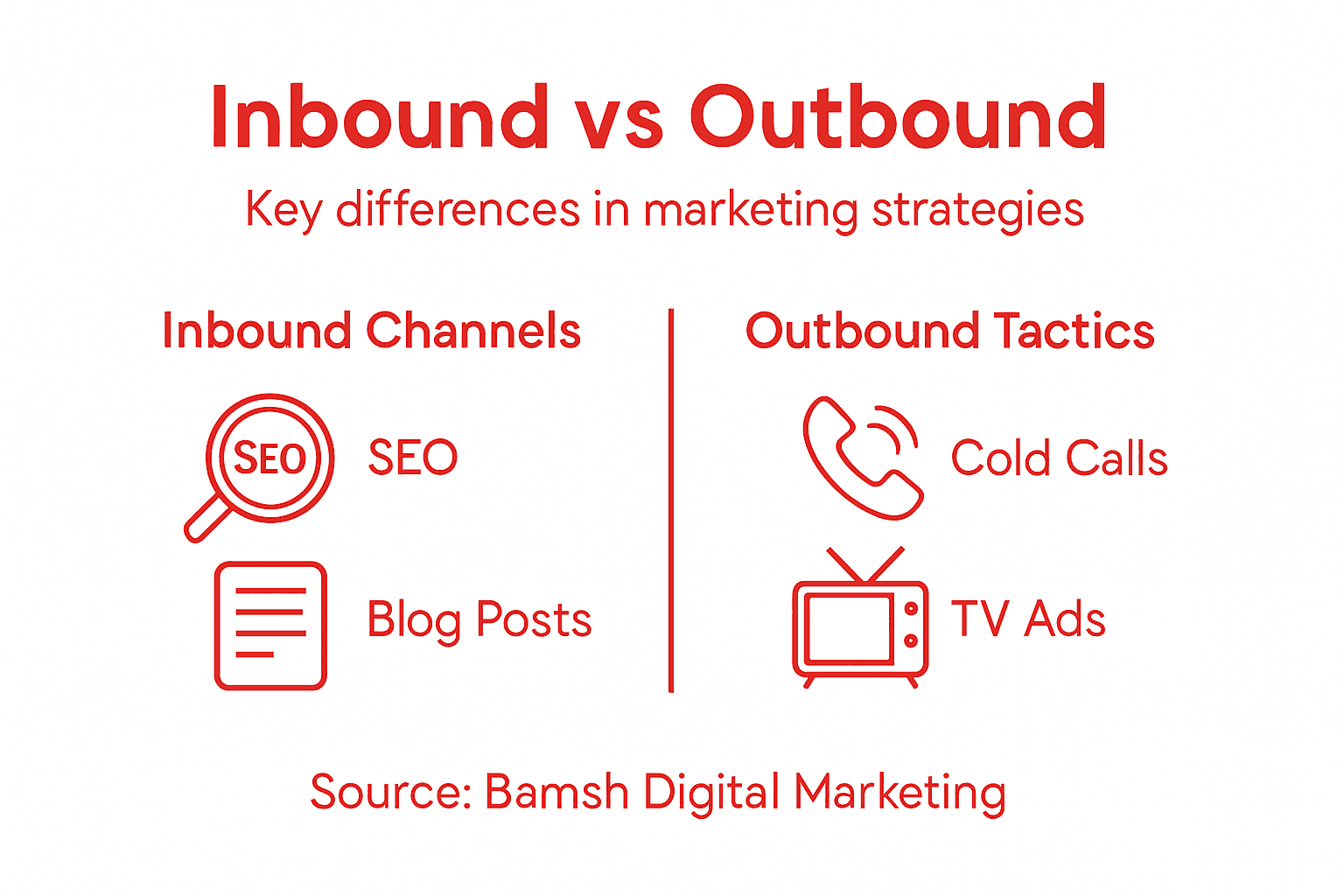
Comparing Inbound with Outbound Approaches
The landscape of marketing has dramatically shifted from traditional interruption-based strategies to more nuanced, customer-centric approaches. Business-to-business marketing distinctions reveal fundamental differences between inbound and outbound marketing methodologies.
Key differences between inbound and outbound marketing include:
- Outbound Characteristics:
- Interruptive communication
- Broad, non-targeted messaging
- Higher customer acquisition costs
- Low engagement rates
- Inbound Characteristics:
- Permission-based interactions
- Highly targeted content
- Lower acquisition costs
- Higher engagement and conversion rates
- Communication Approach:
- Outbound: Pushes messages outward
- Inbound: Attracts customers through value
Marketing communication fundamentally differs in these approaches. Outbound marketing resembles a megaphone, broadcasting messages indiscriminately, while inbound marketing acts like a magnet, drawing interested customers through valuable, relevant content.
To clarify the distinctions, here’s how inbound and outbound marketing differ across key factors:
| Factor | Inbound Marketing | Outbound Marketing |
|---|---|---|
| Communication Style | Pulls with helpful content | Pushes through adverts |
| Audience Targeting | Highly segmented | Broad, general |
| Cost Efficiency | Lower long-term costs | Higher campaign spend |
| Customer Involvement | Actively engages prospects | Passive message recipients |
| Metrics Focus | Engagement and trust | Reach and impressions |
| Legal Alignment (UK) | Matches transparency focus | Stricter regulatory scrutiny |
Inbound marketing transforms customers from passive recipients to active participants in their purchasing journey.
UK marketing communication laws emphasise that, regardless of approach, all marketing must remain truthful, fair, and transparent. Inbound marketing naturally aligns better with these principles by focusing on genuine value and customer empowerment.
The strategic evolution from outbound to inbound involves:
- Shifting from interruption to invitation
- Prioritising customer needs over sales pitches
- Creating educational, valuable content
- Building trust through consistent engagement
Pro tip: Gradually transition from outbound to inbound by repurposing existing marketing materials into educational, customer-centric content that genuinely helps your target audience.
Common Pitfalls and How to Avoid Them
Inbound marketing success relies on understanding and strategically avoiding common mistakes that can undermine your entire marketing approach. Advertising standards guidance provides critical insights into maintaining marketing integrity and effectiveness.
The most prevalent pitfalls in inbound marketing include:
- Content Quality Issues:
- Lack of genuine value
- Inconsistent publishing schedule
- Superficial or generic information
- Strategic Errors:
- Undefined target audience
- Neglecting audience pain points
- Insufficient performance tracking
- Technical Challenges:
- Poor website user experience
- Slow page loading times
- Non-mobile responsive design
Marketing communication requires precision and authenticity. Many businesses fall into the trap of creating content that sounds impressive but delivers little substantive value to potential customers.
The most effective inbound marketing speaks directly to customer needs, not about how amazing your company is.
Program evaluation principles suggest rigorous measurement and continuous improvement are essential for marketing success. This means developing robust tracking mechanisms and being willing to adapt strategies based on actual performance data.
To mitigate these risks, businesses should:
- Conduct thorough audience research
- Create genuinely helpful content
- Implement comprehensive analytics
- Regularly review and refine strategies
Pro tip: Develop a content review process that critically evaluates each piece of marketing material from your customer’s perspective, ensuring it truly addresses their specific needs and challenges.
Unlock the True Power of Inbound Marketing with Bamsh Digital Marketing
If you are struggling to transform your website into a reliable source of quality leads and lasting customer relationships, this article has pinpointed the core issue: building trust through valuable, customer-centric content is not easy without the right strategy. You recognise that creating relevant content, engaging your audience consistently, and measuring results are essential steps, but it can quickly become overwhelming without expert guidance.
At Bamsh Digital Marketing, we specialise in helping UK businesses like yours overcome these exact challenges. Our award-winning team takes the guesswork out of inbound marketing by combining proven strategies such as SEO & Answer Engine Optimisation alongside targeted Google PPC and social media campaigns. We complement this by automating lead nurturing and enhancing your Google Business Profile for maximum local impact. This transparent, results-driven approach ensures your ideal customers find you, choose you, and stay with you for the long term.
Discover how your business can consistently attract and convert leads by exploring our detailed insights and real-world advice through our Podcasts – Bamsh Digital Marketing, or start your journey with a clear, no-obligation conversation on how inbound marketing can work for you at Bamsh.co.uk/15-min. Don’t miss the opportunity to turn marketing complexity into clarity with Bamsh Digital Marketing today.
Frequently Asked Questions
What is inbound marketing?
Inbound marketing is a customer-centric approach that attracts potential customers by providing valuable content rather than interruptive advertising. It focuses on drawing prospects to your brand through helpful, relevant information.
How does inbound marketing differ from outbound marketing?
Inbound marketing pulls customers through value-driven content and targeted engagement, whereas outbound marketing interrupts potential customers with broad messages and advertisements. This results in lower acquisition costs and higher engagement rates for inbound methods.
What are the main stages of inbound marketing?
The main stages of inbound marketing include attracting customers through compelling content, engaging them with solutions that meet their needs, and delighting them with continued value after a purchase.
Why is content quality important in inbound marketing?
Content quality is crucial in inbound marketing as it needs to genuinely provide value to the audience. High-quality content builds trust, enhances engagement, and ultimately leads to higher conversion rates.