

British companies are rapidly embracing remarketing, with over half of UK businesses now using these strategies to re-engage website visitors. In a crowded digital world, standing out and keeping your brand in a customer’s mind is more challenging than ever. Whether you run a small local shop or a national operation, discovering how remarketing works can give you an edge in converting interested shoppers into loyal clients.
Table of Contents
- Remarketing Explained For UK Businesses
- Types Of Remarketing And Key Differences
- How Remarketing Campaigns Actually Work
- Legal Compliance And Privacy Rules In The UK
- Benefits, Costs, And Common Pitfalls
Key Takeaways
| Point | Details |
|---|---|
| Remarketing Strategy | Remarketing allows UK businesses to re-engage customers who have shown interest, enhancing brand awareness effectively. |
| Types of Remarketing | Various approaches, including Standard, Dynamic, Video, Email List, and Social Media Remarketing, cater to different customer engagement needs. |
| Legal Compliance | Adhering to GDPR and data protection laws is essential for building trust and ensuring transparent user experiences in remarketing efforts. |
| Benefits and Risks | Remarketing offers improved conversion rates and lower acquisition costs but requires careful implementation to avoid pitfalls such as excessive ad frequency. |
Remarketing Explained for UK Businesses
Remarketing is a powerful digital advertising strategy that allows businesses to re-engage potential customers who have previously interacted with their website or digital platforms. At its core, remarketing enables companies to display targeted advertisements to individuals who have already shown interest in their products or services, effectively keeping their brand top of mind.
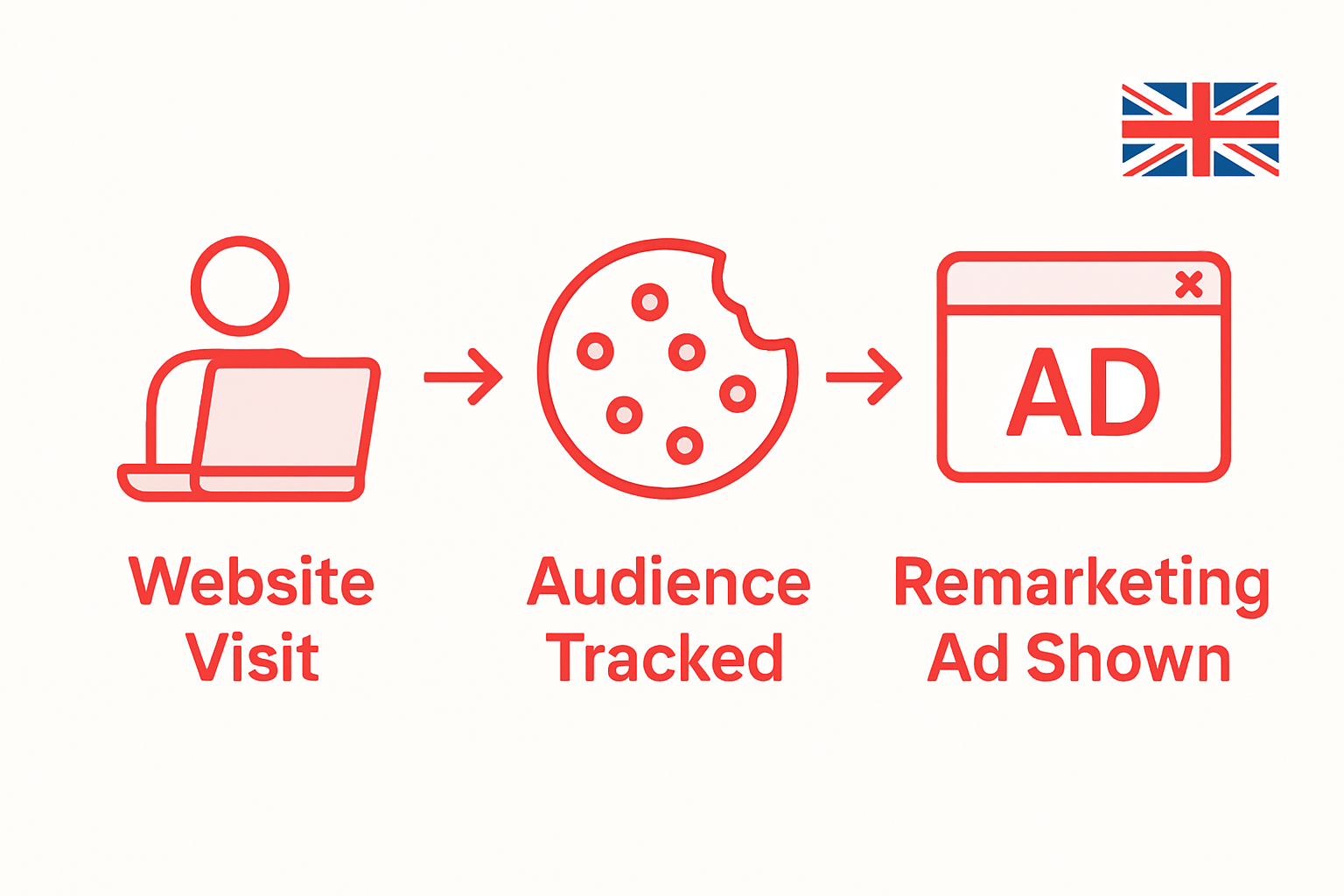
The mechanics of remarketing are surprisingly straightforward. When a potential customer visits your website, a small piece of tracking code (often called a pixel) is placed in their browser, creating a cookie that enables your advertising platforms to recognise and target them later. Google remarketing strategies can help businesses reach these warm leads across various online platforms, including search engines, social media, and display networks.
For UK businesses, remarketing represents a strategic approach to maximising marketing budgets. According to the Annual Business Survey by the ONS, digital marketing techniques like remarketing have become increasingly critical for businesses seeking cost-effective customer engagement. The primary advantages include:
- Increased brand recall and visibility
- More targeted advertising spend
- Higher conversion rates compared to traditional advertising
- Ability to reach potential customers across multiple digital platforms
By understanding and implementing remarketing techniques, UK businesses can create more intelligent, responsive, and efficient marketing campaigns that connect with potential customers precisely when they are most likely to make a purchase.
Types of Remarketing and Key Differences
Remarketing strategies are not one-size-fits-all, with businesses leveraging multiple approaches to re-engage potential customers effectively. Retargeting techniques have evolved to offer sophisticated methods of connecting with audiences across different digital platforms.
According to the Annual Business Survey by the ONS, UK businesses are increasingly adopting diverse remarketing approaches. The primary types of remarketing include:
- Standard Website Remarketing
- Targets visitors who have previously browsed a website
- Displays ads across display networks and social media platforms
- Most common and straightforward remarketing approach
- Dynamic Remarketing
- Personalises advertisements based on specific products viewed
- Shows exact items a potential customer previously explored
- Highly effective for e-commerce and product-based businesses
- Video Remarketing
- Reconnects with users who have interacted with video content
- Targets viewers across YouTube and other video platforms
- Particularly powerful for engaging visual learners
- Email List Remarketing
- Uses existing customer email databases for targeted advertising
- Allows precise segmentation and personalised messaging
- Excellent for nurturing existing customer relationships
- Social Media Remarketing
- Targets users across social media platforms
- Utilises platform-specific tracking pixels
- Ideal for businesses with strong social media presence
Each remarketing type offers unique advantages, enabling businesses to create nuanced, targeted marketing strategies that increase conversion potential and maximise advertising efficiency. By understanding these different approaches, UK businesses can craft more intelligent, responsive campaigns that effectively reconnect with potential customers.
How Remarketing Campaigns Actually Work
Remarketing campaigns operate through a sophisticated digital tracking mechanism that transforms casual website visitors into potential customers. Search engine marketing techniques enable businesses to create intelligent, targeted advertising strategies that reconnect with interested audiences.

The Annual Business Survey by the ONS highlights the intricate processes behind successful remarketing efforts. The core mechanics involve several critical steps:
Technical Setup
- Tracking Pixel Installation: A small piece of code embedded on website pages
- Generates anonymous cookies when visitors interact with your site
- Tracks user behaviour without compromising personal identities
Audience Segmentation
- Categorises website visitors based on specific interactions
- Enables precise targeting of advertising messages
- Allows creation of custom audience groups with shared characteristics
Ad Placement Strategy
- Displays targeted advertisements across multiple digital platforms
- Uses sophisticated algorithmic matching
- Ensures ads appear to users who have demonstrated previous interest
Conversion Tracking
- Monitors user interactions with remarketed advertisements
- Provides detailed metrics on campaign performance
- Allows continuous refinement of marketing approaches
The magic of remarketing lies in its ability to create personalised, contextually relevant advertising experiences. By understanding user behaviour and presenting tailored content, businesses can significantly increase their chances of converting interested prospects into loyal customers.
Legal Compliance and Privacy Rules in the UK
Remarketing strategies in the United Kingdom must navigate a complex landscape of legal requirements designed to protect individual privacy and data rights. GDPR compliance represents a critical foundation for businesses implementing digital marketing techniques that involve tracking user behaviour.
UK Government data protection guidelines establish clear parameters for businesses engaged in remarketing activities. Key legal considerations include:
Consent and Transparency
- Explicit user consent is mandatory before tracking
- Clear communication about data collection practices
- Provide straightforward opt-out mechanisms
Data Protection Principles
- Collect only necessary personal information
- Secure storage of user data
- Limit data retention periods
- Protect user information from unauthorized access
Key Legal Requirements
- Adhere to UK Data Protection Act 2018
- Comply with UK General Data Protection Regulation (UK GDPR)
- Implement robust data protection policies
- Conduct regular privacy impact assessments
User Rights Protection
- Respect individual rights to access personal data
- Allow users to request data deletion
- Provide transparent information about data usage
- Enable easy withdrawal of marketing consent
Businesses must recognise that legal compliance is not just a regulatory requirement but a critical trust-building mechanism with potential customers. By implementing transparent, ethical remarketing practices, companies can create positive user experiences while maintaining legal integrity.
Benefits, Costs, and Common Pitfalls
Remarketing represents a powerful yet nuanced digital marketing strategy that demands strategic implementation. Search engine marketing techniques can transform remarketing from a simple advertising approach into a sophisticated customer engagement tool.
The Annual Business Survey by the ONS reveals critical insights into the financial implications of remarketing strategies for UK businesses.
Key Benefits
- Dramatically improved conversion rates
- Lower customer acquisition costs
- Enhanced brand recall and recognition
- Precise audience targeting
- Higher return on advertising investment
Potential Costs
- Initial setup and tracking pixel implementation
- Ongoing advertising platform fees
- Design and content creation expenses
- Potential data management infrastructure investments
Common Pitfalls to Avoid
- Excessive ad frequency leading to user annoyance
- Inadequate audience segmentation
- Poor ad creative and messaging
- Neglecting privacy compliance
- Failing to track and analyse campaign performance
Successful remarketing requires a delicate balance between strategic targeting and respecting user experience. Businesses must approach these campaigns with precision, understanding that each advertisement represents an opportunity to build trust and demonstrate value to potential customers.
Unlock the Power of Remarketing with Bamsh Digital Marketing
The article highlights the challenge UK businesses face in effectively re-engaging potential customers through remarketing while navigating complex privacy laws and optimising advertising budgets. You want to avoid common pitfalls such as excessive ad frequency and poor audience segmentation, yet still reap the rewards of higher conversion rates and better brand recall. Understanding remarketing types and campaign mechanics is crucial, but the key is implementing these strategies with clear, honest, and compliant digital marketing support.
At Bamsh Digital Marketing, we specialise in turning these remarketing challenges into growth opportunities. Whether you need expert Google PPC Management to target warm leads precisely, or sophisticated Paid Social Media Advertising to engage your audience across platforms, we build tailored campaigns that respect user privacy and maximise your advertising spend. Discover how our transparent, results-driven approach can help your business connect with potential customers exactly when they are ready to buy.
Ready to boost your UK business with smart remarketing that delivers real return on investment? Book your free strategy session today at Bamsh Digital Marketing and start turning website visitors into loyal customers with confidence.
Frequently Asked Questions
What is remarketing and how does it work?
Remarketing is a digital advertising strategy that re-engages visitors who have previously interacted with your website. It works by placing a tracking pixel on your site, which collects cookies that enable targeted ads to be shown across various platforms later.
What are the different types of remarketing strategies?
The main types of remarketing strategies include standard website remarketing, dynamic remarketing, video remarketing, email list remarketing, and social media remarketing. Each strategy offers unique advantages depending on the business goals and audience targeting.
How can a business ensure compliance while using remarketing techniques?
To ensure compliance, businesses must obtain explicit user consent for tracking, provide transparent information about data usage, and adhere to legal requirements such as the UK Data Protection Act 2018 and the UK General Data Protection Regulation (UK GDPR).
What are the benefits of implementing remarketing for businesses?
The benefits of remarketing include improved conversion rates, lower customer acquisition costs, enhanced brand recall, precise audience targeting, and a higher return on advertising investment.
Recommended
- Google Remarketing Strategy – Bamsh Boosts Conversions
- Retargeting Explained: Boosting Conversions and ROI
- 7 Brilliant Social Media Advertising Ideas for Local Businesses
- Should You Run Google Ads on Your Own Business Name?
- The Rise of UK Perfumes: Understanding the Fragrance Industry