

Over 90 percent of British consumers visit a website but leave without making a purchase. For any local business, that means most website visitors slip away before becoming customers. Remarketing offers a proven way to reconnect with these missed opportunities, helping British brands turn simple visits into actual sales. By understanding how these strategies work, business owners can discover practical methods to boost conversions and get more value from every marketing pound.
Table of Contents
- Remarketing Explained For UK Businesses
- Main Types Of Remarketing Campaigns
- How Remarketing Works In Practice
- Business Benefits And ROI Considerations
- Cost, Risks, And Common Pitfalls
Key Takeaways
| Point | Details |
|---|---|
| Effective Digital Strategy | Remarketing is a powerful tool for UK businesses to re-engage customers who have shown interest by displaying targeted ads. |
| Audience Segmentation | Successful remarketing relies on precise audience segmentation to foster personalised advertising experiences. |
| Cost Efficiency | Remarketing campaigns tend to lower customer acquisition costs and improve conversion rates, offering a better return on investment. |
| Risks and Management | It is essential to approach remarketing with strategic planning to avoid common pitfalls, such as audience fatigue and ineffective ad spend. |
Remarketing Explained for UK Businesses
Remarketing represents a powerful digital advertising strategy specifically designed to re-engage potential customers who have previously interacted with your business online. At its core, remarketing allows businesses to display targeted advertisements to individuals who have already visited your website or engaged with your digital content, creating a strategic approach to recapturing lost opportunities.
Understanding how remarketing works reveals its remarkable effectiveness. When a potential customer visits your website, a small piece of tracking code (often called a pixel) places an anonymous browser cookie. This enables your advertising platforms to recognise and target these specific visitors across different websites and platforms. Remarketing strategies help businesses reconnect with interested prospects by presenting them with personalised ads that remind them of products or services they previously explored.
The benefits for UK businesses are substantial. Remarketing provides a cost-effective method to maintain brand visibility, increase conversion rates, and nurture potential customers through their purchasing journey. By keeping your brand at the forefront of customers’ minds, you create multiple touchpoints that significantly improve the likelihood of converting initial interest into actual sales. Businesses can deploy remarketing across various platforms including Google Display Network, social media advertising, and email marketing, allowing for flexible and targeted communication strategies.
Key advantages of remarketing include:
- Increased brand recall and recognition
- More precise audience targeting
- Higher conversion rates compared to standard display advertising
- Lower cost per click due to improved audience relevance
- Enhanced ability to segment and personalise advertising messages
Implementing a successful remarketing campaign requires strategic planning, understanding of your target audience, and continuous performance monitoring. By crafting compelling, relevant advertisements that speak directly to previous website visitors’ interests, UK businesses can transform potentially lost leads into valuable conversions.
Main Types of Remarketing Campaigns
Remarketing campaigns come in several strategic variations, each designed to target potential customers at different stages of their purchasing journey. Understanding these types enables businesses to craft more precise and effective digital advertising approaches that reconnect with interested prospects.
Website Visitor Remarketing represents the most common form, where businesses leverage Google remarketing strategies to display targeted ads to individuals who have previously visited their website. These campaigns track user interactions through browser cookies, allowing advertisers to present personalised advertisements across multiple digital platforms, effectively reminding potential customers about products or services they initially explored.

Another powerful approach is Email List Remarketing, which enables businesses to upload their customer email lists directly to advertising platforms. This method allows for highly targeted campaigns that can reach specific segments of your audience, such as past purchasers, newsletter subscribers, or customers who abandoned shopping carts. By segmenting audiences, businesses can create tailored messaging that speaks directly to each group’s unique interests and potential motivations.
Key remarketing campaign types include:
- Standard Website Remarketing
- Dynamic Remarketing (showcasing specific products viewed)
- Social Media Remarketing
- Video Remarketing
- Search Remarketing
For e-commerce businesses, Dynamic Remarketing offers exceptional precision. This advanced technique displays advertisements featuring the exact products a potential customer previously viewed on your website, creating a personalised re-engagement strategy that significantly increases the likelihood of conversion. By showing customers items they’ve already demonstrated interest in, businesses can effectively reignite purchasing intent and overcome initial hesitation.
How Remarketing Works in Practice
At its core, remarketing operates through sophisticated tracking technologies that enable businesses to create highly targeted advertising experiences. Behavioural retargeting techniques utilise browser cookies to monitor user interactions, creating a digital footprint that allows advertisers to reconnect with potential customers across multiple online platforms.
The technical process begins when a user visits your website. A small piece of tracking code, typically a JavaScript pixel, is discreetly placed in the user’s browser. This invisible marker creates a list of visitors who meet specific criteria, such as viewing particular products or spending a certain amount of time on your site. Advertisers can then segment these audiences and craft personalised advertisements that appear on other websites, social media platforms, and digital networks the user subsequently visits.
Audience Segmentation plays a crucial role in remarketing effectiveness. Businesses can create multiple audience lists based on different behaviours and interactions. For instance, you might develop separate remarketing lists for:
- Users who abandoned shopping carts
- Customers who viewed specific product categories
- Previous purchasers interested in complementary products
- Website visitors who spent more than two minutes on your site
Site retargeting strategies enable businesses to maintain a persistent digital presence, keeping their brand and offerings front of mind for potential customers. By displaying targeted advertisements that reflect a user’s previous interactions, companies can significantly increase the probability of converting initial interest into actual sales. The key is creating relevant, compelling content that resonates with the user’s demonstrated interests and purchasing intent.
Business Benefits and ROI Considerations
Remarketing represents a strategic investment with remarkable potential for improving business performance and marketing efficiency. Retargeting strategies can boost conversion rates by reconnecting with potential customers who have already demonstrated interest in your products or services, making them significantly more likely to complete a purchase compared to standard advertising approaches.
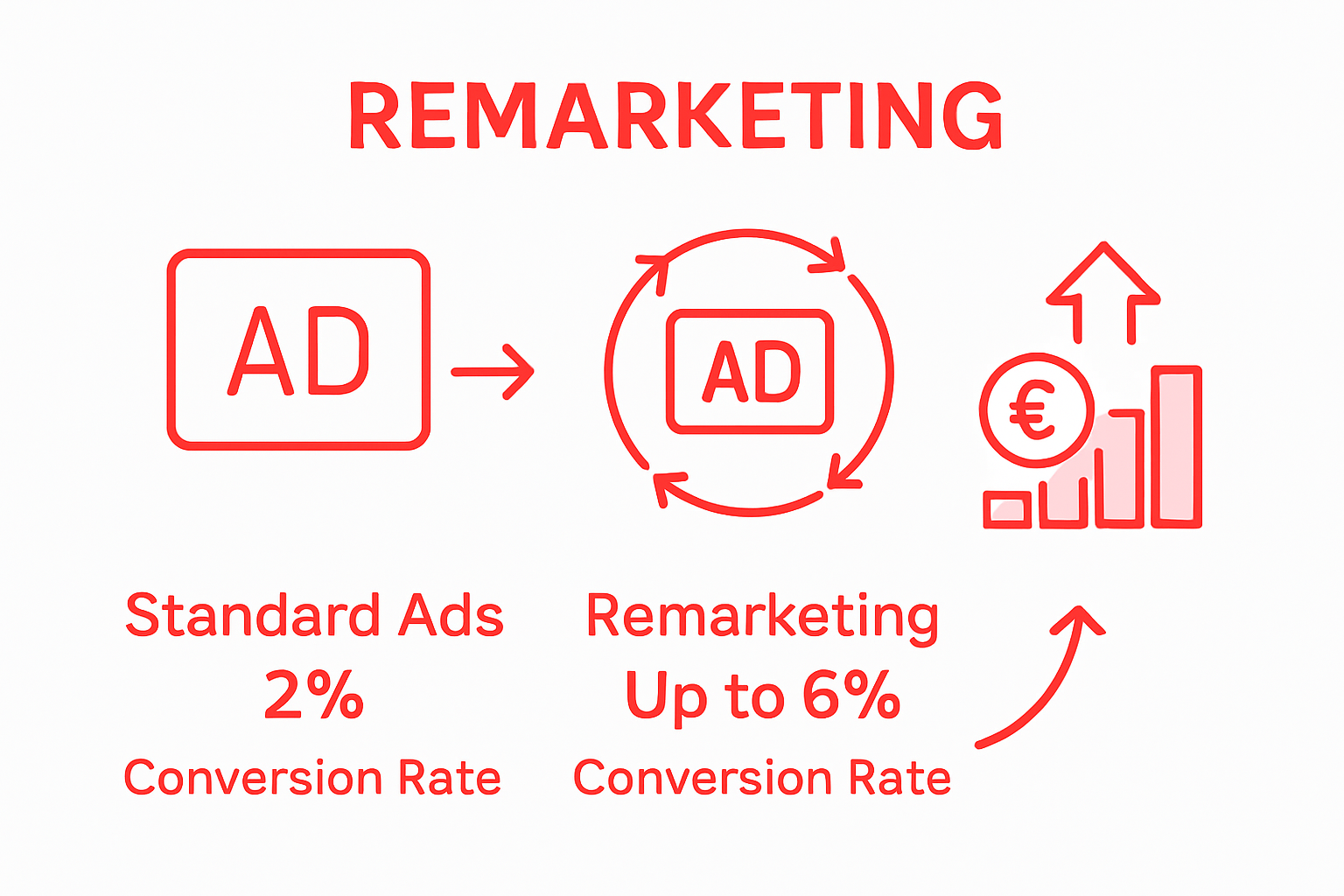
The financial advantages of remarketing are substantial. By targeting individuals who have previously engaged with your brand, businesses can achieve lower cost-per-click rates and higher conversion percentages. Most companies experience a 200-300% improvement in click-through rates compared to traditional display advertising, with remarketing campaigns typically delivering a more efficient return on marketing expenditure. The precision targeting minimises wasted ad spend by focusing exclusively on audiences with proven prior interest.
Key financial benefits include:
- Reduced customer acquisition costs
- Improved conversion rates
- Enhanced brand recall and recognition
- More efficient marketing budget allocation
- Increased lifetime customer value
Businesses must approach remarketing as a nuanced strategy requiring continuous refinement. Successful implementation involves careful audience segmentation, compelling ad creative, and ongoing performance analysis. By treating remarketing as a dynamic tool rather than a static advertising method, companies can progressively improve their targeting precision and maximise their marketing investments. The most effective remarketing campaigns treat each interaction as an opportunity to understand and address potential customers’ specific needs and motivations.
Cost, Risks, and Common Pitfalls
While remarketing offers significant advantages, businesses must approach the strategy with careful consideration and strategic planning. Advanced remarketing strategies for UK SMEs emphasise the importance of understanding potential challenges and mitigating risks before launching campaigns.
The primary financial risks revolve around inefficient ad spend and audience fatigue. Remarketing costs can escalate quickly if not managed precisely, with businesses potentially burning through budgets by displaying repetitive advertisements to the same audience. Typical costs range from £0.50 to £3 per click, depending on industry competitiveness and targeting complexity. Poorly configured campaigns might result in diminishing returns, where potential customers become irritated by overly frequent or irrelevant advertisements.
Common remarketing pitfalls include:
- Inadequate audience segmentation
- Excessive advertisement frequency
- Poorly designed creative assets
- Insufficient tracking and performance analysis
- Neglecting privacy and data protection regulations
Successful remarketing demands a nuanced approach that balances persistence with subtlety. Businesses must develop sophisticated targeting strategies that respect user privacy, provide genuine value, and avoid appearing intrusive. This requires continuous monitoring, creative refinement, and a deep understanding of audience preferences. The most effective remarketing campaigns feel like personalised recommendations rather than aggressive sales tactics, maintaining a delicate balance between visibility and user experience.
Transform Your Leads with Expert Remarketing Strategies
If you are looking to boost your leads and conversions by reconnecting with visitors who showed interest but didn’t convert the first time, remarketing is the solution highlighted in the article and a powerful tool we specialise in at Bamsh Digital Marketing. We understand the challenge UK businesses face with inefficient ad spend and audience fatigue, so our tailored remarketing campaigns focus on precise audience segmentation and compelling creative that resonates with your potential customers’ specific interests.
Don’t let lost website visitors slip away when you can turn them into loyal customers. Through our award-winning services, including Google PPC Management and Paid Social Media Advertising, we ensure your remarketing ads appear at the right time with the right message, increasing your brand recall and conversion rates. Discover how Bamsh’s transparent approach truly works at Special Offers – Bamsh Digital Marketing. Ready to get started? Book your free 15-minute discovery call today and see how you can harness the full power of remarketing with Bamsh at https://bamsh.co.uk/15-min/. For insights that match your business’s unique needs explore our Uncategorized – Bamsh Digital Marketing page and start turning interest into revenue now.
Frequently Asked Questions
What is remarketing, and how does it work?
Remarketing is a digital advertising strategy that allows businesses to display targeted advertisements to individuals who have previously interacted with their website or content. It works by placing a tracking cookie on the user’s browser when they visit the site, enabling personalised ads to appear across various platforms as users browse the web.
What are the benefits of using remarketing for businesses?
Remarketing offers several advantages, including increased brand recall, more precise audience targeting, and significantly higher conversion rates compared to standard advertising methods. It helps keep your brand visible to potential customers who have already shown interest in your products or services.
How can businesses implement effective remarketing campaigns?
To implement successful remarketing campaigns, businesses should focus on strategic planning, audience segmentation, and continuous performance monitoring. Crafting compelling, relevant advertisements that align with previous visitor interests is crucial in converting leads into sales.
What are common pitfalls to avoid in remarketing?
Common pitfalls in remarketing include inadequate audience segmentation, excessive advertisement frequency, poorly designed creatives, and insufficient tracking. Businesses should also ensure compliance with privacy regulations to avoid alienating potential customers.
Recommended
- Top 10 Marketing Problems For PT, HIT & Strength Studios
- What Is Remarketing and How It Boosts UK Businesses
- Google Remarketing Strategy – Bamsh Boosts Conversions
- Retargeting Explained: Boosting Conversions and ROI
- Lead Generation: Everything You Need to Know
- Understanding Conversion Rate Optimisation: Boosting Sales – ApusNest Blog | ApusNest
- Websites That Convert vs. Websites That Don’t: The Difference Every Small Business Owner Should Know – Digital Marketing Agency – Market Link Solutions