

Over 45 million british people use social media every month, putting businesses in direct contact with a massive and varied audience. Without a clear plan, however, advertising on these platforms often becomes a confusing and costly exercise. Whether you run a small shop or a growing brand, cracking the code of effective social media advertising unlocks real growth. This guide breaks down proven steps to help british businesses fine tune their approach, reach the right people, and reap measurable results.
Table of Contents
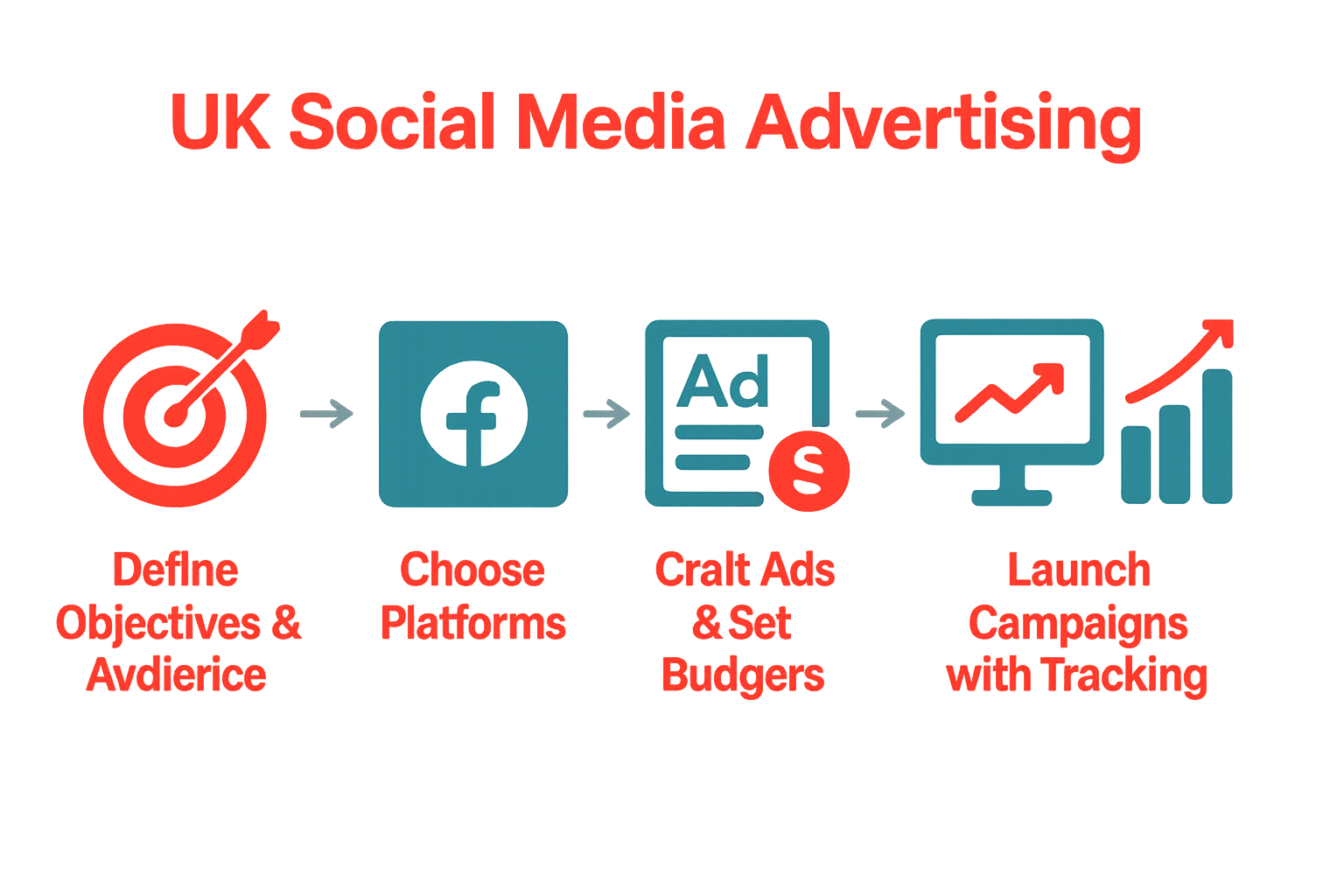
- Step 1: Define Clear Objectives And Ideal Audience
- Step 2: Select The Most Effective Social Platforms
- Step 3: Craft Compelling Ads And Set Budgets
- Step 4: Launch Targeted Campaigns With Tracking
- Step 5: Monitor Performance And Refine Strategies
Quick Summary
| Key Point | Explanation |
|---|---|
| 1. Define clear objectives and audience | Establish specific business goals and create detailed customer personas to tailor your marketing efforts effectively. |
| 2. Select appropriate social platforms | Choose social media channels carefully, focusing on where your ideal audience engages, rather than trying to be present everywhere. |
| 3. Craft compelling ads | Design ads that are visually appealing and optimised for mobile, with concise messaging that clearly conveys your value proposition. |
| 4. Launch targeted campaigns with tracking | Set measurable goals pre-launch and use platform-specific targeting for campaigns to maximise relevance and effectiveness. |
| 5. Monitor performance and refine strategies | Regularly analyse key metrics, making incremental adjustments to improve ads based on data insights from your campaigns. |
Step 1: Define clear objectives and ideal audience
Successful social media advertising begins with crystal clear understanding of what you want to achieve and precisely who will help you get there. Your objectives and target audience form the strategic foundation that transforms scattered efforts into focused marketing power.
As recommended by Business.gov.uk, thorough research is key to selecting the right social media channels and tailoring content that truly resonates with your potential customers. Start by asking yourself critical questions: What specific business outcome am I seeking? Are you aiming to increase brand awareness, generate leads, drive website traffic, or boost sales? Each goal demands a different approach and measurement strategy.
When defining your ideal audience, go beyond basic demographics. Create a detailed customer persona that captures not just age and location, but also interests, challenges, online behaviours, and purchasing motivations. This level of specificity allows you to craft messaging that speaks directly to their needs.
 For instance, a local bakery might target health conscious professionals aged 25 to 40 who value quality ingredients and convenient ordering.
Warning: Avoid the common pitfall of trying to appeal to everyone. Precise targeting beats broad messaging every single time. The more narrowly you define your audience, the more effectively you can speak to their specific desires and pain points.
Your next step will involve selecting the most appropriate social media platforms that align with your carefully defined objectives and audience characteristics. Get ready to match your marketing strategy with the right digital channels.
Step 2: Select the most effective social platforms
Now that you have defined your objectives and ideal audience, the next crucial step is choosing social media platforms that align perfectly with your business goals and customer preferences. Think of this as strategic matchmaking between your brand and the digital spaces where your potential customers actually spend their time.
According to Coursera, different platforms serve unique purposes and attract distinct audience demographics. Facebook remains powerful for broad audience reach and detailed targeting, Instagram excels for visually driven brands targeting younger demographics, LinkedIn works brilliantly for B2B communications, while TikTok offers explosive potential for reaching Gen Z and creating viral content. Your selection should not be about being everywhere but being strategic and present where your specific audience congregates.
To make an informed decision, map your audience characteristics against platform user profiles. A technology startup might find more traction on Twitter and LinkedIn, whereas a fashion boutique could thrive on Instagram and Pinterest. Pay attention to engagement rates, not just follower numbers. Some platforms might have fewer users but higher quality interactions relevant to your business objectives.
Warning: Avoid spreading yourself too thin across multiple platforms. It is far more effective to master two or three platforms with consistent, high quality content than to have a mediocre presence everywhere.
Your next step will involve developing a content strategy tailored to the specific platforms you have selected, ensuring your messaging resonates powerfully with your target audience.
Step 3: Craft compelling ads and set budgets
With your social media platforms selected, it is time to create advertising that captures attention and drives meaningful action. Your ads are the digital storefront of your business, representing your brand and compelling potential customers to engage with your offering.
According to Website Planet, crafting compelling ad copy requires more than just attractive visuals. You must optimise your advertisements for mobile viewing, adhere to platform specific size guidelines, and create messaging that speaks directly to your target audience. Focus on creating concise, powerful headlines that communicate your unique value proposition within seconds. Use clear, action oriented language that prompts immediate response.
Budget allocation is equally critical. Start with a modest investment and incrementally increase spending as you understand which ads generate the best return on investment. Most platforms offer robust targeting options allowing you to control daily spend, set maximum budgets, and adjust bids based on performance. 7 Brilliant Social Media Advertising Ideas for Local Businesses can provide additional insights into maximising your advertising effectiveness.
Warning: Avoid the temptation to spread your budget thinly across multiple campaigns. Instead, concentrate resources on ads that demonstrate genuine engagement and conversion potential.
Your next step involves monitoring ad performance and making data driven adjustments to continuously improve your social media advertising strategy.
Step 4: Launch targeted campaigns with tracking
With your ads crafted and budgets set, it is time to launch targeted campaigns that precisely reach your ideal audience and provide actionable insights into your marketing performance.
According to Business.gov.uk, setting clear objectives is fundamental before launching any social media campaign. This means defining specific, measurable goals such as increasing website traffic by 20%, generating 50 new leads, or boosting online sales by a certain percentage. Each campaign should have distinct tracking mechanisms that allow you to monitor performance in real time.
Utilise the robust targeting options available on most social media platforms. Narrow your audience based on demographics, interests, behaviours, and previous interactions with your brand. Mastering SEM Techniques to Drive Digital Growth provides additional strategies for refining your targeting approach. Most platforms offer pixel tracking, conversion tracking, and detailed analytics dashboards that reveal precisely how users are interacting with your advertisements.
Warning: Do not become obsessed with tracking every single metric. Focus on key performance indicators that directly relate to your business objectives and provide meaningful insights.
Your next step involves continuously analysing campaign data and preparing to make strategic adjustments to optimise your social media advertising performance.
Step 5: Monitor performance and refine strategies
With your targeted social media campaigns now live, the critical work of continuous performance analysis and strategic refinement begins. This stage transforms raw data into actionable insights that will drive your advertising success.
According to Website Planet, successful digital marketing relies on systematic testing and consistent adjustment of advertising strategies. Set up a routine for weekly or bi-weekly performance reviews, examining key metrics such as click through rates, conversion rates, cost per acquisition, and engagement levels. Complete Guide to PPC in Lead Generation can provide additional context for interpreting these performance indicators.
Each platform offers comprehensive analytics dashboards that reveal granular details about audience behaviour.
 Pay close attention to demographic insights, time of day performance, and which creative elements generate the most interest. Look for patterns suggesting which ads resonate most strongly with your target audience. Are certain images more compelling? Do specific headlines drive more clicks? Use these insights to incrementally optimise your campaigns, making small strategic adjustments that compound into significant improvements.
Warning: Avoid making drastic changes based on short term data. Allow sufficient time to gather meaningful insights before implementing major strategy shifts.
Your final step involves leveraging these refined strategies to create increasingly targeted and effective social media advertising campaigns that consistently deliver remarkable results.
Unlock the Full Potential of Your Social Media Advertising Today
Struggling to define clear objectives or selecting the ideal social platforms for your UK business can hold back your social media advertising success. From pinpointing the right audience to crafting compelling ads that convert, this journey is challenging yet essential. At Bamsh Digital Marketing, we understand these pain points and offer targeted solutions designed to get your business noticed and your campaigns delivering results.
Our expert team specialises in creating data-driven social media advertising strategies that align with your specific goals. Whether you need help mastering precise audience targeting, optimising budget spend, or launching campaigns with robust tracking, we provide transparent, honest support every step of the way. Discover how our Social Media Marketing Agency Bristol services can transform your advertising approach. For tailored advice and proven strategies, don’t miss our Uncategorized – Bamsh Digital Marketing insights.
Ready to stop guessing and start growing? Take the next vital step for your business success by booking a free 15-minute consultation with us at https://bamsh.co.uk/15-min/. Connect with specialists who speak your language, cut through the jargon, and deliver marketing that truly works.
Frequently Asked Questions
What are the key objectives I should set for social media advertising?
Establishing clear objectives is crucial for your social media advertising. Determine whether you’re aiming to increase brand awareness, generate leads, drive website traffic, or boost sales, as each goal requires a different approach and measurement strategy.
How do I define my ideal audience for social media campaigns?
To define your ideal audience, create a detailed customer persona that includes not just age and location, but also interests, challenges, online behaviours, and purchasing motivations. This specificity will help you create targeted messaging that resonates with your audience’s needs.
Which social media platforms should I use for my business?
Select social media platforms based on where your target audience spends their time. For instance, Facebook is great for broad audience reach, while Instagram is excellent for visually driven brands. Focus on mastering two or three platforms to ensure high-quality content.
How can I craft compelling ads that drive engagement?
Create ads that capture attention by optimising for mobile viewing, adhering to platform-specific size guidelines, and using action-oriented language. Aim for concise, powerful headlines that communicate your unique value proposition clearly and engagingly.
What steps should I take to monitor the performance of my campaigns?
Monitor key metrics such as click-through rates, conversion rates, and engagement levels regularly. Establish a routine for performance reviews to identify patterns and make data-driven adjustments to improve your advertising strategies.
How often should I refine my social media advertising strategies?
Regularly refine your advertising strategies based on performance data. Conduct weekly or bi-weekly reviews to gather meaningful insights and adjust your campaigns strategically, allowing ample time to observe the impact of changes before making major shifts.
Recommended
- 7 Brilliant Social Media Advertising Ideas for Local Businesses
- Social Media Services Bristol – Boosts Engagement & Leads
- 7 Effective Ways to Generate Leads for UK Business Owners
- What is today’s equivalent of Yellow Pages? – Bamsh Digital Marketing
- Optimisez votre workflow vidéo pour réseaux sociaux en 2025