

Most British companies believe paid ads are only for industry giants, but research shows over 45 percent of small businesses use PPC to reach their audience. With so many myths swirling around digital advertising, understanding the basics matters more than ever. This guide breaks down the essentials, clears up common misconceptions, and explains how British businesses of every size can leverage smart strategies for measurable online growth.
Table of Contents
- PPC Advertising Explained: Core Concepts And Myths
- Types Of PPC Campaigns And Their Differences
- How PPC Advertising Works In Practice
- Essential Costs, Risks, And ROI Factors
- Common Mistakes And How To Avoid Them
Key Takeaways
| Point | Details |
|---|---|
| Understanding PPC | PPC is a digital marketing strategy that allows companies to bid on keywords to display ads, only paying when users click through. |
| Campaign Types | Different PPC campaigns, such as Search and Display, serve unique business goals, enhancing targeting and engagement in varied ways. |
| Cost and ROI Management | Effective PPC demands careful planning around costs, extensive performance analysis, and a focus on long-term customer value. |
| Common Pitfalls | Avoid errors like poor keyword selection and neglecting performance analytics to ensure successful PPC campaigns and budget efficiency. |
PPC Advertising Explained: Core Concepts and Myths
Pay-Per-Click (PPC) advertising represents a powerful digital marketing strategy that enables businesses to purchase targeted website visitors through strategic online advertising. At its core, PPC advertising allows companies to display adverts across search engines and digital platforms, paying only when potential customers click their specific ad.
Understanding PPC requires recognising how digital advertising strategies connect businesses with qualified leads. Essentially, advertisers bid on specific keywords relevant to their target audience, creating adverts that appear when users search for those precise terms. This method provides unprecedented precision in reaching potential customers precisely when they demonstrate purchasing intent.
The mechanics of PPC involve several critical components:
- Keyword Selection: Identifying precise search terms your ideal customers use
- Ad Creation: Developing compelling, targeted advertising messages
- Landing Page Optimisation: Designing web pages that convert clicks into genuine business opportunities
- Budget Management: Strategically allocating advertising spend to maximise return on investment
Common myths about PPC often prevent businesses from leveraging this powerful marketing approach. Many entrepreneurs mistakenly believe PPC is prohibitively expensive or only suitable for large corporations. In reality, PPC offers scalable advertising options for businesses of all sizes, with granular control over spending and immediate performance tracking. By understanding these fundamental principles, UK businesses can transform their digital marketing strategy and generate high-quality leads with remarkable efficiency.
Types of PPC Campaigns and Their Differences
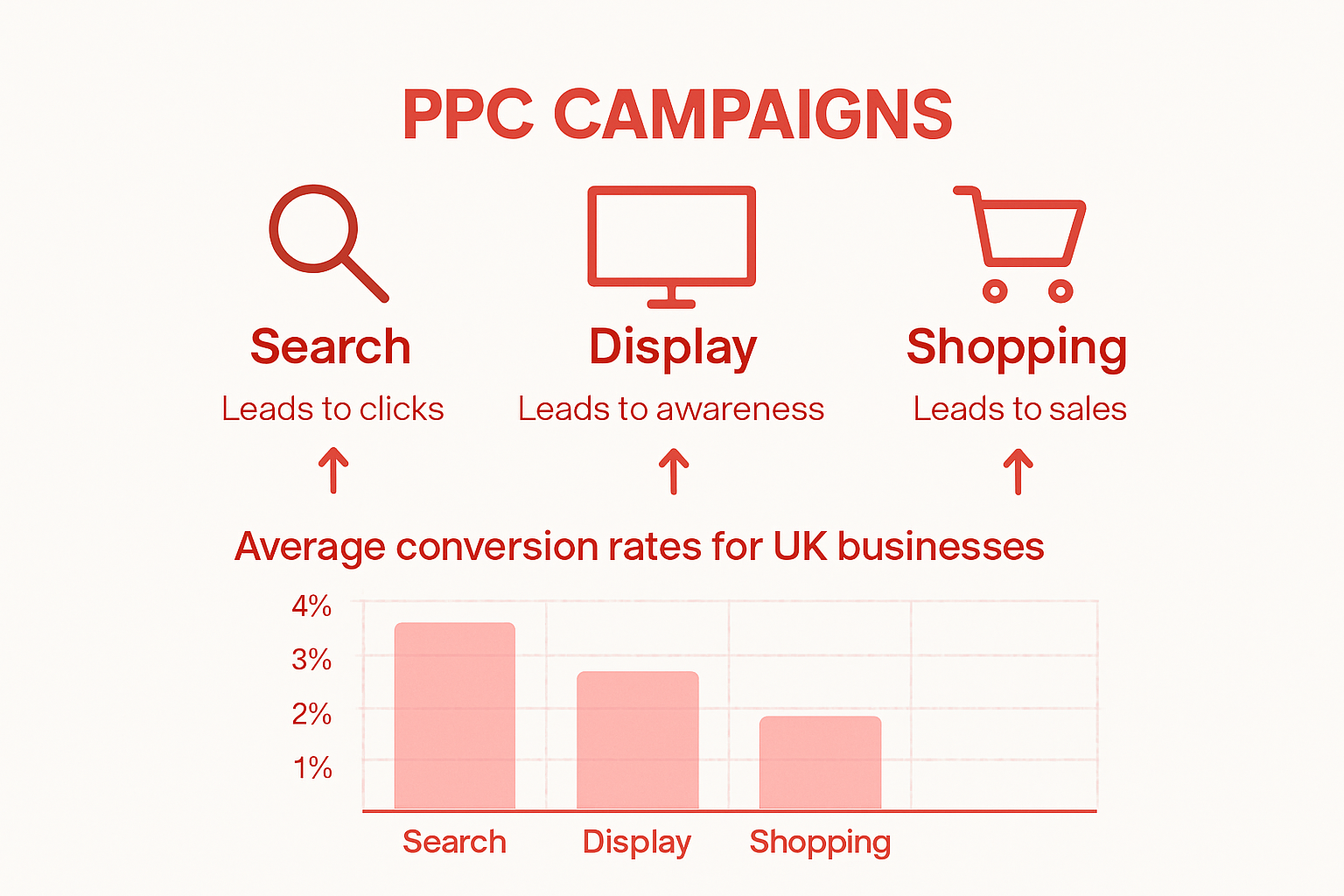
PPC advertising encompasses diverse campaign types, each designed to target specific business objectives and audience segments. Digital marketing platforms offer multiple strategies for reaching potential customers, with each campaign type presenting unique advantages and targeting methodologies.
The primary PPC campaign categories include:
- Search Network Campaigns: Text-based adverts appearing directly in search engine results
- Display Network Campaigns: Visual banner advertisements displayed across websites and apps
- Shopping Campaigns: Product-specific adverts showcasing images, prices, and merchant details
- Remarketing Campaigns: Targeted adverts reaching users who have previously interacted with your website
- Video Campaigns: Promotional video content displayed on platforms like YouTube
Search network campaigns represent the most traditional PPC approach, where businesses bid on keywords to display text adverts alongside search results. These campaigns work exceptionally well for businesses seeking immediate, high-intent customer interactions. Display network campaigns, by contrast, focus on building brand awareness through visually engaging advertisements across multiple websites, allowing for more creative and expansive audience targeting.
Understanding the nuanced differences between campaign types enables UK businesses to craft sophisticated digital marketing strategies. Sophisticated advertisers often combine multiple campaign types, creating comprehensive approaches that maximise reach, engagement, and conversion potential. By strategically selecting and integrating different PPC campaign types, businesses can develop robust marketing ecosystems that deliver measurable, scalable results.
How PPC Advertising Works in Practice
PPC advertising operates through a sophisticated digital marketplace where businesses compete for targeted audience attention. Businesses can drive website traffic and increase conversions by strategically implementing paid search techniques, creating a dynamic and responsive marketing approach.
The practical implementation of PPC involves several critical steps:
- Keyword Research: Identifying precise search terms that potential customers use
- Ad Creation: Developing compelling, targeted advertising messages
- Bidding Strategy: Determining how much to spend on each potential customer click
- Landing Page Optimisation: Designing web pages that convert clicks into genuine business opportunities
- Performance Tracking: Monitoring and analysing campaign effectiveness
When a potential customer enters a search query, advertisers enter an instantaneous auction where their bid, ad relevance, and landing page quality determine ad placement. The most successful PPC campaigns combine strategic keyword selection with high-quality, relevant content that directly addresses user intent. This means crafting adverts that not only appear in the right place but also speak directly to the customer’s specific needs and expectations.

Understanding the intricate mechanics of PPC allows UK businesses to transform digital advertising from a cost centre into a precise, measurable growth engine. By continuously refining targeting, adjusting bids, and optimising ad content, businesses can create a powerful marketing tool that delivers predictable, scalable results. The key lies in treating PPC not as a one-time effort, but as an ongoing, data-driven strategic process that evolves with customer behaviour and market dynamics.
Essential Costs, Risks, and ROI Factors
PPC advertising represents a strategic investment with complex financial considerations that demand careful planning and continuous monitoring. Understanding comprehensive cost structures and budgeting strategies is crucial for mitigating potential financial risks, ensuring businesses maximise their digital marketing potential.
The primary cost components of PPC campaigns include:
- Click Costs: Actual expense for each user interaction with your advert
- Management Fees: Potential agency or platform charges for campaign setup and maintenance
- Keyword Pricing: Variable expenses based on competitive bidding landscapes
- Conversion Tracking: Costs associated with analytics and performance measurement tools
- Creative Development: Expenses for designing compelling advertising materials
Businesses must recognise that PPC success extends beyond initial monetary investment. The most effective campaigns balance strategic spending with rigorous performance analysis, continuously adjusting targeting, messaging, and budget allocation. Risks include potential overspending on non-converting keywords, creating adverts that fail to resonate with target audiences, or neglecting critical conversion optimisation techniques.
Calculating return on investment requires a nuanced approach that considers not just immediate sales but long-term customer acquisition value. Sophisticated UK businesses approach PPC as a precision instrument, treating each campaign as an opportunity to gather market insights, refine targeting strategies, and build sustainable digital marketing ecosystems that deliver predictable, scalable growth.
Common Mistakes and How to Avoid Them
PPC advertising presents numerous potential pitfalls that can quickly erode marketing budgets and diminish campaign effectiveness. Businesses must develop comprehensive strategies to identify and mitigate common PPC marketing errors, ensuring their digital advertising efforts deliver meaningful results.
The most critical mistakes UK businesses frequently encounter include:
- Poor Keyword Selection: Choosing overly broad or irrelevant search terms
- Neglecting Negative Keywords: Failing to filter out non-converting search queries
- Inadequate Landing Page Design: Creating disconnected or non-compelling destination pages
- Ignoring Performance Analytics: Overlooking crucial campaign performance data
- Inconsistent Ad Messaging: Developing adverts that lack clear, targeted communication
Successful PPC campaigns demand continuous refinement and strategic oversight. Businesses must approach digital advertising as a dynamic process, constantly testing and adjusting targeting, messaging, and budget allocation. This means implementing robust tracking mechanisms, conducting regular performance audits, and remaining agile in response to changing market dynamics and customer behaviour.
Ultimately, avoiding PPC mistakes requires a proactive, data-driven approach. Sophisticated marketers treat each campaign as a learning opportunity, using sophisticated analytics to understand customer interactions, optimise targeting, and incrementally improve advertising effectiveness. By embracing a mindset of continuous improvement and maintaining rigorous performance standards, UK businesses can transform potential pitfalls into strategic advantages that drive sustainable growth.
Boost Your UK Business with Expert PPC Solutions from Bamsh Digital Marketing
If navigating the complexities of PPC advertising feels overwhelming or costly, you are not alone. This article highlights important challenges such as keyword selection, budget management and optimising landing pages—core elements that can make or break your PPC success. At Bamsh Digital Marketing, we understand the frustration of pouring money into ads without seeing real returns or clarity on performance.
We specialise in creating highly targeted Google PPC campaigns that deliver better-quality leads at lower costs. Our transparent monthly reporting means you always know exactly where your budget is going and how your ads perform. Whether you need help managing budgets, refining keywords or driving conversions, our tailored strategies ensure your business stands out precisely when UK customers are ready to buy.
Ready to transform PPC from a costly experiment into a growth engine for your business? Explore more insights in our Uncategorized – Bamsh Digital Marketing page and see how clear, honest marketing works. Take the first step toward measurable growth with a free 15-minute consultation at https://bamsh.co.uk/15-min/. Don’t let confusion hold your business back — act now and watch your leads, visibility and revenue grow.
Frequently Asked Questions
What is PPC advertising?
PPC advertising, or Pay-Per-Click advertising, is a digital marketing strategy where businesses pay to display ads to potential customers and only incur costs when users click on the ads.
How does PPC advertising benefit UK businesses?
PPC advertising provides UK businesses with a precise method to target potential customers at the exact moment they express intent to purchase, resulting in high-quality leads and increased conversions.
What are the key components of a successful PPC campaign?
A successful PPC campaign includes effective keyword selection, compelling ad creation, optimised landing pages, and proper budget management, along with continuous performance tracking and adjustment.
What are common mistakes to avoid in PPC advertising?
Common mistakes in PPC advertising include poor keyword selection, neglecting negative keywords, inadequate landing page design, ignoring performance analytics, and inconsistent ad messaging. Avoiding these pitfalls is crucial for campaign success.
Recommended
- Complete Guide to PPC in Lead Generation
- PPC & Google Ads Agency Bristol – Bamsh Targeted Ad Success
- PPC Management: Maximising Ad Spend for UK Businesses
- SEO versus PPC: Unleash the Power of Traffic Generation
- Exploring the Benefits of HP 307A Yellow Original LaserJet Toner Cartridge for Your Multi-function Device