

More than 40 percent of british businesses admit they lose sales due to unclear lead management. For many small and medium-sized business owners in South West UK, the challenge is not a lack of leads but failing to nurture the right ones through a predictable revenue process. This guide demystifies how transparent strategies and a clear focus on ideal customers can sharpen lead conversion and help you outpace competitors.
Table of Contents
- Step 1: Define Your Ideal Customer Profile
- Step 2: Map Your Lead Capture And Handling Flow
- Step 3: Implement Automated Lead Nurturing Systems
- Step 4: Optimise Sales Follow-Up And Engagement
- Step 5: Measure Results And Refine Conversions
Quick Summary
| Main Insight | Detailed Explanation |
|---|---|
| 1. Define Your Ideal Customer | Identify characteristics of your most profitable customers to guide your marketing efforts effectively. |
| 2. Map Lead Handling Process | Create a systematic flow for capturing and nurturing leads to ensure effective engagement at all stages. |
| 3. Automate Lead Nurturing | Implement automation to facilitate timely, personalised communications with leads based on their behaviours. |
| 4. Optimise Follow-Ups | Establish a structured follow-up strategy that enhances communication and increases conversion rates. |
| 5. Measure and Refine Performance | Continuously analyse conversion data to identify areas for improvement and enhance overall sales performance. |
Step 1: Define your ideal customer profile
Defining your ideal customer profile is about creating a laser-focused blueprint of exactly who will benefit most from your product or service. By mapping out precise characteristics and needs, you transform guesswork into strategic targeting.
Start by examining your existing customer base. Look for common patterns among your most profitable and loyal clients through careful analysis. Gather data points like company size, industry sector, annual revenue, specific challenges, and purchasing behaviours. Consider creating a spreadsheet tracking these characteristics across your top performing accounts.

The key is moving beyond generic demographics to understanding deeper motivations. What problems do these customers consistently face? How does your solution uniquely solve their challenges? A well-defined ideal customer profile grounds your entire go-to-market strategy by ensuring sales, marketing, and product teams are aligned towards the same target.
Expert Tip: Conduct structured interviews with 5-10 of your best existing customers to uncover nuanced insights that data alone cannot reveal.
Step 2: Map your lead capture and handling flow
Mapping your lead capture and handling flow is about creating a strategic roadmap that transforms potential customer interactions into predictable sales opportunities. This process ensures no valuable lead slips through the cracks and every potential customer receives targeted attention.
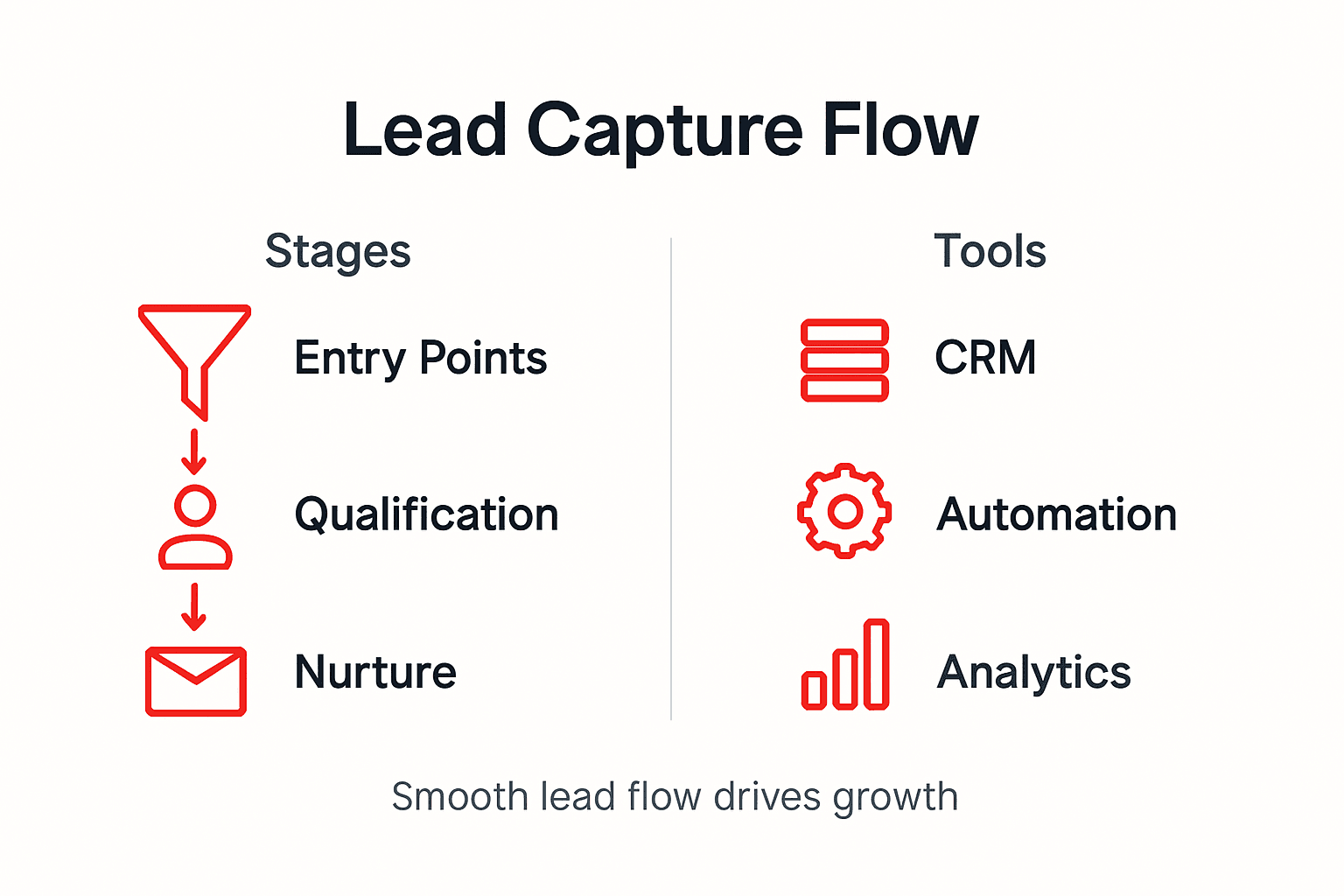
Lead management requires a systematic approach to capturing and nurturing potential customers through multiple strategic stages. Begin by identifying all potential lead entry points such as website contact forms, social media interactions, email inquiries, phone calls, and event registrations. Create a comprehensive tracking system that captures essential information like contact details, source of inquiry, initial interest level, and specific needs or challenges.
Utilise technology and automation to streamline your lead management process by implementing a customer relationship management (CRM) system. This allows you to score leads based on their engagement, automate initial follow-up communications, and ensure each lead is routed to the most appropriate sales team member. Develop clear protocols for lead qualification, including specific criteria that determine when a lead moves from marketing to sales engagement.
Expert Tip: Create a visual flowchart of your lead handling process to identify potential bottlenecks and ensure smooth transition points between marketing and sales teams.
Step 3: Implement automated lead nurturing systems
Implementing automated lead nurturing systems transforms how you connect with potential customers by creating intelligent communication pathways that engage leads consistently and strategically. This approach allows you to deliver personalised interactions at scale without requiring constant manual intervention.
Automated lead nurturing uses sophisticated technology to send timely personalised communications aligned with each lead’s specific buyer journey. Start by mapping out your customer journey stages and designing targeted email workflows that respond to specific lead behaviours. For instance, create different email sequences for leads who download a whitepaper versus those who request a product demonstration. These workflows should include educational content progressively introducing your value proposition while tracking engagement metrics like open rates and click throughs.
Behaviour-triggered messaging enables real-time tracking and personalisation of lead engagement through your customer relationship management system. Configure your CRM to automatically segment leads based on interactions, creating dynamic lists that update in real time. This allows you to score leads, objectively measure their sales readiness and route them to appropriate team members precisely when they demonstrate purchase intent.
Expert Tip: Design at least three distinct nurture tracks with progressively sophisticated messaging to match different lead temperature and engagement levels.
Step 4: Optimise sales follow-up and engagement
Optimising your sales follow-up and engagement strategy transforms potential leads into committed customers by creating a systematic approach to communication that feels personalised and attentive. This process is about turning initial interest into meaningful conversations that drive conversions.
Sales follow-up requires a continuous process of monitoring and analysing each interaction with precision and strategic intent. Begin by establishing a structured follow-up cadence that includes multiple touchpoints across different communication channels. Design a sequence that might include an initial email within 24 hours of contact, a follow-up call after 48 hours, and a personalised message addressing specific concerns or interests demonstrated during initial interactions. Track response rates and adapt your approach based on real engagement data.
Successful B2B sales follow-ups demand persistence and multiple strategic communication approaches that keep your offering prominently in the prospect’s mind. Utilise customer relationship management platforms to schedule automated yet personalised follow-ups, ensuring no potential lead falls through the cracks. Develop communication templates that can be quickly customised, allowing for rapid yet thoughtful responses that demonstrate your understanding of the potential customer’s unique challenges.
This table outlines key features of lead management systems and their impact on B2B sales effectiveness:
| Feature | Description | Business Impact |
|---|---|---|
| Lead Scoring | Rates lead quality | Prioritises high-potential clients |
| Automated Follow-Ups | Scheduled communications | Ensures timely engagement |
| Real-Time Routing | Assigns leads instantly | Reduces response delays |
| Engagement Tracking | Monitors interactions | Optimises sales strategies |
Expert Tip: Create a follow-up scoring system that automatically prioritises leads based on their engagement level and potential conversion probability.
Step 5: Measure results and refine conversions
Measuring results and refining conversions transforms raw data into actionable insights that continuously improve your sales performance. This critical step turns numbers into strategic intelligence that drives predictable business growth.
Lead conversion measurement requires building a sophisticated scoring system that prioritises high-intent prospects. Establish a comprehensive tracking framework that captures multiple performance indicators, including response times, engagement levels, and progression through your sales funnel. Implement real-time routing mechanisms that allocate leads to the most appropriate sales representatives based on their specific characteristics and demonstrated interests. Create dashboards that provide immediate visibility into conversion performanc,e allowing rapid adjustments and strategic interventions.
Calculating lead conversion rate provides a fundamental metric for understanding sales and marketing effectiveness. Break down your conversion metrics systematically tracking the percentage of leads transformed into paying customers. Analyse each stage of your sales pipeline, identifying potential bottlenecks or drop-off points. Use these insights to develop targeted improvement strategies that incrementally enhance your conversion performance. Regularly compare your conversion rates against industry benchmarks to understand your competitive positioning and potential areas for strategic enhancement.
Expert Tip: Implement a quarterly review process that forensically examines conversion data to identify micro improvements that can compound into significant performance gains.
Here is a summary comparing the main goals and outcomes of each step in developing an effective B2B sales process:
| Step | Primary Goal | Expected Outcome |
|---|---|---|
| Define Ideal Customer | Target high-value prospects | Effective resource allocation |
| Map Lead Flow | Capture all potential leads | Increased lead volume |
| Automate Nurturing | Guide leads through the journey | Improved engagement consistency |
| Optimise Follow-Up | Personalise outreach | Higher conversion rates |
| Measure and Refine | Analyse & enhance results | Continuous performance growth |
Boost Your Lead Conversion with Bamsh Digital Marketing
The article highlights the common challenge many businesses face in mastering their lead conversion process for reliable growth. Key pain points include capturing and nurturing leads without losing them in the funnel, automating follow-ups, and using data-driven insights to refine strategies. If you find yourself struggling to consistently convert leads into customers or spend too much time manually managing complex sales flows, you are not alone. Concepts like ideal customer profiling, automated lead nurturing, and optimised follow-up routines all demand effective tools and expertise to truly deliver results.
At Bamsh Digital Marketing, we specialise in turning these challenges into opportunities. Our services such as CRM Setup & Automated Lead Nurturing, ensure no lead is ever missed by automating pipelines that capture, score, and nurture enquiries even while you focus on other priorities. We also offer targeted solutions like Google PPC Management and AI-powered tools to accelerate engagement and deliver predictable revenue growth. Experience transparent, honest digital marketing with a trusted partner who makes complex lead conversion simple and stress free.
Discover how our award-winning strategies can help you define your ideal customers, automate communications intelligently, and measure performance clearly. Ready to stop losing leads and start growing your business steadily? Take the first step now with a free consultation at Bamsh Digital Marketing and unlock your full sales potential.
Frequently Asked Questions
How can I effectively define my ideal customer profile?
Defining your ideal customer profile involves analysing your existing customer base to identify common traits. Gather data on company size, industry, challenges, and purchasing behaviours to create a detailed profile. Start by creating a spreadsheet tracking these factors across your most profitable clients.
What steps should I take to map my lead capture and handling flow?
Begin by identifying all potential entry points for leads, like website forms and social media interactions. Then, create a system to track essential information, including contact details and initial interests. Visualise the process with a flowchart to help ensure every lead is nurtured effectively.
How do I implement automated lead nurturing systems successfully?
To set up automated lead nurturing, start by mapping your customer journey stages and designing specific email workflows for different lead behaviours. Configure your customer relationship management system to segment leads based on interactions, and create multiple nurture tracks that respond to varying engagement levels.
What strategies can I use to optimise sales follow-up and engagement?
Establish a structured follow-up process that includes multiple communication touchpoints, such as emails and calls. Use a customer relationship management platform to track responses and adapt your messaging based on lead interactions. Aim for timely follow-ups, such as contacting leads within 24 hours of initial engagement.
How can I measure lead conversion results to ensure continuous improvement?
To measure lead conversion results, develop a scoring system that prioritises high-intent prospects and captures performance indicators like response times and engagement levels. Create dashboards that provide quick insights into conversion metrics, and analyse each stage of your sales funnel to identify areas for improvement. Implement a review process every quarter to refine your strategies.
What are common bottlenecks in the lead conversion process and how can I identify them?
Common bottlenecks often occur during lead qualification or handoff between marketing and sales. Map your lead handling process visually to spot delays or gaps in communication. Conduct regular reviews of your pipeline to evaluate conversion rates at each stage and identify where prospects tend to drop off.