

Most british small business owners are surprised to learn that PPC can deliver leads up to three times faster than traditional digital methods. In competitive areas like Bristol and Cheltenham, this matters because every click counts when aiming to turn online interest into loyal customers. Discover how a well-structured PPC approach allows you to target the right audience, control spending, and measure what truly works—giving your business a valuable edge in the local market.
Table of Contents
- Defining PPC and Its Purpose in Business
- Types of PPC Campaigns Available to SMEs
- How Pay-Per-Click Advertising Works
- Essential Costs and Budget Management
- Key Benefits for UK Businesses
- Common PPC Mistakes and How to Avoid Them
Key Takeaways
| Point | Details |
|---|---|
| PPC Overview | Pay Per Click (PPC) is a digital advertising model where businesses pay for each click on their ads, allowing precise targeting of potential customers. |
| Campaign Types | Small and medium-sized enterprises (SMEs) can utilise various PPC campaign types, including search engine ads, display ads, and social media ads, to meet specific marketing objectives. |
| Cost Management | Effective budget management in PPC is crucial, involving clear tracking of costs and performance metrics to maximise return on investment. |
| Avoiding Mistakes | Common PPC pitfalls include poor keyword selection and unoptimised landing pages, which can significantly hinder campaign success and increase unnecessary expenditure. |
Defining PPC and Its Purpose in Business
Pay-Per-Click (PPC) is a strategic digital advertising model where businesses pay only when potential customers actively click on their online advertisements. This targeted approach allows companies to purchase website visits instead of attempting to earn them organically through traditional marketing methods.
At its core, PPC is about precision targeting. Digital advertising model enables businesses to display ads on search engines, social media platforms, and websites, paying a small fee each time someone clicks through to their website. The primary goal is connecting with potential customers who are already searching for products or services similar to what the business offers.
The mechanics of PPC are straightforward but powerful. Advertisers bid on specific keywords relevant to their target audience, creating ads that appear when those keywords are searched. This means businesses can reach potential customers at the exact moment they are expressing interest, making PPC an incredibly efficient marketing strategy. Companies can control their budget, track performance in real-time, and adjust campaigns instantly to maximise return on investment.
Pro tip: Start with a modest budget and gradually increase spending as you understand which keywords and ad formats generate the most qualified leads for your specific business.
Types of PPC Campaigns Available to SMEs
Small and medium-sized enterprises (SMEs) have a diverse range of Pay Per Click (PPC) campaign types at their disposal, each designed to meet specific marketing objectives and budgetary constraints. Digital marketing strategies for SMEs typically encompass multiple advertising channels, allowing businesses to reach their target audience with precision and flexibility.
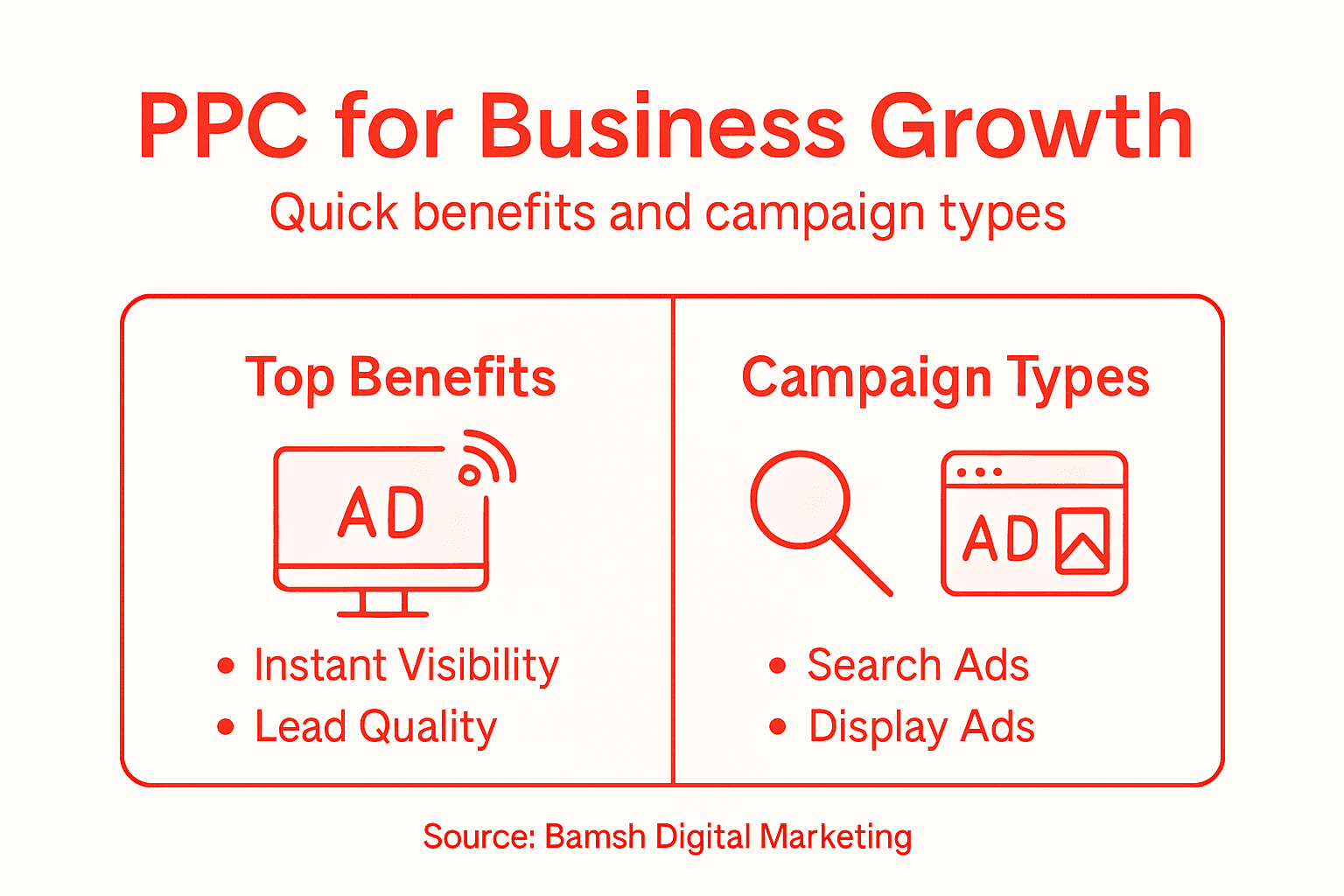
The primary PPC campaign types include search engine ads, which appear directly in search results when potential customers type relevant keywords. These ads are particularly powerful for businesses looking to capture high-intent customers actively searching for their products or services. Display ads offer another strategic option, appearing across websites and online platforms as visual banners, enabling businesses to build brand awareness and retarget interested visitors. Social media advertising represents a third critical campaign type, allowing SMEs to leverage platforms like Facebook, Instagram, and LinkedIn to reach highly specific demographic groups.

Moreover, SMEs can choose between single-channel and multi-channel PPC approaches. A single-channel strategy might focus intensively on Google Search Ads, while a multi-channel approach could simultaneously deploy ads across search engines, social media platforms, and display networks. This flexibility enables businesses to experiment with different channels, track performance, and optimise their marketing spend based on real-world results.
Here’s a summary comparing popular PPC campaign types for SMEs:
| Campaign Type | Main Platform | Audience Targeting Level | Typical Business Goal |
|---|---|---|---|
| Search Engine Ads | Google, Bing | High | Drive high-intent website visits |
| Display Ads | Google Display Net. | Moderate | Build brand awareness |
| Social Media Ads | Facebook, LinkedIn | Very High | Engage specific demographics |
Pro tip: Begin your PPC journey by selecting one primary channel with the most relevance to your target audience, and gradually expand your strategy as you gain insights and confidence in your campaign performance.
How Pay-Per-Click Advertising Works
Pay-Per-Click (PPC) advertising operates on a sophisticated mechanism that allows businesses to purchase targeted visibility in digital spaces. PPC bidding systems enable advertisers to compete for strategic ad placements by selecting specific keywords relevant to their target audience and setting maximum bid amounts for each potential click.
The core process involves an automated auction system where advertisers bid on keywords most likely to attract their ideal customers. When a user enters a search query matching those keywords, an instantaneous bidding process occurs behind the scenes. The winning ad is determined not just by bid price, but also by the ad’s quality score, which considers factors like relevance, click-through rate, and landing page experience. This means businesses can’t simply outspend their competitors – they must also create compelling, highly targeted advertisements that genuinely meet user needs.
Advanced PPC platforms provide granular targeting options beyond keywords, including demographic filters, geographic location, device type, and even user behaviour patterns. Advertisers can set precise budgets, track performance in real-time, and make immediate adjustments to optimise their campaigns. Sophisticated tracking mechanisms ensure businesses pay only for genuine user interactions, with built-in fraud prevention systems protecting advertisers from invalid or accidental clicks.
Pro tip: Invest time in developing a comprehensive keyword strategy, focusing on long-tail keywords that demonstrate specific user intent rather than broad, competitive terms.
Essential Costs and Budget Management
Pay-Per-Click (PPC) advertising requires strategic financial planning to maximise return on investment. Budget management techniques involve understanding both direct and indirect expenses associated with digital advertising campaigns, ensuring businesses allocate resources effectively and maintain financial control.
The primary costs in PPC advertising include keyword bidding expenses, ad creation costs, and ongoing campaign management. Businesses must consider the cost per click (CPC), which varies dramatically depending on industry competitiveness and selected keywords. Some industries might experience click costs ranging from £1 to £50, making precise budget allocation crucial. Smart advertisers develop a comprehensive budgeting strategy that accounts for initial testing phases, ongoing optimisation, and potential fluctuations in market dynamics.
Successful PPC budget management relies on continuous monitoring and data-driven adjustments. Businesses should establish clear key performance indicators (KPIs) such as conversion rates, cost per acquisition, and return on ad spend. By implementing robust tracking mechanisms, companies can dynamically redistribute their budget towards high-performing keywords and ad formats, ensuring maximum efficiency. This approach allows for real-time financial control, preventing unnecessary expenditure and focusing resources on campaigns delivering tangible business results.
Pro tip: Start with a conservative daily budget and incrementally increase spending only after establishing clear performance benchmarks and understanding your specific market’s cost dynamics.
Key Benefits for UK Businesses
Pay-Per-Click (PPC) advertising offers UK businesses a powerful digital marketing strategy with multiple strategic advantages. Digital marketing insights reveal that PPC provides unprecedented flexibility and precision for companies seeking targeted customer engagement and measurable growth opportunities.
The primary benefits for UK businesses include immediate market visibility, precise audience targeting, and complete budget control. Unlike traditional marketing channels, PPC allows companies to display advertisements directly to potential customers actively searching for their products or services. Businesses can select specific demographics, geographic locations, and even time of day for their advertisements, ensuring marketing resources are used efficiently. This targeted approach means smaller businesses can compete effectively against larger competitors by optimising their advertising spend.
Moreover, PPC provides exceptional analytical capabilities that transform marketing from a guessing game into a data-driven strategy. Companies receive real-time performance metrics, enabling instant insights into campaign effectiveness. Advertisers can track critical indicators like click-through rates, conversion percentages, and cost per acquisition, allowing continuous refinement of marketing approaches. This granular understanding helps UK businesses make informed decisions, reduce wasted advertising expenditure, and progressively improve their digital marketing performance.
Pro tip: Begin your PPC journey by establishing clear, measurable objectives and allocating a small experimental budget to test different targeting strategies before scaling your campaigns.
Common PPC Mistakes and How to Avoid Them
Pay-Per-Click (PPC) advertising can be a minefield for businesses without proper strategic planning. PPC management techniques reveal several critical errors that can dramatically undermine campaign effectiveness and waste valuable marketing budgets.
One of the most frequent mistakes is poor keyword selection, where businesses choose overly broad or irrelevant terms that attract unqualified traffic. Instead, companies should focus on precise, long-tail keywords that demonstrate specific user intent. Advertisers often neglect negative keyword strategies, which help prevent ads from appearing in unrelated searches. For instance, a luxury furniture retailer might use negative keywords like ‘cheap’ or ‘discount’ to avoid attracting budget-conscious customers who are unlikely to purchase high-end products.
Another significant pitfall is inadequate landing page optimisation. Many businesses direct PPC traffic to generic homepage designs rather than creating targeted, conversion-focused landing pages that directly address the specific search intent. Successful campaigns require alignment between ad copy, keywords, and landing page content. This means crafting unique landing pages for different ad groups, ensuring message consistency, and providing clear, compelling calls-to-action that guide potential customers through the purchasing journey.
Below is a reference table outlining common PPC errors and best-practice prevention tactics:
| PPC Mistake | Impact on Campaign | Prevention Strategy |
|---|---|---|
| Poor keyword selection | Low conversion rates | Use targeted, intent-based terms |
| Neglecting negative keywords | Wasted ad spend | Add exclusion terms to campaigns |
| Unoptimised landing pages | High bounce rates | Align landing pages with ad intent |
Pro tip: Implement a strict ‘test and learn’ approach by allocating a small experimental budget to multiple ad variations, carefully tracking performance metrics to identify and scale the most effective strategies.
Unlock Business Growth with Expert PPC Solutions from Bamsh Digital Marketing
The article highlights how Pay Per Click advertising is essential for business growth and lead generation, yet many SMEs struggle with precise keyword targeting, budget management, and converting clicks into customers. You may be feeling overwhelmed by fluctuating costs and unclear results while trying to harness the full power of PPC campaigns. This is where Bamsh Digital Marketing steps in — offering transparent, results-driven PPC management designed to put your business in front of the right audience at exactly the right moment.
Our team specialises in creating focused Google Ads campaigns that balance cost efficiency with high-quality leads. With clear communication and detailed reporting, you always understand how your budget is being invested and what each click delivers. Explore our full range of digital marketing strategies on our Digital Marketing Bristol – Bamsh Digital Marketing page and discover how our blend of expertise and honesty has earned us a reputation trusted by UK businesses.
Ready to stop guessing and start growing your business confidently with PPC? Take the first step toward more predictable revenue by booking your free consultation today at Bamsh 15 Minute Discovery Call and learn how to optimise your ads for maximum impact. For more insights into our ethos and services, visit Bamsh – Bamsh Digital Marketing. Your business deserves a marketing partner that simplifies digital advertising without the jargon or wasted spend.
Frequently Asked Questions
What is PPC advertising and how does it work?
PPC advertising is a digital marketing model where businesses pay for their ads only when a user clicks on them. Advertisers bid on specific keywords, and ads are displayed based on these bids and their relevance to search queries.
What are the benefits of using PPC for lead generation?
PPC allows businesses to reach potential customers actively searching for their products or services, offering precise audience targeting, immediate visibility, and the ability to track campaign performance in real-time, thus enhancing lead generation.
How can I effectively manage my PPC budget?
Effective PPC budget management involves setting clear performance indicators, continuously monitoring ad performance, and reallocating funds toward high-performing campaigns while starting with a conservative daily budget to test strategies.
What common mistakes should I avoid in my PPC campaigns?
Common mistakes include poor keyword selection, neglecting negative keywords, and directing traffic to unoptimised landing pages. It is crucial to focus on targeted keywords, use exclusion terms, and create relevant, conversion-focused landing pages.