

Most british businesses are amazed to learn that retargeted website visitors are 70 percent more likely to convert than those seeing ads for the first time. In a competitive digital world flooded with short attention spans, missing out on this audience means leaving both sales and brand loyalty on the table. Understanding how retargeting works can help you bring back potential customers, strengthen your online presence, and make smarter choices about your advertising budget.
Table of Contents
- What Is Retargeting And Why It Matters
- Core Types Of Retargeting Campaigns Explained
- How Retargeting Tracks And Engages Audiences
- Major Benefits For UK Business Growth
- Common Pitfalls And How To Avoid Them
Key Takeaways
| Point | Details |
|---|---|
| Importance of Retargeting | Retargeting reconnects with website visitors who did not convert, increasing the likelihood of conversion by 70%. |
| Types of Retargeting | Key strategies include website, social media, search, email, and video retargeting, allowing for diverse engagement opportunities. |
| Tracking Techniques | Effective retargeting relies on pixel-based tracking and audience segmentation to personalise ad experiences for users. |
| Avoiding Pitfalls | Common mistakes include improper audience segmentation and ignoring frequency capping, which can undermine campaign effectiveness. |
What Is Retargeting and Why It Matters
Retargeting is a powerful digital marketing strategy designed to re-engage potential customers who have previously interacted with your website or online content but did not complete a purchase. According to Brain Academy, this technique helps businesses capture and retain audience attention by strategically placing targeted advertisements in front of individuals who have already shown interest in your products or services.
The core mechanism of retargeting involves tracking website visitors through browser cookies, allowing marketers to display specific ads to users as they browse other websites or social media platforms. When someone visits your website and leaves without converting, retargeting ensures your brand remains visible, gently reminding them of their initial interest. As Thames College explains, this approach significantly increases the likelihood of converting previously interested prospects into actual customers.
Why does retargeting matter for your business? The statistics speak volumes. Retargeted website visitors are 70% more likely to convert compared to first-time visitors. This means you’re not just throwing advertising into the void, but strategically reconnecting with potential customers who have already demonstrated some level of interest in what you offer. By keeping your brand top of mind and presenting personalised, relevant messaging, retargeting transforms casual browsers into committed customers, ultimately driving higher conversion rates and improving your return on investment.
Key Benefits of Retargeting:
- Increases brand recall and recognition
- Reduces customer acquisition costs
- Delivers higher click-through rates compared to standard display advertising
- Allows for highly personalised marketing approaches
- Provides measurable, data-driven marketing insights
Core Types of Retargeting Campaigns Explained
Retargeting encompasses several strategic approaches designed to re-engage potential customers across different digital platforms. According to Stanmore UK, advanced remarketing strategies typically involve multiple campaign types that target users through diverse channels, ensuring comprehensive brand visibility and engagement.
Website Retargeting represents the most fundamental approach, where advertisements are displayed to users who have previously visited your website but did not complete a desired action. These ads follow potential customers across various websites and social media platforms, using browser cookies to track and remind them of their initial interest. By presenting personalised content, businesses can significantly increase the chances of conversion.
Social Media Retargeting has become increasingly powerful, allowing marketers to display targeted ads on platforms like Facebook, Instagram, and LinkedIn. This method enables businesses to reconnect with website visitors, specifically within their preferred social media environments. Users who have interacted with your website or specific content can be served tailored advertisements that align with their previous browsing behaviour, creating a more personalised marketing experience.
Key Types of Retargeting Campaigns:
- Website Retargeting
- Social Media Retargeting
- Search Retargeting
- Email Retargeting
- Video Retargeting
By leveraging these diverse retargeting strategies, businesses can create a comprehensive approach that keeps their brand consistently visible and increases the likelihood of converting interested prospects into loyal customers.
How Retargeting Tracks and Engages Audiences
Retargeting relies on sophisticated tracking technologies that transform anonymous website visitors into potential customers. As Thames College explains, the process begins with implementing tracking mechanisms like Google Analytics and Google Tag Manager to build precise audience segments and deploy remarketing tags across digital platforms.
Pixel-Based Tracking is the primary method used in retargeting, where a small piece of JavaScript code (often called a ‘pixel’) is placed on your website. This pixel drops an anonymous browser cookie on every visitor’s device, allowing marketers to track their online journey across different websites and platforms. When a user visits your site and leaves without converting, this cookie enables your ads to follow them, creating multiple touchpoints that increase the likelihood of re-engagement.
According to Brain Academy, effective audience engagement through retargeting requires understanding user behaviour and leveraging data-driven strategies. This means segmenting your audience based on specific interactions, such as pages visited, products viewed, or actions taken on your website. By creating highly targeted ad campaigns that speak directly to users’ previous interests, businesses can dramatically improve conversion rates and marketing efficiency.
Key Tracking and Engagement Techniques:
- Pixel-based tracking
- Cookie tracking
- Audience segmentation
- Behavioural targeting
- Cross-platform remarketing
The magic of retargeting lies in its ability to transform casual website browsers into engaged potential customers by maintaining a strategic, personalised presence across their digital landscape.

Major Benefits for UK Business Growth
Retargeting offers transformative advantages for UK businesses seeking sustainable growth and a competitive edge. Research from arXiv reveals that digital marketing strategies like retargeting can significantly impact business expansion, particularly for small and medium enterprises looking to leverage technology for growth.
Cost-Effective Customer Acquisition is perhaps the most compelling benefit. Traditional advertising methods require substantial investment with uncertain returns, whereas retargeting allows businesses to focus marketing budgets on audiences already demonstrating interest. By targeting individuals who have previously engaged with your brand, you’re dramatically reducing wasted ad spend and increasing the probability of conversion. Small businesses can stretch their marketing budgets further, competing more effectively against larger competitors.
According to arXiv, data-driven decision-making through retargeting can enhance productivity and performance for UK SMEs. This approach enables businesses to anticipate customer needs, optimise marketing strategies, and deliver more efficient services. Retargeting provides granular insights into customer behaviour, allowing companies to create highly personalised marketing experiences that resonate with their target audience.
Key Growth Benefits of Retargeting:
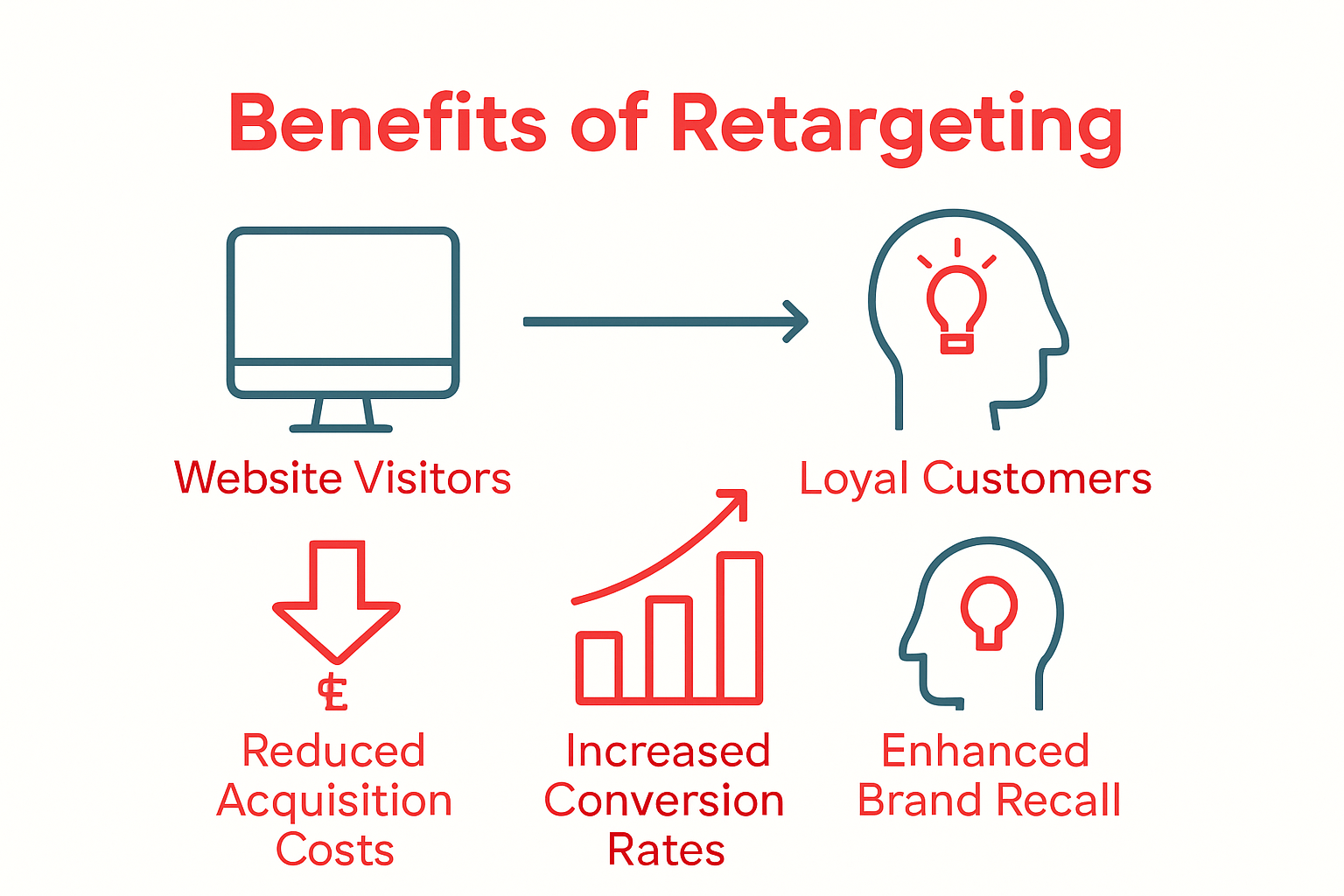
- Reduced customer acquisition costs
- Increased conversion rates
- Enhanced brand recall
- Precise audience targeting
- Improved return on marketing investment
By implementing strategic retargeting campaigns, UK businesses can transform casual website visitors into loyal customers, driving sustainable growth in an increasingly competitive digital marketplace.
Common Pitfalls and How to Avoid Them
Retargeting campaigns can quickly become ineffective if businesses fail to navigate their complexities strategically. As Thames College highlights in their comprehensive course, understanding and mitigating common pitfalls is crucial for maintaining campaign effectiveness and avoiding potential marketing missteps.
Audience Segmentation Mistakes represent one of the most significant challenges in retargeting. Many businesses make the error of treating all website visitors as a homogeneous group, which leads to generic, ineffective advertising. Instead, you should create granular audience segments based on specific behaviours, such as pages visited, products viewed, or stage in the buying journey. This approach ensures that your retargeting ads speak directly to each group’s unique interests and needs, dramatically improving engagement and conversion rates.
According to Brain Academy, privacy concerns and ad fatigue are critical considerations that can undermine retargeting efforts. Implementing frequency capping is essential to prevent overwhelming potential customers with repetitive advertisements. Most platforms recommend limiting ad exposure to 3-5 times per user within a two-week period. Additionally, ensure compliance with data protection regulations like GDPR by being transparent about data collection and providing clear opt-out mechanisms.
Key Retargeting Pitfalls to Avoid:
- Inappropriate audience segmentation
- Lack of ad creative variation
- Ignoring frequency capping
- Non-compliant data practices
- Failing to track and analyse campaign performance
By understanding these potential challenges and implementing strategic safeguards, businesses can create retargeting campaigns that feel personalised and respectful, rather than intrusive or overwhelming.
Transform Your Retargeting Strategy with Bamsh Digital Marketing
Retargeting is essential for any business struggling to convert website visitors into loyal customers. This article highlights key challenges such as ineffective audience segmentation, wasted ad spend, and the risk of ad fatigue without proper frequency capping. If you want to increase your brand recall, reduce customer acquisition costs and deliver personalised, data-driven marketing messages that really engage your potential customers, Bamsh Digital Marketing offers the expert support you need.
We specialise in creating tailored paid social media advertising campaigns to retarget your ideal customers on platforms like Facebook and Instagram. Our transparent approach means you will always know how your advertising budget is being used and see clear results. Take advantage of our latest Special Offers – Bamsh Digital Marketing to get started. Don’t let potential sales slip away. Connect with us today for a clear, no-obligation conversation by booking a free consultation at https://bamsh.co.uk/15-min/ and start turning casual visitors into paying customers with confident retargeting strategies.
Frequently Asked Questions
What is retargeting in digital marketing?
Retargeting is a digital marketing strategy aimed at re-engaging users who have previously interacted with your website or online content but did not complete a purchase. It involves displaying targeted ads to these users as they browse other sites, reminding them of their initial interest in your products or services.
How does retargeting increase conversion rates?
Retargeting increases conversion rates by keeping your brand visible to users who have already expressed interest. Statistics show that retargeted visitors are 70% more likely to convert, as they are reminded of their previous interactions with your brand through personalised ads.
What are the main types of retargeting campaigns?
The main types of retargeting campaigns include website retargeting, social media retargeting, search retargeting, email retargeting, and video retargeting. Each type targets users on different platforms and helps maintain brand visibility across digital channels.
How can businesses avoid common pitfalls in retargeting?
To avoid common pitfalls in retargeting, businesses should ensure appropriate audience segmentation, vary their ad creatives, implement frequency capping to avoid excessive exposure, comply with data protection regulations, and continually track and analyse campaign performance.