

Most business owners believe that a strong presence on one or two platforms is enough to capture customers. Yet over 70% of consumers use multiple channels before making a purchase decision. If your marketing channels aren’t working together, you’re losing sales to competitors who offer seamless experiences. This guide explains what omnichannel marketing is, why it matters for UK businesses in 2026, and how to implement it effectively to boost engagement and revenue.
Table of Contents
- Understanding Omnichannel Marketing And How It Differs From Multichannel
- The Impact Of Omnichannel Marketing On Customer Behaviour And Business Growth
- Real-World Examples And Best Practices For Uk Smes
- Common Challenges And How To Overcome Them
- Enhance Your Omnichannel Marketing With Expert Help
Key Takeaways
| Point | Details |
|---|---|
| Unified experience | Omnichannel marketing integrates all channels so customers experience consistency wherever they interact with your brand. |
| Higher conversion rates | Businesses using three or more channels see 287% higher purchase rates than single-channel campaigns. |
| Stronger retention | Strong omnichannel engagement retains 89% of customers compared to just 33% for weaker strategies. |
| Multiple touchpoints | 77% of consumers use 3-4 channels when shopping for non-essential products. |
Understanding Omnichannel Marketing and How it Differs From Multichannel
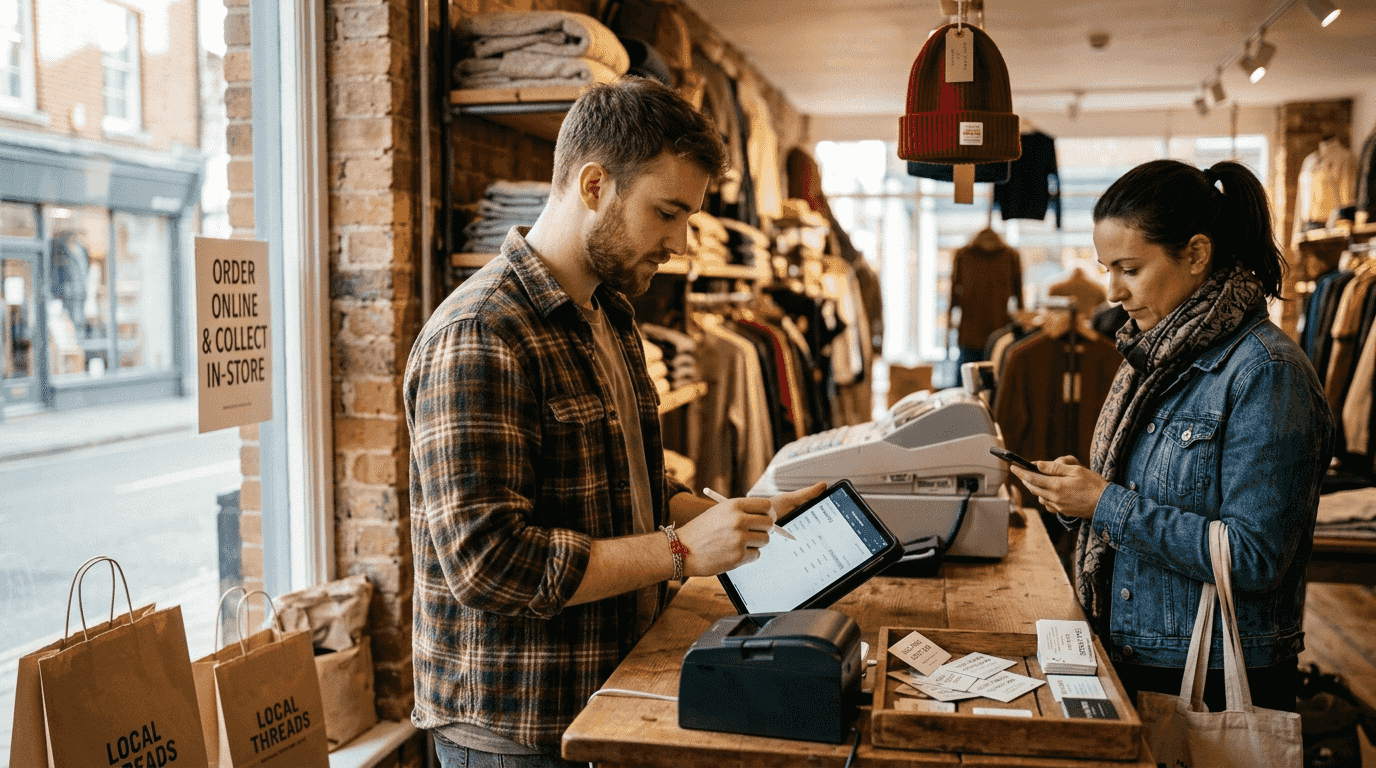
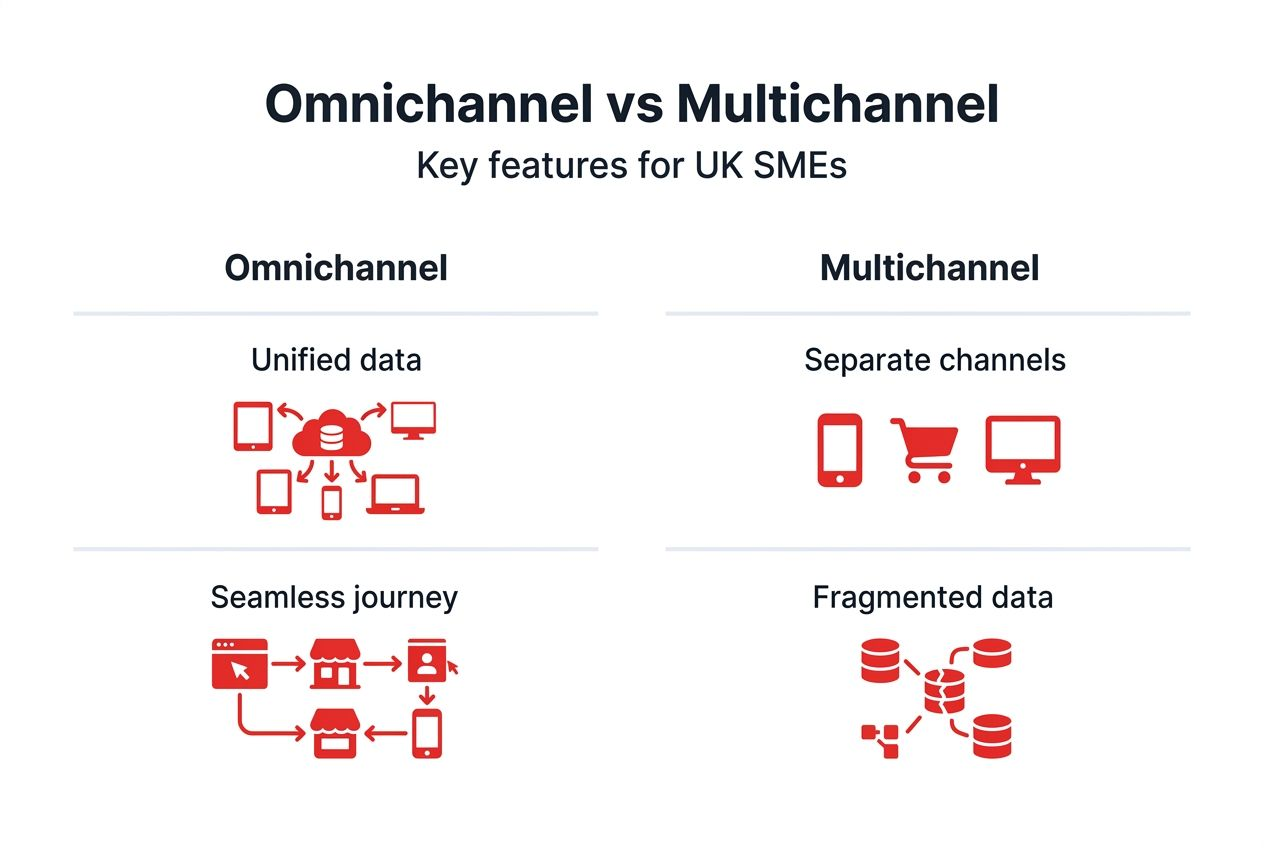
Omnichannel marketing integrates all available shopping and communication channels to provide a unified, consistent, and personalised customer experience. Every touchpoint shares data and context, so customers can start their journey on one channel and continue seamlessly on another without repeating information or losing progress.
Multichannel marketing involves communicating through various digital channels, but these channels often operate independently. A customer might see your Facebook advert, visit your website, and receive an email, yet each interaction feels disconnected because the channels don’t share information or coordinate messaging.
The fundamental difference lies in integration. Omnichannel strategies ensure that your email marketing team knows what a customer viewed on your website, your SMS campaigns reflect their purchase history, and your social media adverts acknowledge their previous interactions. This data sharing creates relevance and removes friction from the customer journey.
Core channels in an omnichannel strategy typically include:
- Website and mobile app experiences
- Email marketing campaigns
- SMS and messaging platforms
- Social media channels
- Physical store interactions
- Customer service touchpoints
- Paid advertising across platforms
Consistency across these channels builds trust and makes it easier for customers to engage with your brand however they prefer. When executed properly, customers don’t think about which channel they’re using because the experience feels natural and continuous. For UK SMEs looking to compete with larger brands, implementing multi-channel marketing creates a professional presence that reassures customers and drives conversions.
The Impact of Omnichannel Marketing on Customer Behaviour and Business Growth
The evidence for omnichannel marketing’s effectiveness is compelling. Campaigns using three or more channels achieve 287% higher purchase rates than single-channel campaigns. This dramatic difference occurs because multiple touchpoints reinforce your message, build familiarity, and meet customers where they naturally spend time.
Retention rates tell an equally powerful story. Companies with strong omnichannel engagement retain 89% of customers versus just 33% for those with weaker strategies. When customers can interact with your brand seamlessly across channels, they develop stronger relationships and return more frequently.
Consumer behaviour research reveals that 77% of omnichannel consumers use 3-4 channels when buying non-essential products. This pattern means your customers expect flexibility and will reward businesses that provide it with their loyalty and spending.
| Channel Strategy | Customer Retention Rate | Purchase Rate Improvement |
|---|---|---|
| Single channel | 33% | Baseline |
| Weak omnichannel | 45% | 150% increase |
| Strong omnichannel | 89% | 287% increase |
These statistics translate directly to revenue growth for UK SMEs willing to invest in coordinated marketing. Understanding digital marketing costs helps you plan an omnichannel approach that fits your budget whilst maximising returns.
Pro Tip: Start by identifying your two or three best-performing channels based on customer engagement and conversion data. Perfect the integration between these channels before expanding to others. This focused approach delivers better ROI than spreading resources too thin across many poorly connected channels.
The relationship between channel diversity and revenue becomes clear when you track customer lifetime value. Customers who engage across multiple channels typically spend more per transaction and purchase more frequently. They also provide valuable data that helps you refine targeting and personalisation, creating a virtuous cycle of improved performance and revenue growth.
Real-world Examples and Best Practices for UK SMEs
Fashion brand Rebecca Minkoff demonstrates the power of integrated channels. After consolidating SMS and email through Klaviyo, SMS accounted for 24% of flow revenue despite being the newer channel. This success came from treating SMS and email as complementary rather than separate, using customer data to determine the best channel for each message.
UK SMEs can apply similar principles without enterprise budgets. The key is starting with channels your customers already use and ensuring those channels share customer data and coordinate messaging.
Best practices for effective omnichannel marketing include:
- Maintain consistent brand voice, visual identity, and messaging across all channels
- Integrate customer data so each channel knows the full customer history
- Map the complete customer journey to identify key touchpoints and transitions
- Personalise content based on behaviour, preferences, and purchase history
- Use triggered messaging that responds to customer actions across channels
- Test different channel combinations to find what works for your audience
Start by auditing your current channels. Are they sharing data? Can customers move between them smoothly? If someone adds a product to their cart on your website, does your email system know? Can your SMS campaigns reference their browsing history?
Small improvements create noticeable results. Implementing abandoned cart emails that reference specific products viewed, sending SMS order updates that link to your app, or creating social media adverts based on website behaviour all strengthen your omnichannel approach.
Pro Tip: Use customer feedback and analytics to refine your channel mix continuously. Remove underperforming channels and double down on combinations that drive engagement. Your omnichannel strategy should evolve as customer preferences change and new platforms emerge.
For comprehensive guidance on building effective campaigns, explore proven digital marketing strategies and review UK social media advertising examples that demonstrate successful cross-channel integration.
Common Challenges and How to Overcome Them
UK businesses implementing omnichannel marketing typically face four major obstacles: data silos, inconsistent branding, technology complexity, and resource limitations. Each challenge has practical solutions that don’t require massive budgets or technical expertise.
Data silos occur when customer information stays trapped in separate systems. Your email platform doesn’t talk to your e-commerce system, your CRM doesn’t connect to your advertising accounts, and your social media data lives in isolation. Omnichannel marketing requires integration that shares data and customer context to create seamless journeys.
Inconsistent branding happens when different teams manage different channels without coordination. Your Instagram tone might be casual whilst your email marketing sounds corporate. Visual styles vary between your website and printed materials. These disconnects confuse customers and weaken brand recognition.
Follow these steps to overcome common implementation challenges:
- Unify your data sources by choosing platforms that integrate natively or using tools like Zapier to connect systems.
- Standardise your brand guidelines including tone of voice, visual identity, and key messages, then train all team members.
- Adopt integrated marketing platforms that manage multiple channels from one dashboard rather than juggling separate tools.
- Train your staff on the importance of channel coordination and provide them with tools to access customer context.
- Start small with core channels and expand gradually as you build capability and confidence.
- Measure performance across channels to identify what’s working and where improvements are needed.
Technology complexity intimidates many SMEs, but modern marketing platforms have simplified omnichannel management significantly. Many tools now offer intuitive interfaces, pre-built integrations, and templates that reduce technical barriers.
Resource limitations matter, especially for smaller businesses. You don’t need a large marketing team to execute omnichannel strategies effectively. Focus on automation, which handles repetitive tasks like triggered emails, SMS confirmations, and retargeting adverts without manual intervention.
Sharing customer context between channels transforms isolated interactions into connected experiences. When your customer service team can see purchase history, your sales team knows which marketing messages someone received, and your marketing automation responds to actual behaviour, you create the seamless journey that defines successful omnichannel marketing.
For businesses struggling with data integration and measurement, data-driven marketing approaches provide frameworks for collecting, analysing, and acting on customer information across channels.
Enhance Your Omnichannel Marketing with Expert Help
Building an effective omnichannel strategy takes time, expertise, and ongoing optimisation. At Bamsh, we help UK SMEs create integrated marketing systems that drive measurable results. Our team manages everything from SEO and content to PPC and social advertising, ensuring all channels work together to support your business goals.
We start with a comprehensive SEO audit that identifies opportunities across your digital presence. Then we build campaigns that coordinate messaging, share customer data, and deliver consistent experiences whether customers find you through search, social media, or paid advertising. Our Google Ads management integrates with your other channels to create a unified strategy that maximises ROI and minimises wasted spend.
Get in touch to discuss how we can help you implement omnichannel marketing that actually works.
Frequently Asked Questions
What is the difference between omnichannel and multichannel marketing?
Omnichannel marketing integrates all channels to provide a seamless, unified customer experience where data and context are shared across touchpoints. Multichannel marketing uses multiple channels but operates them independently without coordination or data sharing. The integration in omnichannel strategies creates continuity that customers notice and value.
How many channels should small businesses use in their omnichannel strategy?
Using three to four channels is most common and linked to significantly higher purchase rates and retention. Focus on channels where your specific audience is most active rather than trying to maintain a presence everywhere. Start with your best-performing channels, perfect the integration between them, then expand gradually based on results and resources.
Can SMS marketing really boost revenue?
Yes, SMS marketing can drive substantial revenue when integrated effectively with other channels. Rebecca Minkoff achieved 24% of Klaviyo flow revenue from SMS after consolidating their SMS and email marketing. SMS works particularly well for time-sensitive messages like abandoned cart reminders, order updates, and flash sales when coordinated with email and other touchpoints.
How can an SME start with omnichannel marketing on a budget?
Start small by focusing on the two or three channels your customers use most frequently. Use integrated marketing platforms that offer free trials or affordable entry-level plans to test functionality before committing. Prioritise consistent messaging and collecting customer data even if you can’t implement advanced automation immediately, as this foundation supports growth as your budget increases.