
Many business owners believe intent-based marketing is simply choosing the right keywords for adverts. In reality, it’s far more sophisticated. Intent-based marketing means recognising and responding to customer behaviour across digital channels to deliver precisely what they need when they need it. This guide explains how UK SMEs can harness intent signals to boost lead quality, improve conversion rates, and create predictable revenue streams in 2026.
Table of Contents
- Understanding Intent-Based Marketing: More Than Just Keywords
- Identifying Customer Intent: Active And Passive Signals Explained
- The Evolution And Power Of Modern Intent Data For Smes
- How Uk Smes Can Apply Intent-Based Marketing For Better Leads And Conversions
- Discover Expert Digital Marketing Support Tailored For Uk Smes
- Frequently Asked Questions About Intent-Based Marketing
Key Takeaways
| Point | Details |
|---|---|
| Intent-based marketing uses user behaviour to tailor messages and increase conversions | Rather than guessing what customers want, businesses track digital signals to deliver relevant content at the right moment. |
| Active and passive intent signals indicate different stages of the buyer journey | Active signals show high purchase readiness, whilst passive signals reveal research behaviour requiring different messaging approaches. |
| Modern intent platforms offer precise targeting for higher lead quality and predictable revenue | Second-wave intent data integrates seamlessly with existing systems to identify buying group members and deliver non-intrusive engagement. |
| UK SMEs should integrate local SEO and tailored content for best results | Combining intent-based strategies with localised search optimisation creates powerful synergies for reaching customers in specific regions. |
| Using intent data can boost conversion rates by up to 30% compared to traditional marketing | Properly implemented intent-based approaches deliver measurable improvements in lead quality and revenue predictability. |
Understanding Intent-based Marketing: More Than Just Keywords
Intent-based marketing means tailoring your approach based on user behaviour and digital signals rather than simply targeting keywords. Whilst keywords matter, true intent marketing recognises where customers sit in their buying journey and delivers content that matches their current needs.

The buyer’s journey has distinct stages: research, consideration, and purchase readiness. Each stage demands different messaging. Someone researching solutions needs educational content, whilst someone comparing providers wants specifics about your service. Someone ready to buy needs clear pricing and easy contact options.
Content and messages must align with buyer intent, not just push keywords into view. This means understanding both overt intent, such as explicit user actions like form completions, and covert intent, including browsing behaviour patterns that reveal interest without direct engagement.
Intent signals that indicate different user levels include:
- Searching for specific product names or service providers
- Downloading guides or resources from your website
- Repeatedly visiting pricing or contact pages
- Reading comparison articles or reviews
- Engaging with email campaigns or social media content
A common misconception is that intent-based marketing is solely about keyword targeting. It’s more about understanding the customer’s journey and providing relevant content at each stage.
This distinction matters because throwing adverts at everyone who searches a broad term wastes budget. Intent-based approaches focus resources on people showing genuine buying signals, dramatically improving return on investment and customer experience simultaneously.
Identifying Customer Intent: Active and Passive Signals Explained
Understanding the difference between active and passive intent transforms how you allocate marketing resources. Active intent signals include searching for an item by name, repeatedly making website visits, and adding products to a cart. These behaviours indicate high purchase readiness.
Passive intent signals include searching related keywords, reading informational blog articles, and browsing reviews. These suggest research phase activity where prospects evaluate options without immediate purchase plans.
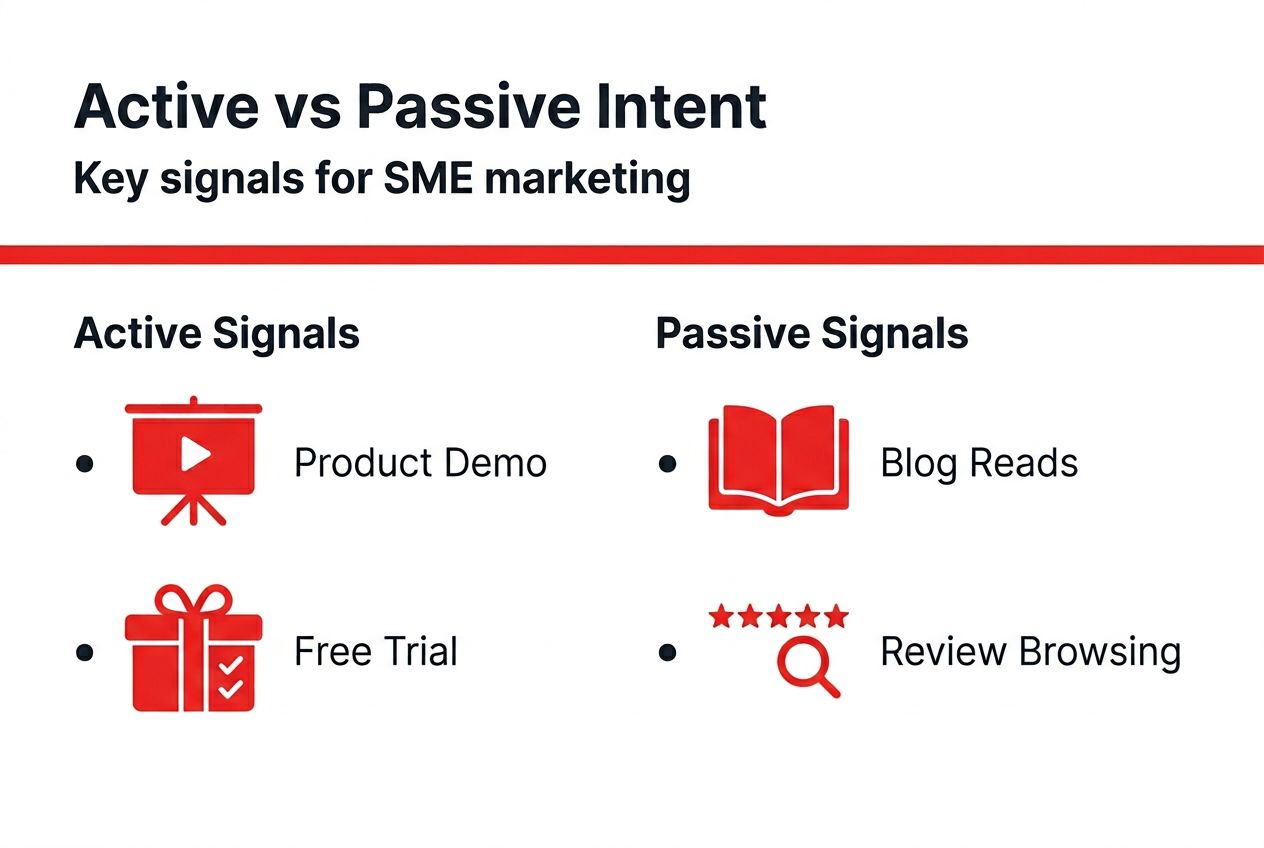
Marketing messages differ substantially for these intent types. Active intent prospects respond to direct offers, clear pricing, and immediate contact options. Passive intent prospects need educational content, trust-building case studies, and gentle nurturing through email sequences.
| Signal Type | Examples | Buyer Stage | Best Marketing Response |
|---|---|---|---|
| Active Intent | Product searches, cart additions, pricing page visits | Purchase readiness | Direct offers, clear calls-to-action, immediate contact options |
| Passive Intent | Blog reading, keyword research, review browsing | Research and consideration | Educational content, case studies, email nurturing sequences |
UK SMEs can monitor these signals digitally through:
- Google Analytics tracking showing page visit patterns and time on site
- CRM systems recording email opens, link clicks, and form interactions
- Remarketing audiences segmented by behaviour and engagement level
- Social media engagement metrics revealing content preferences
- Search console data showing which queries bring visitors to your site
Pro Tip: Prioritise localised SEO and content targeting to draw more high-intent leads in your specific UK regions. Someone searching for services in Manchester has different needs than someone in London, and tailoring content accordingly improves retargeting effectiveness substantially.
The Evolution and Power of Modern Intent Data for SMEs
Intent data technology has matured significantly, moving from unreliable early attempts to precise, integrated systems. Understanding this evolution helps UK SMEs leverage current capabilities effectively.
Three reasons early intent data underperformed:
- Account-level fog meant businesses received vague signals about companies rather than specific individuals, leading to poorly targeted outreach that annoyed prospects.
- Operational chasms existed between intent platforms and existing marketing systems, creating manual work and data silos that prevented seamless execution.
- Personalisation missteps occurred when marketers used intent data for intrusive, pushy messaging that eroded trust and damaged brand reputation.
The second wave of intent data is defined by technical maturity and a focus on integration, shifting from hype to precision and predictable revenue. Modern intent platforms pinpoint buying group members, integrate seamlessly with CRM and marketing automation tools, and deliver relevant, non-intrusive engagement.
These advances benefit UK SMEs through higher conversion rates, building trust through relevant timing and messaging, and creating predictable revenue streams based on reliable signal data. Rather than guessing which prospects might buy, businesses focus resources on people actively showing interest.
Modern intent platforms also support sophisticated event marketing workflows that trigger personalised sequences based on specific behaviours. This automation means small teams achieve results previously requiring large marketing departments.
Pro Tip: Partner with digital marketing agencies offering integrated intent-based marketing for best results. Agencies with proper technical infrastructure can implement these systems faster and more effectively than most SMEs can achieve internally, delivering quicker returns on investment.
How UK SMEs Can Apply Intent-based Marketing for Better Leads and Conversions
Intent-based marketing leverages real-time signals to identify and engage potential customers actively seeking solutions, leading to higher conversion rates with 20-30% increases. UK SMEs can implement this approach through practical steps that deliver measurable results.
Five actionable steps UK SMEs can take:
- Monitor intent signals across your website, email campaigns, and social channels to identify patterns showing purchase readiness or research behaviour.
- Tailor messages specifically for different intent levels, creating distinct content pathways for active versus passive prospects.
- Integrate intent data with PPC campaigns and SEO strategies to amplify reach whilst maintaining precise targeting.
- Localise content for specific UK regions where you operate, matching language, examples, and offers to regional preferences.
- Use analytics platforms to measure intent signal effectiveness, continuously refining which behaviours predict conversions most reliably.
| Intent Signal | Tailored Marketing Action | Likely Outcome |
|---|---|---|
| Pricing page visits | Send personalised quote offer email | 35% higher conversion than generic follow-up |
| Blog content reading | Deliver case study via email sequence | 28% increase in consideration stage progression |
| Cart abandonment | Trigger immediate remarketing advert | 20% cart recovery rate |
| Repeat website visits | Offer consultation booking | 42% higher booking rate than cold outreach |
| Review page browsing | Share client testimonials | 31% improvement in trust indicators |
Measurable benefits include conversion uplift up to 30% from using intent data properly compared to traditional spray-and-pray approaches. This improvement stems from focusing resources on prospects showing genuine interest rather than broad, unfocused campaigns.
Pro Tip: Combine intent-based marketing with local SEO strategies and paid adverts for optimal results. The synergy between understanding customer intent and appearing in local searches creates powerful momentum that traditional marketing cannot match. Adding answer engine optimisation ensures your content appears when prospects ask AI tools for recommendations.
Discover Expert Digital Marketing Support Tailored for UK SMEs
Bamsh Digital Marketing specialises in helping UK small and medium businesses harness intent-based marketing alongside SEO, PPC, and other digital strategies to boost leads and conversions. Our answer engine optimisation service ensures your content reaches prospects using AI tools like ChatGPT and Gemini, whilst our PPC management delivers precisely targeted campaigns that convert.
We combine intent signal tracking with local search optimisation, creating integrated systems that identify prospects at every journey stage and deliver relevant messages automatically. Our transparent approach means you always understand where your budget goes and what results it delivers.
As an award-winning digital marketing agency, we’ve helped dozens of UK businesses transform their lead generation through intent-based strategies. Let’s discuss how we can tailor an approach for your specific needs.
Frequently Asked Questions About Intent-based Marketing
What types of businesses benefit most from intent-based marketing?
Businesses with longer sales cycles and higher-value transactions gain the most from intent-based marketing. Professional services, B2B companies, and specialist retailers see substantial improvements because they can nurture prospects through extended decision-making processes with precisely timed content.
How can SMEs measure the success of intent-based marketing campaigns?
Track conversion rates from different intent signal sources, monitor cost per acquisition compared to traditional channels, and measure progression speed through your sales funnel. Compare these metrics against baseline performance before implementing intent-based approaches to quantify improvement accurately.
Is intent-based marketing suitable for all digital channels?
Intent-based strategies work across search, social media, email, and display advertising, though implementation varies by channel. Search and remarketing offer the clearest intent signals, whilst social requires more sophisticated behaviour analysis. The key is integrating signals across channels for comprehensive prospect understanding.
How does intent-based marketing respect customer privacy and comply with UK regulations?
Intent-based marketing complies with UK GDPR by using anonymised behavioural data and obtaining proper consent for tracking. Modern platforms aggregate signals without exposing personal information until prospects voluntarily identify themselves through form completions or direct contact. Always work with providers following UK data protection standards.
How often should SMEs update their intent data strategies to stay effective?
Review intent signal effectiveness quarterly, adjusting which behaviours trigger specific marketing actions based on conversion data. Market conditions, competitor activities, and customer behaviour patterns shift regularly, so continuous refinement ensures your approach remains effective. Monitor weekly performance metrics whilst making strategic adjustments quarterly.